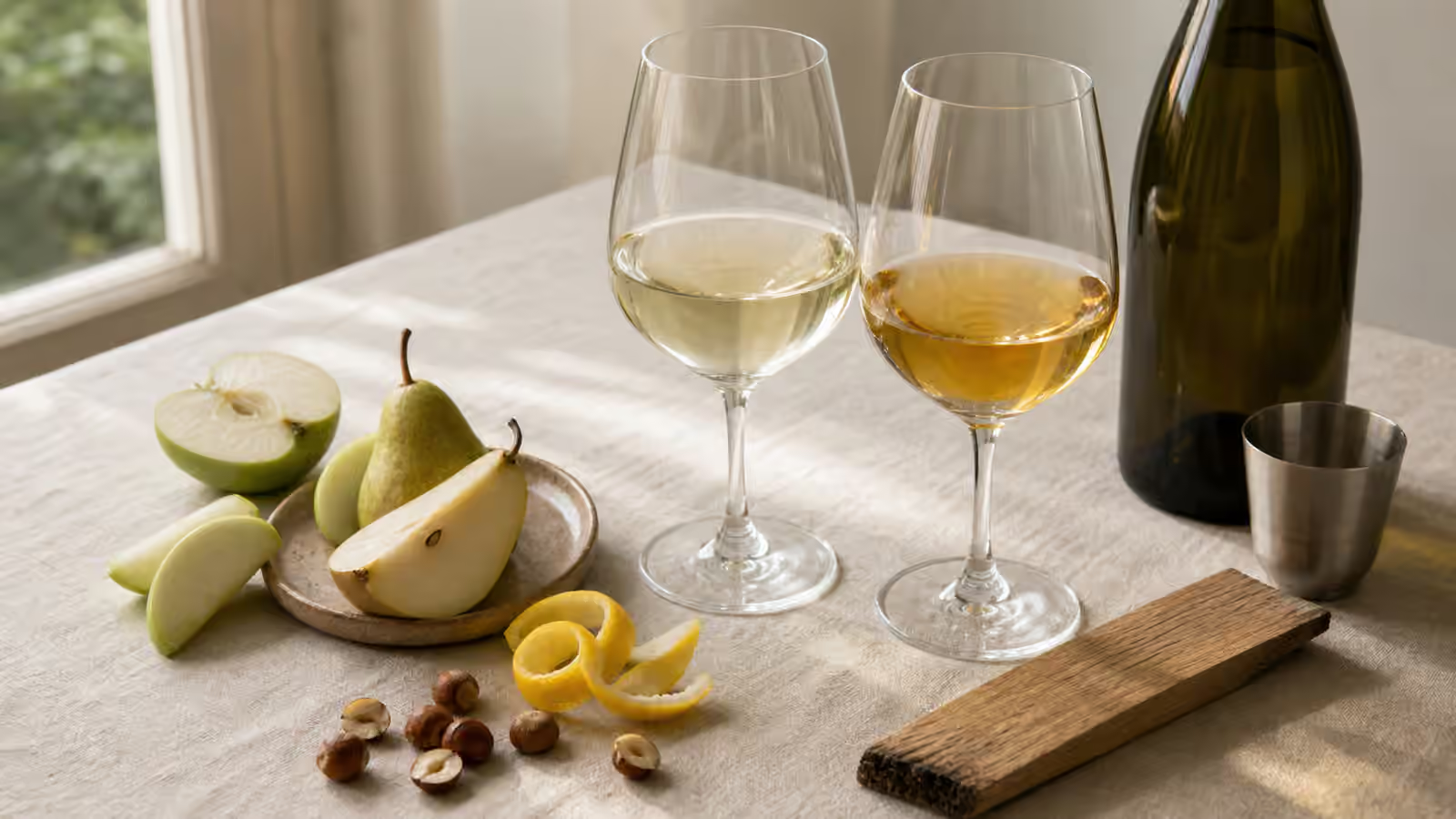
A tasting room visit is not a test, a sales pitch you must survive, or a performance of expertise. At its best, it is a focused conversation with a place. You taste several wines from one producer, often near the vines or cellar that shaped them, and you get a chance to connect style, grape, vintage, farming, winemaking, and hospitality in a way a retail shelf cannot show. At its worst, the visit becomes a blur because the pours are too fast, the questions are too vague, or the buying pressure gets louder than the wine.
The difference usually comes from pacing. A good visit gives each pour a job. You are not trying to drink a lot. You are trying to notice how one bottle differs from the next and why that difference matters. If Wine Tasting 101 gives you the method and How to Build a Wine Flight at Home gives you comparison practice, a tasting room turns those habits toward a producer’s own lineup.
Start with the purpose of the visit
Before you arrive, decide what kind of visit you want. Some days are about learning a region. Some are about choosing bottles for dinner. Some are about understanding a producer you already like. Some are simply about enjoying a quiet afternoon with good hospitality. None of those purposes is wrong, but they lead to different choices.
If the region is new to you, taste broadly and ask about the local baseline. What grapes are common here? What does the climate tend to do to acidity, body, ripeness, and tannin? How does this producer’s style compare with nearby neighbors? Those questions give you context without pretending you already know the answer. They also connect to the reading habits in Old World and New World Wine Styles Without Stereotypes , where broad labels only help when they lead to more precise observations.
If you already know the region, ask narrower questions. Which vineyard is cooler? Which block gives firmer tannin? Which wine sees more oak? Which vintage is more open now? These are not fancy questions for their own sake. They help you connect what is in the glass to the decisions behind it. The guide to Oak, Steel, Lees, and Skin Contact is useful background because tasting rooms often explain style through cellar choices.
Use the first pour to calibrate
The first wine in a flight is a calibration point. Do not rush to judge it as good or bad. Notice the serving temperature, glass shape, pour size, aroma, and the pace of the room. Is the wine bright and lean, broad and ripe, oaky, floral, savory, sweet, tannic, or gentle? Is the staff presenting facts, stories, or both? Are you being guided through a set order or invited to choose?
Take one small sip and place the wine structurally before chasing aroma. Is acidity high or moderate? Is there tannin? Does the body feel light, medium, or full? Does alcohol show warmth? Does the finish hold? This is the practical language from Wine Structure , and it keeps the visit grounded. You can always add fruit, flowers, herbs, earth, or spice later.
Water and neutral food help. Crackers or bread are not there to make wine taste perfect. They reset your mouth enough to compare the next pour. Avoid strongly flavored snacks at the beginning unless the tasting is designed around pairing. Cheese, charcuterie, chocolate, and spicy food can be wonderful, but they change the wine. If the goal is to understand the producer, taste the wine alone first, then with food.
Spitting is normal
Spitting can feel awkward the first time, but it is standard tasting behavior. It lets you stay clear enough to notice differences across a flight, especially if you are visiting more than one producer or tasting higher-alcohol wines. A tasting room that provides a dump bucket or spit cup is not being unfriendly. It is giving you the tool professionals use to keep the experience useful.
You do not have to spit every drop to taste thoughtfully, and you do not have to apologize for doing it. Smell, sip, move the wine around your mouth, then spit or swallow depending on your plan. If you are tasting several flights, arranging transportation, keeping pours small, eating, and pacing the day all matter more than bravado. The point is to remember the wines and the people, not to turn the itinerary into a contest.
Dumping unfinished wine is also normal. If a pour is not useful to you, if you have enough information, or if you are keeping your pace slow, leave it. The producer would rather you taste clearly than force down every ounce out of politeness.
Ask questions that reveal style
Useful questions are specific enough to answer but open enough to teach. Instead of asking whether a wine is good, ask what changes between two wines in the flight. If one Chardonnay is sharper and another is rounder, ask whether that comes from vineyard, ripeness, oak, lees, malolactic fermentation, or all of the above. If one red feels firmer, ask whether it is grape variety, skin contact, vintage, whole-cluster fermentation, or barrel aging.
Ask about drinking windows without treating age as automatic improvement. Which wine is meant for tonight? Which might benefit from a few years? Which one is most sensitive to serving temperature? Those questions connect the visit to real use at home and to Aging vs. Drinking Now . They also show respect for the producer’s intention. Not every wine wants to be cellared, and not every expensive bottle is the right bottle for dinner this week.
Ask about food in structural terms. What does the winery serve with the high-acid white? What kind of dish makes the tannic red relax? Does the rose prefer seafood, herbs, char, or cheese? A good answer may give you local examples, but the deeper lesson is transferable. Once you hear how the producer thinks about acidity, fat, salt, spice, and texture, the wine becomes easier to use at home.
Take notes that help later
Tasting room notes do not need poetry. In fact, overly detailed notes can distract from the visit. Write the name of the wine, one structural phrase, one aroma or flavor impression, and one use case. A note such as “bright, salty white with lemon peel and herbs, good for goat cheese or shellfish” will help you more than a long paragraph of borrowed descriptors.
Photos can help if they are organized. A label photo without context may mean little two weeks later. Pair the photo with a short note or a quick voice memo. If you buy bottles, mark which one was the dinner bottle, which one was the cellar bottle, and which one was mainly a souvenir. Reading Wine Labels Without Panic becomes easier after a tasting room visit because the label is now attached to a real glass, a place, and a conversation.
Pay attention to changes across the lineup. A producer may have a house signature: bright acidity, restrained oak, polished texture, ripe fruit, savory stems, low-intervention funk, or careful classicism. You may like one bottle and not another, but the overall pattern tells you whether the producer’s handwriting fits your palate.
Buying should follow use
It is easy to buy because the room is beautiful, the host is kind, and the moment feels special. Hospitality matters, but bottles still need a purpose. Before buying, ask how you will use each wine. Is it for dinner soon, a gift, a comparison tasting, a cellar experiment, or a memory of the trip? That question protects you from coming home with bottles that are impressive in the tasting room and awkward in your kitchen.
If you loved a wine because it was served at the perfect temperature with a vineyard view, think about whether it will still make sense on an ordinary night. Some wines travel well into real life. Others belong mainly to the place where you tasted them. There is nothing wrong with either outcome. The trick is knowing which one you are buying.
When choosing between bottles, use the same method as How to Buy Wine Without Guessing . Give each bottle a job. The crisp white might be the seafood wine. The lighter red might be the weeknight dinner bottle. The structured reserve might be for a future meal with time and decanting. The sweet or fortified bottle might be for cheese after dinner.
Let the place teach without taking over
A winery visit adds context, but context should not bully your palate. You may admire the farming, the story, the cellar, and the landscape while preferring a different style of wine. You may dislike a famous grape and love the humble bottle poured at the end. You may discover that a producer’s entry-level wine gives you more pleasure than the rare bottling. That is not failure. It is useful information.
The best tasting room visits leave you with a clearer sense of your own taste and a better understanding of the region. You learn what the producer values, what the place tends to give, and how the wines behave beside one another. You also learn how you behave as a taster: what you notice first, what you miss when the pace is fast, and which questions open the room.
Carry that knowledge back to ordinary wine life. A retail shelf will feel less abstract. A restaurant list will feel less random. A home flight will feel more purposeful. The visit has done its job when the bottles are not just souvenirs, but references you can use the next time you choose, serve, or share wine.