
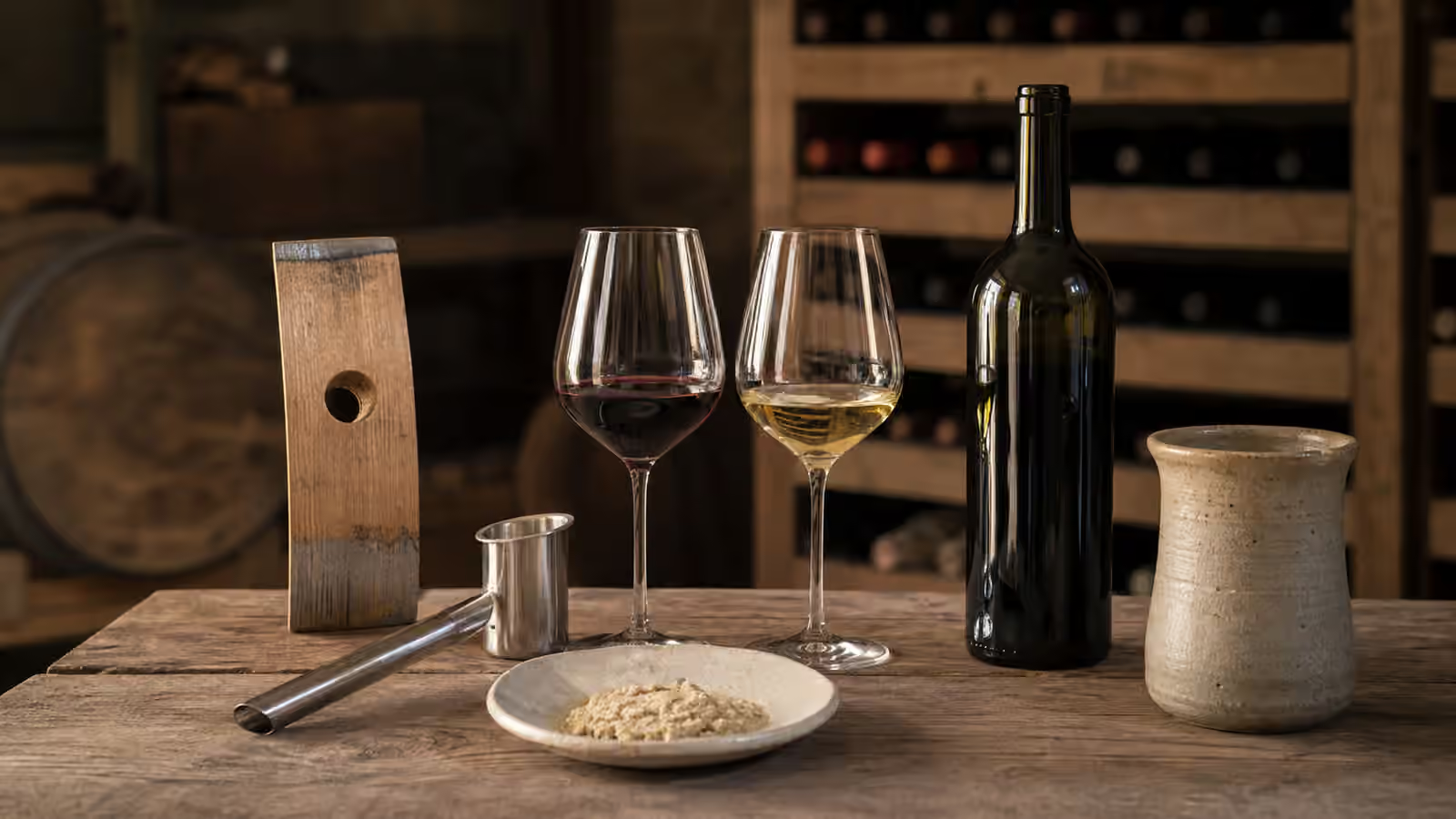
Wine can feel mysterious until you realize how many of its flavors come from decisions made after the grapes arrive at the winery. Soil, climate, grape variety, and vintage matter deeply, but the cellar is where raw fruit becomes a specific kind of drink. The same Chardonnay can taste like lemon, green apple, and cold stone in one bottle, then like baked pear, butter, vanilla, and toast in another. The grape did not change. The handling did.
This guide is about reading those choices without turning wine into homework. If Reading Wine Labels Without Panic teaches you how to extract signals from the bottle, this is the next layer: what words like oak aged, stainless steel, sur lie, skin contact, unfiltered, whole cluster, and malolactic are trying to tell you. None of these terms guarantees quality. They are style clues. Used well, they help you predict texture, aroma, and food fit before you pull the cork.
Start with the vessel
The container a wine ferments or ages in changes how it smells, how it feels, and how quickly it evolves. Stainless steel is the cleanest starting point to understand because it is mostly neutral. A stainless tank does not add vanilla, smoke, coconut, toast, or spice. It protects freshness, keeps fruit sharp, and lets bright acidity stay in focus. When a label or shop note says stainless steel, especially for white wine, expect a cleaner line: citrus, green apple, herbs, mineral impressions, and a lighter or more direct texture.
That does not mean stainless wine is simple. Riesling, Sauvignon Blanc, Muscadet, Albarino, many crisp Italian whites, and plenty of unoaked Chardonnay can be precise and complex without a trace of barrel flavor. Stainless simply means the winemaker is trying not to put the vessel in front of the grape. If you like wines that feel brisk, transparent, and food-friendly, stainless is often a friendly clue.
Oak is different because it is both a container and an ingredient. A barrel allows a small exchange of oxygen, which can round a wine and help it knit together. It can also add aroma and flavor, especially when the barrel is new or heavily toasted. Vanilla, baking spice, cedar, coconut, clove, smoke, coffee, toast, and sweet wood notes can all come from oak. In reds, oak can frame tannin and make a young wine feel more polished. In whites, oak can add breadth and a creamy or nutty impression.
The important question is not whether oak is good or bad. The question is how much oak, what kind of oak, and whether the wine has enough fruit and structure to carry it. Light oak can feel like seasoning. Heavy oak can feel like the seasoning became the meal. A balanced oaked wine still tastes like wine first. If a Chardonnay smells more like vanilla frosting than fruit, or a red tastes more like a barrel sample than grapes, the oak may be leading too loudly for your palate.
Concrete, clay, and large old barrels sit between those poles. Concrete tanks are often neutral in flavor but can give wine a rounder texture than stainless. Clay amphorae or qvevri can also be relatively neutral, though they are often used in traditional or natural-leaning cellars where texture and oxygen exchange matter. Large old oak casks, sometimes called foudres or botti, usually add far less obvious oak flavor than small new barrels. They can let wine breathe gently without making it taste strongly of wood.
Oak is not one flavor
People often talk about oak as if it were a single note, but oak is a set of choices. New barrels give more flavor than older barrels. Small barrels have more surface area touching the wine than large casks. American oak can read sweeter, with coconut, dill, and vanilla impressions, while French oak is often described as tighter, spicier, or more cedar-like. Toast level matters too. A lightly toasted barrel behaves differently from one charred enough to give smoke, coffee, and baking-spice depth.
This is why two labels that both say oak aged can taste nothing alike. A Rioja raised in older American oak may show vanilla, dill, leather, and red fruit in a traditional way. A Napa Cabernet aged in a high proportion of new French oak may feel darker, glossier, and more polished. A white Burgundy may use oak so quietly that you notice texture and hazelnut before you notice wood. The word oak is only the beginning of the sentence.
When shopping, translate oak language into a practical question: do you want richness or clarity? For roast chicken, creamy pasta, or a quiet winter dinner, a moderately oaked Chardonnay can be exactly right. For ceviche, goat cheese, salads, or spicy food, that same oak may feel heavy and out of place. The pairing logic in Pairing Wine with Modern Foods works better when you treat oak as weight and seasoning, not as a prestige signal.
Lees aging changes texture
Lees are the spent yeast cells and tiny solids that settle after fermentation. If a wine is quickly racked off its lees, it often keeps a cleaner, more direct profile. If it ages on the lees, especially with occasional stirring, it can gain texture and savory complexity. The French phrase sur lie means “on the lees,” and it is one of the most useful back-label clues for white wines and sparkling wines.
Lees aging can make a wine feel creamier without making it sweet. It can add notes that people describe as bread dough, biscuit, yogurt-like tang, almond, or subtle nuttiness. In sparkling wine made by the traditional method, time on the lees is part of what creates brioche and toast notes. In still whites, lees contact can turn a sharp line into something with more middle, as if the wine has gained a quiet cushion beneath the acidity.
Muscadet is a classic place to learn this because many bottles are labeled sur lie and remain bright rather than heavy. Good Champagne, Cava, Cremant, and other traditional-method sparkling wines show another version of the same idea, where lees aging gives depth to bubbles that might otherwise taste only crisp and fruity. If Wine Tasting 101 gave you the structure words, lees aging is one explanation for why some wines feel broader, more savory, or more persistent than their acidity alone would suggest.
The risk is not usually that lees aging tastes bad. The risk is misunderstanding it. A lees-aged wine can be textured while still dry. It can smell bready without being sweet. It can feel creamy without dairy or sugar. If you expect every white wine to taste like citrus and nothing else, lees character may seem odd at first. Give it food and time in the glass. Often the savory side becomes the reason the wine works.
Malolactic fermentation softens the edge
Malolactic fermentation, often shortened to malo or MLF, is not the same as alcoholic fermentation. It is a secondary process where sharp malic acid, the kind associated with green apples, is converted into softer lactic acid. The effect is easiest to notice in Chardonnay. A wine that goes through full malolactic fermentation may feel rounder, softer, and sometimes buttery. A wine that blocks malolactic fermentation may feel brighter, sharper, and more citrus-driven.
Butteriness is not only about malo, and not every wine with malolactic fermentation smells like popcorn. Oak, lees, ripeness, and producer style all shape the final result. Still, malo is one of the reasons two Chardonnays can seem like different species. One is taut and lemony. The other is broad and creamy. Both may be dry. Both may be well made. They are simply chasing different forms of pleasure.
Many red wines go through malolactic fermentation because the goal is usually to soften acidity and integrate structure. In reds, the process is less likely to announce itself as butter. It simply helps the wine feel less angular. In whites, especially aromatic varieties where freshness is central, winemakers may avoid it to protect lift. That is why unoaked Sauvignon Blanc often feels direct and piercing, while a fuller Chardonnay may feel rounded even before you think about oak.
For serving, this matters because richer, malo-influenced whites often taste better a little warmer than the coldest fridge temperature. Too cold, they can feel waxy and muted. A few minutes in the glass lets texture and aroma return. The same temperature logic appears in Serving Temperature and Decanting , but cellar choices explain why one white needs more warmth than another.
Skin contact is texture, not just color
Red wine gets its color and much of its tannin from contact with grape skins. White wine is usually pressed away from its skins before fermentation, which is why it stays pale and lower in tannin. Skin-contact white wine, often called orange or amber wine, borrows a red-wine technique for white grapes. The result can be golden, amber, tea-colored, lightly grippy, savory, aromatic, and sometimes challenging.
Short skin contact can add a little texture and aromatic depth without making the wine strange. Longer skin contact can bring dried fruit, tea, herbs, spice, bitterness, and tannin. The point is not that orange wine is red wine in disguise. It is its own lane. It can be brilliant with foods that are hard on ordinary whites, especially dishes with roasted vegetables, spices, fermented flavors, nuts, or richer sauces.
Skin contact also explains why some roses feel delicate and others feel almost red-wine-adjacent. A pale direct-press rose may taste like citrus, melon, and sea air. A deeper rose with more skin time may have more body, more red-fruit flavor, and a faint tannic edge. Color is not a perfect guide, but it is a clue worth noticing.
If you are curious but cautious, connect this idea with The Bottle Without a Label . Many natural wines use skin contact, but skin contact itself is not automatically natural, funky, or flawed. It is a technique. The glass still has to be balanced.
Whole clusters, stems, and the savory side of red wine
Most red wines are made from destemmed grapes, meaning the berries are separated from their stems before fermentation. Some winemakers include whole clusters, stems and all. This can change aroma, tannin, and freshness. Whole-cluster wines may show floral, herbal, peppery, tea-like, or stemmy notes. They can feel lifted and aromatic, but if the stems are not ripe or the handling is heavy, they can also taste green or abrasive.
Pinot Noir, Syrah, Gamay, and some Grenache-based wines are common places to notice whole-cluster character. It is not always listed on the label, but shop descriptions may mention whole bunch, stem inclusion, or partial whole cluster. If you like reds that feel savory, perfumed, and less jammy, this can be a useful clue. If you dislike herbal bitterness, you may prefer fully destemmed styles.
Whole-cluster character is also a reminder that fruitiness is not the only measure of wine. Some wines are beautiful because fruit shares the room with herbs, flowers, spice, earth, and structure. The trick is learning whether those non-fruit notes feel integrated or distracting to you.
Fining, filtration, and the look of the glass
Fining and filtration are finishing choices. Fining uses a substance to bind with particles in wine so they can be removed. Filtration passes wine through a medium to clarify or stabilize it. These techniques can make wine clearer and more predictable. A wine labeled unfined or unfiltered may look slightly hazy or throw more sediment, but it does not automatically taste better, more authentic, or more complex.
Clarity is easy to overread. A cloudy natural wine may be alive and delicious. It may also be unstable or simply not to your taste. A crystal-clear wine may be industrial and dull. It may also be precise, beautiful, and carefully made. The appearance gives a clue about handling, not a verdict.
This matters most when you open a bottle and see haze or sediment. Sediment in an older red is normal. Haze in some minimally filtered wines can be normal. A wine that smells clearly wrong is a different question, and the fault check in Wine Tasting 101 gives useful first signals. Do not confuse unusual appearance with automatic failure, but do not talk yourself into drinking something that smells aggressively off.
How to use these clues when buying
The practical move is to combine cellar clues with structure. If you want crispness, look for stainless steel, unoaked, high-acid grapes, cooler regions, and lower alcohol. If you want richness, look for oak, lees aging, malolactic fermentation, fuller-bodied grapes, or warmer regions. If you want savory texture, look for skin contact, whole cluster, older oak, or traditional regions where those choices are common.
One bottle rarely tells you everything. A label may say barrel fermented but not how much new oak was used. A shop note may mention lees but not whether the wine is lean or broad. A producer may use concrete but still make a ripe, generous wine. Treat the clues as a conversation starter. When a wine merchant asks what you like, you can answer in a way that is easier to help: “I like Chardonnay when it has texture but not too much vanilla,” or “I want a red with savory whole-cluster lift, but not green bitterness.”
This is where How to Buy Wine Without Guessing becomes more powerful. Buying by structure gets you into the right neighborhood. Winemaking clues help you choose the house. They explain why one bottle feels sharp and clean, another creamy and broad, another tannic and amber, another smoky and polished.
The best way to learn is to taste in pairs. Try an unoaked Chardonnay beside an oaked one. Try a young sparkling wine with little lees character beside a traditional-method bottle with bready depth. Try a direct, stainless white beside a lees-aged version of the same grape. You do not need to write poetic notes. Just ask what changed in aroma, weight, texture, and finish. After a few comparisons, cellar language stops sounding technical and starts sounding like a map of the glass.


