Wine Storage Guide: Preserve Your Collection
Let’s get one thing out of the way: wine storage doesn’t have to be intimidating. You don’t need a limestone cave beneath a French château or a bank vault lined with mahogany. Proper storage is really about protecting wine from a handful of predictable enemies—heat, light, vibration, and wild swings in conditions. Nail those basics, and you’ll preserve both quality and aging potential whether you’ve got three special bottles tucked in a closet or a serious collection demanding its own room.
If you want the ultra-short priority list, here’s how to think about it: stable temperature comes first, darkness or low light second, stillness (meaning low vibration) third, and reasonable humidity fourth—especially if your bottles are sealed with natural cork. Everything else beyond those four pillars? That’s optimization. Nice to have, but not worth losing sleep over.
The Essential Conditions
Temperature: The Critical Factor
Of all the variables that influence how wine evolves in the bottle, temperature is king. Think of it as the dial that controls the speed of aging. Crank it up and chemical reactions accelerate—flavors flatten, volatile aromas vanish, and you end up with what sommeliers grimly call “cooked” wine. Turn it way down and evolution nearly stalls, which sounds harmless until a deep freeze pushes a cork right out of the bottle.
But here’s the real kicker for most of us living in regular homes: the biggest danger isn’t a temperature that’s slightly too warm or slightly too cool. It’s instability. Every time the mercury swings, the liquid inside expands and contracts, working against the seal like a tiny bellows. Over weeks and months, that cycle invites oxygen in—and oxygen, in uncontrolled doses, is wine’s arch-nemesis.
Ideal Temperature: 55°F (12-13°C)
Acceptable Range: 45-65°F (7-18°C)
So what happens at the extremes? When things get too warm—say, above 70°F (21°C)—aging kicks into overdrive and flavors start to break down. Go the other direction, below about 45°F (7°C), and you risk not only glacially slow development but also the physical danger of corks being forced outward. And those fluctuations we mentioned? They’re the sneakiest villain of all, quietly damaging seals and letting oxidation creep in without any obvious warning signs until you pop the cork and wonder what went wrong.
The practical takeaway is beautifully simple: find the most stable spot you can, and then decide whether you need active cooling to keep it there. Don’t obsess over hitting 55°F on the nose if your basement naturally sits at a rock-steady 62°F year-round—that’s actually a fantastic situation.
To give you a sense of how dramatic the temperature effect can be: at the ideal 55°F, wine ages exactly as the winemaker intended. Bump that up to 65°F and the aging process nearly doubles in speed. Reach 75°F and you’re looking at three to four times the intended rate, which is genuinely risky territory. And at 85°F or above? Wine can suffer permanent, irreversible damage in a matter of days. That last point is why leaving bottles in a hot car—even for an afternoon—is one of the most common ways people accidentally ruin good wine.
Humidity: Protecting the Cork
Humidity might sound like a secondary concern, and honestly, for short-term storage it kind of is. But if you’re holding bottles for years or decades, it becomes a quiet guardian of your investment. The reason is simple: natural cork is a living material, and it needs a certain amount of moisture in the air to stay plump and pliable. Let the air go bone-dry and corks slowly shrink, creating tiny gaps that invite air inside. On the flip side, a rainforest-level environment encourages mold growth on labels and can turn your beautiful collection into something that looks like it was salvaged from a shipwreck.
Ideal Humidity: 60-70%
Acceptable Range: 50-80%
When humidity drops below about 50%, corks start drying out, shrinking ever so slightly, and allowing air to seep in—hello, premature oxidation. Push above 80% and you’re rolling out the welcome mat for mold and label deterioration. The sweet spot in the 60-70% range keeps corks pliable and sealed while your labels stay legible and your storage area stays clean.
Light: The Silent Killer
Here’s a fun—or rather, not-so-fun—fact: light, especially ultraviolet light, can degrade the aromatic compounds in wine and create unpleasant off-flavors that wine professionals call “light strike.” It’s the reason most wine bottles are tinted green or brown, but even that built-in sunscreen has its limits. Sparkling wines and delicate whites tend to show the damage first, but given enough exposure, any wine will suffer.
Ideal Condition: Complete darkness or very low light
When it comes to light sources, direct sunlight is by far the worst offender—it delivers a punishing combination of UV radiation and heat. Fluorescent lighting is another culprit because it’s surprisingly heavy on the UV spectrum. Halogen bulbs bring both heat and light to the party, making them a double threat. If you absolutely need artificial lighting in your storage area, LED bulbs are your best bet because they emit minimal UV and generate very little heat. But the simplest strategy of all? Just store your wine in darkness and keep bottles well away from windows.
Orientation: On Its Side
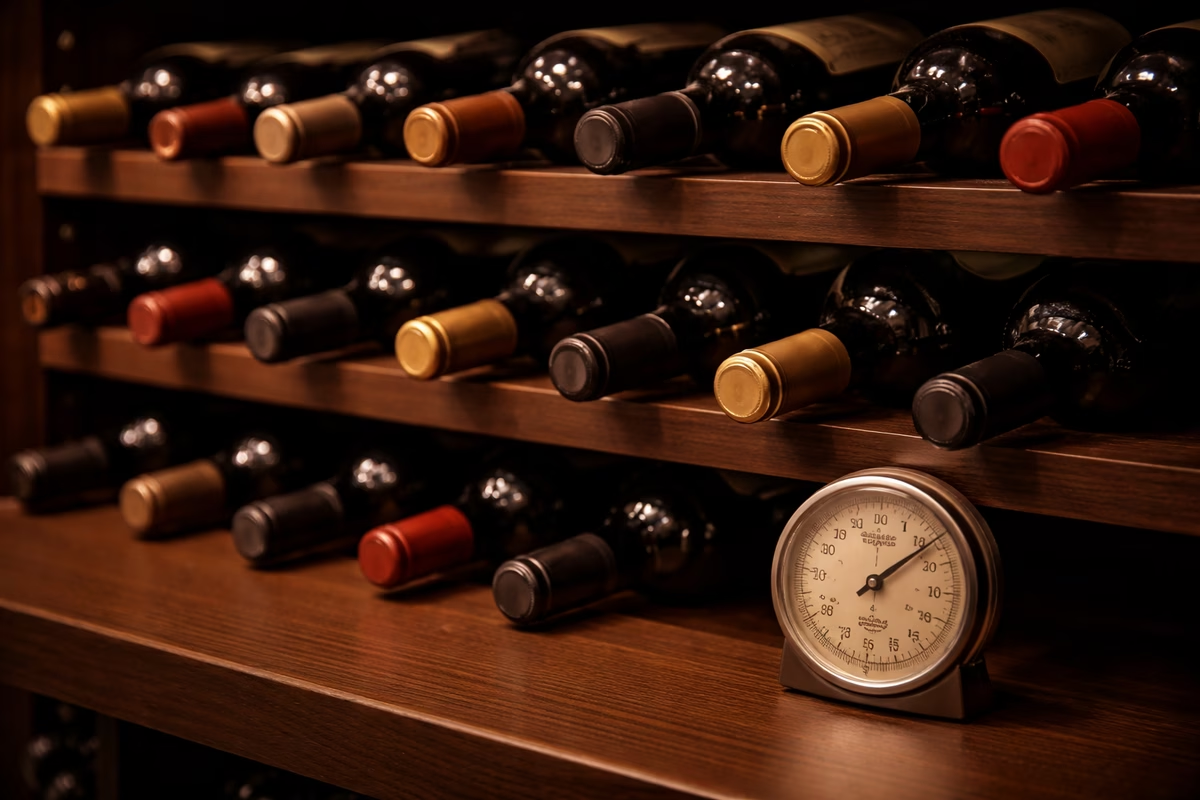
You’ve probably seen wine racks that hold bottles horizontally and wondered whether that’s just an aesthetic choice. It’s not—at least not for bottles sealed with natural cork. Storing a bottle on its side keeps the wine in constant contact with the cork, which prevents it from drying out and losing its seal. Think of it as a moisture bath for the cork from the inside, complementing whatever humidity the air provides from the outside.
Rule: Store bottles horizontally (on their side)
Now, if your bottles have screw caps or synthetic closures, orientation matters a lot less. Those closures don’t dry out, so you can stand them up, lay them down, or arrange them in an avant-garde sculpture if that’s your thing. But since many collectible wines still use natural cork, horizontal storage remains the default best practice.
Vibration: Keep It Still
Vibration is the storage factor that flies under the radar because it’s not dramatic—no one opens a shaky bottle and sees an obvious defect. But over time, constant micro-vibrations can disturb the sediment that naturally forms in aging wines, potentially affecting flavor development. More importantly, some research suggests vibration can accelerate certain chemical reactions in ways that leave wine tasting prematurely tired and flat.
The practical advice here is straightforward: keep your wine away from appliances that rumble and cycle. That means steering clear of washing machines, dryers, HVAC units, and compressors. High foot-traffic areas can transmit surprisingly persistent vibrations too. And yes, if you’re a home-theater enthusiast, those subwoofers shaking the floor probably aren’t doing your Barolo any favors.
Air Quality: Clean and Odor-Free
Last on our list of essential conditions, but absolutely not least: the air around your wine should be clean and free of strong odors. Natural cork is porous—that’s actually part of what makes it a great closure, allowing the tiniest gas exchange over time. But that porosity is a two-way street. Strong smells in the environment can gradually migrate through the cork and taint the wine itself.
What kinds of odors are we talking about? Paint and solvents are the classic culprits, but strong spices, gasoline, chemicals, and even persistent mold or mildew can become unwelcome additions to your wine’s aromatic profile. The solution is simple: store wine in a clean, well-ventilated space that you’d be comfortable spending time in yourself. If it smells weird to your nose, it’ll smell weird to your cork.
Storage Solutions
Alright, so you know the conditions—now where do you actually put the wine? Your best storage solution really depends on two questions: how long do you plan to hold bottles, and how stable is your home environment? Let’s walk through the options by time horizon.
Short-Term Storage (Up to 1 Year)
If you’re the type who buys a bottle (or a case) and drinks it within a few months, you can prioritize convenience without too much hand-wringing. A simple wine rack tucked into a cool, dark corner of your home will serve you beautifully. If your home tends to run warm—or you want to keep whites and sparkling wines at a crisp serving temperature—a compact wine refrigerator is a worthwhile upgrade. And don’t overlook the humble closet: an interior closet on the coolest side of your home, away from the kitchen’s heat, can be a surprisingly effective budget storage solution with nothing more than an inexpensive rack inside.
Medium-Term Storage (1-5 Years)
This is where stability starts to really matter. You’re holding bottles long enough that seasonal temperature swings can accumulate real damage. For many collectors, a quality wine refrigerator—or a naturally cool, consistent basement corner—becomes the sweet spot between investment and protection.
If you’re shopping for a wine fridge, the features worth paying for are rock-solid temperature control, a low-vibration compressor (thermoelectric models are whisper-quiet but struggle in warm rooms), UV-protected glass on the door (or better yet, a solid door), and shelving that actually fits the variety of bottle shapes you’ll encounter in the real world. Dual-zone fridges can be handy for keeping reds and whites at different serving temperatures, but for pure aging purposes, one stable zone is usually all you need.
Long-Term Storage (5+ Years, Aging)
Now we’re in serious territory. For true aging—the kind where you tuck away a bottle of Bordeaux and forget about it for a decade or two—you need conditions you can trust through every season, every power outage, every heat wave. That can mean building a custom wine cellar, converting an existing room with proper insulation and cooling, or going the off-site route with professional storage.
If you decide to build a cellar at home, the fundamentals are insulation (walls and ceiling), a vapor barrier to manage moisture, a well-sealed door, a cooling system sized appropriately for the room’s volume, and some form of monitoring so you know immediately if something goes sideways. The finish materials—whether you choose limestone, tile, or simple drywall—are really secondary to getting those core elements right.
Storage Location Selection
Best Locations in Your Home:
So you’re scouting your home for the perfect wine spot. The golden rule is to look for the coolest, most stable, and least disturbed space you can find.
1. Basement (Best) — If you have one, congratulations—you’ve already won half the battle. Basements naturally tend toward cool, stable temperatures and darkness. Just keep an eye on humidity levels and make sure you’re not in a flood-prone area, because nothing ruins a wine collection quite like six inches of standing water.
2. Interior Closet (Good) — An interior closet away from exterior walls and heat sources can be surprisingly effective. The key word is “interior”—you want a space insulated from outdoor temperature extremes by the surrounding rooms.
3. Under Stairs (Good) — That dead space under your staircase? It’s often naturally cool and dark, making it a prime candidate. The one caveat is foot traffic: all those trips up and down the stairs translate to vibration, so it’s better for medium-term storage than ultra-long-term aging.
4. Spare Room/Office (Moderate) — A spare room can work, but you’ll likely need climate control—a dedicated cooling unit or at least a well-managed thermostat—and good window coverings to block light and moderate temperature swings.
Worst Locations:
Now let’s talk about where not to store wine, because these mistakes are heartbreakingly common. The kitchen might seem logical (wine goes with food, right?) but it’s actually one of the worst spots—it’s warm, temperatures fluctuate wildly every time you cook, and appliances generate constant vibration. The garage is another classic trap, with its extreme seasonal swings and chemical odors from paint cans and car exhaust. Attics are even worse, baking in summer and freezing in winter. Anywhere near windows invites both light and heat damage. The laundry room combines vibration from machines with unpredictable humidity spikes. And that spot on top of your refrigerator? The heat rising from the compressor makes it basically a slow cooker for wine.
What to Store vs. Drink Now
One of the most valuable skills any wine lover can develop is knowing what not to cellar. Here’s a truth that might save you some heartbreak: the vast majority of wines produced in the world today are made to be enjoyed young. Holding them doesn’t make them better—it just makes them older, and often worse.
Wines That Benefit from Aging (Worth Storing):
The wines that genuinely reward patience share some common traits: they have structure, meaning plenty of acidity and (for reds) tannin, along with concentration and balance. These are the building blocks that allow a wine to evolve gracefully rather than simply fade.
Among red wines, the classics of the aging world include Bordeaux, which can reward ten to thirty-plus years of patience; Burgundy, which often hits its stride between five and twenty years; Barolo and Barbaresco from Italy’s Piedmont, which are famously long-lived at ten to thirty-plus years; vintage Port, which is a true marathon runner capable of fifty years or more; premium Napa Valley Cabernet Sauvignon, which can age beautifully for ten to twenty-five years; and the great wines of the Rhône Valley, where Northern Rhône Syrah can develop over five to twenty years and Châteauneuf-du-Pape rewards ten to twenty years of cellaring.
White wines get less credit for aging potential, but the right ones can be absolutely transcendent. Premier and Grand Cru white Burgundy can evolve magnificently over five to fifteen-plus years. German and Alsatian Rieslings are some of the most age-worthy whites on earth, with a range of five to thirty-plus years depending on sweetness and quality. Sauternes and other great sweet wines are practically immortal—ten to fifty-plus years is not unusual. And vintage Champagne, with its combination of acidity and complexity, can age gracefully for five to twenty years.
What do all these age-worthy wines have in common? High acidity acts as a preservative. Robust tannins (in reds) provide structure that softens beautifully over time. Concentration and structural integrity give the wine enough “material” to evolve rather than simply fall apart. A quality-focused producer matters enormously—not all Bordeaux or Burgundy is created equal. And vintage conditions play a role too, since great vintages tend to produce wines with more aging potential.
Wines to Drink Soon (Don’t Bother Storing):
On the flip side, there’s a whole universe of wines that are at their absolute best right now—and “right now” means within a year or two of purchase. Most wines under twenty dollars fall into this camp; they’re crafted for immediate pleasure, not long-term contemplation. Rosé is the quintessential drink-now wine, at its vibrant best within a year or two. Beaujolais (with the exception of the structured Cru bottlings) is all about fresh, juicy fruit. Most Sauvignon Blanc, Pinot Grigio, and Pinot Gris are designed to deliver crisp, aromatic enjoyment while they’re young. Non-vintage Prosecco and most non-vintage sparkling wines are the same story—effervescence and freshness are their calling cards, and those qualities only diminish with time. Wines with screw caps are generally (though not always) made for early drinking. And boxed wine? Pour it tonight. Seriously. It’s not getting better in there.
Building Your Collection
Storage isn’t just a physical problem—it’s an organizational one. A well-curated collection of fifty bottles that you can navigate effortlessly will bring you far more joy than a chaotic stash of five hundred where you can never find what you’re looking for.
Organization Systems
The best organization system is the one that makes it easy and natural to grab the right bottle at the right time. If maximum practicality is your goal, try organizing primarily by drinking window—group together the bottles that need to be opened soon, the ones that are in their prime, and the ones that still need years of sleep. If you’re a student of wine who loves comparing regions and producers, organizing by region or grape variety will make those side-by-side tastings effortless. And if you frequently entertain, consider carving out an “occasion” section where you keep your go-to crowd-pleasers and celebration bottles.
The approach that works best for most people is a hybrid: use drinking window as the primary grouping, then organize by region or variety within each window. That way, you always know what’s ready to drink and you can find your Barolo without rummaging through every shelf.
Inventory Management
Here’s where a tiny bit of administrative discipline pays enormous dividends. Tracking your collection is how you avoid buying duplicates of wines you already have, and more importantly, how you avoid the tragic mistake of opening a bottle five years past its peak because you forgot it was there.
Your inventory doesn’t need to be fancy. At a minimum, track the wine name, vintage, quantity, purchase date, an estimated drink-by window, and where the bottle lives in your storage. For the method, a simple spreadsheet is free and flexible—perfect for getting started. Dedicated wine apps are incredibly convenient, offering barcode scanning, community tasting notes, and drinking-window suggestions built right in. And for large or investment-grade collections, professional cellar management software provides the kind of detailed tracking and valuation tools that serious collectors need.
Rotation and Consumption
A collection isn’t a museum exhibit—it’s a living, evolving thing meant to be enjoyed. The best cellars thrive when their owners commit to a gentle routine. Practice “first in, first out” by drinking older purchases before newer ones when all else is equal. Set periodic calendar reminders for bottles that are entering their optimal drinking window so you don’t miss the magic moment. And above all, open interesting bottles regularly. Wine was made to be shared and savored, not hoarded indefinitely. The saddest bottle in any collection is the one that was “too special to open” until it was too late.
Special Considerations
Sparkling Wines and Champagne
Sparkling wines follow the same general storage rules as still wines—cool, dark, and stable—but they tend to be even more vulnerable to light damage, so extra darkness is a kindness. There’s an ongoing debate about whether to store them upright or on their side; the internal pressure in a sparkling bottle actually helps keep the cork sealed from the inside, so upright storage is less risky than it would be for a still wine. That said, stable temperature remains the most important factor by far. Non-vintage sparklers are generally at their best young and fresh, while vintage and prestige cuvées (think vintage Champagne and top-tier Franciacorta) can age gracefully for many years under the right conditions.
Fortified Wines
The world of fortified wines is wonderfully diverse when it comes to storage needs. Vintage Port is a legendary ager, capable of developing beautifully over decades in a cool cellar. At the other end of the spectrum, Fino and Manzanilla sherry are at their absolute best fresh from the bodega—drink them as soon as you can and keep them refrigerated once opened. And then there’s Madeira, which is practically indestructible thanks to a production process that involves deliberate heat exposure. If you’re worried about your storage conditions, Madeira is the most forgiving wine you can buy.
Large Format Bottles
Magnums, double magnums, and even larger formats aren’t just impressive at dinner parties—they actually age more slowly and more gracefully than standard 750ml bottles. The reason is simple physics: the ratio of oxygen (entering through the closure) to wine volume is much lower, so the aging process is gentler and more even. The trade-off is practical: large formats need dedicated rack space and a plan for lifting and serving. But if you’re laying down wines for the very long haul, large format is one of the best investments you can make.
Monitoring and Maintenance
Temperature Monitoring
Here’s a small investment that delivers outsized peace of mind: an inexpensive min/max thermometer placed in your storage area. It won’t just tell you the current temperature—it’ll record the highs and lows over time, revealing what really happens when seasons change or the HVAC cycles. You might be surprised (pleasantly or otherwise) by what you discover.
If your collection is valuable enough that a cooling failure would be genuinely painful, consider upgrading to a smart temperature monitor with Wi-Fi alerts. Getting a text message at two in the morning because your cellar hit 70°F is infinitely better than discovering the problem three weeks later.
Regular Checks
Building a habit of periodic checks keeps small problems from becoming disasters. A quick monthly walkthrough lets you spot leaking bottles, suspicious odors, or equipment issues early. Quarterly reviews are a great time to reassess your drinking windows—pull out anything that’s ready and make room for new arrivals. And once a year, do a thorough audit: clean the storage area, check seals on any cooling equipment, verify your inventory against what’s actually on the shelves, and pat yourself on the back for being a responsible wine steward.
Common Problems and Solutions
Even the best-maintained storage will occasionally throw you a curveball. Cork weepage—where you notice wine seeping around the cork—usually points to temperature instability or a cork that’s starting to fail. The fix is to drink those bottles sooner rather than later and investigate what’s causing the temperature swings. Mold on labels is a sign of high humidity and poor ventilation; lower the humidity, improve airflow, and gently clean affected labels if the bottles are still sound. If a wine tastes “cooked” when you open it—flat, stewed, lacking vibrancy—that’s evidence of excessive heat exposure. Unfortunately, once heat damage is done, there’s no reversing it, which is why prevention through proper temperature control is so critical. And if you find sediment in an older bottle, don’t panic! Sediment is a completely natural byproduct of aging in red wines. Simply stand the bottle upright for a day or two before opening, then decant carefully, leaving the sediment behind.
Insurance and Protection
If your collection has grown to the point where losing it would be more than just disappointing—if it would be genuinely financially painful—it’s time to think about documentation and insurance.
When to Insure
Consider insurance once your collection’s value exceeds roughly $5,000, or if you own rare and investment-grade bottles that would be difficult or impossible to replace. It’s also worth checking whether your homeowners or renters policy has coverage limits that might leave your collection underprotected. And if you use professional off-site storage, don’t just assume their insurance covers your bottles fully—verify the details and fill any gaps.
Insurance Options
For moderate collections, a rider on your homeowners or renters insurance policy is often the simplest and most affordable approach. For larger or more valuable collections, specialized wine insurance policies exist that cover scenarios standard policies may not—including breakage, theft, spoilage, and cooling-system failure. Whichever route you choose, thorough documentation is your best friend: maintain a detailed inventory, keep purchase receipts, photograph bottles and labels, and note your storage conditions.
When to Use Professional Storage
At some point, many collectors face a crossroads: keep managing storage at home, or hand the job to professionals? Professional wine storage becomes increasingly attractive as both the value of your collection and the intended aging horizon grow. These facilities offer rock-steady temperature and humidity, robust security, and insurance options that would be expensive or impractical to replicate at home. They also eliminate the risk that a home HVAC failure, a move, or a renovation project could compromise years of careful cellaring.
The peace of mind alone can be worth the monthly fee—especially when you consider that the cost of professional storage for a case of wine is often less than the cost of replacing a single bottle that was ruined by a weekend power outage during a heat wave.
Proper wine storage isn’t complicated, but it rewards consistency above all else: stable temperature, appropriate humidity, darkness, and stillness. The goal is beautifully simple—keep the wine tasting as gorgeous in the future as the day it was bottled, or even better. Now go find that perfect spot, lay down a few bottles, and look forward to the wonderful moments ahead when you finally pull the cork.