A wine collection starts the moment you buy a bottle and don’t drink it tonight.
Maybe you bought two bottles at a shop and decided to save one for a special occasion. Maybe someone gifted you a bottle that felt too important for a Tuesday. Maybe you visited a winery, loved something, and bought a case because six months from now you want to taste that same feeling again.
That’s a collection. Not a cellar full of Bordeaux. Not an investment portfolio. Just: more wine than you can drink right now, held with some intention about when you’ll drink it.
This guide is about building from that first saved bottle to a deliberate, enjoyable collection that fits your life, your space, and your budget—without turning wine into homework.
The collector’s first question: why collect at all?
Collecting wine serves three purposes, and knowing which one drives you helps you make better decisions:
1. Convenience
Having wine at home means you always have something for dinner, something for guests, something for a quiet evening. A small collection of reliable bottles eliminates the last-minute shop run and the “I guess this one?” grab from the grocery shelf.
This is the most practical reason to collect, and it justifies a modest collection of 12–24 bottles that you rotate regularly.
2. Aging
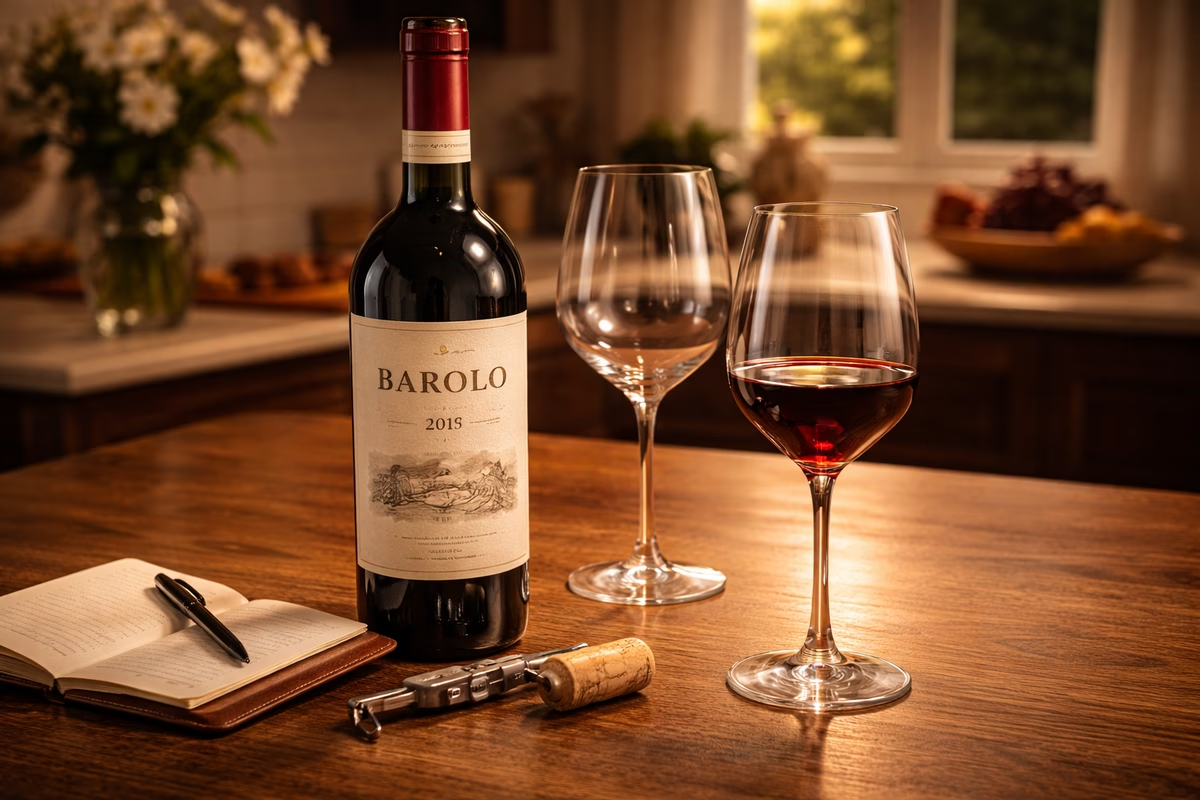
Some wines improve with time. A young Barolo that’s tight and tannic today will become perfumed and silky in ten years. A well-made Riesling will develop honey and petrol notes over a decade. Aging is the only way to experience these transformations—you can’t buy them off the shelf.
If aging interests you, you need proper storage (consistent temperature, humidity, darkness) and patience. The reward is tasting something that doesn’t exist anywhere else: wine that time has shaped specifically for you.
3. Exploration
A collection lets you compare vintages, track how a wine evolves, taste regions and producers over years. It’s a library of flavor experiences, and the act of curating it teaches you more about wine than any book.
Building the foundation: the 12-bottle start
If you’re starting from zero, aim for a core of 12 bottles that cover the major bases. Think of these as your “house wines”—bottles that handle everyday situations without requiring a special occasion.
The framework
| Category | Bottles | Purpose |
|---|---|---|
| Everyday red | 3 | Dinner, casual drinking |
| Everyday white | 3 | Weeknight meals, warm weather |
| Sparkling | 2 | Celebrations, aperitif, versatile food wine |
| Age-worthy red | 2 | Lay down for 3–10 years |
| Special occasion | 1 | The bottle you open when it matters |
| Wildcard | 1 | Something unfamiliar—a new region, grape, or style |
This isn’t a recipe. It’s a starting shape. Adjust the ratios to your own drinking habits. If you drink mostly white, shift the balance. If you never drink sparkling, replace those slots.
Choosing the everyday bottles
Your everyday wines should be:
- Reliably enjoyable. You’ll drink these without ceremony, so they need to be bottles you reach for happily, not bottles that require food pairing research.
- Food-friendly. Higher acidity, moderate body, balanced tannins (for reds). These qualities make wine flexible at the table.
- Affordable enough to drink freely. If a bottle costs so much that you hesitate to open it on a Wednesday, it’s not an everyday wine.
Good everyday categories: Côtes du Rhône, Chianti Classico, Portuguese reds, Spanish Garnacha (reds); Muscadet, Grüner Veltliner, Vermentino, dry Riesling (whites).
Choosing the age-worthy bottles
Not all wine benefits from aging. Most wine is made to drink within a few years. The bottles worth cellaring share specific characteristics:
- High acidity (acid acts as a preservative)
- Firm tannins (tannins soften over time, adding complexity)
- Concentrated fruit (fruit fades with age; if it’s thin now, it’ll be hollow later)
- Good structure (balance between acidity, tannin, fruit, and alcohol)
Classic age-worthy wines: Bordeaux (red), Barolo, Barbaresco, Brunello di Montalcino, Northern Rhône Syrah, vintage Champagne, German Riesling (Spätlese/Auslese), Vintage Port.
You don’t need to buy the most expensive version. Entry-level wines from these regions often age well and cost $20–$40.
Storage: the non-negotiable
Wine is fragile. Heat, light, vibration, and temperature swings all damage it. A $50 bottle stored badly is worth less than a $10 bottle stored well.
The rules
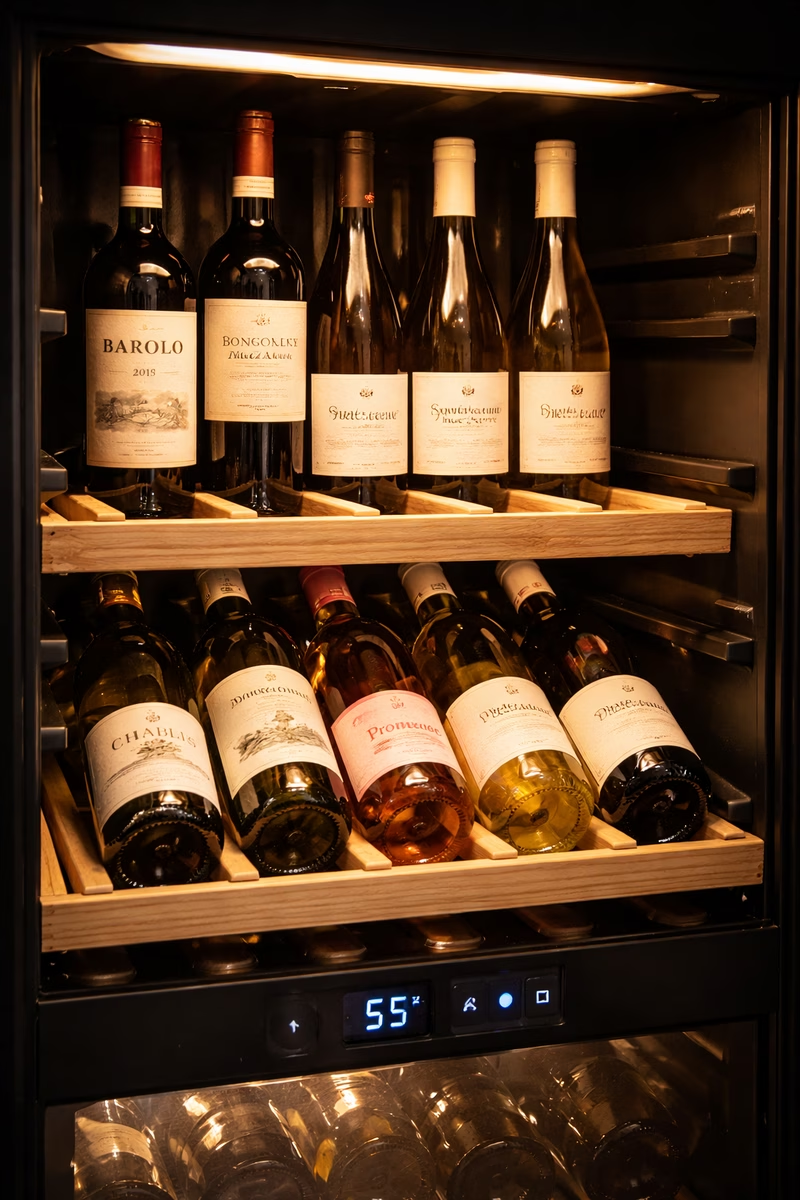
- Temperature: 55°F (13°C) is ideal. The acceptable range is 45–65°F. Above 70°F, wine ages too quickly and develops cooked, flat flavors. Below 40°F, aging slows to a crawl.
- Consistency: More important than the exact temperature. A steady 60°F is better than swinging between 50°F and 70°F. Temperature fluctuations cause the cork to expand and contract, letting air in.
- Humidity: 60–70% is ideal. Too dry and corks shrink; too humid and labels mold. This matters mainly for long-term storage (years).
- Darkness: UV light degrades wine. Store bottles away from direct sunlight and fluorescent lighting.
- Orientation: Bottles with corks should lie on their sides to keep the cork moist. Screw-cap bottles can stand upright.
Storage options by budget
Free: a cool closet. An interior closet away from the kitchen (kitchens are too warm) can work for short-term storage of bottles you’ll drink within a year. Not ideal, but better than the kitchen counter.
$200–$500: a wine fridge. A small thermoelectric or compressor wine fridge holds 20–50 bottles at a consistent temperature. This is the best investment for most beginning collectors. It solves the temperature and humidity problems in one appliance.
$500–$2,000: a larger cabinet. Dual-zone models let you store reds and whites at different temperatures. Holds 50–150 bottles.
$2,000+: a dedicated cellar. For serious collectors who plan to age wine for decades. This is unnecessary for most people.
Tracking what you have
Once you have more than a dozen bottles, you’ll forget what’s in there. This is universal. Everyone thinks they’ll remember, and nobody does.
Simple tracking
A spreadsheet or note with five columns:
- Wine name (producer, wine name, vintage)
- Date purchased
- Price paid
- Drink window (when to open it)
- Notes (one line: why you bought it, who recommended it)
Apps
Several wine apps let you scan labels, log bottles, and track your inventory. CellarTracker is the most established. Vivino is the most popular for casual users. Both work. The best system is whichever one you’ll actually use.
The “drink by” discipline
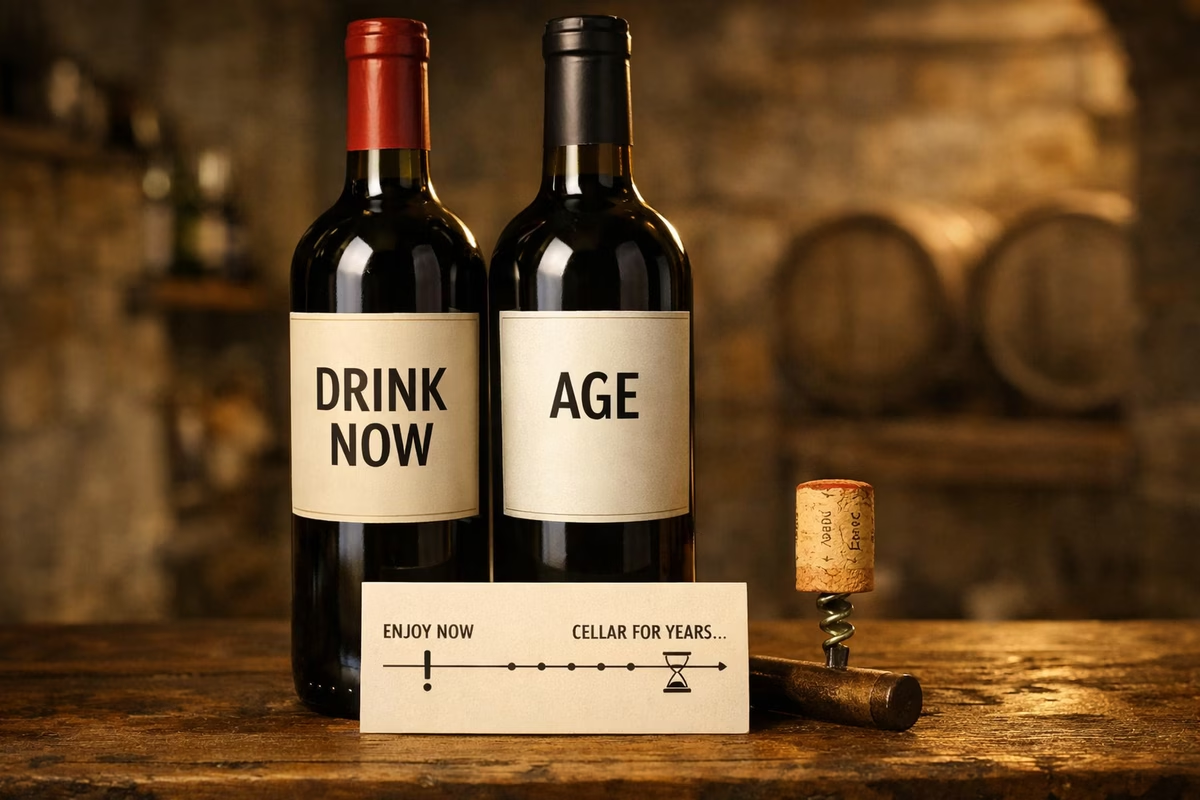
For every bottle you add, decide when you plan to drink it. Not a precise date—a window. “Within 6 months,” “2027–2030,” “special occasion in the next year.”
This prevents the most common collecting mistake: hoarding bottles past their peak because you were waiting for the “right moment.” The right moment is any moment you’d enjoy the wine. Open it.
Growing the collection: what to add next
Once your foundation is solid, growth should follow your curiosity, not a checklist.
Verticals
Buy the same wine from three consecutive vintages (e.g., 2019, 2020, 2021). Tasting them side by side over time teaches you more about vintage variation than any review can describe.
Horizontals
Buy different wines from the same region and vintage. Three different Barolos from 2019, for example. This teaches you about producer style—what’s consistent across a region versus what’s individual.
The “one for now, one for later” rule
When you find a wine you love, buy two bottles if you can. Drink one soon. Hold one for a year or more and taste the difference. This simple habit builds your understanding of how wine changes over time.
Buying in quantity
When you find something exceptional at a good price, buying a case (or half case) makes sense. You’ll drink some, age some, and share some. Case discounts (usually 10–15% off) help the economics.
Common mistakes
Collecting what you “should” instead of what you enjoy. If you don’t like Bordeaux, don’t buy Bordeaux because it’s prestigious. Your collection should make you happy, not impressed.
Storing wine in the kitchen. Kitchens are the warmest, most light-exposed rooms in the house. Wine belongs somewhere cool, dark, and stable.
Never opening anything. A bottle you never drink gives you nothing. The point of collecting is drinking—on your timeline, at your pace, but eventually.
Buying beyond your storage capacity. If you have a 24-bottle wine fridge, own 24 bottles. Overflow wine stored in bad conditions degrades regardless of what you paid for it.
Forgetting to drink the everyday wines. If your collection is entirely “save for later” bottles, you have a museum, not a collection. Keep the everyday slots stocked and rotating.
The long view
A wine collection is a living thing. Bottles come in, bottles go out. Your taste changes. A region you loved five years ago becomes less interesting; a style you ignored becomes fascinating.
The best collectors treat their collection as a conversation with their own evolving palate—not as a trophy case, not as an investment vehicle, but as a curated library of flavors they want to experience, share, and remember.
Start with twelve bottles. Store them properly. Drink them with attention. Replace them with something slightly more interesting. Repeat for as long as it brings you pleasure.
Next steps
- Read Wine Storage Guide for detailed storage conditions and equipment
- See Aging vs. Drinking Now for deciding which bottles to cellar and which to enjoy immediately
- Explore World Wine Regions Guide for finding new regions to explore
- Try How to Buy Wine for shopping strategies that feed your collection
- Read Your First Really Good Bottle for the experience that starts most collections