The way wine is sealed and packaged shapes more than the opening ritual. A cork, screwcap, synthetic closure, can, or box affects oxygen exposure, convenience, aging expectations, fault risk, storage habits, and the mood of the bottle. It does not decide quality by itself. Excellent wine can come under screwcap, and ordinary wine can come under natural cork. The closure is a tool, not a status symbol.
Still, the tool matters. Wine changes with oxygen, and every package manages oxygen differently. Some formats are built for gradual evolution. Some are built for freshness and reliability. Some are built for portability and short-term drinking. Understanding those differences makes buying easier and keeps you from judging a wine by habit instead of purpose. How to Buy Wine Without Guessing starts with the job a bottle needs to do. Packaging is part of that job.
Natural cork is traditional because it works, not because it is perfect
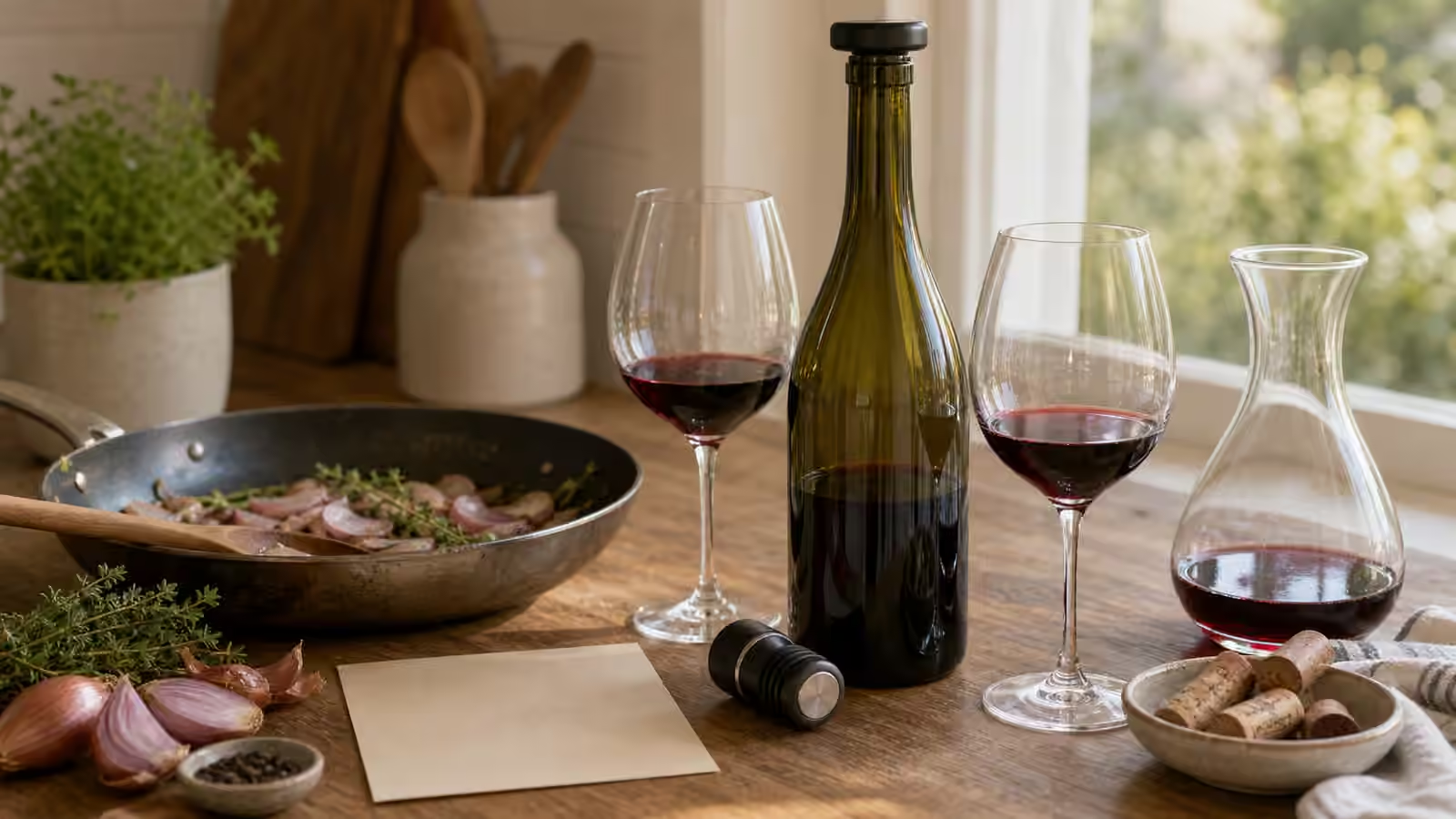
Natural cork has been associated with wine for centuries because it compresses, seals, and allows a tiny exchange of oxygen when it behaves well. For wines meant to age, that slow and limited oxygen transmission can be part of the bottle’s development. It is also familiar, tactile, and ceremonial. Pulling a cork can feel like opening a small piece of time.
The romance should not hide the weakness. Natural cork varies. Some corks seal more tightly than others. Some allow too much oxygen. Some dry out if stored poorly. Some break. Most famously, cork can be associated with cork taint, often linked to TCA, which can make a wine smell musty, muted, or like damp cardboard. When Wine Smells Off explains how to distinguish that from ordinary earthiness or unfamiliar style.
This does not mean cork is bad. It means cork is a natural material with variation. Many producers use high-quality corks and careful screening because they value how cork performs for wines that may spend years in bottle. For age-worthy reds, classic whites, traditional sparkling wines, and bottles where ceremony matters, cork remains a sensible and often beautiful closure. It simply should not be treated as proof that the wine inside is better.
Screwcaps are about consistency and freshness
Screwcaps carry old prejudices in some markets because many drinkers first met them on cheap bottles. That association is outdated. A screwcap can be a precise, high-quality closure, and many serious producers use it because it reduces cork-taint risk and gives predictable sealing. It is especially useful for wines meant to taste fresh, aromatic, and clean.
The common fear is that screwcap wine cannot age. The better answer is more specific. Some screwcap wines can age, depending on the wine, the liner, the producer’s choices, and the intended style. Aging under screwcap may look different from aging under cork because oxygen transmission can be lower and more consistent. For most everyday drinkers, the practical advantage is simple: the wine opens easily, reseals easily, and is less likely to be spoiled by cork taint.
Screwcaps are excellent for crisp whites, aromatic whites, roses, many lighter reds, and wines meant for early enjoyment. They also remove tool anxiety. No corkscrew, no broken cork, no crumbled pieces floating in the glass. If you are choosing a bottle for a picnic, a weeknight dinner, or a situation where freshness matters more than ceremony, screwcap is often a benefit. The important question is whether the producer chose the closure to fit the wine.
Synthetic corks and glass stoppers solve some problems and create others
Synthetic corks were designed to avoid cork taint and provide a familiar pull-cork experience. They vary widely in quality. Some seal well for wines meant to be consumed young. Others can be hard to extract or hard to push back into the bottle. Historically, some allowed more oxygen than ideal for longer storage, though materials have improved. As with most closures, the intended drinking window matters. A synthetic cork on a fresh, inexpensive wine is not alarming. On a bottle you plan to age for many years, it raises more questions.
Glass stoppers are less common but elegant. They can provide a clean seal, avoid cork taint, and feel premium without using a traditional cork. They are often seen on aromatic whites or wines where freshness and presentation both matter. Their limitation is partly practical: they require compatible bottles and caps, and they are not as widely used. If you encounter one, treat it as a producer choice rather than a novelty.
These closures are reminders that wine packaging is full of compromises. One closure may be more consistent. Another may support a familiar ritual. Another may fit a short drinking window. Another may suit shipping or sustainability goals. None of those priorities automatically outranks the others.
Boxed wine is a freshness format, not just a bargain format
Boxed wine has suffered from reputation more than logic. The usual bag-in-box format keeps wine inside a collapsible bladder so less air enters as wine is poured. That can help the wine stay fresh longer after opening than a standard bottle left half full. For households that drink a glass at a time, cook with wine, or want a casual table wine available without opening a new bottle, the format makes practical sense.
The limitation is aging. Boxed wine is generally meant for near-term drinking, not cellaring. The package protects opened wine well, but it is not designed for long bottle development. Store it cool, keep it out of heat and light, and treat it as a fresh product. Wine Storage and Serving matters here because poor storage can damage any format, including one built for convenience.
Quality depends on the producer and the wine, not the box alone. Some boxed wines are simple and forgettable. Some are honest, fresh, and well-suited to everyday meals. The right expectation helps. You are usually not buying a ceremonial bottle or a cellar candidate. You are buying a practical format for steady drinking. If the wine is sound, balanced, and useful at the table, the box has done its job.
Cans are for immediacy and portion control
Canned wine is even more direct: it is usually made for early drinking, convenience, and small servings. The can protects from light, chills quickly, travels easily where glass may be awkward, and gives a fixed portion. That can be useful for picnics, outdoor meals, cooking, or moments when opening a full bottle makes no sense.
The format has tradeoffs. Cans do not offer the same ritual as bottles, and the serving size can encourage drinking straight from the can, which hides aroma. If you care about the wine, pour it into a glass. Aroma is a large part of taste, and Wine Aromas and Tasting Notes becomes impossible if the package blocks your nose. Cans also work best for styles that do not need bottle age or delicate oxygen development.
As with boxed wine, quality varies. A fresh sparkling rose, crisp white, spritzy red, or simple chilled red can make sense in a can. A structured, age-worthy, complex wine usually belongs elsewhere. Packaging should match ambition.
Closure affects storage, but does not cancel the basics
Different closures change details, but the basic storage rules remain steady. Avoid heat, strong light, repeated temperature swings, and long exposure to poor conditions. Cork-finished bottles are commonly stored on their side for longer storage so the cork stays in contact with wine, though humidity and seal quality also matter. Screwcaps and cans do not need side storage. Boxed wine should be kept cool and used within the producer’s suggested window after opening.
Open-bottle behavior also changes by format. A cork or screwcap bottle begins taking in more oxygen once opened, so leftovers need recapping and refrigeration if you want to slow decline. A box limits air exposure as it pours, so it can remain useful longer after opening. A can is usually best finished the day it is opened. Fortified wines, sparkling wines, and high-tannin reds all have their own patterns, but the principle is the same: oxygen changes wine after opening.
Serving context matters too. A screwcap bottle can still deserve a proper glass. A cork-finished bottle can still be ordinary. A can can be poured with care. A box can sit beside good food without apology. Ritual is pleasant, but the wine’s condition in the glass is the test.
Choose the package by purpose
If you are buying a bottle to age, natural cork or another closure designed by the producer for aging may make sense, but the wine’s structure matters more than the cork. Aging Wine vs Drinking Now is the better guide to whether patience is worthwhile. If you are buying aromatic whites, roses, or everyday reds for near-term drinking, screwcap can be a strength. If you want one glass at a time over several weeks, boxed wine may be the practical choice. If you need portability and a small serving, cans can be useful.
Do not let closure prejudice narrow your drinking. The old hierarchy that cork means serious and screwcap means cheap was never reliable enough to deserve your loyalty. Better questions lead to better bottles. Is this wine meant to be fresh or aged? Will I open it tonight or hold it? Do I need convenience, ceremony, or preservation after opening? Does the format protect the style the producer is trying to make?
Wine packaging is easy to overlook because the glass gets all the attention. But the closure is part of the wine’s path from cellar to table. It controls how the wine waits, how it opens, how it survives after opening, and how you feel about serving it. Treat it as practical information, not a class marker, and the shelf becomes easier to read.