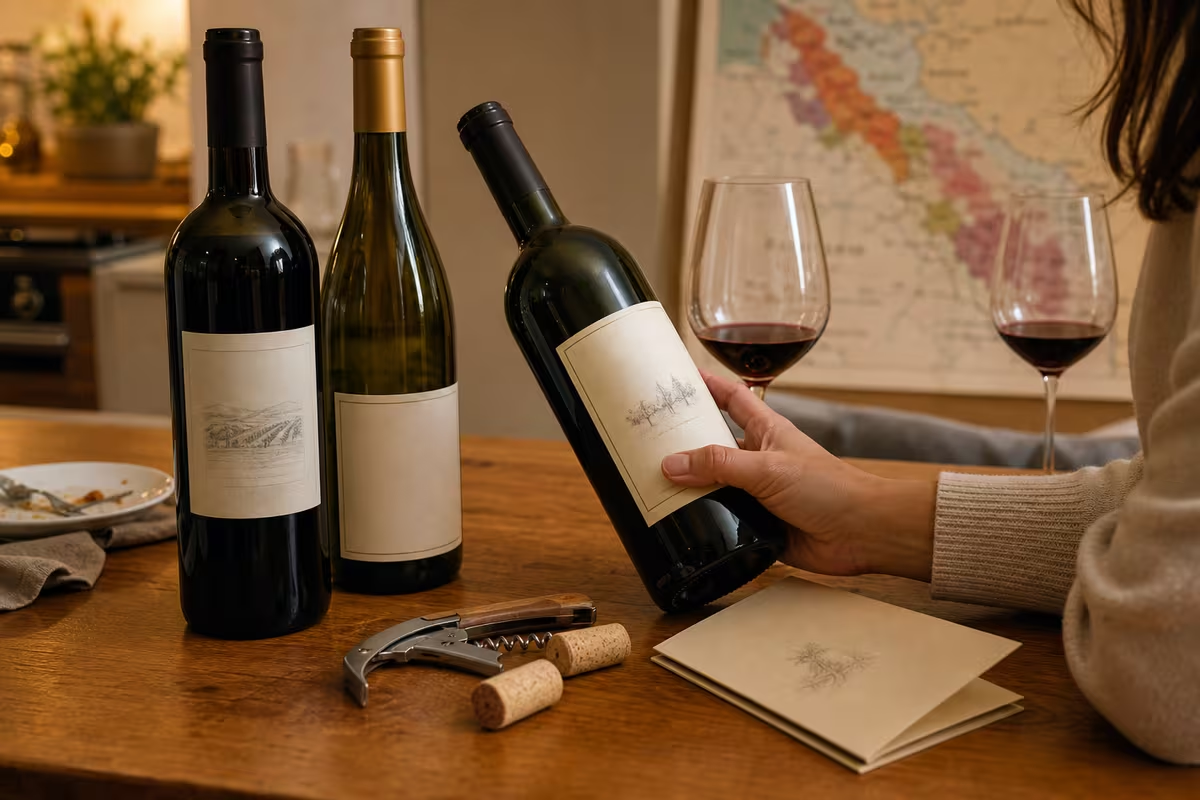
Single-grape wine is easy to talk about. Cabernet Sauvignon, Pinot Noir, Chardonnay, Sauvignon Blanc, Riesling: the name on the label gives you a handle before the bottle is even open. Blends ask for a different kind of attention. They may hide the grapes behind a place name, list several varieties in small print, or say only red blend with enough confidence that the label seems to assume you will trust it. That can make blends feel vague, but the idea behind them is one of the oldest and most practical ideas in wine.
A blend is not automatically a cheaper compromise or a way to disguise weak grapes. Sometimes it is exactly that, because every category has dull examples. At its best, blending is composition. One grape brings structure, another adds perfume, a third fills the middle of the palate, and a small addition may change color, acidity, texture, or finish in a way that makes the whole wine feel more complete. If Wine Structure: Acidity, Tannin, Body, Sweetness, Alcohol, and Finish teaches you to notice the shape of a wine, blends teach you how that shape can be assembled.
Blending is a vineyard habit as much as a cellar habit
Modern drinkers often imagine blending as something that happens only in a winery, with finished wines lined up in glasses and a winemaker adjusting proportions until the final version clicks. That does happen, and it can be meticulous work. But blending also begins in vineyards. Older vineyards in many regions were planted as field blends, with several varieties growing together in the same place and sometimes harvested at the same time. The blend was not a marketing story. It was a farming strategy.
Different grapes ripen at different speeds, handle weather differently, and supply different pieces of structure. A vineyard with more than one variety can spread risk. If one grape struggles in a cool year, another may still ripen well enough to bring body or aroma. If a hot year pushes sugar and alcohol higher, a grape that keeps acidity can help preserve freshness. In places where families made wine for local tables rather than export shelves, that kind of practical resilience mattered.
The cellar version of blending is more deliberate but follows the same logic. A winemaker may ferment varieties separately, taste each lot, and decide what belongs in the final wine. Another may co-ferment grapes together so their characters knit during fermentation rather than being joined afterward. Neither method is inherently superior. The point is balance. The finished wine should not taste like a committee meeting. It should feel like one voice with several registers.
Grapes have jobs inside a blend
It helps to think of each grape as contributing a tendency rather than a fixed flavor. Cabernet Sauvignon often brings tannin, dark fruit, and a firm frame. Merlot often brings flesh, plum-like softness, and approachability. Cabernet Franc can add lift, herbal detail, and red-fruited aromatics. Petit Verdot, when used in small amounts, can deepen color and add grip. Those are not rigid laws, but they explain why Bordeaux-style blends have survived for centuries. The varieties solve problems together that they do not always solve alone.
The same is true in the southern Rhone and in many places inspired by it. Grenache can bring generous red fruit, warmth, and roundness. Syrah can add color, savory depth, pepper, and structure. Mourvedre often contributes darker fruit, earth, tannin, and a more brooding finish. A wine built mostly from Grenache may feel open and sunlit. A little more Syrah can make it darker and firmer. More Mourvedre can make it slower, more savory, and better suited to time or richer food. The blend changes the wine’s posture.
White blends work by the same principle, though people talk about them less dramatically. Sauvignon Blanc can bring cut and aroma, while Semillon can add waxy texture, breadth, and age-worthy depth. Marsanne and Roussanne can make whites that feel broad, herbal, floral, and savory. Traditional-method sparkling wines often use Chardonnay for brightness, Pinot Noir for structure, and Pinot Meunier for fruit and early charm. Those roles shift with region, ripeness, and producer style, but the underlying idea remains: a blend can make a wine longer, steadier, and more complete than any single component would be on its own.
Place names often hide blends in plain sight
Many famous wine names are blend names, even when they do not look that way. Bordeaux red usually means a family of grapes built around Cabernet Sauvignon, Merlot, Cabernet Franc, and their companions. Chateauneuf-du-Pape, Cotes du Rhone, Rioja, Champagne, Port, Sherry, and many Tuscan reds all involve blending traditions of one kind or another. Some are blends of grapes. Some are blends across vineyards, barrels, harvest dates, or years. In sparkling wine and fortified wine, blending can be central to the house style, not a side detail.
This is why Reading Wine Labels Without Panic matters. A label that does not name a grape may still be giving you a strong clue if it names a region. The place may carry the grape information indirectly. A bottle labeled Chateauneuf-du-Pape does not need to shout Grenache, Syrah, and Mourvedre for the regional tradition to be present. A non-vintage Champagne label may not list the grapes on the front, yet the style is deeply shaped by how Chardonnay, Pinot Noir, and Pinot Meunier are handled and blended.
New World labels often take a different approach. They may name the leading grape, list the blend percentages on the back, or use a broader phrase such as red wine, red blend, white blend, meritage, GSM, or proprietary blend. The exact labeling rules vary by country and region, so it is better to treat the front label as a clue rather than a full technical disclosure. If the back label gives percentages, read them for shape. If it does not, use region, alcohol, producer, and any shop note to build a reasonable expectation.
Single-varietal is not the purity standard
There is a quiet bias in some wine conversations that single-varietal wines are more transparent and therefore more serious. Sometimes a single grape is exactly the point. Pinot Noir from Burgundy, Nebbiolo from Barolo, Riesling from the Mosel, and Chardonnay from Chablis can show place with extraordinary clarity. But that does not make blending a lesser art. A great blend can also show place, because place is not only one grape. It is climate, soil, farming, harvest decisions, cellar tradition, and the local idea of balance.
The better question is whether the wine has coherence. Does the tannin fit the fruit? Does the acidity keep the wine moving? Does oak support rather than smother? Does the finish feel connected to the first sip? A single-varietal wine can be clumsy if it is overripe, over-oaked, or thin. A blend can be graceful if its parts are chosen with restraint. Quality lives in proportion.
This matters when buying because blends are often good dinner wines. They are designed to cover more than one structural need. A Cabernet-heavy wine might bring the frame for grilled meat, while Merlot can keep the texture from becoming severe. A Grenache-based blend can bring warmth and fruit without the hard edges of a more tannic red. A Sauvignon-Semillon blend can offer the brightness needed for seafood or goat cheese while still having enough texture for roast chicken or richer sauces. When How to Buy Wine Without Guessing suggests shopping by job and structure, blends often sit in the useful middle lanes.
Blending can adjust for vintage, but it cannot erase character
Wine is agricultural, so each year gives a producer different raw material. A cooler year may bring more acidity and less ripeness. A warmer year may bring more body, softer acidity, and higher alcohol. Rain near harvest can dilute some lots. Drought can concentrate others. Blending lets a producer respond. A little more of a firmer grape can tighten a soft year. A little more of a rounder grape can make a stern year more generous. Reserve wines from previous years can help non-vintage sparkling wines keep a consistent house style.
That flexibility is useful, but it is not magic. Blending cannot turn weak material into profound wine by arithmetic. It cannot create freshness if every component is tired, or elegance if every lot is heavy. The best blending respects the character of the year and the place rather than sanding everything into sameness. A thoughtful blend still has identity. It simply arrives by relationship rather than solitude.
This is one reason producer matters so much. Two wineries can work with similar grapes in the same region and make very different choices. One may prefer polish, ripeness, and soft tannin. Another may favor freshness, savory detail, and a more angular shape. Over time, remembering producer names will teach you more than memorizing that a blend contains a certain grape. The recipe matters, but the cook matters too.
How to taste a blend with purpose
When you pour a blend, resist the urge to identify every grape immediately. That is a useful exercise for advanced blind tasting, but it is not the most helpful first move at the table. Start with structure. Is the wine bright or soft? Light or full? Gentle or grippy? Does it feel driven by red fruit, dark fruit, herbs, oak spice, earth, flowers, or savory notes? Is one feature dominating, or does the wine move as a whole?
After that, think about what each possible component might be doing. In a Bordeaux-style red, firm tannin and blackcurrant may point toward Cabernet Sauvignon, while plush plum and a round middle may suggest Merlot. Herbal lift could come from Cabernet Franc. In a GSM-style wine, ripe strawberry or raspberry warmth may suggest Grenache, while pepper, smoke, and darker color may suggest Syrah. These are clues, not verdicts. The goal is to connect sensation to structure, not to win a guessing contest.
Serving temperature can make blends easier to read. A red blend served too warm may seem alcoholic and broad, hiding the difference between fruit, oak, and tannin. A short chill can restore edges. A young structured blend may need air to loosen, while a softer fruit-driven blend may lose charm if it sits open too long. The practical advice in Serving Temperature and Decanting applies especially well to blends because you are often trying to let several components speak clearly at once.
Use blends as bridges at the table
Food is where blends make immediate sense. A meal rarely has one flavor. There may be browned meat, herbs, acid, fat, sweetness from roasted vegetables, smoke from a grill, and salt from cheese or olives. A wine made from more than one grape can meet that complexity with more than one structural tool. It might bring enough acid for the sauce, enough fruit for spice, enough body for protein, and enough tannin to refresh the palate after fat.
That does not mean blends pair with everything. A massive, oaky red blend can flatten delicate fish. A soft, high-alcohol blend can feel clumsy with chili heat. A textured white blend can be beautiful with roast chicken and awkward with a sharp vinaigrette if it lacks sufficient acidity. Pairing still depends on balance. The useful habit from Pairing with Modern Foods is to match weight, manage heat, and use acidity as a refresh button.
Blends are also helpful when a table is mixed. If one person likes Cabernet but another finds it too firm, a Merlot-supported Bordeaux-style blend may give both people part of what they want. If one person wants a rich white and another wants freshness, a Sauvignon-Semillon or a textured Rhone-style white may bridge the gap. This is not compromise in the dull sense. It is hospitality through proportion.
The next time a label says blend, treat it as an invitation to ask better questions. What is the leading grape or region? What structural problem might the blend be solving? Does the wine feel assembled with care, or merely softened into anonymity? Once you start tasting for those answers, blends stop being vague. They become one of wine’s clearest reminders that balance is rarely a single ingredient. It is the relationship between parts, held together long enough to make the next sip feel inevitable.