I used to skip the rosé section entirely.
Not out of snobbery—or at least, not the kind I was aware of. It was more like a reflex. My wine education, such as it was, had organized itself into two lanes: reds for serious occasions, whites for lighter ones. Rosé occupied a vague middle ground that I associated with picnic blankets and bachelorette parties. It was the wine you bought when you didn’t care what you were drinking.
Then I went to Provence.
The first glass
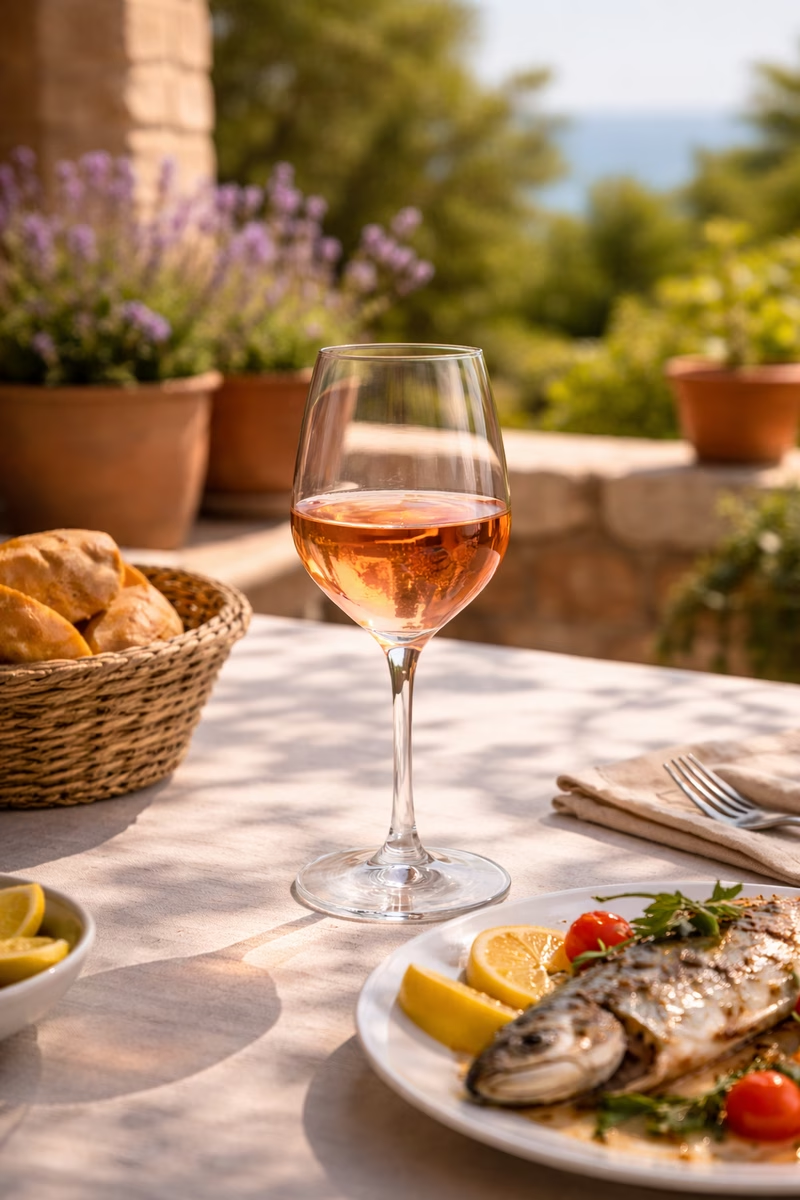
It was July, and the restaurant was outdoors—one of those places where the terrace is the restaurant and the building behind it is almost an afterthought. The tables were stone. The chairs were iron. The Mediterranean was visible as a strip of blue between the rooftops, and the air smelled like rosemary and warm bread.
I ordered the house rosé because the waiter recommended it and because it was 38°C and the idea of a tannic red made my throat close. He brought a bottle in an ice bucket—pale, almost translucent, the color of a barely-ripe peach. He poured it without ceremony.
The first sip was a revelation I wasn’t prepared for.
It wasn’t sweet. That was the first surprise. Every rosé I’d had in the States had been a little sweet, a little flabby, a little… nothing. This was bone-dry. Crisp as a Granny Smith apple but with a texture that had weight—not the heft of a red, but a mineral presence, like biting into a cold nectarine and feeling the stone fruit give way to something flinty underneath.
There were flavors I’d never associated with rosé: dried herbs (was that thyme?), white pepper, a whisper of sea salt. And a finish that went on and on—not big and dramatic like a Cabernet, but persistent and precise, like a note held on a flute.
I ordered a second glass before the food arrived.
Why rosé is misunderstood
Rosé has an image problem, and it’s not entirely undeserved. For decades, the American market was dominated by sweet, mass-produced pink wines—White Zinfandel chief among them—that trained consumers to think of pink wine as simple, sugary, and unserious. If your first rosé was a syrupy blush from a box, you can be forgiven for not coming back.
But serious rosé—the kind made in Provence, Tavel, Bandol, and increasingly in Spain, Italy, and progressive American wineries—is a different animal entirely. It’s dry, complex, food-friendly, and made with the same care and intention as any good red or white.
The key difference is how it’s made.
Rosé is made from red-skinned grapes, but with only brief skin contact—typically 2 to 20 hours, compared to days or weeks for red wine.
Direct press (Provence method): Red grapes are gently pressed immediately after harvest. The juice picks up just a whisper of color from the skins before fermentation. This produces the palest, most delicate rosés.
Saignée (“bleeding”): Red wine fermentation begins normally, but a portion of juice is “bled off” early and fermented separately as rosé. This produces deeper-colored, more structured rosés.
Short maceration: Grapes soak with their skins for a few hours before pressing. The winemaker controls color and flavor by deciding when to press.
The method matters because skin contact determines not just color but tannin, body, and flavor intensity. A direct-press Provence rosé is pale and ethereal. A saignée rosé from Tavel is deeper, richer, almost red-wine-adjacent. Both are rosé. Neither is a compromise.
The Provence standard
Provence is to rosé what Burgundy is to Pinot Noir: the place that defines the style and sets the standard everyone else measures against.
The region produces more rosé than red and white combined—about 88% of its total output. This isn’t a side project. Rosé is Provence wine. The best producers (Domaines Ott, Château d’Esclans, Domaine Tempier, Château Simone) make rosé with the same precision and ambition that Bordeaux applies to Cabernet.
The Provence style is distinctive: pale pink to salmon, bone-dry, moderate alcohol (12-13%), with a flavor profile built around citrus, stone fruit, dried herbs, and minerality. The wines are meant to be drunk young—within a year or two of vintage—and served well-chilled (45-55°F).
This is important: rosé is not wine that’s waiting to become something else. It’s finished. It’s complete. A great Provence rosé at the right temperature, with the right food, in the right light, is one of the most perfect combinations in the wine world.
Beyond Provence: rosé around the world
Once you understand what rosé can be, you start finding excellent versions everywhere.
Tavel (Southern Rhône, France): The only French appellation that makes exclusively rosé. Deeper-colored and fuller-bodied than Provence, made primarily from Grenache and Cinsault. These rosés can actually age 2-3 years and pair with heartier foods.
Bandol (Provence, France): Made from Mourvèdre, these are the most structured and complex Provençal rosés—more body, more tannin grip, and a savory quality that sets them apart.
Rioja (Spain): Spanish rosado from Garnacha (Grenache) tends to be deeper in color and fruitier than French styles. Strawberry, watermelon, and a hint of spice. Excellent value.
Puglia and Abruzzo (Italy): Italian rosato—especially Cerasuolo d’Abruzzo from Montepulciano grapes—offers a cherry-colored, medium-bodied style that bridges the gap between rosé and light red.
Pinot Noir rosé (Oregon, New Zealand): Increasingly popular, these rosés bring Pinot’s elegance to the pink category—delicate, floral, with red fruit and earthy undertones.
Dry rosé from Long Island and the Finger Lakes (New York): America’s own Provence, increasingly producing pale, mineral-driven rosés from Cabernet Franc and Merlot.
- Look for pale color. The palest rosés are usually the driest and most elegant. Deep pink often (but not always) signals more sweetness or extraction.
- Check the region. Provence, Tavel, Bandol, and Rioja are reliable origins. “Rosé” from an unknown source may be dumping ground wine.
- Drink the current vintage. Rosé is meant to be young. If you see a rosé that’s more than two years old, it’s past its prime (with rare exceptions like Tavel).
- Chill it properly. Rosé should be served at 45-55°F—colder than most whites, but not ice-cold. Over-chilling kills the aromatics.
- Spend $12-$25. The sweet spot. Below $10, quality drops. Above $30, you’re often paying for the bottle shape.
The food pairing secret
Here’s the thing nobody told me about rosé until that night in Provence: it’s the most food-flexible wine style that exists.
Red wine needs food that can match its tannins and weight. White wine needs food that doesn’t overwhelm its delicacy. Rosé occupies a Goldilocks zone—enough body to stand up to grilled meats, enough acidity to cut through cheese, enough freshness to complement salads and seafood.
What rosé pairs with beautifully:
- Grilled fish and shellfish. This is rosé’s home turf. Grilled shrimp, seared tuna, whole branzino—the wine’s acidity and mineral quality mirror the ocean.
- Mediterranean cuisine. Anything with olive oil, tomatoes, herbs, and garlic. Ratatouille, tapenade, grilled vegetables, pizza.
- Charcuterie and cheese. Rosé bridges the gap between the fattiness of cured meats and the tang of aged cheese. A rosé-and-charcuterie board is a perfect aperitif.
- Spicy food. Rosé’s acidity and low tannin make it a better partner for Thai, Indian, and Mexican food than most reds. The chill and the crispness cool the heat without competing.
- Salads with protein. Grilled chicken Caesar, Niçoise salad, grain bowls with feta. Rosé is the wine that makes lunch feel like a celebration.
The waiter in Provence paired our rosé with bouillabaisse—a rich, saffron-scented fish stew. It was one of the three best food-and-wine combinations I’ve ever experienced. The wine didn’t compete with the stew’s complexity. It lifted it. Every sip cleaned the palate, brightened the broth’s flavors, and made me want another bite.
The golden hour wine
There’s a reason rosé sales peak in summer, and it’s not just marketing. Rosé is an environmental wine—its pleasure is inseparable from context. A glass of rosé on a January Tuesday under fluorescent lights is fine. A glass of rosé on a July evening on a warm terrace with friends and fading sunlight is transcendent.
Wine people sometimes call this “the rosé effect”—the way the wine amplifies the moment rather than demanding attention for itself. A great Cabernet says: pay attention to me. A great rosé says: pay attention to everything else, and I’ll make it better.
That’s not a lesser ambition. It might be a higher one.
The conversion
I came home from Provence and bought a case of rosé. Château d’Esclans Whispering Angel, because it’s good and available. A Domaine Tempier Bandol rosé, because it’s extraordinary. A $14 Spanish rosado from Navarra, because it proved the style doesn’t require a French passport.
I served the Navarra rosado at a dinner party. One friend—a committed red wine drinker—took a sip, looked at the glass, looked at me, and said: “What is this?”
“Rosé.”
“This is not what I thought rosé was.”
“I know,” I said. “That’s the whole point.”
Next steps
- Read Wine Tasting 101 for systematic tasting technique
- Explore Wine Regions for where the world’s best wines come from
- See Pairing with Modern Foods for creative food combinations
- Read Serving Temperature and Decanting for getting the most from every bottle
- Check How to Buy Wine for navigating wine shops with confidence