
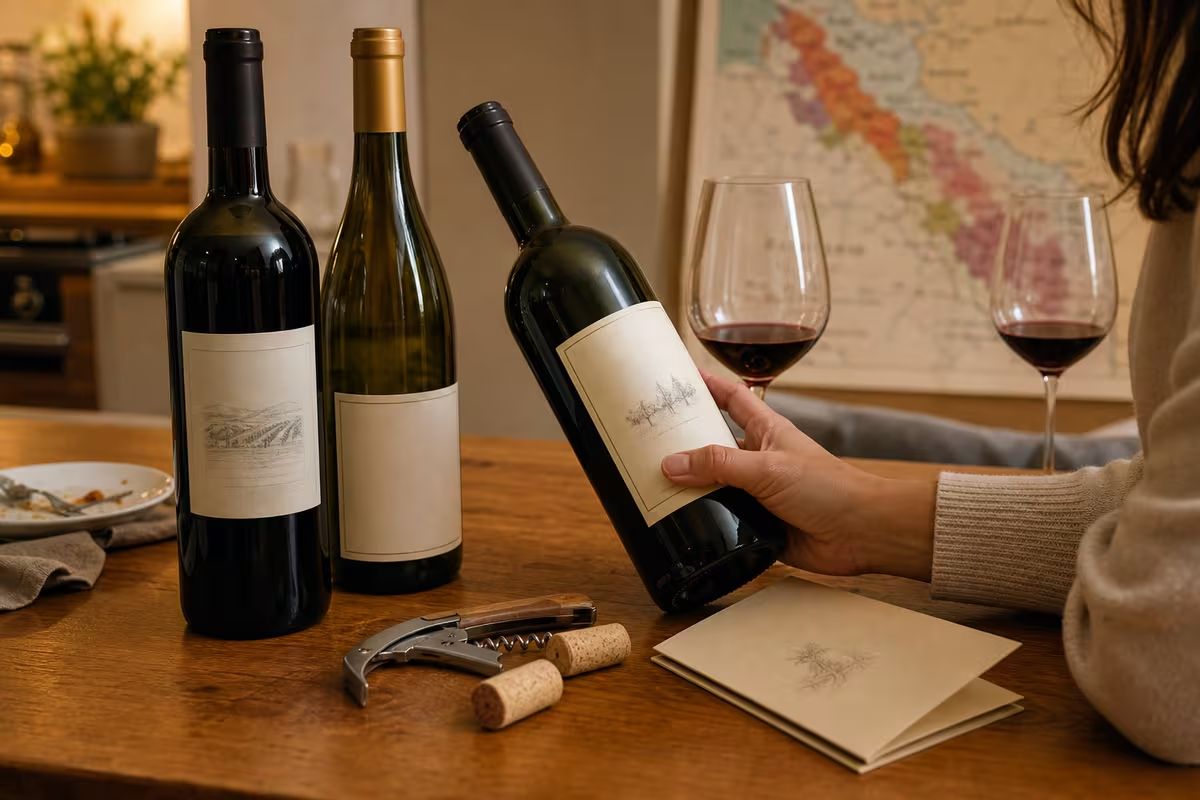
A wine label can feel like a little exam you did not agree to take. One bottle tells you the grape in large friendly letters. Another gives you a village, a producer name, a vintage, and a place you vaguely remember hearing about, but no obvious grape. A third looks modern and confident, yet tells you almost nothing beyond a brand, a region, and an alcohol percentage. The shelf is quiet, the dinner is tonight, and suddenly the label seems to be testing whether you belong.
The useful move is to stop reading labels as puzzles and start reading them as conversations. A label is trying to tell you where the wine comes from, who made or bottled it, what style clues matter, how ripe or strong it might feel, and sometimes what tradition it belongs to. It may speak plainly or indirectly. It may assume local knowledge. It may be helpful, evasive, beautiful, crowded, or almost blank. Your job is not to decode everything. Your job is to get enough signal to make a decent choice.
If How to Buy Wine gives you the shopping method, this guide gives you the label-reading habit that keeps the shelf from becoming a wall of names.
Start with the place
Place is often the strongest clue on a label. In many wine traditions, especially in Europe, place carries the style expectation. A bottle may say Burgundy, Chianti, Rioja, Sancerre, Barolo, Chablis, Champagne, Mosel, or Beaujolais more prominently than it says the grape. That is not meant to be cruel. It reflects a system where region and grape are historically tied together.
At first, you do not need to memorize every region. You only need to notice that place matters. A label that leads with a broad region usually gives a broader style promise. A label that names a village, vineyard, or smaller appellation is being more specific. Specificity can suggest identity, scarcity, and sometimes price, but it does not automatically mean you will like the wine more. A simple regional bottle from a good producer can be more satisfying at dinner than an expensive narrow-place bottle opened for the wrong reason.
New World labels from places such as California, Oregon, Washington, Australia, Chile, Argentina, South Africa, and New Zealand often lead with grape variety more clearly. Cabernet Sauvignon, Pinot Noir, Chardonnay, Sauvignon Blanc, Riesling, Syrah, Malbec, and Chenin Blanc may be right on the front. That can feel easier, but place still matters. A Pinot Noir from a cool coastal area will not behave exactly like one from a warmer inland site. A Chardonnay can be lean, rich, oaky, mineral, tropical, or restrained depending on where and how it was made.
Notice whether the grape is named
When the grape is named, you get an immediate handle. You can connect the bottle to what you already know from Wine Tasting 101 : acidity, tannin, body, aroma, sweetness, and alcohol. A labeled Sauvignon Blanc suggests a different dinner path than a labeled Syrah. A Riesling label asks you to consider sweetness and acidity. A Cabernet label asks whether you want tannin and structure.
When the grape is not named, the label may be leaning on regional knowledge. Chablis is Chardonnay. Red Burgundy is Pinot Noir. White Burgundy is Chardonnay. Sancerre is usually Sauvignon Blanc. Rioja reds are commonly built around Tempranillo. Chianti is based on Sangiovese. Barolo and Barbaresco are Nebbiolo. These facts accumulate slowly through drinking, not through one heroic study session.
There is no shame in looking up a region at the shop or asking someone working there. Wine culture becomes friendlier when you treat questions as normal. A good merchant would rather hear “I like bright reds but do not know this place” than watch you buy a bottle by label anxiety.
Producer is the handwriting
If place is the address, producer is the handwriting. Two wineries working in the same region and grape can make wines that feel very different. One may chase polish and oak. Another may keep the wine lean and savory. One may bottle young and fruit-forward. Another may make something more structured, earthy, or age-worthy. A familiar producer becomes a shortcut because it tells you something about taste, reliability, and point of view.
This is why it helps to remember names when you enjoy a bottle. Not every detail, just the producer. Take a photo, write a line, or keep the cork if that is your habit. Over time, you build a map that belongs to your palate. Regions are public knowledge. Producer trust becomes personal knowledge.
Importers can also be a quiet clue. On imported bottles, the back label often names who brought the wine into the country. Some importers have a recognizable point of view. If you repeatedly like bottles from the same importer, that name becomes a useful breadcrumb. It is not a guarantee, but it is a better clue than label art.
Vintage is weather, not just age
The vintage is the year the grapes were harvested. Beginners sometimes treat older as automatically better, but that is a trap. Many wines are made to taste fresh and lively when young. Some wines need time. Others can age but do not require it. Vintage matters because growing seasons differ and because age changes wine in the bottle.
A recent vintage on a fresh white, rose, light red, or casual dinner bottle is usually not a problem. It may be exactly what you want. A structured red from a serious region may need more context. Is it young and tight? Is it in a good drinking window? Has it been stored well? Aging Wine vs Drinking Now is helpful here because age is only valuable when the wine has the structure, balance, closure, and storage to make use of time.
Vintage can also explain why the same bottle tastes different from year to year. A warmer year may feel riper. A cooler year may feel brighter. Rain, heat, frost, drought, and harvest timing can all leave fingerprints. You do not need to become a weather historian. Just remember that wine is agricultural. The year is part of the story.
Alcohol tells on the wine
Alcohol percentage is one of the most useful small clues on a label. It will not tell you everything, and label tolerances mean it is not a laboratory-perfect number, but it gives a hint about body, ripeness, and warmth. A table wine at 11.5 percent often feels different from one at 14.8 percent. The lower-alcohol wine may be lighter, brighter, or sweeter depending on style. The higher-alcohol wine may be fuller, riper, and more warming.
This matters when pairing. A high-alcohol red can overwhelm delicate food and feel heavy on a warm night. A lower-alcohol white or sparkling wine can make a salty, spicy, or casual meal feel easier. Pairing with Modern Foods becomes simpler when you use alcohol as one of the structure clues rather than treating the label as decoration.
Alcohol also helps you notice your own preferences. If every red you find tiring sits above a certain range, that is useful information. If the whites you love cluster around a brisker profile, the label can guide you back there.
Back labels are useful, but not sacred
Back labels can be charming, practical, or nearly meaningless. Some tell you the vineyard, farming, fermentation, aging vessel, importer, sweetness level, or serving suggestions. Others give a romantic paragraph that could belong to almost any bottle. Read them, but do not surrender to them.
Look for concrete information. Terms such as estate grown, old vines, single vineyard, reserve, oak aged, unfiltered, traditional method, dry, off-dry, or late harvest may matter, but each one needs context. “Reserve” can be regulated in some places and marketing in others. “Old vines” can signal concentration, but it does not guarantee balance. “Natural” may tell you something about philosophy, yet the bottle still has to taste good to you. Natural Wine is useful because it treats style and expectation with more nuance than a sticker can.
The best back labels respect the drinker. They give enough information to orient you without pretending that adjectives are proof. If the back label says the wine is crisp, savory, lightly oaked, or built for grilled food, take that as a clue. Then let the glass confirm or correct it.
Label design is not flavor
Beautiful labels sell wine. Plain labels can hide excellent bottles. Loud labels can be delicious or cynical. Traditional labels can be profound or dull. Design is part of the pleasure of the object, but it is a weak guide to taste. The shelf is full of bottles designed to look serious, rustic, rebellious, luxurious, natural, old, young, or effortless.
When you feel yourself choosing by art alone, return to the concrete clues. Place. Grape. Producer. Vintage. Alcohol. Importer. Price. Store context. Food context. Your own mood. Those clues will not make every bottle perfect, but they will make your choices less random.
The point of reading labels is not to become impossible to impress. It is to make wine easier to bring home. A label is allowed to be incomplete. You are allowed to ask questions. The glass is allowed to teach you something the label did not. Over time, the shelf stops looking like a test and starts looking like a set of invitations, some familiar, some risky, and some worth taking because you finally know what the clues are trying to say.


