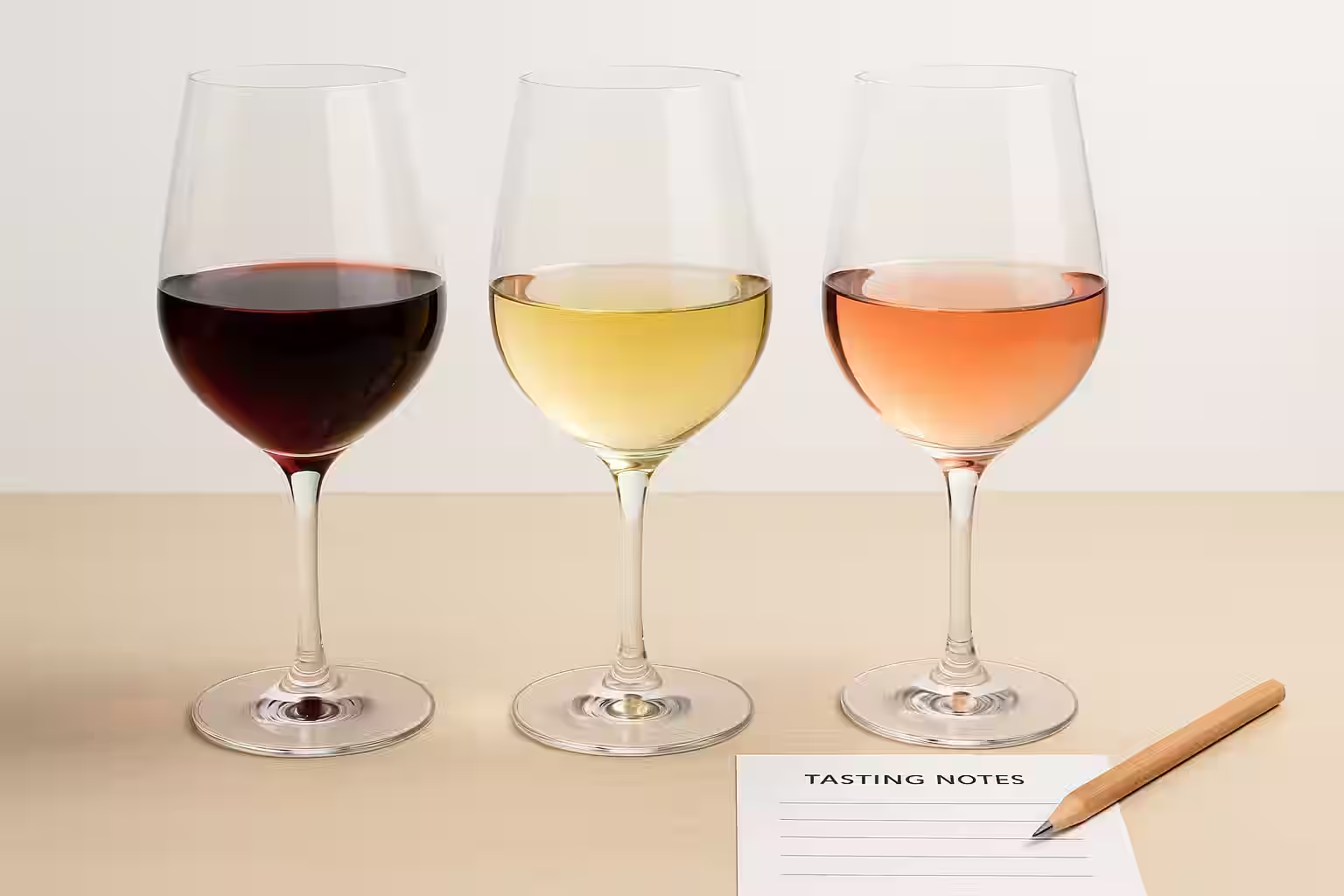
Wine Appreciation: 30-Minute Quickstart
Wine isn’t complicated; it’s detailed. Most “wine confusion” comes from people being handed a vocabulary test when what they actually need is a simple system: how to pick a bottle, how to taste without pretending, and how to connect what you like to what you buy next.
This quickstart is designed to give you confidence fast. In 30 minutes, you’ll learn a small set of concepts that unlock most wine lists and shop shelves. You do not need a fancy palate. You need a few reliable anchors. So grab a glass (even an empty one for now), settle in, and let’s get you fluent in the language of wine — without any of the snobbery.
⏱️ Minute 1-5: The Absolute Basics
What Makes Wine, Wine?
Wine = Fermented grape juice (yeast converts grape sugar → alcohol)
That’s the core idea. Everything else—sparkling, sweet, tannic, buttery, crisp—is a result of choices made about grapes, fermentation, aging, and blending. Think of it like cooking: the same ingredient (grapes) can produce wildly different results depending on who’s in the kitchen and what techniques they use.
So how do we carve up this vast world of fermented grape juice? It starts with the big two. Red wine is made from red or black grapes, and — here’s the crucial part — the grape skins stay in contact with the juice during fermentation. That’s where all the color, tannin, and much of the flavor complexity comes from. White wine, on the other hand, can actually be made from any color grape, but the skins are removed before fermentation begins, giving you that lighter, often crisper result.
Beyond those two pillars, you’ve got rosé, which gets its gorgeous pink blush from just brief skin contact with red grapes — think of it as red wine’s lighter, sunnier cousin. And then there’s sparkling wine, which is simply wine with bubbles. Champagne, Prosecco, Cava — they’re all sparkling wines, just from different places made in different ways. Each one has its own personality, and yes, we’ll get to that.
Reading a Wine Label (10 Seconds)
Every wine label, no matter how fancy or intimidating it looks, is trying to tell you the same handful of things. The producer is who made it — think of them as the chef. The region tells you where the grapes grew up, and believe it or not, this matters MORE than most beginners realize. The same grape variety planted in two different regions can taste like two entirely different wines. Then there’s the grape or blend — what’s actually in the bottle (though some labels use a regional name instead, which we’ll decode in a moment). The vintage is the year the grapes were harvested, and the alcohol percentage typically falls between 12-15%, which can actually tell you a lot about the wine’s body and style.
Here’s the beginner secret: labels look intimidating because they’re written for two different traditions. Some labels — especially from New World regions like California, Australia, or Chile — put the grape variety front and center. You’ll see “Chardonnay” or “Cabernet Sauvignon” in big bold letters. Other labels — particularly from classic European regions like France, Italy, or Spain — emphasize the place instead. A bottle of “Chablis” won’t say “Chardonnay” anywhere, even though that’s exactly what it is.
In both cases, you’re trying to answer the same question: what style is this likely to be? You’ll get that with practice, but you can start right now by reading the alcohol level and region as your first style clues. Higher alcohol often means richer and fuller; cooler regions tend to produce crisper, more restrained wines.
⏱️ Minute 6-10: The Essential Grapes
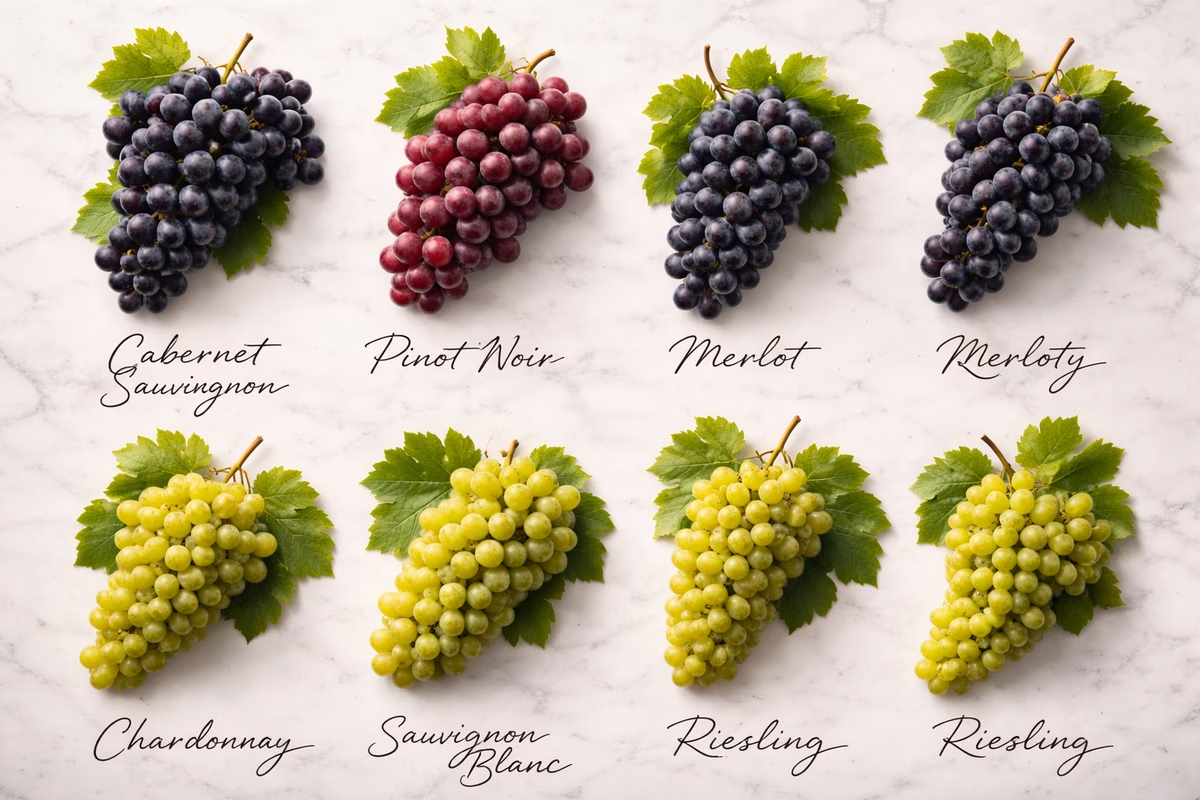
The “Noble Six” Grapes (Know These, You’re 80% There)
Here’s some incredibly good news: out of the thousands of grape varieties grown around the world, just six of them account for roughly 90% of the quality wine you’ll encounter. Learn these six personalities, and you’ll walk into any wine shop or restaurant with a solid foundation under your feet.
Red Grapes:
Let’s start with the heavyweight champion: Cabernet Sauvignon (cab-er-NAY saw-vee-NYON). This is the grape that built Bordeaux and Napa Valley. It’s full-bodied, bold, and serious, with flavors of black currant, cedar, and sometimes a whiff of tobacco. Think of it as the steak of the wine world — rich, satisfying, and built to stand up to powerful flavors. When you’re grilling lamb or pulling out the aged cheddar, this is your grape.
Next up is Pinot Noir (PEE-no NWAR), and it couldn’t be more different. Where Cabernet is a power ballad, Pinot Noir is a jazz standard — elegant, nuanced, and endlessly fascinating. It’s light to medium-bodied with flavors of cherry, mushroom, and earth. It’s the grape behind the legendary wines of Burgundy, and it also thrives in Oregon and New Zealand. Pinot Noir is one of the most food-friendly reds on the planet, pairing beautifully with salmon, duck, and mushroom dishes.
Rounding out our red trio is Merlot (mare-LOW), the smooth operator. Think plum, chocolate, and a soft, velvety texture. It ranges from medium to full-bodied and is wonderfully approachable — it’s the red wine equivalent of a warm hug. Merlot shines alongside roast chicken, pork, and comforting pasta dishes. You’ll find stellar examples from Bordeaux, California, and Chile.
White Grapes:
On the white side, Chardonnay (shar-doh-NAY) is the chameleon — the world’s most popular white grape, and the most versatile. Unoaked, it’s all about crisp apple and citrus. Give it some time in an oak barrel, though, and it transforms into something buttery, vanilla-scented, and almost creamy. Medium to full-bodied and grown everywhere from Burgundy to California to Australia, Chardonnay is the go-to for lobster, creamy pasta, and roast chicken.
Sauvignon Blanc (SOH-vee-nyon BLAHNK) is Chardonnay’s zesty, energetic counterpart. If Chardonnay is a leisurely Sunday brunch, Sauvignon Blanc is a brisk morning jog — light to medium-bodied, bursting with citrus and fresh-cut grass, and razor-crisp on the finish. It comes from the Loire Valley in France, but New Zealand has arguably made it famous in the modern era. It’s an absolute knockout with goat cheese, seafood, and bright, fresh salads.
Finally, there’s Riesling (REEZ-ling), the most underrated grape in the world. Light-bodied and incredibly aromatic, it weaves together peach, honey, and — here’s the fun one — a touch of petrol as it ages. Yes, that’s actually a good thing, and Riesling lovers get excited about it. What makes Riesling truly special is its range: it can be bone-dry, lightly sweet, or dessert-level luscious, and it always keeps a spine of vibrant acidity. Grown primarily in Germany, Alsace, and Australia, it is absolutely magical with spicy food, pork, and Asian cuisine.
One extra idea that makes tasting easier: these grapes tend to cluster by “weight.” Pinot Noir sits on the lighter side of reds, while Merlot and Cabernet Sauvignon bring more heft. For whites, Sauvignon Blanc and many Rieslings are crisp and light, while Chardonnay — especially with oak — goes richer and fuller. You can enjoy any grape in any mood, but if you start by matching the wine’s weight to the moment (light lunch vs. hearty dinner), you’ll make better choices more often.
⏱️ Minute 11-15: How to Actually Taste Wine
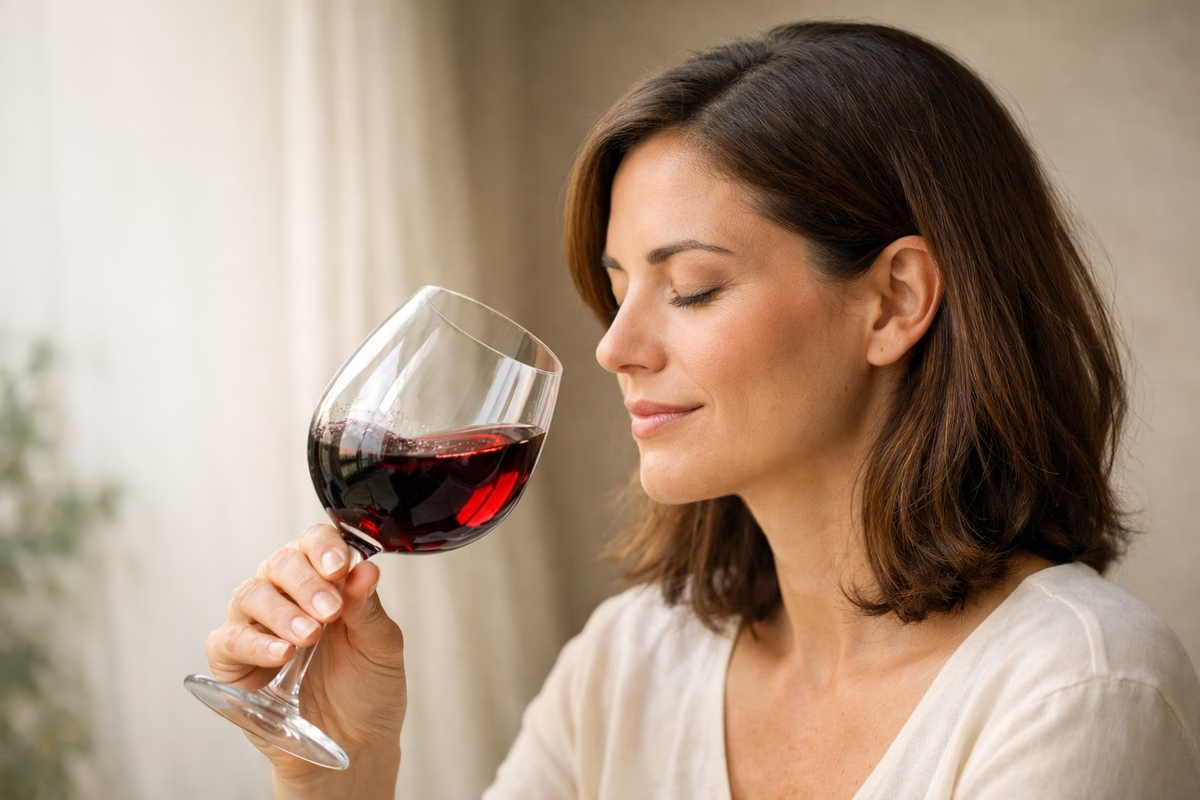
The 5 S’s (Takes 30 Seconds Per Wine)
The Professional Method (Looks Fancy, Actually Simple)
Here’s the thing about wine tasting: it looks like pure theater when you watch someone do it, but there’s actual science behind every swirl and sniff. The good news? The whole routine takes about 30-40 seconds, and once you learn the five steps — the “5 S’s” — you’ll never look at a glass the same way again.
Step one: SEE. This takes about five seconds. Tilt your glass at an angle against a white background (a napkin works perfectly) and look at the wine’s color. Is it a deep, inky purple or a pale, translucent ruby? Is it brilliant and clear, or a little hazy? The color tells you more than you’d think — it hints at the grape variety, the age of the wine, and even the winemaking style. Older reds fade toward garnet and brick tones, while young whites tend to be pale straw.
Step two: SWIRL. Give the glass a gentle rotation for a few seconds — this aerates the wine and releases all those gorgeous aromatic compounds into the air above the glass. You’ll also notice streaks of wine running down the inside of the glass afterward. Those are called “legs” or “tears,” and they tell you about the wine’s alcohol and sugar content. Thicker, slower legs usually mean higher alcohol or sweetness. But here’s a secret: legs say nothing about quality, so don’t overthink them.
Step three: SNIFF. This is where the magic really happens, and where most of the “tasting” actually occurs. Stick your nose right into the glass and take a deep, slow inhale. What hits you first? Is it fruity? Earthy? Oaky? Those first impressions are your most honest reactions. Then swirl again and sniff a second time — aromas evolve and deepen as the wine opens up to the air.
Step four: SIP. Take a small sip and let it coat your entire mouth. Pay attention to the sensations: is it sweet or dry? Is there a mouth-watering tang of acidity? Do your gums feel that drying, grippy sensation of tannin? What about the texture — is it silky and smooth, or lean and angular? Swishing gently (it looks a little silly, but everyone does it at tastings) helps you pick up on all those dimensions.
Step five: SAVOR. After you swallow (or spit, if you’re tasting many wines and want to keep your wits about you), notice the finish. How long do the flavors linger? A great wine leaves a long, pleasant echo on your palate — sometimes for thirty seconds or more. A mediocre wine? Gone in an instant. The finish is one of the most reliable markers of quality.
Two upgrades that instantly level up your tasting game: First, name the structure before the flavors. Before you reach for “blackberry” or “vanilla,” ask yourself simpler questions — is this wine light or heavy? Crisp or round? Drying or soft? Once the structural skeleton is clear, the specific flavor notes come much more easily. Second, use comparison words instead of poetry. Saying “this is more acidic than the last one” or “less sweet” or “more fruity” keeps your tasting honest, builds your reference library, and makes your personal preferences obvious over time.
⏱️ Minute 16-20: Wine Shopping Secrets
Best Values in Wine (Insider Knowledge)
Let’s talk about where your money goes furthest — because in wine, price and quality have a complicated relationship, especially at the extremes.
Under $15, there’s a treasure trove waiting for you. Côtes du Rhône from France is one of the most reliable, food-friendly reds on the planet at this price point. Vinho Verde from Portugal delivers crisp, refreshing white wine that tastes like it should cost twice as much. Argentine Malbec brings rich, fruit-forward red that’s perfect for weeknight dinners. Spanish Tempranillo and Garnacha offer some of the best value in all of winemaking, and Chilean Sauvignon Blanc delivers crisp, dependable white wine without breaking the bank.
Move up to the $15-$25 range and you’ve hit what many wine professionals call the “sweet spot” — the zone where quality leaps up dramatically but prices haven’t gone stratospheric. Oregon Pinot Noir is elegant and genuinely worth the splurge. California’s Central Coast produces wines that rival Napa in quality without the prestige markup. Spanish Rioja Reserva gives you aged, complex red wine at a price that would be impossible from more famous regions. New Zealand Sauvignon Blanc is vibrant and distinctive. And if you want to dip into classic French wine without remortgaging your house, Burgundy Village wines offer authentic French winemaking at genuinely fair prices.
On the flip side, there are categories where you’re often paying for something other than what’s in the bottle. Napa Cabernet under $30 is frequently disappointing — you’re paying for the region’s reputation more than the actual juice. Grocery store “reserve” labels are usually marketing, not a meaningful quality indicator. Wines with animals or novelty labels on the front? Often, a big chunk of your money went to the graphic designer. And celebrity wines? Let’s just say you’re subsidizing someone’s lifestyle brand.
Shopping Strategy
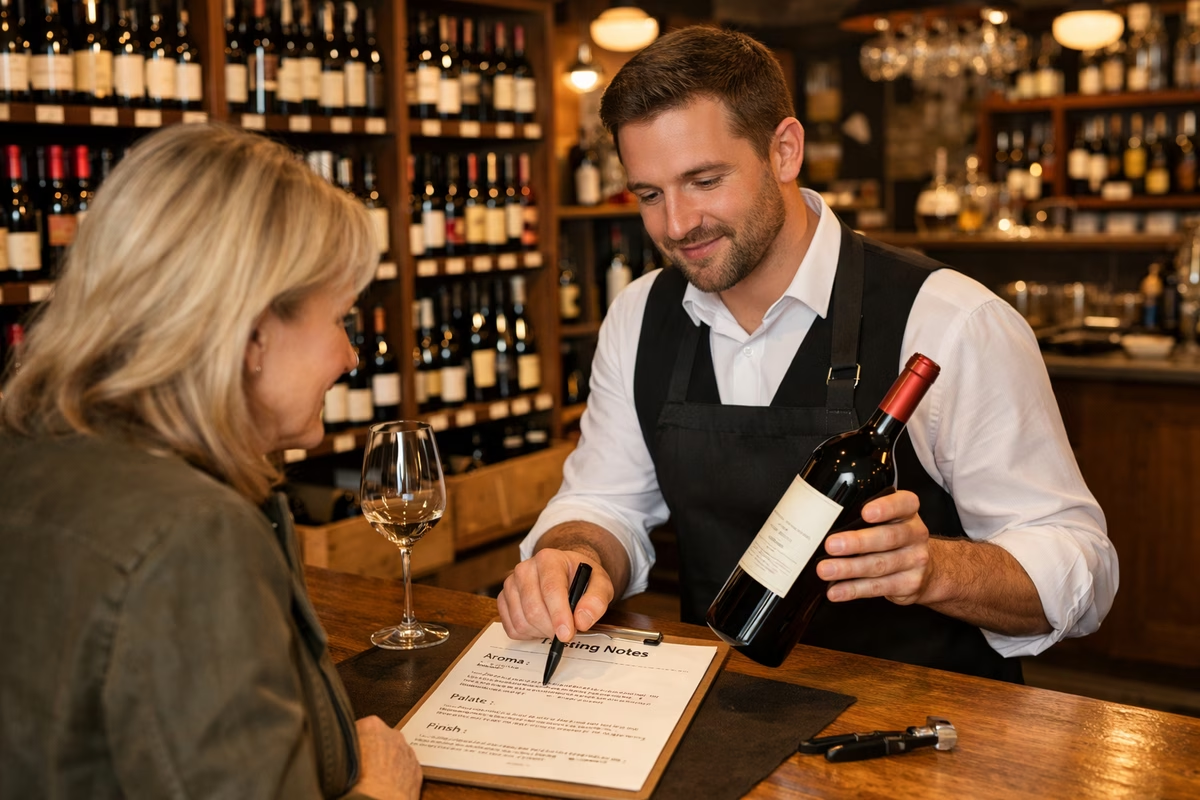
Here’s the single best piece of advice for shopping at a wine store: talk to the staff. Walk in, tell them your budget (no shame — $15, $25, $40, whatever you’re comfortable with), describe what you enjoy in plain language (“I like fruity reds” or “something crisp and white” or “not too dry”), and then ask this magic question: “What’s drinking well right now in this range?” Good wine shops want you to come back. They’ll steer you honestly because a happy return customer is worth far more than a one-time upsell.
If you want one shopping move that saves money long-term, learn one dependable “value region” for the style you like. If you love medium-bodied reds with food, Spanish reds are often incredible value. If you love crisp whites, Portuguese whites punch way above their weight class. Pick one lane, get familiar with a few producers, then branch out from there. It’s like having a home base on a map — you can always explore, but you know where to come back to.
⏱️ Minute 21-25: Wine and Food Pairing (Simple Rules)
The Only Rules You Need
Food and wine pairing sounds like it requires a sommelier certification, but it really comes down to four straightforward principles that cover about 90% of situations.
The first rule is to match weight. Think of it like this: a delicate piece of grilled fish would be completely steamrolled by a massive Cabernet Sauvignon, while a juicy ribeye steak would make a light Pinot Grigio taste like flavored water. Light food calls for light wine, and hearty food calls for something with more body and power. It’s intuitive once you start thinking about it.
The second rule is that acid cuts fat. This is the secret weapon of food pairing, and once you internalize it, you’ll understand why certain classic pairings just work. Creamy, rich, or fatty dishes need a wine with good acidity to slice through all that richness and refresh your palate between bites. That’s why Sauvignon Blanc with goat cheese feels like magic, and why Chianti with tomato-based pasta is a combination that’s endured for centuries.
The third rule is that sweet beats heat. If you’re eating spicy food — Thai, Indian, Szechuan, Mexican with serious chili heat — reach for an off-dry or slightly sweet wine. A Riesling with a touch of sweetness alongside Thai food is a revelation. The residual sugar soothes the heat instead of amplifying it, which is exactly what a dry, high-alcohol wine would do (dry wine plus spicy food equals a burning, unpleasant experience).
The fourth rule is the “what grows together, goes together” principle. Italian wine with Italian food. French wine with French food. Spanish wine with Spanish food. Regional cuisines and regional wines evolved side by side over centuries, and there’s a natural harmony between them that’s hard to replicate. When in doubt, match the wine’s origin to the cuisine’s origin.
Cheat Sheet Pairings
For those moments when you’re staring at a menu and need a quick answer: red meat loves Cabernet Sauvignon, Malbec, and Syrah. Chicken is wonderfully versatile — Chardonnay, Pinot Noir, or any lighter red will do beautifully. Fish and seafood sing with Sauvignon Blanc, Pinot Grigio, or Champagne (yes, bubbly with oysters is one of life’s great pleasures). Spicy food wants off-dry Riesling or Gewürztraminer. Cheese is its own beautiful rabbit hole — see our Pairing With Modern Foods guide for that deep dive. Pizza is basically begging for Chianti, Sangiovese, or anything Italian. Burgers are best friends with Zinfandel, Merlot, or a good American red. And salads brighten up with Sauvignon Blanc or a dry rosé.
And when you genuinely have no idea what to order? Pinot Noir or Champagne pair with almost everything. They’re the universal donors of the wine world.
One more pairing insight that explains a lot of “why did that feel weird?” moments: tannin plus salt and protein equals harmony. Tannins — that drying, slightly astringent sensation you get from many red wines — can feel harsh and mouth-puckering on their own or with the wrong food. But pair them with something salty, fatty, or protein-rich, and they soften beautifully. That’s the fundamental reason Cabernet Sauvignon with a well-seasoned steak feels so natural and satisfying.
⏱️ Minute 26-30: Your Wine Journey Starts Now
Action Plan (Do This Week!)
You’ve absorbed a lot in the last 25 minutes, so let’s turn that knowledge into action with a concrete plan you can execute this week.
Step 1: Buy four wines that will give you a side-by-side crash course in the major styles. Budget about $50-70 total. Pick up a crisp white like a New Zealand Sauvignon Blanc ($12-15), a rich white like a California or Australian Chardonnay ($15-20), a light red like an Oregon or Burgundy Pinot Noir ($18-25), and a bold red like an Argentine Malbec or Washington State Cabernet ($12-15). Tasting these four together will teach you more about your own preferences than reading a dozen books.
Step 2: Host a mini tasting this weekend. Invite one to three friends — wine is always more fun when it’s social. Open all four bottles, taste them using the 5 S’s method you just learned, and take simple notes on what you like and don’t like. Keep some cheese and crackers on hand (they’ll help you taste the wines with food and provide essential snacking fuel for the discussion). Don’t worry about being “right” — the whole point is discovering what you enjoy.
Step 3: Find your local wine shop and introduce yourself. Tell them you’re learning, ask for recommendations in your preferred style and budget, and start building a relationship. A great wine shop employee is like having a personal wine consultant on speed dial — they’ll remember what you’ve liked, steer you toward new discoveries, and save you from costly mistakes.
Common Beginner Questions (Answered!)
“Do I need expensive wine to enjoy it?” Absolutely not! The $12-20 range offers incredible quality these days, and price is a terrible predictor of whether you will enjoy a particular wine. The most expensive bottle in the store might be completely wrong for your palate, while a $14 gem could become your new favorite.
“What if I can’t taste all those flavors?” That’s completely normal, and it doesn’t mean anything is wrong with your palate. Everyone starts with broad categories — “this is fruity,” “this tastes earthy,” “I’m getting something oaky.” The specific notes (“blackberry compote with hints of cedar and graphite”) come with practice and exposure. Be patient with yourself.
“Is it okay to add ice to wine?” Your wine, your rules! That said, if you want to chill a wine down without diluting it, the fridge works better. As a general guideline, whites, rosés, and sparkling wines taste best well-chilled at around 45-50°F, while reds are actually best served slightly cooler than typical room temperature, around 60-65°F — which is probably cooler than you’d think.
“Sweet wine is for beginners, right?” This is one of the most persistent myths in the wine world, and it’s dead wrong. Some of the most expensive and revered wines on Earth — Sauternes, Port, Ice Wine — are sweet. They’re sophisticated, complex, and pair beautifully with desserts and cheeses. Never let anyone make you feel bad about enjoying sweetness.
“Should I buy a decanter?” Not yet. Focus your early energy (and budget) on learning the grapes and regions. A simple, clean wine glass is all you need to start. The gear can come later, once you know what you love.
Confidence Builders
Here’s the beautiful thing: after reading this guide, you already know enough to order wine at a restaurant without panic, to buy wine at a shop with genuine confidence, to taste wine properly and describe what you’re experiencing, to pair wine with food successfully, and to recognize the six major grape varieties that dominate the wine world. That’s not nothing — that’s a genuinely solid foundation.
And here’s what you don’t need to worry about: you don’t need to memorize every wine region on the planet. You don’t need to detect 47 different aroma notes in a single glass. You don’t need to spend a fortune. You don’t need to use fancy vocabulary. And you absolutely, positively don’t need to pretend to like wine that you don’t enjoy.
Trust your palate. If you like it, it’s good wine — full stop. Don’t let anyone wine-shame you, ever.
If you want to sound confident without reaching for fancy jargon, here are four words that cover an enormous amount of ground. Fresh describes wine that’s bright, clean, and lively — often because it has higher acidity. Round means softer, less sharp, usually with more body or oak influence. Drying refers to tannin, that grippy, mouth-drying sensation common in many reds. And juicy describes something fruit-forward and incredibly easy to drink. That’s it. You’re describing your experience, not taking a test.
Quick Reference Card (Screenshot This!)
Grape Personality Guide
Want something fruity and easy-drinking? On the red side, reach for Merlot, Malbec, or Zinfandel — they’re all about generous fruit and approachable charm. For white, Moscato and Riesling deliver delightful, aromatic sipping pleasure.
Want something elegant and food-friendly? Pinot Noir is your red — graceful, versatile, and endlessly rewarding. For white, Chardonnay and Pinot Grigio both bring sophistication to the table without being fussy.
Want something bold and intense? Cabernet Sauvignon and Syrah are the powerhouses of the red world — think big flavors and serious structure. On the white side, oaked Chardonnay brings the richness and weight.
Want something crisp and refreshing? Beaujolais and a lightly chilled Pinot Noir are surprisingly delightful on the red side. For whites, Sauvignon Blanc and Albariño are pure refreshment in a glass.
Temperature Guide
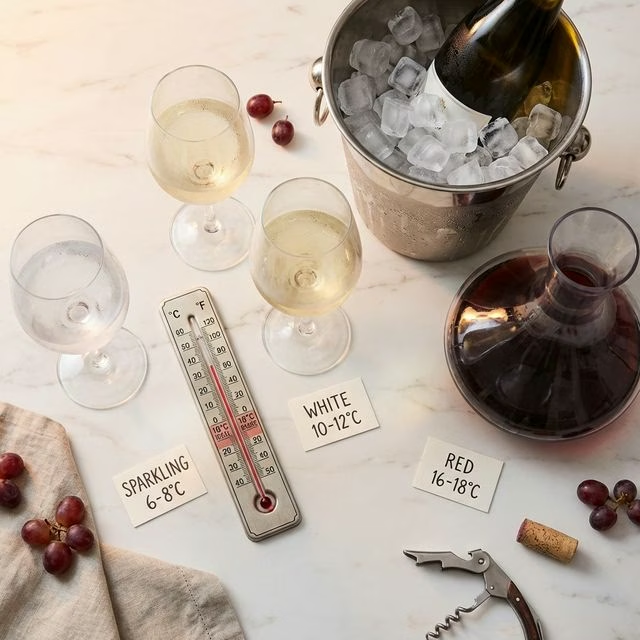
Serving temperature matters more than most people realize, and getting it right is one of the easiest ways to make any wine taste better. Sparkling wines want to be very cold, around 40-45°F — that keeps the bubbles fine and the wine lively. Whites and rosés should be fridge-temperature, roughly 45-50°F. Light reds like Pinot Noir are best around 55-60°F, which is a cool room temperature. And full-bodied reds like Cabernet Sauvignon do best at 60-65°F — slightly below room temperature, which is probably a bit cooler than you’d guess.
Here’s a pro tip that might save your dinner: restaurants almost always serve red wine too warm. Don’t be afraid to ask for an ice bucket, even for a red. Nobody will judge you, and your wine will taste noticeably better.
If you only remember one temperature principle, make it this: a little cooler is almost always better than too warm. Warm wine amplifies alcohol and flattens freshness, which is exactly what you don’t want.
You’re Ready to Explore!
You now know the essential grape varieties, how to taste wine properly, where to find great value, how to pair wine with food, and exactly what to do next. That’s a lot of ground covered in thirty minutes.
Go forth and discover! Wine is meant to be enjoyed, shared, and explored. There are no wrong answers—only your preferences waiting to be discovered.
Questions? Dive deeper:
Remember: The best wine is the wine YOU enjoy. Never let anyone tell you your palate is “wrong.” Explore, experiment, and most importantly—have fun!