The bottle arrived at our table without a label.
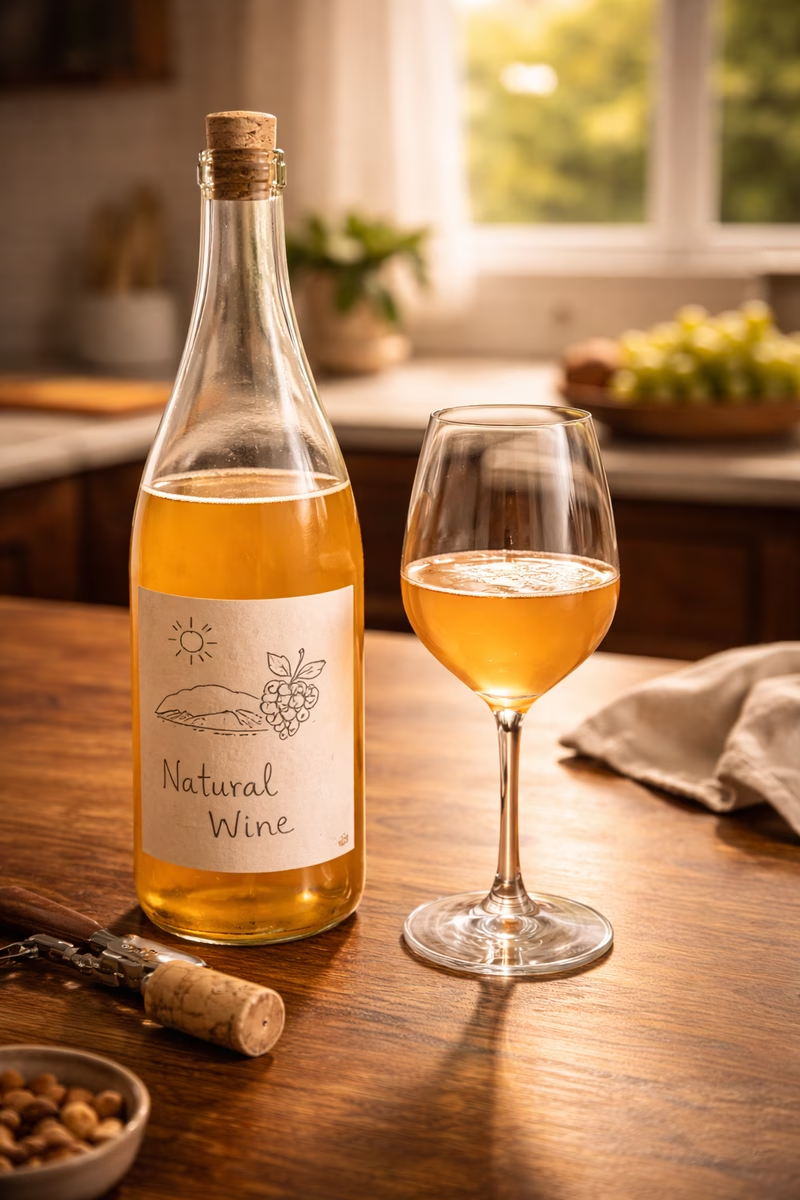
Not “minimalist label” or “artsy label.” No label at all—just a plain glass bottle with an amber liquid inside and a crown cap where a cork should have been. The sommelier set it down with a look that was half apology, half dare.
“This is from a small producer in the Jura,” she said. “It’s a Savagnin that spent six months on its skins. It’s funky. It’s alive. Some people love it and some people send it back. I think your table can handle it.”
My friend Raj, who drinks Napa Cabernet exclusively and believes wine should taste like wine, looked at the glass and said, “It’s orange.”
It was orange. Not rosé-orange. Not amber-from-age orange. A deep, honeyed, almost tea-like orange that looked like no wine any of us had ever been served.
I took a sip.
It tasted like nothing I expected. Tart. Savory. A little like dried apricot, a little like sourdough bread, a little like standing in an orchard in October. It was strange and specific and entirely itself.
Raj sent his back.
I ordered another glass.
This guide is for everyone who’s curious about the bottle without a label—what natural wine actually is, why it tastes the way it does, and how to decide whether it’s for you.
What “natural wine” actually means
Natural wine doesn’t have a legal definition in most countries, which is part of why it’s confusing. But the community generally agrees on a set of principles:
In the vineyard:
- Organic or biodynamic farming (no synthetic pesticides, herbicides, or fertilizers)
- Hand-harvested grapes
- Healthy soil as the foundation of flavor
In the cellar:
- Fermentation with native yeast (the yeast that lives on the grape skins, not commercial packets)
- Minimal or zero added sulfites (the preservative used in conventional wine)
- No additions: no commercial enzymes, no added sugars, no tannin powder, no flavor-adjusting chemicals
- No fining or heavy filtration (which is why many natural wines are cloudy)
The shorthand: natural wine is wine made with as little intervention as possible. The winemaker’s job is to guide, not engineer.
Why natural wine tastes different
If conventional wine is a studio recording—polished, consistent, engineered for a specific result—natural wine is a live performance. It’s less predictable, more variable, and sometimes more thrilling.
The flavor signatures
Funk. The word that either excites or terrifies you. Natural wines often have earthy, farmyard, or fermentation-forward aromas that conventional wine eliminates. This comes from native yeast strains and the absence of SO₂ to suppress volatile compounds. Some funk is the winemaker’s intention. Some is a flaw. Learning to tell the difference is the skill.
Fruit that’s alive, not sweet. Natural wines tend to taste of fruit in its natural state—tart, complex, seasonal—rather than the ripe, jammy fruit of high-alcohol conventional wines. A natural Gamay might taste like biting into a fresh cherry, not cherry syrup.
Texture and movement. Many natural wines have a slight effervescence (called pétillant naturel or pét-nat) from residual fermentation. Others have a tannic grip from skin contact (especially orange wines). The mouthfeel is often more dynamic than conventional wine—less smooth, more interesting.
Vintage variation. A conventional winemaker blends and adjusts to make each year taste similar. A natural winemaker lets each year be itself. The 2023 might be bright and electric; the 2024 might be heavier and more brooding. This is a feature, not a bug—but it means you can’t always predict what’s in the bottle.
Orange wine: the category that confuses everyone
Orange wine—also called skin-contact white wine or amber wine—is the style that brings the most questions and the most raised eyebrows.
What it is
White grapes fermented with their skins, like red wine. Normally, white wine is made by pressing the grapes immediately and fermenting just the juice. Orange wine leaves the juice in contact with the skins for days, weeks, or months, extracting color, tannin, and flavor compounds that white wine usually doesn’t have.
What it tastes like
Depending on the grape and the maceration time:
- Short maceration (days): Golden color, extra texture, slightly grippy finish. Subtle.
- Medium maceration (weeks): Amber-orange, dried fruit and honey notes, noticeable tannin. Food-friendly.
- Long maceration (months): Deep orange, earthy, savory, sometimes funky. This is the polarizing end of the spectrum.
Why it pairs brilliantly with food
Orange wine’s tannin structure and savory character make it one of the most versatile food wines. It bridges the gap between white and red: acidic enough for seafood, textured enough for meat.
Dishes that work beautifully:
- Roasted vegetables with olive oil and herbs
- Moroccan or Middle Eastern cuisine (tagines, kebabs)
- Hard and semi-hard cheeses
- Charcuterie and cured meats
- Mushroom risotto or earthy pasta dishes
Pét-nat: the other natural wine category worth knowing
Pétillant naturel—“naturally sparkling”—is wine bottled before primary fermentation is complete. The remaining yeast finishes fermenting in the bottle, creating gentle, rustic bubbles.
Unlike Champagne (which adds sugar and yeast for a controlled second fermentation), pét-nat is one fermentation, one bottling, no additions. The result is unpredictable, often cloudy, sometimes slightly sweet, always lively.
Good pét-nat tastes like: cider’s sophisticated cousin. Fruity, fresh, a little wild, with a mousse that’s softer and less aggressive than traditional sparkling wine. It’s the perfect summer aperitif and the wine most likely to make someone say, “Wait, what is this? I love it.”
How to start exploring (without getting burned)
Find a good shop
Natural wine lives and dies by the retailer. A good natural wine shop will:
- Ask what you normally drink before recommending anything
- Steer you away from the challenging bottles until you’re ready
- Offer tastes when possible
- Be honest about which bottles are funky and which are clean
Avoid buying natural wine from shops that stock one token bottle. Look for stores where natural wine is a real part of the selection.
Start with these styles
If you drink conventional wine and want a gentle on-ramp:
| If you like… | Try this natural style |
|---|---|
| Crisp Sauvignon Blanc | Natural Muscadet or Picpoul |
| Pinot Noir | Natural Gamay (Beaujolais) |
| Rosé | Natural rosé from Provence or Loire |
| Full-bodied reds | Natural Syrah from Rhône or Australia |
| Sparkling wine | Pét-nat (any region) |
| Adventure | Skin-contact orange wine |
The chill rule
Most natural wines taste better slightly chilled—even reds. The cold tames funk and brightens fruit. Try 55–60°F (13–15°C) for reds and 45–50°F (7–10°C) for whites and oranges. Twenty minutes in the fridge is usually enough.
Accept that some bottles won’t work
This is the deal with natural wine: without the safety net of sulfites and commercial yeast, there’s more variability. Most bottles are wonderful. Some are extraordinary. And occasionally, one will smell like a Band-Aid or taste like vinegar. That’s a flawed bottle, not a normal natural wine experience. Return it or pour it out—don’t let one bad bottle define the category.
The ending: the table that couldn’t agree
That night, after the Jura Savagnin, we ordered three more natural wines—each more unusual than the last. A pét-nat rosé that tasted like strawberries and bread dough. A skin-contact white from Georgia that was the color of strong tea. A light red from Beaujolais that smelled like a garden and tasted like cherries and earth.
Raj stuck with his Cabernet. He wasn’t wrong to. He knows what he likes, and he likes it consistently.
But the rest of us spent the evening in the most alive wine conversation I’ve ever been part of. Not because natural wine is objectively better—it isn’t—but because it’s specific. Every glass was clearly from somewhere, made by someone, shaped by a particular year’s weather. There was nothing generic about any of it.
Natural wine doesn’t ask you to abandon what you already love. It asks you to be curious about what else wine can be—when you let the grape, the soil, and the season speak without editing.
Some nights, that’s exactly the right question.
Next steps
- Read Wine Tasting 101 for the palate fundamentals that help you decode any style
- Explore Wine Regions for the geography behind natural wine hotspots (Loire, Jura, Beaujolais, Georgia)
- See How to Buy Wine for shopping confidence in any section of the store
- Try Pairing with Modern Foods for what to eat alongside your first natural bottle