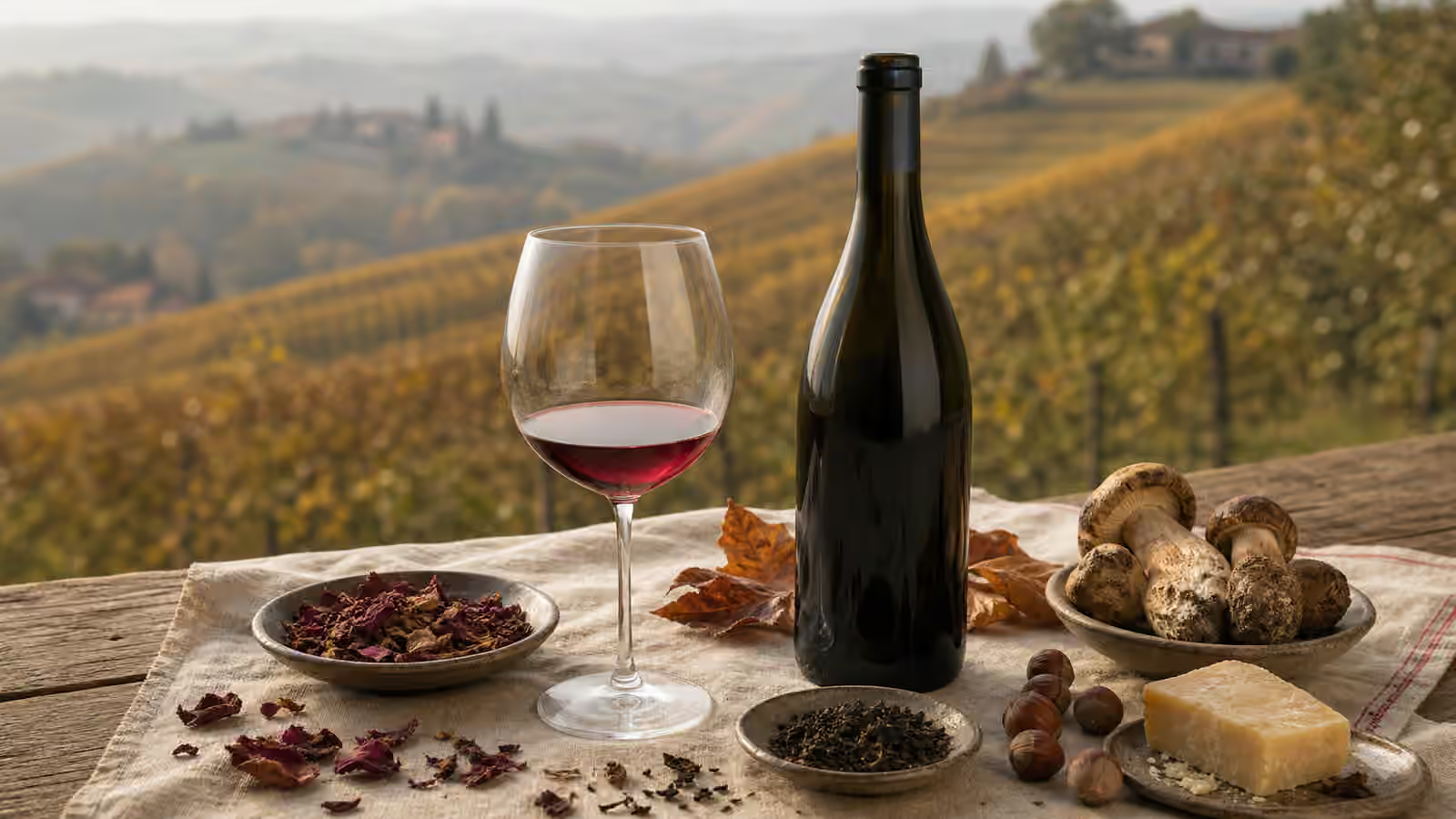
Italian wine gets easier when you stop trying to memorize the whole country and start reading the label as a set of clues. The label may give you a place, a grape, a producer, a style word, a vintage, or a familiar regional name. It may not explain itself in the direct way a varietal label from a newer wine region might. That does not make it hostile. It means the bottle is asking you to learn how place and grape travel together.
The practical goal is not to become a scholar of Italian classifications. It is to know enough to choose a bottle that fits dinner. Reading Wine Labels Without Panic gives the general method: read place, grape, producer, vintage, alcohol, and importer clues in that order. Italian labels reward that method because so many of the most useful words are place names that quietly imply grape, structure, and food behavior.
Place usually carries the grape
Italy is full of regional names that behave like shortcuts. Chianti points you toward Sangiovese. Barolo and Barbaresco point toward Nebbiolo. Soave points toward Garganega. Prosecco points toward Glera. Brunello di Montalcino is Sangiovese under a local name and stricter regional identity. Etna Rosso often means Nerello Mascalese in a volcanic Sicilian frame. These are not trivia answers. They are buying handles.
This is the same pattern explained in Old World and New World Wine Styles Without Stereotypes . Some wine cultures expect place to do more work than grape variety on the front label. Once you accept that, the bottle becomes less mysterious. You are not reading every Italian word. You are asking what the most important place word usually tells you about the wine’s shape.
Structure matters more than exact pronunciation. Sangiovese often brings acidity, sour cherry, herbs, and moderate tannin. Nebbiolo can be pale but firm, fragrant but drying, patient rather than plush. Barbera usually gives bright acidity and darker fruit with softer tannin. Dolcetto is often more immediate and lower in acidity than its name suggests. Nero d’Avola, Primitivo, Negroamaro, and Aglianico each bring different southern warmth and grip, but the same question applies: what will this feel like with food?
Tuscany teaches acidity before luxury
Tuscany is the most approachable starting point because its main grape, Sangiovese, loves the table. Good Sangiovese often tastes like red cherry, dried herbs, tomato leaf, leather, tea, or earth, but its real value is structural. It has enough acidity to meet tomato sauce, olive oil, roast vegetables, pork, beans, grilled bread, mushrooms, and hard cheese. It does not need to be enormous to be satisfying.
Chianti and Chianti Classico are the everyday-to-serious lane. The word Classico points to the historic zone, not automatically to greatness, but it is a useful clue that the bottle is speaking from the region’s central tradition. Riserva and Gran Selezione may suggest longer aging, more concentration, or a producer’s more ambitious selection, but those words are only clues. A vivid, balanced Chianti Classico can be a better dinner bottle than a heavier wine with a more impressive label.
Brunello di Montalcino is the more powerful, age-worthy expression of Sangiovese. It can be beautiful, but it is not always the right first bottle for a Tuesday dinner. If you open a young, structured Brunello without food or patience, tannin may dominate. Aging vs. Drinking Now is useful here because prestige Italian reds often tempt people to open too early or save without a plan. Vino Nobile di Montepulciano and Rosso di Montalcino can be practical bridges when you want Tuscan character without the same weight or ceremony.
Super Tuscan is a looser style idea rather than a single flavor. Some bottles blend Sangiovese with Cabernet Sauvignon or Merlot. Others lean heavily on international grapes. They can be polished, structured, modern, savory, plush, or restrained depending on the producer. Treat the phrase as an invitation to read the back label and the alcohol level. Understanding Wine Blends helps because many Tuscan bottles are really conversations among grapes, not just regional names.
Piedmont asks for patience and context
Piedmont can surprise people because its famous red grape, Nebbiolo, does not look as powerful as it feels. A young Barolo may be pale in color, perfumed with rose, cherry, tar, herbs, or dried orange, and then strongly tannic on the palate. Barbaresco often feels a little more open, but it can still have serious grip. The lesson is simple: color does not tell you tannin.
The label hierarchy can also mislead if you treat it only as prestige. Barolo and Barbaresco are the famous names, but Langhe Nebbiolo can be the smarter first step. It gives you Nebbiolo’s perfume and firmness in a more accessible frame. Barbera d’Alba or Barbera d’Asti is often brighter, juicier, and easier with pasta, roast chicken, pizza, and salumi because the tannin is usually softer. Dolcetto can be darker, rounder, and more casual, useful when you want a red that does not ask for a decanter.
Piedmont also makes one of the great reminders that sweet wine can be balanced. Moscato d’Asti is lightly sparkling, low in alcohol, fragrant, and gently sweet when made well. It is not a dessert afterthought. It can be lovely with fruit, pastry, salty snacks, or a quiet afternoon pour. The guide to Wine Sweetness explains why sugar should be read as structure, not as a quality judgment.
Veneto and the northeast are not one style
Veneto gives many drinkers their first Italian sparkling wine through Prosecco. The best way to understand Prosecco is not to compare it resentfully with Champagne. It is usually fruitier, softer, and more immediate, made for freshness rather than long lees-aged depth. A good bottle can be cheerful and useful with snacks, brunch, salty appetizers, or a warm evening. A dull one can taste simple and sweet. The label may help, but balance in the glass is what matters.
The same region also gives Valpolicella, Amarone, Recioto, and Soave, which could hardly be more different from one another. Valpolicella is often a lighter red with cherry, herbs, and gentle tannin. Amarone is made from dried grapes and can be rich, high in alcohol, intense, and powerful. Recioto is the sweet relative. Soave, when serious, is a white wine of almond, pear, citrus, flowers, and quiet mineral detail. If you only know Veneto from basic Prosecco or simple Pinot Grigio, you are seeing one corner of a much larger room.
Farther northeast, Friuli and Alto Adige can be excellent places for white wine drinkers. Pinot Grigio can be clean and brisk, but the region also offers textured Friulano, Sauvignon, Pinot Bianco, Ribolla Gialla, and aromatic mountain whites. This is where the structure map from Major Wine Grapes by Structure becomes practical. Do you want crispness, perfume, body, or savory texture? Northern Italian whites can answer each of those jobs.
The south and islands bring warmth with freshness when chosen well
Southern Italy is too often reduced to ripe red wine, but the better buying clue is balance. Sicily, Campania, Puglia, Basilicata, Sardinia, and Calabria can make generous wines, but they also have altitude, coastlines, old vines, volcanic soils, local grapes, and producers who care about freshness. The labels may be less familiar, which can make them good value for curious drinkers.
Sicily is a good place to start. Nero d’Avola can be dark-fruited and generous, while Etna Rosso can feel lighter, smoky, mineral, and tense because vineyards on Mount Etna are shaped by elevation and volcanic ground. Etna Bianco can be saline, citrusy, and structured in a way that surprises people who expect southern whites to be soft. Campania brings Aglianico for firm reds and Fiano, Greco, and Falanghina for whites with texture and acidity. Puglia’s Primitivo and Negroamaro can be plush, but the best examples still need enough lift to avoid heaviness.
These bottles work best when you connect them to food rather than status. A warm southern red with herbs and a little bitterness can be excellent with grilled vegetables, lamb, sausage, eggplant, tomato, or lentils. A coastal white can make seafood, lemon, olive oil, and herbs feel sharper. Pairing Wine with Vegetarian and Plant-Based Food is especially relevant because Italian wine often shines with vegetables, beans, grains, cheese, and sauces instead of only large cuts of meat.
Label words should become plain language
Italian labels use terms such as DOC, DOCG, IGT, Classico, Riserva, Superiore, and Passito. They matter, but they should not become a maze. DOC and DOCG usually point to regulated regional identity. IGT can mean flexibility, sometimes humble and sometimes ambitious. Classico often points to a historic zone. Riserva often suggests longer aging or a producer’s more serious bottling. Superiore may suggest a slightly higher standard within a regional frame. Passito usually points toward dried-grape sweetness or concentration.
Those words are not automatic guarantees. They are translation tools. A Riserva can be excellent or tired. An IGT can be simple or profound. A Classico can taste more regionally focused, but producer quality still matters. The most useful label habit is to combine terms with sensory expectations. If the label suggests age, ask whether you want developed flavor. If it suggests dried grapes, expect more richness. If it names a mountain or coastal place, expect climate to matter. Wine Terroir: Climate, Soil, Slope, and Vintage gives the broader frame for why these place details affect the glass.
Let dinner choose the first bottle
The fastest path into Italian wine is through a real meal. Tomato sauce asks for acidity. Olive oil wants freshness. Bitter greens need fruit or texture. Mushrooms invite earth and savor. Hard cheese can handle tannin and salt. Seafood often wants citrus, salt, and restraint. Rich braises can carry more structure. If you begin with the plate, the label becomes easier to interpret.
For a first Tuscan bottle, choose Sangiovese with a meal that has tomato, herbs, or roast vegetables. For a first Piedmont red, try Barbera with dinner before reaching for Barolo. For a first southern red, keep the food savory and substantial enough for warmth and fruit. For a first northern white, serve it cool but not icy, and notice whether it refreshes the food or simply sits beside it. Serving Temperature and Decanting matters because Italian reds can feel more alcoholic and less precise when served too warm, while aromatic whites can disappear when over-chilled.
You do not need to learn Italy all at once. Buy one region, taste it with food, write one plain sentence, and repeat. Chianti may become your tomato-and-herb reference. Barbera may become your bright weeknight red. Soave may become your quiet white for seafood and almonds. Etna may become your volcanic, lifted red. Once each name attaches to a glass and a meal, Italian labels stop looking like a test and start looking like invitations with useful directions.