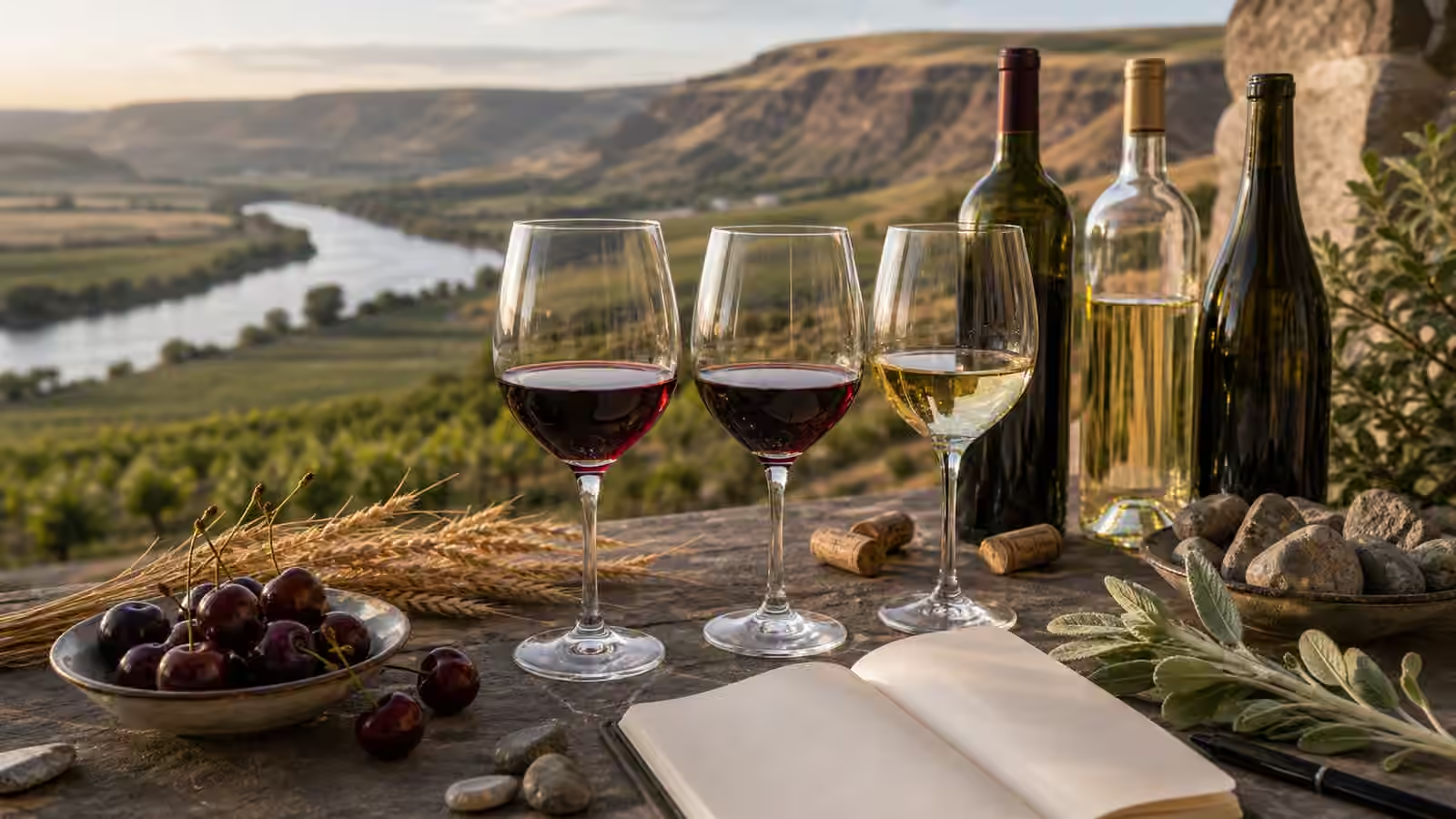
Bordeaux is famous enough to become blurry. The name can suggest auctions, old cellars, classified estates, and bottles saved for formal dinners, but most useful Bordeaux knowledge is much simpler. The region is a study in blending, geography, and structure. Cabernet Sauvignon, Merlot, Cabernet Franc, Petit Verdot, Malbec, and occasionally Carmenere share the bottle in different proportions. Rivers divide the landscape into habits. Some wines are built for patience, some are built for dinner this year, and some are sweet, golden, and far from the red stereotype.
If Burgundy teaches place through small parcels and two main grapes, Bordeaux teaches place through blends. The first skill is not memorizing every chateau. It is learning what the blend is likely to feel like. Understanding Wine Blends explains why grapes share a bottle. Bordeaux is one of the classic places to taste that idea in action.
The River Map Explains More Than The Prestige
Bordeaux sits around the Garonne and Dordogne rivers, which meet to form the Gironde estuary. Wine people often simplify the region into Left Bank and Right Bank. The Left Bank, west and south of the Gironde and Garonne, includes the Medoc, Haut-Medoc, Margaux, Pauillac, Saint-Julien, Saint-Estephe, and Graves. Its gravelly soils often suit Cabernet Sauvignon, so many Left Bank reds lead with Cabernet structure: black currant, cedar, graphite, firm tannin, freshness, and aging potential.
The Right Bank, around Saint-Emilion and Pomerol, often gives more space to Merlot and Cabernet Franc. These wines can feel rounder, more plush, and more immediately aromatic, with plum, red fruit, chocolate, flowers, herbs, or earthy notes depending on the producer and site. That does not mean all Right Bank wine is soft or all Left Bank wine is severe. It means the starting point changes. Cabernet often brings frame. Merlot often brings flesh. Cabernet Franc can bring perfume, freshness, and savory lift.
Graves and Pessac-Leognan complicate the simple map in a useful way. They can produce red wines with Cabernet structure and a smoky mineral impression, but they are also important for dry white Bordeaux, usually based on Sauvignon Blanc and Semillon. That white side of Bordeaux is easy to miss if you only think of the region as red and expensive.
Bordeaux Red Is A Conversation Among Grapes
Cabernet Sauvignon gives many Bordeaux reds their spine. It contributes tannin, acidity, black fruit, and the capacity to age when the fruit is ripe enough. Merlot fills the middle, softening edges and adding plum, red fruit, and texture. Cabernet Franc can make the aroma more lifted and herbal. Petit Verdot is usually a seasoning grape, adding color, tannin, and spice when it ripens well. The blend changes by estate, vintage, and bank.
This is why Bordeaux is such a useful region for learning structure. A young Left Bank wine can feel firm, even if the fruit is ripe. The tannin may dry the gums and cheeks. With protein, salt, and time in the glass, that same firmness can become the reason the wine works. A Right Bank wine may feel more generous earlier, but the best examples still have shape. If you already use the language from Wine Structure: Acidity, Tannin, Body, Sweetness, Alcohol, and Finish , Bordeaux gives those words a practical workout.
Oak is common but should not be the point. Cedar, vanilla, clove, toast, smoke, and tobacco-like notes may come from barrel aging or bottle development. In a balanced wine, those notes support fruit and structure. In a clumsy one, oak can sit on top like furniture in the wrong room. The better question is whether the wine feels integrated: does tannin connect to fruit, does acidity keep the wine alive, and does the finish carry more than raw wood?
Labels Need Context, Not Awe
Bordeaux labels usually emphasize estate and appellation. A bottle may say the chateau name, then Pauillac, Saint-Emilion, Pessac-Leognan, Bordeaux Superieur, or another place name. The grape varieties may appear on a back label, but the front label often assumes you understand the region. This is classic Old World label behavior, described more broadly in Old World and New World Wine Styles Without Stereotypes .
Famous classifications can help explain why some bottles are expensive, but they are not the only path to drinking well. The 1855 classification, the Saint-Emilion systems, and other local hierarchies belong to history, commerce, and reputation as much as to what you will enjoy tonight. They can be interesting, but they can also pull attention away from the useful question: is this bottle from a good producer, in a good style for the meal, at a stage when it is ready?
For everyday learning, the broader appellations can be valuable. Bordeaux and Bordeaux Superieur can show the region’s blend profile without demanding years of storage. Cotes de Bordeaux, Fronsac, Castillon, and other less famous names can give honest Merlot-led or blended reds with real dinner usefulness. On the Left Bank, Haut-Medoc and satellite villages can sometimes teach Cabernet structure without the cost or waiting time attached to the most famous communes. The point is not bargain hunting by rumor. It is learning to ask for style and readiness before prestige.
Aging Is A Tool, Not A Requirement
Bordeaux built much of its reputation on wines that improve with time. Tannin softens. Fruit shifts from cassis, plum, or cherry toward dried fruit. Oak integrates. Earth, leather, cedar, tobacco, mushroom, and graphite-like notes can emerge. A mature Bordeaux can be beautiful because it has moved from force to harmony.
Still, not every Bordeaux is meant to age for decades, and not every drinker prefers mature flavors. Many regional and modest estate wines are made for near-term drinking. Some serious wines can be enjoyable young with air and food, while others feel closed and drying. Aging Wine vs Drinking Now is especially relevant because Bordeaux tempts people into saving bottles without a plan. Patience helps only when the wine has the structure and concentration to reward it.
If you are opening a young, tannic Bordeaux, decanting can help, but it should be purposeful. Pour a small taste first. If the wine is tight, firm, or dominated by oak and tannin, give it air. If it is already aromatic and balanced, a gentle pour may be enough. Older Bordeaux needs a different kind of care, often decanted mainly to separate sediment rather than to expose it aggressively to oxygen.
Food Is The Fastest Way To Understand It
Bordeaux reds often make the most sense with food that answers tannin. Lamb, beef, mushrooms, lentils, roast chicken with pan juices, hard cheeses, and savory herb-driven dishes can all help the wine relax. The classic steak pairing works because protein, fat, and salt soften tannin and give the wine a reason to be firm. That does not mean Bordeaux requires luxury food. A well-seasoned mushroom dish or a lentil stew can make the same structural point.
Dry white Bordeaux belongs in a different lane. Sauvignon Blanc brings citrus, grass, and snap. Semillon can bring waxy texture, lemon curd, lanolin, or subtle honeyed depth, especially with age. Together they can make a white wine that handles seafood, goat cheese, roast poultry, herbs, and richer vegetable dishes with more texture than a simple crisp white. If you usually skip Bordeaux because red tannin feels heavy, the whites are a useful doorway.
Sweet Bordeaux, especially from Sauternes and Barsac, is another doorway. These wines are usually based on Semillon with Sauvignon Blanc and sometimes Muscadelle, shaped by noble rot in conditions that concentrate sugar and flavor while preserving acidity. They can taste of apricot, honey, marmalade, saffron, ginger, and citrus peel. They are not only dessert wines. They can be extraordinary with blue cheese, foie gras, fruit tarts, or salty, rich dishes when served in small pours.
A Practical Path Into Bordeaux
Start with contrast. Taste a Cabernet-led Left Bank style beside a Merlot-led Right Bank style. Do not worry about guessing. Notice which has more grip, which has more middle, which smells darker or redder, which feels longer with food. Then taste a dry white Bordeaux so the region stops meaning only red wine. Later, add a mature bottle if you can find one from a trustworthy shop, because age is a flavor in Bordeaux, not just a date.
The region becomes less intimidating when you treat every bottle as a blend with a job. Some are for cellars. Some are for roast lamb next weekend. Some are for learning tannin. Some are for understanding why Semillon matters. Bordeaux deserves its reputation, but it is most useful when brought back to the table, where structure, food, and patience can be judged honestly.