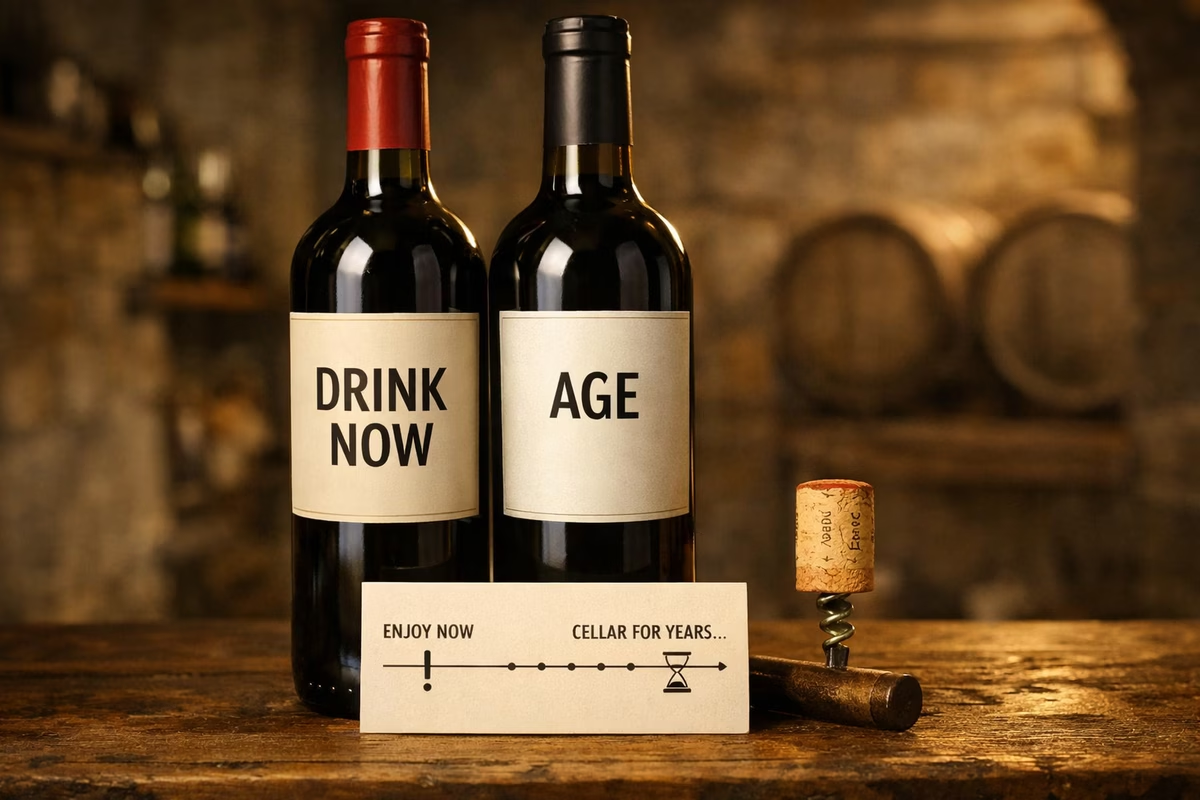
Deciding whether to open a bottle tonight or tuck it away for years has a peculiar thrill. But “aging wine” isn’t a magic trick where time automatically turns everything into something better. Time is a lens. For the right wines, it reveals complexity and texture you can’t get when they’re young. For the wrong wines, it simply fades the things that made them charming in the first place.
This guide is meant to make timing feel practical. You’ll learn what changes with age, how to read a wine’s “aging potential” using structure rather than mythology, and how to build a tiny, realistic aging plan without turning your home into a cellar.
The core idea: age is a trade
Wine doesn’t “improve” in one direction. It changes.
When wine is young, it often has bright, primary aromas: fresh fruit, flowers, citrus, herbs. Acidity feels vivid. Tannin (in many reds) can feel firm, sometimes aggressive. The wine can be thrilling, but also a bit disjointed.
With time, the trade begins:
- You lose some primary fruit intensity (the “freshness” dial turns down).
- You gain secondary and tertiary complexity (the “story” dial turns up).
- Texture often gets smoother (tannin can feel more integrated, not necessarily less present).
- Aromas shift from fruit-forward to savory, earthy, nutty, spicy, dried, honeyed.
The question is whether that trade matches what you want.
If you love bright, zesty, fruit-driven wine, your “peak” may be earlier than someone who loves forest floor and leather. Neither is more correct. Your preferences define the best time to open the bottle.
What actually changes as wine ages
You don’t need chemistry to make good decisions, but a little clarity helps.
Aromas: from primary to tertiary
Young wines lean heavily on primary aromas (the grape and fresh fermentation). With time, you often see tertiary development: dried fruit, tobacco, mushroom, leather, roasted nuts, honey, caramel, tea, earth, and “old library” notes.
Those descriptors can sound dramatic. In practice, it’s often subtler: the wine smells less like “blackberry” and more like “blackberry plus cedar plus something savory.” Complexity is not a single note; it’s layers.
Texture: integration is the real prize
When people say a wine “needs time,” they often mean it needs integration. Young structured wines can have fruit in one place, tannin in another, acid in a third. Age can knit those together so nothing feels like it’s standing apart.
Integration is why people cellar. A mature wine can feel less like a list of components and more like one coherent object.
Sweetness and acidity: perception shifts
As fruit aromas fade and texture changes, your perception of sweetness can change too. A wine that felt plush and sweet-seeming when young may feel drier and more savory later.
Acidity is a backbone. High acidity helps wines stay lively as other elements evolve. It’s one of the clearest signals of aging potential.
Tannin: not a disappearance, a refinement
Tannins don’t simply vanish. They often polymerize and feel less coarse—more like a fine fabric than sandpaper. The shape of tannin changes. That’s why the same wine can feel “too tannic” at year two and “silky and structured” at year ten.
The four structural pillars of age-worthiness
If you want to decide aging potential without memorizing regions, focus on structure. Four pillars matter most:
1) Acidity
High acidity is like a spine. It keeps wine from feeling flat as it develops. It also helps preserve aromatic detail.
Many classic age-worthy whites are age-worthy not because they are rich, but because they combine richness with serious acidity.
2) Tannin (for reds)
Tannin is both a preservative and a framework. A wine with firm tannin can hold shape for years, especially when balanced by acidity and fruit concentration.
If you dislike tannin when it’s young, aging can be your friend—if the wine has the other pillars.
3) Concentration
Concentration doesn’t mean “heavier.” It means the wine has enough flavor density that time won’t hollow it out.
This can come from old vines, low yields, careful winemaking, or simply a great site and vintage. Concentration helps wines remain interesting after primary fruit recedes.
4) Sugar (and sometimes alcohol)
Residual sugar dramatically extends lifespan when paired with acidity. That’s why many dessert wines and off-dry high-acid whites can age beautifully.
Alcohol can contribute to longevity in some styles, but very high alcohol without acidity can accelerate the feeling of heaviness rather than improve balance over time.
If you’re scanning for a quick signal: wines built on acid + tannin + concentration are often candidates for aging.
Wines that usually reward patience (and why)
Age-worthiness is not restricted to expensive bottles, but it is more common in wines that are built with a long arc in mind.
Structured reds
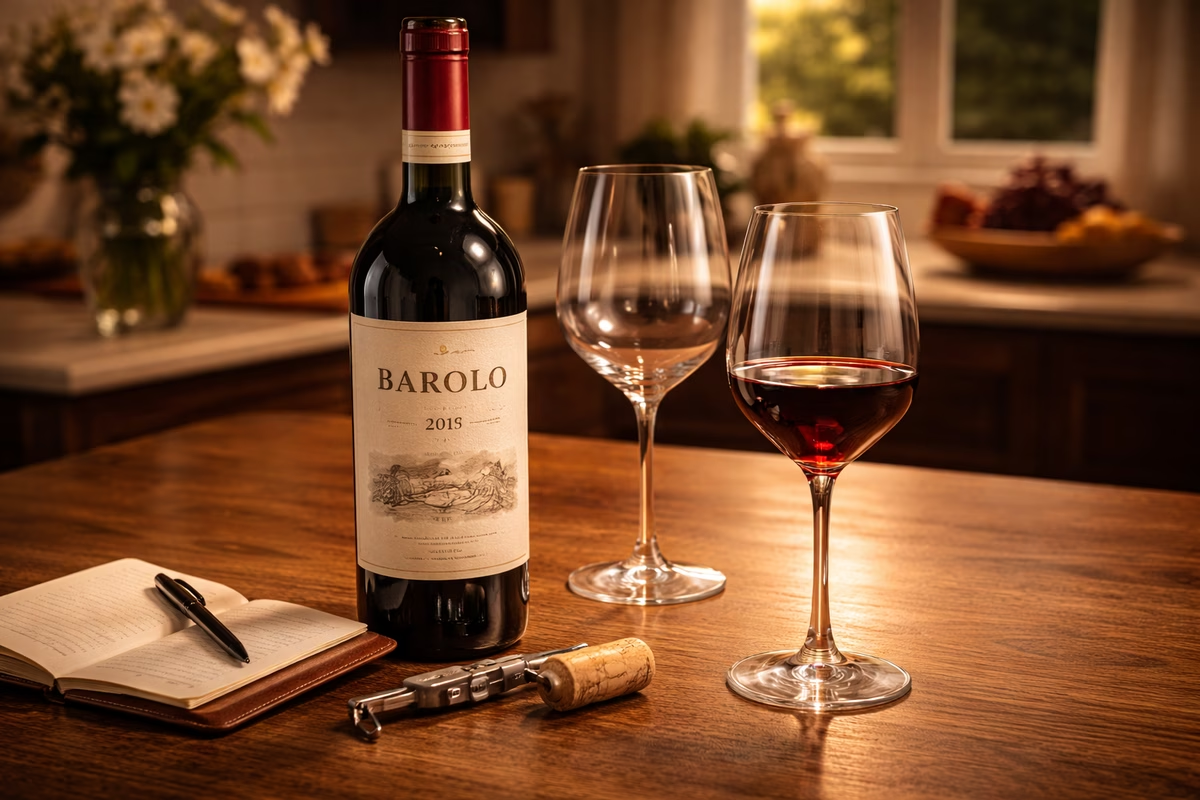
Many structured reds benefit from time because their tannin and acidity are meant to integrate.
Think of classic, tannin-structured categories: wines that can feel “tight” when young, then broaden and become more expressive later.
If you’re using your site’s baselines, explore structured grapes like Cabernet Sauvignon and Syrah as reference points.
High-acid whites with depth
Some whites age not by becoming “bigger,” but by gaining savory complexity and textural roundness.
High-acid whites can develop honeyed, nutty, and tea-like notes, especially when the wine has enough concentration to hold interest.
Sweet and fortified wines
Sugar and/or spirit can preserve wine for a very long time. Even if you’re not collecting them, knowing this helps you avoid a common mistake: assuming sweetness means “drink immediately.” In many cases, it means the opposite.
Wines best enjoyed young (and why)
Many wines are designed for immediacy. That’s not a flaw; it’s a style.
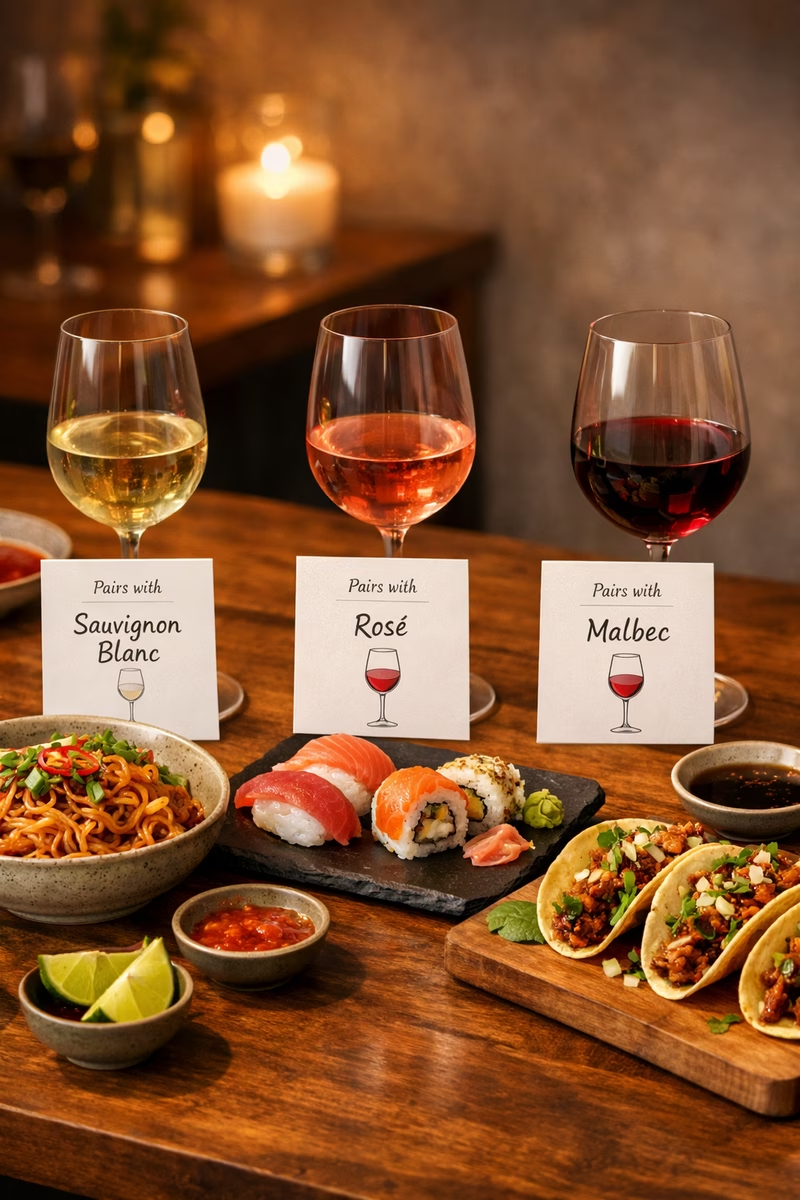
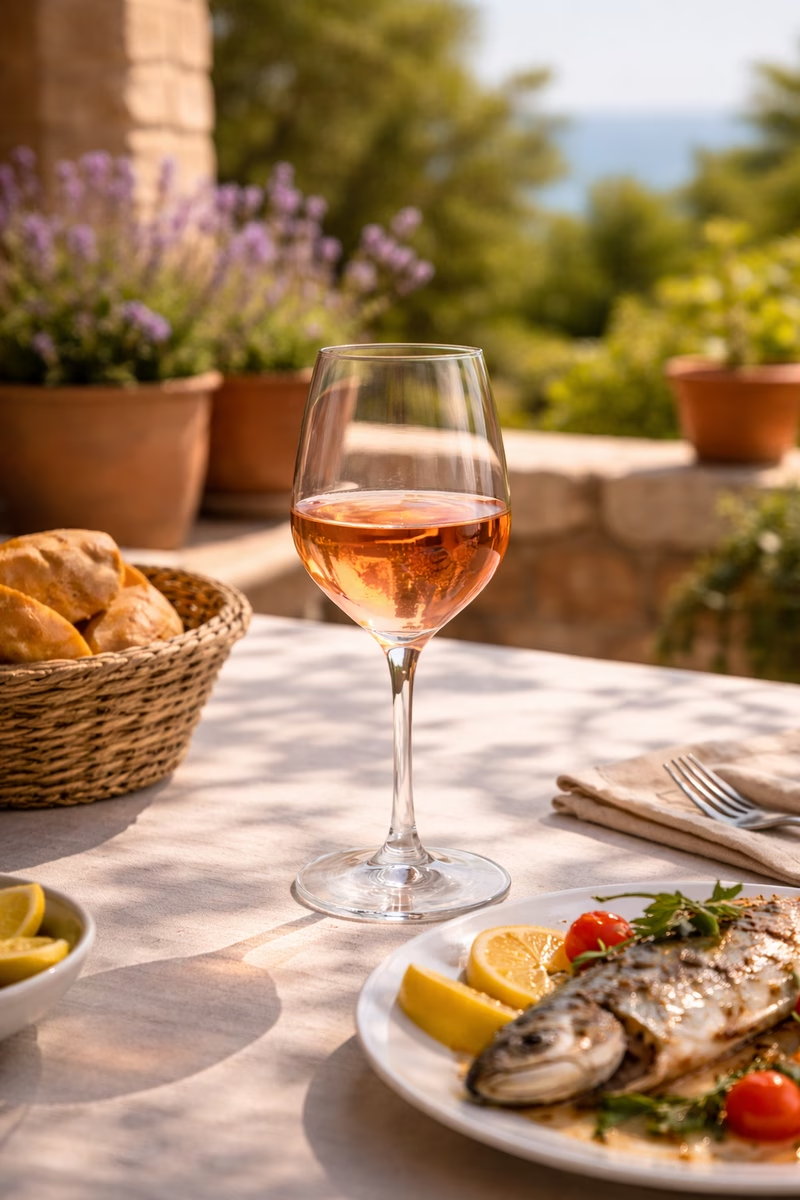
Fresh, aromatic whites often lean on delicate primary aromas that time will fade. Many rosés are built for brightness and energy, not long development.
Light, fruity reds can be wonderful young because their charm is about freshness and drinkability.
If your favorite wines are zippy, floral, and bright, you might be happiest drinking earlier and using temperature and decanting (when appropriate) to fine-tune the experience rather than waiting years.
A practical decision checklist (tonight vs later)
If you’re deciding in the moment, use a short checklist that connects structure to action.
1) Is it built on structure or perfume?
If the wine is built on structure (acid + tannin + concentration), aging is plausible.
If it’s built on perfume (floral, zesty, delicate, easy), the best moment is often earlier.
2) Does it feel tight or ready?
“Tight” often means the wine is closed aromatically and the tannin feels out in front. You have three options:
- Age it (if the wine has structure).
- Decant it (if it’s young and structured).
- Serve it slightly cooler (often helps texture and alcohol balance).
If it feels open, aromatic, and balanced—if the tannin doesn’t dominate and the finish feels coherent—it’s ready.
3) What’s the opportunity cost?
This is underrated. If you’re not confident a bottle will improve, the safest choice is often to drink it now when you can enjoy it, and use the lesson to buy a more age-worthy bottle next time.
Cellaring is not a moral achievement. It’s a tool.
Reading the bottle without memorizing regions
You can extract useful hints from the bottle without becoming a label expert.
Vintage (how old is this already?)
For many everyday wines, a newer vintage often means fresher and better. For wines sold with some built-in aging (certain structured reds), a few years of age might already be part of the intended arc.
Alcohol percentage (a proxy, not a verdict)
Higher alcohol often correlates with ripeness and body. That can be delicious, but if acidity doesn’t match, the wine may age less gracefully.
Lower alcohol can signal a fresher style, though there are plenty of exceptions.
Sweetness cues
Even a little residual sugar can extend lifespan when paired with acidity. Don’t assume sugar means “simple.” In many classic styles, it’s a stabilizer and a balancing tool.
Winemaking terms
Words like “reserve,” “riserva,” and “gran reserva” can signal that the producer expects some development (often from time in barrel and bottle), but they are not guarantees of aging potential.
When in doubt, trust the wine in the glass more than the word on the label.
Build a small aging plan (without committing your life to it)
The best way to learn timing is not to buy one expensive bottle and hope. It’s to build a tiny vertical of something you can repeat.
The three-bottle ladder
Choose one wine you can buy three of (same producer, same cuvée). Then open:
- Bottle 1: now (baseline)
- Bottle 2: in 3–5 years (early development)
- Bottle 3: in 8–12 years (mature window)
This teaches you more than reading ten articles. You’ll learn how your palate responds to age.
If you don’t want to wait that long, compress the ladder: now, in one year, in three years. The point is comparison.
What to record (simple notes that actually help)
Don’t write novels. Record structure:
- Acid: low/medium/high
- Tannin (reds): soft/firm/aggressive
- Fruit: fresh/ripe/dried
- Aroma type: primary/secondary/tertiary leaning
- Finish: short/medium/long and one word (clean/savory/spicy)
Those notes tell you when a wine is peaking for you.
Storage and serving: make age possible
You don’t need a professional cellar, but you do need stability.
Storage basics
- Steady temperature matters more than the exact number. Around 12–14°C (54–57°F) is a classic target, but “steady and cool” beats “perfect but swinging.”
- Darkness protects aroma.
- Low vibration helps long-term stability.
- Humidity matters mostly for cork health over long timelines.
If you can’t store at cellar temps, consider shorter aging horizons. A year or two in a cool closet can still be educational.
Serving mature bottles
Older wines can be delicate. Gentle handling helps.
If a bottle has sediment, decant carefully to keep the pour clean. If the wine is very old and aromatic, aggressive aeration can cause it to fade quickly. In those cases, a gentle decant (or even just careful pouring) is often better than a long, wide-bellied aeration.
For temperature and decanting technique, connect this guide with Serving Temperature and Decanting.
A few smart scenarios
If you want decision-making examples that feel real:
Scenario: the structured red that tastes hard
If a young structured red tastes grippy and the aroma is muted, that’s often a sign it’s built for time.
If you want it tonight, decant and serve slightly cool. If you want to learn, buy a second bottle and revisit in a couple of years.
Scenario: the aromatic white you love
If the wine is all perfume and brightness, it’s probably telling you its best story now.
Drink it young, and focus on serving temperature to keep the aromatics alive.
Scenario: you’re not sure, but you’re curious
Drink it now and take notes. Curiosity is the skill. Every bottle is feedback.
Final thought
Cellaring is patient curiosity: a few thoughtful purchases, careful notes, and the occasional act of restraint. The real win isn’t owning old bottles; it’s learning timing—so your openings become less random and more precise.