Water resistance is one of the most misunderstood promises in watches because the words sound more absolute than the engineering. A caseback says 30 meters, 100 meters, or 200 meters, and it is tempting to read that number like a depth guarantee for ordinary life. Then the watch fogs after a hot shower, a crown was not fully closed, or an old gasket lets moisture through during a swim that seemed harmless.
The calmer way to think about water resistance is that a watch is a small sealed system that ages. The rating describes what the watch was designed and tested to handle under controlled conditions. Your daily life adds temperature changes, soap, impact, sweat, crown use, strap choices, service history, and time. A new dive watch with fresh gaskets is a different object from the same watch after years of desk knocks, beach sand, and a crown that has been pulled out hundreds of times.
This does not mean you should be afraid of your watch. It means you should treat water resistance as maintenance, not mythology. A watch can be both sturdy and vulnerable. The trick is knowing where the vulnerability usually lives.
The seal is a system, not a slogan
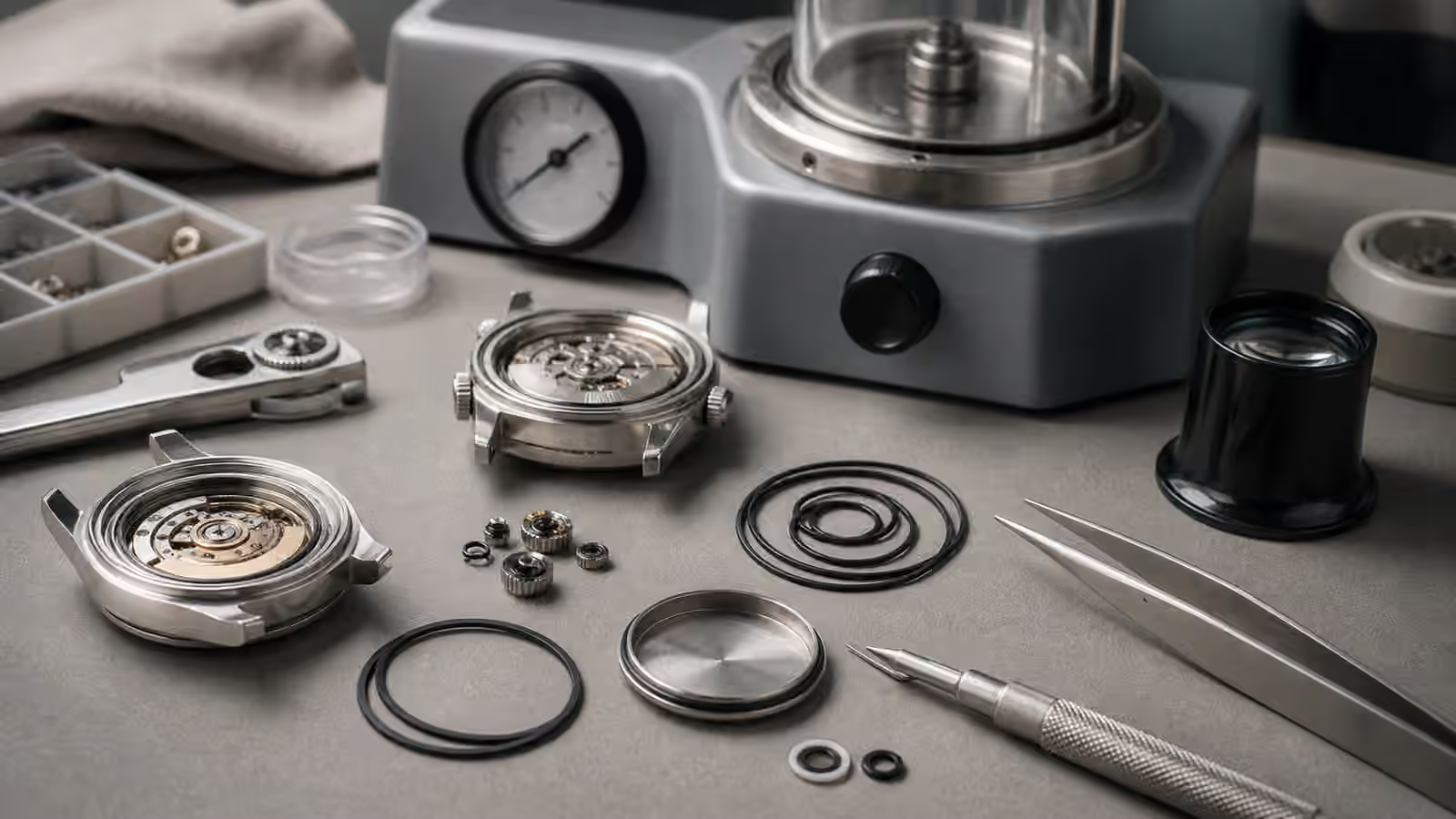
A water-resistant watch keeps moisture out through a set of controlled entry points. The caseback needs a gasket. The crystal needs a seal. The crown tube needs one or more gaskets. Pushers, if the watch has them, need seals too. A screw-down crown can add security, but it still depends on the condition of the tube and gasket. A thicker case does not save a neglected seal. A famous model name does not make old rubber young again.
Gaskets are usually small, plain, and invisible to the owner. They are also the whole story. Rubber and synthetic seals compress, dry, wear, and take shape over time. Heat and chemicals can speed that aging. A watch that passed a pressure test years ago may not pass one today. The case may look perfect while the seal is tired.
This is why water resistance belongs with Watch Care rather than only with sport watches. Care is not just polishing scratches or wiping a bracelet. It is understanding that a watch has hidden consumable parts. If you plan to swim with it, travel with it, or use it around water regularly, pressure testing becomes part of ownership.
Meters are not ordinary meters
The number on the dial or caseback is often the source of confusion. Thirty meters does not mean you should confidently take the watch thirty meters underwater. The rating comes from standardized testing conditions, not from a guarantee that every real-world situation at that nominal depth is safe. Movement, pressure changes, seals, temperature, and use history complicate the simple number.
For daily life, it helps to translate ratings into habits. A low splash-resistant watch may handle handwashing if it is in good condition, but it is not a swimming watch. A 100-meter watch from a reputable maker, kept in good condition and pressure tested, is usually more comfortable around swimming than a dress watch with a modest rating. A true dive-oriented watch is built with more margin, but it still deserves fresh seals and a closed crown.
The rating should be read together with the design. Does the watch have a screw-down crown? Does it have pushers? Is it vintage? Has it been opened recently? Was it pressure tested after service? Is the crystal acrylic, mineral, or sapphire? Is the caseback screwed, snapped, or otherwise sealed? A single printed number cannot answer all of that.
The crown is the everyday risk
The crown is the part people touch most, and it is often where trouble begins. Setting the time, winding a mechanical watch, changing the date, or forgetting to push the crown fully in can turn a sealed case into a vulnerable one. A screw-down crown helps only when it is actually screwed down correctly. Cross-threading, dirt, or rushing can damage the system.
Make a habit of checking the crown before water. It is a small action, but it prevents a lot of regret. Do not operate the crown or pushers underwater unless the watch is explicitly designed for that use and you understand the instructions. Even then, caution is cheap. Water pressure against a moving seal is less forgiving than water against a closed one.
On chronographs, pushers deserve special respect. Many chronographs are not meant to have pushers used in water. Some specialized models can handle it, but they are exceptions. If you are unsure, assume the pushers should stay alone when wet.
Showers are worse than they look
People often ask whether they can shower with a water-resistant watch. The practical answer is that showering is a bad habit even when the watch would probably survive. Heat expands materials. Soap and shampoo are not the same as clean water. Steam can find weak seals. A leather strap will suffer. The watch gains almost nothing from being there.
This is where watch ownership becomes less about bravery and more about discipline. The watch can come off for ten minutes. The fact that a robust watch might survive the shower does not make the shower a useful test. If you want the watch to last, keep unnecessary heat, soap, and chemical exposure away from it.
The same logic applies to hot tubs and saunas. Heat is hard on seals, and rapid temperature changes can create stress. A watch that is fine in a cool pool may not deserve a hot tub. Water resistance is not a license to ignore temperature.
Straps change the experience
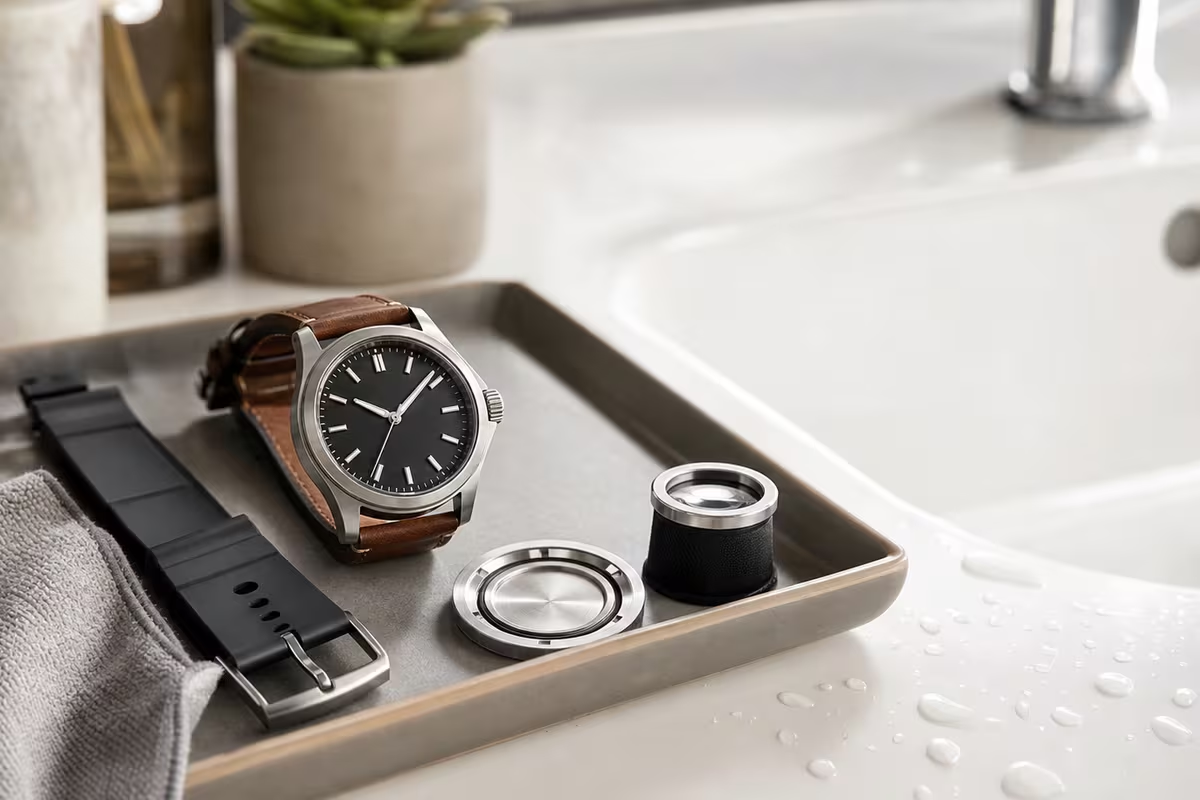
The case may be water resistant while the strap is not. Leather and water are a poor long-term match. A leather strap can darken, stiffen, smell, stretch, or weaken when repeatedly soaked. A dress watch on leather should be treated differently from the same watch on rubber or a bracelet. Watch Straps and Bracelets explains the comfort and material side, but water adds a sharper boundary.
Rubber, fabric, and bracelets are generally better around water, though each has its own cleanup needs. Saltwater should be rinsed off with fresh water if the watch is designed for swimming and the crown is secure. Sand should be treated gently because grit can scratch and work into bracelet links, clasp points, and crown guards. After swimming, dry the watch and strap instead of dropping it damp into a box.
The right strap can also prevent false confidence. A watch on leather near a sink reminds you that it is not the day for water. A watch on rubber says the opposite. Owners sometimes make smarter choices when the strap matches the job.
Vintage watches need their own rules
Vintage water resistance is a fragile subject. A watch may have been rated for water when new, but decades of case wear, polishing, parts replacement, crystal aging, crown changes, and gasket deterioration can erase that practical protection. A vintage diver can look ready for the sea and still be a museum of old seals.
If a vintage watch matters to you, do not treat the original rating as a present-tense promise. Have it inspected by a watchmaker who understands the model. Ask whether pressure testing is appropriate, because some older watches may not be worth stressing if you have no intention of getting them wet. Sometimes the best answer is to enjoy the watch as a dry-weather object and let a modern watch handle the pool.
That is not preciousness. It is respect for age. A watch that survived decades should not have to prove itself in a sink because the dial once said a comforting number.
Fogging is a warning, not a quirk
Condensation under the crystal means moisture is inside the watch. Treat it as urgent. Do not wait to see whether it clears on its own and then forget it. Moisture can damage hands, dial surfaces, movement parts, and lubricants. The watch needs a qualified watchmaker, and sooner is better than later.
There are folk remedies for wet watches, but the serious answer is controlled opening, drying, inspection, and service judgment. A bag of rice is not a service center. If the watch has financial or sentimental value, get it handled properly.
The best outcome is never needing that decision. Check the crown, avoid heat and soap, pressure test before water-heavy use, change gaskets during appropriate service, and match the watch to the day. Water resistance is not a dare. It is a working condition that you preserve.
Wear the watch, but know the deal
A good watch is meant to be lived with. Scratches, rain, travel, handwashing, and summer heat are part of ownership. The goal is not to turn every wristwatch into a fragile heirloom. The goal is to know which risks are normal and which are pointless.
If the watch is modern, properly sealed, pressure tested, and built for water, then swimming may be exactly the life it was made for. If it is a slim dress watch on leather, it belongs away from the sink. If it is vintage, assume age has changed the promise. If the crown is open, all ratings are theater.
Water resistance becomes simple once you stop asking what the printed number lets you get away with. Ask instead whether the seals are healthy, whether the design fits the activity, whether the strap belongs near water, and whether the watch has been maintained for the job. That way the watch can stay useful, honest, and dry inside, which is the only water-resistance result that matters.