I didn’t plan to take only one watch on a three-week trip. I planned to take three.
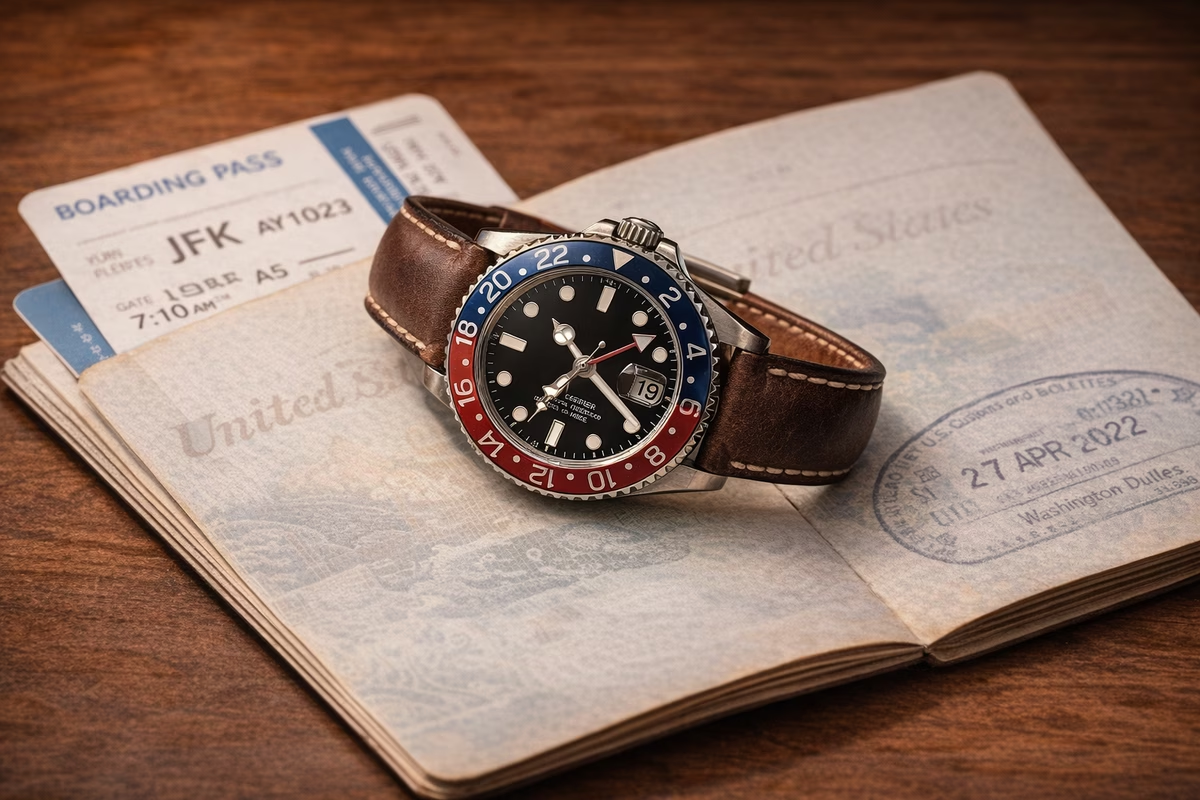
There was a packing rationalization for each one: the diver for beach days, the dress watch for the two nice dinners I’d booked, and the GMT for time-zone tracking during the transit legs. Three watches, three moods, three versions of myself distributed across a nylon watch roll that took up more space in my bag than my toiletries.
The night before I left, I looked at the watch roll and the half-packed bag and felt the particular exhaustion of someone who has turned a trip into a logistics problem. So I took one watch—the GMT, because it was the most practical—and left the other two in the drawer.
It was the best packing decision I’ve ever made.
The First Lesson: One Watch Simplifies Everything
The immediate relief was physical. My bag was lighter. My wrist made one decision per day instead of three. I didn’t spend breakfast wondering if this was a “diver day” or a “dress watch day.”
But the deeper relief was mental. A single watch on a trip removes the performance. You stop thinking about what the watch says about you and start thinking about what it does for you. It tells the time. It tracks a second time zone on the bezel. It sits on your wrist while you eat unfamiliar food in an unfamiliar city, and it’s the one constant—the thing that went to sleep in one country and woke up in another, just like you.
I hadn’t expected to bond with a watch. But by the third day, the GMT felt less like an accessory and more like a companion. It was the only object from home that was always on my body.
Lisbon: Where I Started Noticing Time
The trip started in Lisbon. I’d been there before, but this time I was moving slower—no work email, no meetings, no schedule beyond “eat well and walk.”
The first thing I noticed was how differently I related to time without a phone alarm or a calendar notification. The watch on my wrist was analog. It showed the time, but it didn’t demand anything. It didn’t buzz. It didn’t display a countdown to the next obligation. It just showed two hands making their slow circle, and I glanced at it when I wanted to—not when it told me to.
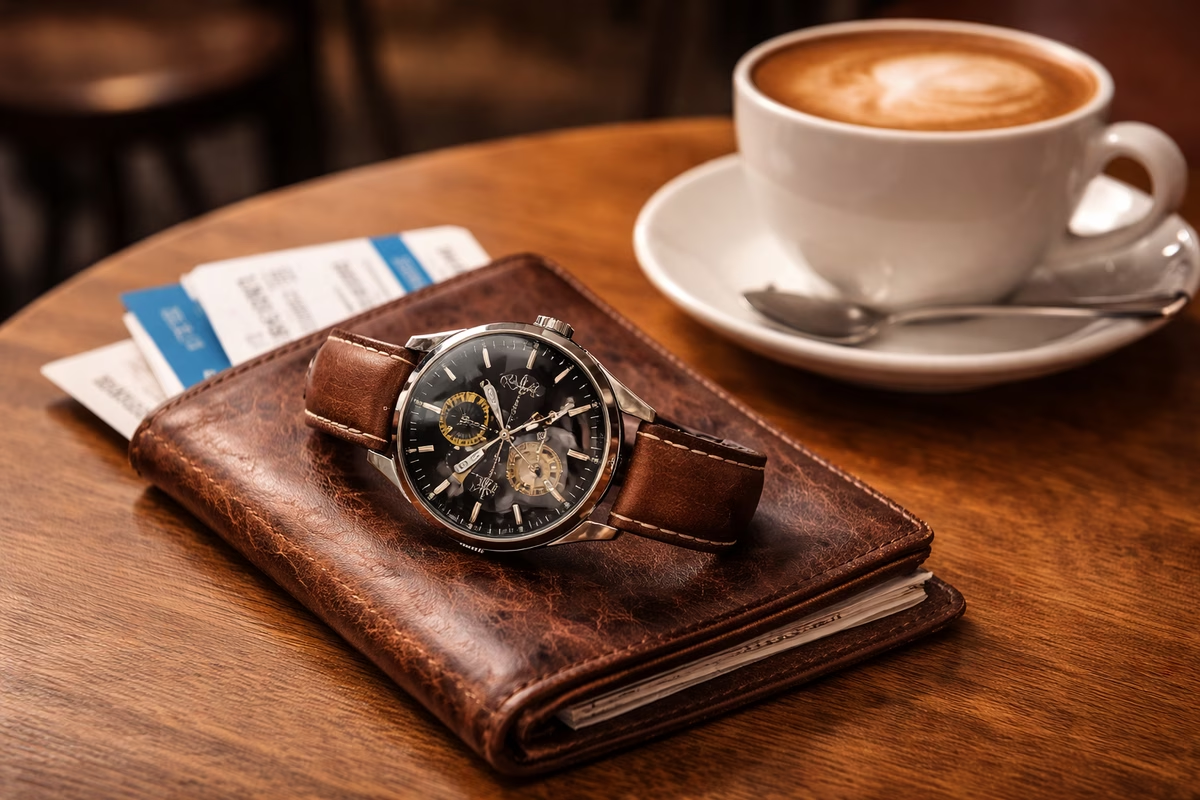
In Lisbon’s Alfama district, I sat in a small café with a pastel de nata and a bica (the local espresso), and I watched the second hand on the GMT sweep around its dial. Not because I was bored—because the movement was beautiful. The sweep of a mechanical second hand is alive in a way that a phone screen’s digital clock isn’t. It moves continuously, not in jumps. It’s hypnotic in small doses.
An older man at the next table noticed me looking at the watch and nodded. “Bonito,” he said. Beautiful. Then he held up his own wrist—a vintage Omega Seamaster, scuffed and loved, probably from the 1970s. We didn’t share a language, but we shared a brief moment of mutual appreciation for small mechanical things.
That happened more than I expected on this trip.
Istanbul: A Watch Market and a Lesson in Heritage
Istanbul was the second stop, and Istanbul has a watch culture that caught me off guard.
In the Grand Bazaar, between the spice sellers and the lamp merchants, there are watch dealers—some selling new fashion watches, others selling vintage pieces with stories. I stopped at a stall where an older dealer had a tray of mid-century watches: Seikos, Citizens, a couple of Orients, and a few Swiss brands I didn’t recognize.
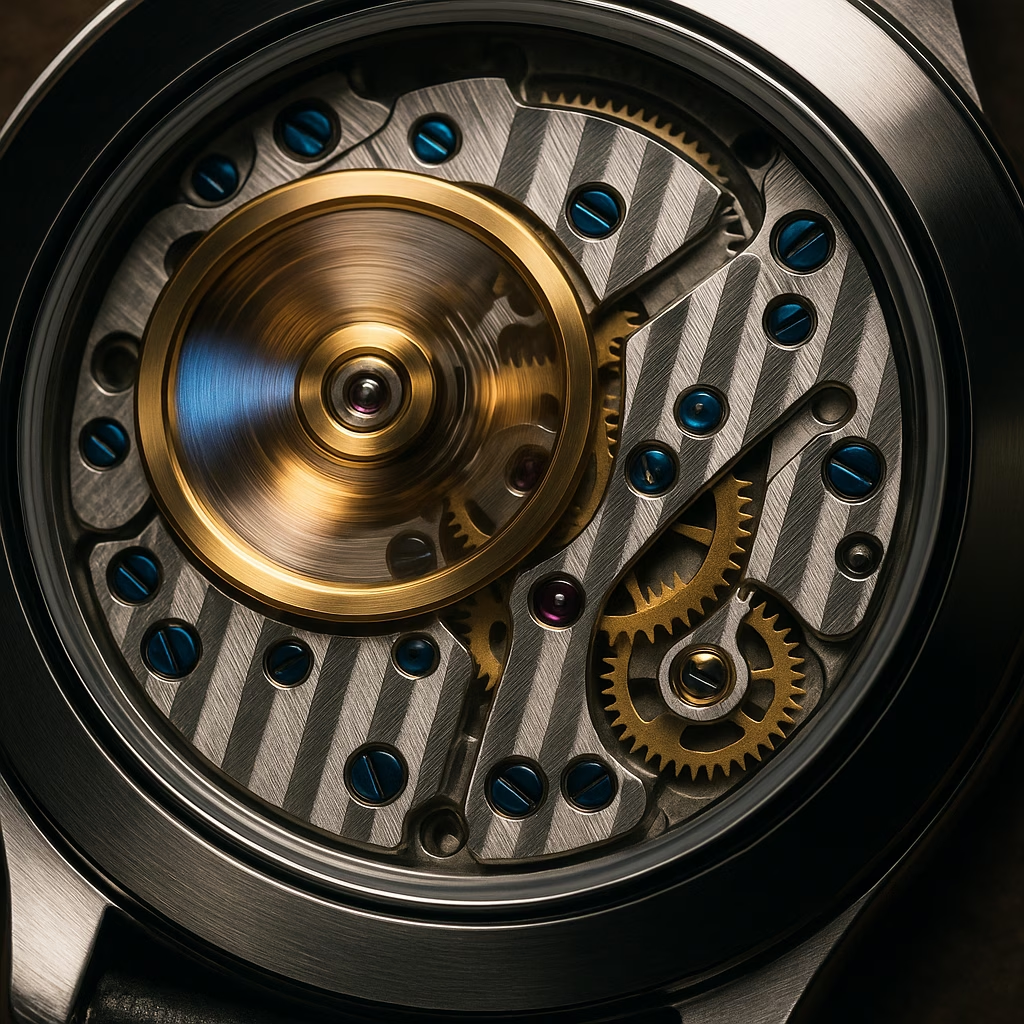
He noticed my GMT immediately. He asked to see it—not to appraise, just to appreciate. He held it under his desk lamp, turned it slowly, and pointed to the movement visible through the caseback. “Good,” he said. Then he showed me his own watch—a vintage Omega Constellation from the 1960s, given to him by his father, who had received it as a wedding gift.
Three generations on one wrist. The watch had been to more places than I would ever visit, and it was still running—still ticking through the days, decades after the person who received it as a gift had passed it forward.
That encounter reframed something for me. I’d always thought of watches as personal objects—my watch, my taste, my choice. But in Istanbul, surrounded by pieces that had outlived their original owners and would outlive their current ones, watches felt more like shared objects. Things that pass through lives rather than belonging to one.
For context on how watches carry history, see the Inherited Watch story.
Tokyo: Precision and Patience
Tokyo is the mechanical watch capital of the world in a way that Switzerland is not. Switzerland makes the most prestigious watches. Tokyo has the most passionate culture of wearing, collecting, maintaining, and discussing them.
I visited a watch shop in the Nakano Broadway—a multi-floor complex of specialty stores that includes some of the most curated vintage watch dealers on earth. The selection was staggering: thousands of watches, organized by brand, era, and condition, each one individually inspected and graded. The precision of the operation—the care with which each piece was catalogued—felt very Japanese. It wasn’t just commerce. It was curation.
I spent an hour talking (through halting translation) with a dealer who specialized in vintage Grand Seikos. He explained the difference between the 36,000 vph movement from the 1960s and the Spring Drive of the 2000s. He showed me the zaratsu polishing on a case—a technique that creates a distortion-free mirror surface that is, technically, unnecessary and, aesthetically, extraordinary.
What struck me was not the watches themselves (though they were beautiful). It was the attention. The dealer handled each watch with a care that suggested every one was someone’s future treasure. The culture around mechanical watches in Tokyo is not about expense or status. It’s about respect for craft—the conviction that a well-made small thing deserves the same attention as a great painting or a perfect meal.
For more on what makes movements special, see the Movements guide.
Rural Portugal: Time Slows Down
The final leg of the trip was a week in rural Portugal—a rented farmhouse outside a village with no traffic lights, one café, and a population that appeared to operate on a completely different temporal system.
Lunch happened when lunch happened. Shops closed when the shopkeeper felt like it. Conversations lasted as long as they lasted, which was sometimes an hour for what should have been a five-minute transaction. The clock on the village church tower showed a time that I’m fairly certain was approximate.
I found myself checking my watch less. Not because I didn’t care about the time, but because in a place where time is treated as a suggestion rather than a contract, glancing at your wrist feels slightly absurd.
But I still wore the watch. And I still appreciated it—not as a timekeeping device, but as a tactile pleasure. The weight on the wrist. The smooth bezel rotation when my hands were idle. The faint ticking, audible only in perfect silence, when I held it close to my ear at night.
A watch in a quiet place is a different object than a watch in a busy city. In a city, it’s a tool. In a quiet place, it’s a metronome for your thoughts—a reminder that seconds are passing, that the afternoon is finite, that this particular moment of sunlight on stone will not come again.
Coming Home
I landed back home after three weeks with one watch, one carry-on, and a changed relationship with both objects and time.
The watch had been on my wrist for 504 hours across four countries. It had been rained on in Lisbon, steamed in an Istanbul hamam, and slept through by a cat in rural Portugal. It was scratched in two new places. The bracelet had a patina that wasn’t there when I left.
Those marks were not damage. They were evidence. Evidence that the watch had been somewhere—that it had participated in a trip rather than waiting in a drawer for a sufficiently special occasion.
When I got home, I opened the drawer and looked at the two watches I’d left behind. They were pristine, exactly as I’d placed them. And for the first time, “pristine” felt like a shortcoming. A watch that never gets scratched is a watch that never goes anywhere.
I didn’t take three watches on my next trip either.
What Travel Teaches About Watches
A watch is a relationship with time, and travel changes that relationship. At home, time is a schedule. On the road, time is an experience. The same watch tells both kinds of time, but you feel them differently.
One good watch is enough. The hobby encourages collecting. Travel encourages simplicity. Both are valid, but the watch you wear every day for three weeks becomes part of you in a way that a rotation never can.
Scratches are stories. Every mark on a watch is a record of somewhere you were and something you did. A perfect, unworn watch has no stories. A scratched, loved watch has dozens.
Watches connect strangers. In four countries, on multiple occasions, a visible watch started a conversation that language alone couldn’t have. The watch community is global, and a mechanical watch on the wrist is a universal signal of shared interest.
Next Steps
- Read Watch Care and Maintenance for keeping your travel watch healthy
- See Straps and Bracelets for choosing the right strap for different conditions
- Explore Watch Styles Guide for understanding which watch works where
- Try The Secondhand Watch Hunt for another narrative about finding the right watch
- Check Watch History for the five-century story behind what’s on your wrist