Travel changes the way a watch is used. At home, the watch has a familiar drawer, tray, box, charger-free rhythm, and repair network nearby. Away from home, the same object has to pass through packing, airport routines, hotel rooms, weather changes, unfamiliar water, crowded streets, and tired moments when small systems fail. A watch that feels effortless on an ordinary Tuesday can become one more loose object to manage if the trip was not planned with it in mind.
The best travel watch habit is not to bring the most impressive selection. It is to bring the fewest watches that will actually serve the trip. One watch may be enough. Two may make sense if one is dressier or water-ready. More than that can be enjoyable for a collector, but each additional watch adds storage, attention, and the possibility of forgetting something in a pouch, hotel drawer, or bag pocket. Travel rewards clarity.
Choose roles before choosing watches
Begin with the trip, not the collection. A city work trip, beach holiday, hiking weekend, wedding weekend, and long family visit ask different things from a watch. The most useful questions are simple. Will there be water? Will there be formal clothing? Will you cross time zones? Will you be walking all day? Will you want a watch that attracts little attention? Will you have safe storage when the watch is not on your wrist?
Those questions often reduce the answer quickly. A single robust daily watch can handle many trips if it fits under sleeves, resists the water exposure you realistically expect, and feels comfortable for long days. A second watch may be justified if the first is poorly suited to a formal event or if you need a dedicated swimming watch. A travel roll full of watches may be fun, but it should be a deliberate pleasure, not a reflex from indecision.
The Watch That Crossed Time Zones makes the emotional case for travel watches, especially GMTs and world timers. The practical addition is that travel function is only one role. A GMT that is uncomfortable, too flashy for the setting, or poor around water may be less useful than a plain quartz watch you trust.
Pack watches like fragile tools, not jewelry tossed into luggage
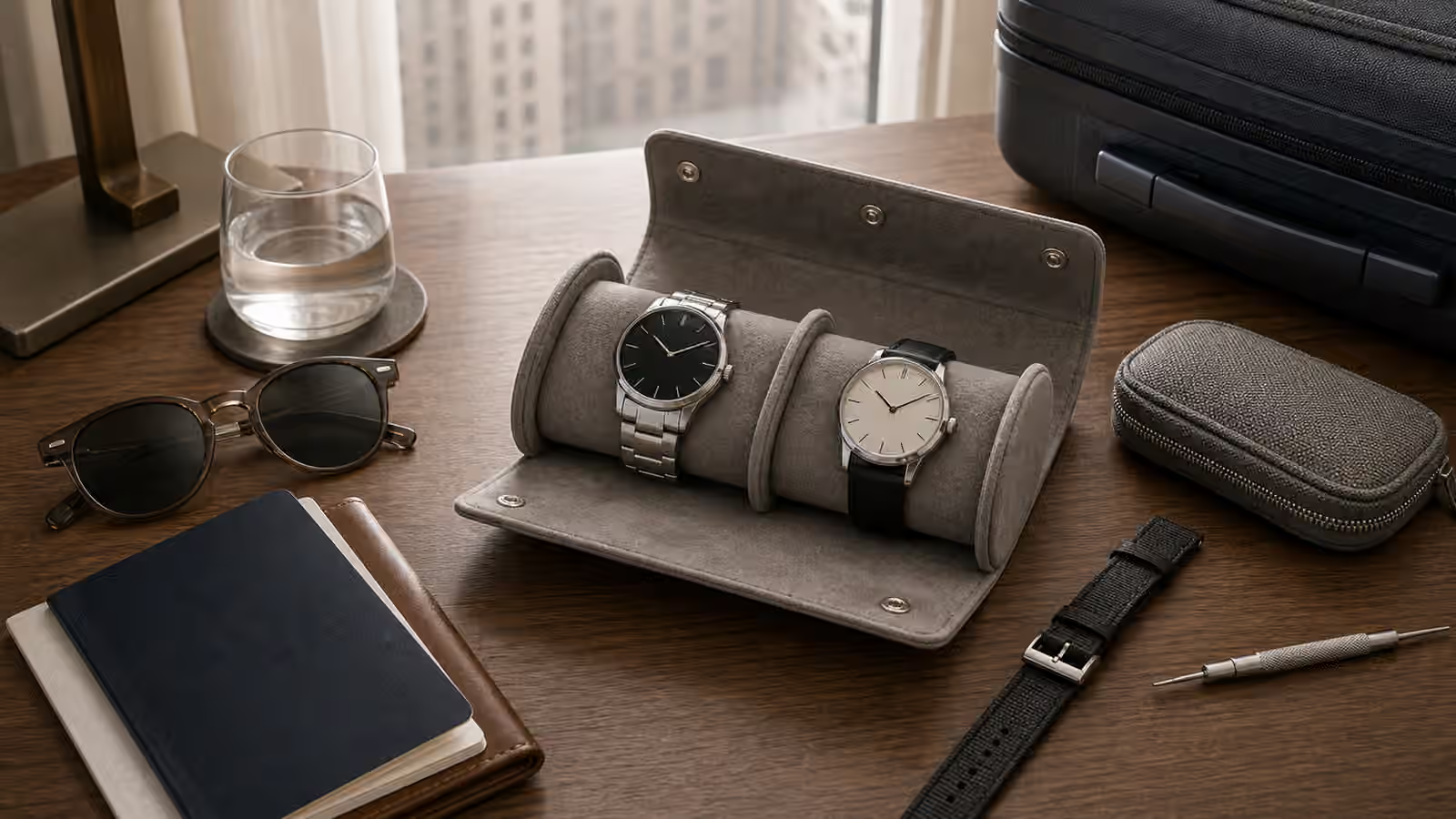
A watch should have a predictable place when it is not on the wrist. A soft pouch can work for one watch. A compact hard-sided case adds crush protection. A travel roll can be excellent if each watch is held separately and the roll does not press crowns, crystals, or clasps into hard edges when closed. The open presentation matters less than the closed shape inside a bag.
Avoid loose storage. A watch in a toiletry kit can meet liquids, metal grooming tools, and hard containers. A watch in a backpack pocket can meet keys, chargers, coins, and the corner of a laptop. A watch wrapped in clothing can disappear into laundry. None of these mistakes feels dramatic while packing, which is why they happen. The watch needs a home obvious enough that tired-you will use it.
Watch Storage and Winders covers home and travel storage in broader terms. On the road, compression and distraction are the main enemies. A case that protects well at home may be too bulky to carry, while a slim pouch may be perfect if you bring only one spare and keep it in your personal bag.
Keep control during transit
Watches that are not on the wrist should usually stay in carry-on or personal luggage rather than checked bags. The reason is practical control. You know where the watch is, you reduce handling, and you can avoid liquids, weight, and misplaced luggage. Security procedures vary by airport and country, so the evergreen habit is to stay calm, follow local instructions, and avoid creating a loose pile of valuable objects at the last second.
If you remove a watch during screening, place it in a zipped pocket or a small pouch before it goes into a tray. Do not balance it beside a phone, belt, and coins where it can slide, scrape, or be forgotten. If you keep it on, make sure the clasp is secure and the watch is not interfering with instructions. The best system is whichever one you can repeat without improvisation while tired and hurried.
Travel also changes attention. A watch that feels ordinary at home may draw interest elsewhere, and local context matters. This is not a reason for fear. It is a reason to choose thoughtfully. A quiet, comfortable watch often makes a better travel companion than one that constantly asks you to think about where it is.
Hotel rooms need a landing ritual
The most common travel loss is not dramatic theft. It is misplacement. A watch comes off before a shower and ends up on a sink edge. It is placed in a drawer during sleep and left there. It is wrapped in a shirt and packed into the wrong bag. It is tucked into a bedside corner, then hidden by receipts, chargers, and room keys. The solution is a simple landing ritual.
Choose one place in the room as the watch station. It might be the travel case, a zipped pouch, or a specific tray area away from water. Use it every time the watch leaves the wrist. Before checkout, make that place part of the room sweep along with chargers, passport, bathroom counter, and closet. If you brought spare straps, spring bars, or tools, keep them with the case rather than scattered across the desk.
Watch Collection Inventory and Photography is written for record keeping, but the same mindset helps travel. Knowing what you brought makes it easier to confirm everything is coming home. A quick phone photo of the packed watch case before departure can be useful, not as paranoia, but as a memory aid.
Water, heat, and straps behave differently away from home
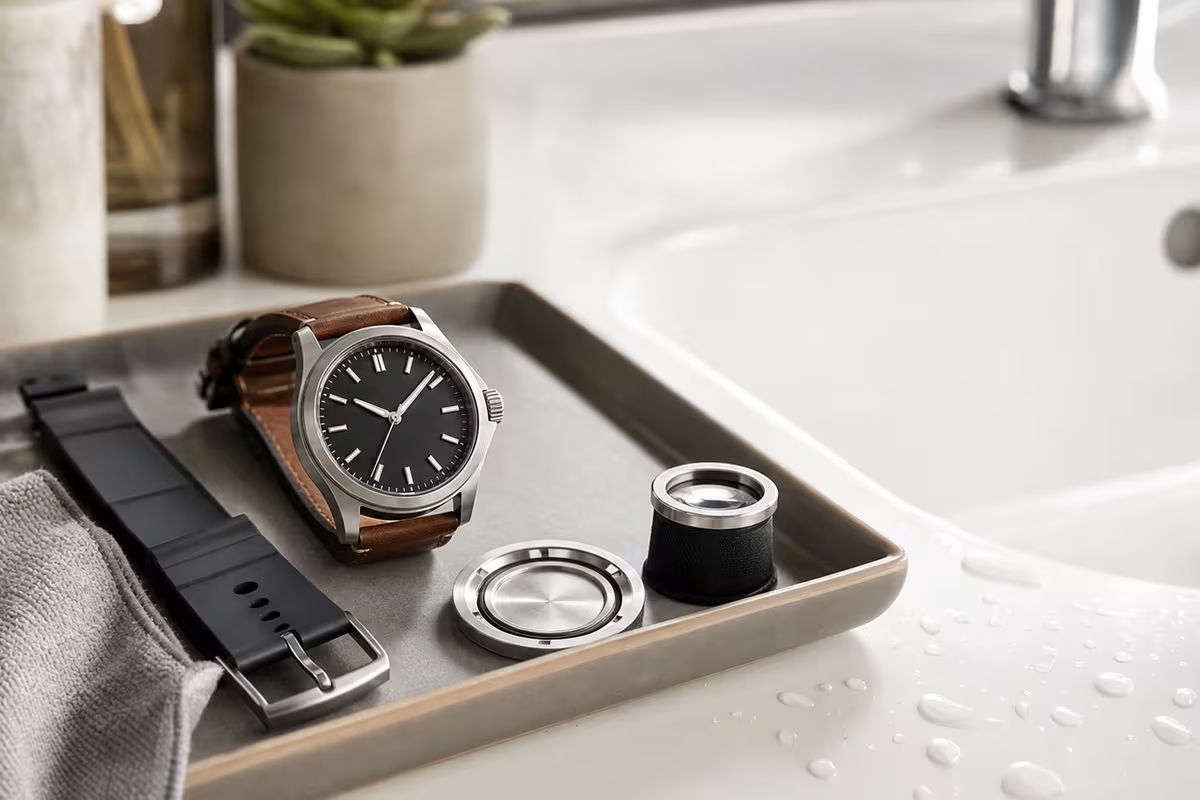
Travel often increases water exposure. Pools, beaches, rain, handwashing in unfamiliar sinks, boat spray, and humid rooms all change the watch’s environment. The case rating matters, but condition matters more. A watch suitable for swimming at home is still only suitable if seals are current, crown and pushers are handled properly, and the strap can tolerate the water. A vintage dress watch may be charming at dinner and wrong for a beach morning.
Watch Water Resistance in Everyday Life and Watch Gaskets and Pressure Testing belong in the travel reading path because trips tempt owners into assumptions. A dive-style bezel and sporty case do not prove a current seal. A screw-down crown left open is not protecting anything. A leather strap soaked in saltwater may suffer even if the case is fine.
Heat also matters. Direct sun through a hotel window, a hot car, or a sealed bag on a warm day can stress straps, adhesives, lubricants, and gaskets more than ordinary wear. Do not turn a watch into a dashboard object. If a solar quartz watch needs light, give it ordinary daylight rather than baking it. If a leather strap gets damp, let it dry before sealing it in a pouch.
Straps can make one watch do more
Packing an extra strap is often smarter than packing an extra watch. A bracelet can handle water and heat well, but a leather strap may make the same watch dressier. A rubber strap can make a watch more comfortable around water. A fabric strap can make a field watch feel casual and breathable. The change is small, light, and low-risk if you know how to do it properly.
That last condition matters. Do not make your first strap-change attempt on a hotel desk with bad lighting. Learn the watch at home. Use the right tool, protect the lugs, and carry spare spring bars if the watch uses standard ones. Quick-release straps can be convenient, but convenience is not a substitute for checking that the bars are seated. Watch Spring Bars and Strap Changes is the safer guide before travel experiments.
Strap choice also affects security and comfort. A bracelet with good micro-adjustment can be excellent through long flights and warm days. A stiff new leather strap may be unpleasant when walking for hours. A pass-through strap can add security if one spring bar fails, but it can also lift the case and change comfort. Try the travel setup before the trip, not on the first morning abroad.
Time zones are a habit, not only a complication
A GMT or world timer can make travel time feel visible. So can a simple watch set carefully. The key is to decide how you will manage home time, local time, and appointments. Some travelers set the watch to destination time once seated on the plane. Others keep home time until arrival. A GMT owner may leave the 24-hour hand on home time and move the local hour hand if the movement allows it. A quartz owner may simply reset quickly and move on.
There is no universal ritual, but there should be a ritual. Confusion usually appears when the watch, phone, boarding pass, hotel clock, and tired brain all show different assumptions. If the watch has a date, check whether a timezone change moved it unintentionally. If it has a mechanical calendar, avoid quick-setting in the danger zone described in Watch Calendar Complications .
The best travel watch is one whose time-setting behavior you understand before you need it. A beautiful travel complication used badly is less useful than a plain watch set with confidence.
Coming home is part of travel care
When the trip ends, give the watch a small reset. Rinse an appropriate water-ready watch after saltwater or sweat, then dry it carefully. Wipe bracelets and clasps. Let damp straps breathe. Check that spring bars and clasps still feel secure. Put spare links, straps, tools, and documents back where they belong. If the watch took a hard knock, saw water it should not have seen, or fogged under the crystal, treat that as service information rather than a story to ignore.
Travel can make a watch more meaningful because it attaches the object to places and days outside routine. The Watch That Went Everywhere captures that side. The practical habits are what let the story remain pleasant. Bring only what serves the trip, pack each watch in a real place, keep control during transit, use a hotel landing ritual, respect water and heat, and clean up when you return.
A good travel watch does not have to be exotic. It has to fit the itinerary and reduce friction. When the watch is chosen well and managed simply, it becomes one less thing to worry about and one more quiet thread through the trip.