Introduction
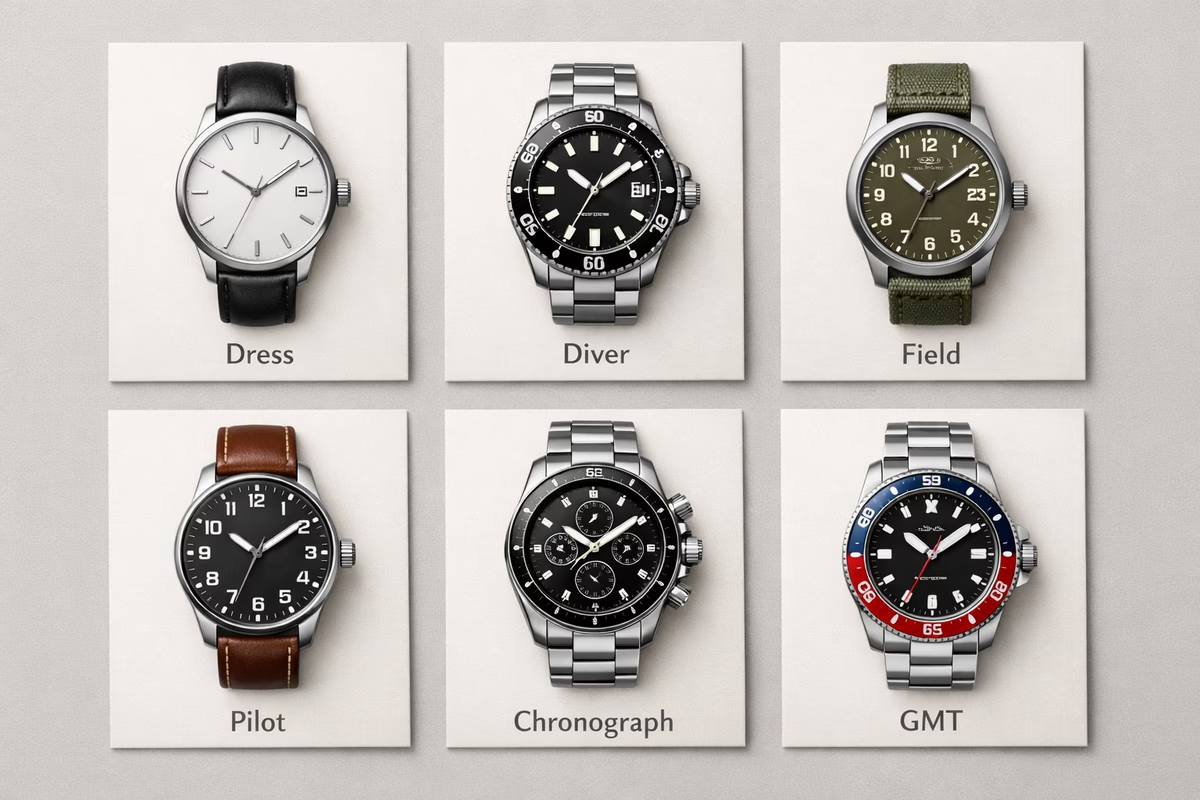
Watch styles are not random looks. Dress, dive, pilot, field, and chronograph watches started as tools for specific jobs.
That history still matters. A diver’s big markers and rotating bezel help with readability. A dress watch’s thin case helps it sit cleanly under a cuff.
Use this guide in two ways.
If you want one watch, pick the style that fits your life. If you want a small collection, think in roles. One for formal moments, one for daily wear, and one for rough use or travel.
Dress Watches
The dress watch is the quiet one. It is made to disappear under a cuff, look calm with tailoring, and avoid extra visual noise.
What makes a dress watch feel like a dress watch
Dress watches tend to be thin, balanced, and simple. That usually means a case in the mid-30s to around 40mm, a profile under about 10mm thick, and a calm dial. Time-only is the cleanest version. A date window is usually the furthest they go. Leather straps fit the style best.
Quartz is fine here. Hand-wound and automatic movements often allow a thinner profile and add a little ritual.
Classic examples
Entry level: Orient Bambino, Seiko Presage Cocktail Time, Tissot Gentleman. Mid-range: Longines Master Collection, Nomos Tangente, Oris Artelier. Luxury: Jaeger‑LeCoultre Master Ultra Thin, Patek Philippe Calatrava, Vacheron Constantin Patrimony.
When to wear it
Dress watches shine when the outfit has structure: weddings, business formal, evening events, and any time you want a calm, “finished” look.
A small rule that prevents most regrets
If you want the watch to behave like a dress watch, keep it under ~40mm and under ~10mm thick. That one constraint does more than any branding choice.
Dive Watches
Dive watches are the work boots of the watch world. They are built to be legible and durable, which makes them easy to wear every day.
The design logic (and why it’s still useful)
The classic dive watch recipe is purposeful: a rotating timing bezel, high contrast dial, and lots of lume. The goal is “readable at a glance” in poor conditions.
ISO 6425 is the formal “dive watch standard,” but you don’t need certification to buy a great diver. What you do want is honesty: real water resistance, a solid crown, and a bezel you can actually grip.
Most divers land around 200m of water resistance, use a screw-down crown, and have a unidirectional bezel. They also tend to be thick, so comfort matters.
Sub-styles you’ll see
Within the category you’ll see classic everyday divers (wearable size and 200–300m ratings), professional divers (thicker, deeper-rated, sometimes with a helium escape valve), and vintage-inspired divers (smaller proportions and domed crystals). Dive chronographs exist too, but they’re often chunky and more about the aesthetic than underwater practicality.
Classic examples
Entry level: Casio MDV106 Duro, Orient Kamasu, (used) Seiko SKX007, Islander divers. Mid-range: Seiko Prospex SPB143, Longines HydroConquest, Oris Aquis, Christopher Ward C60 Trident. Premium/luxury: Tudor Black Bay 58 / Pelagos, Omega Seamaster 300M, Rolex Submariner.
When to wear it
If you want a watch for weekday office use and weekend outdoors, a dive watch is usually the easiest choice. The downside is thickness.
Pilot / Aviator Watches
Pilot watches began as cockpit instruments. Readability comes first. They use big numerals, high contrast, and shapes that stay legible fast.
Even today, when actual pilots use avionics, the pilot watch survives because the design language is so clear. It looks like a tool, even when it’s worn as style.
What defines the pilot look
Pilot watches typically run larger (often 40–46mm) because more dial surface is easier to read quickly. Dials are high-contrast with big Arabic numerals, and many include a triangle at 12 so you can orient the watch at a glance. Hands are bold and frequently luminous. Useful complications are common: GMT for travel, chronographs for timing, and sometimes day-date for “daily utility.”
Sub-styles you’ll see
You’ll see Flieger Type A/B designs (German “B‑Uhr” heritage), GMT/world-time pilots built for travel, and pilot chronographs with more visual complexity and aviation timing cues.
Classic examples
Entry level: Laco Augsburg, Seiko pilot-style models, Citizen Nighthawk, Hamilton Khaki Pilot lines. Mid-range: Sinn 556 / 104, Oris Big Crown ProPilot, Longines Spirit. Luxury: IWC Pilot’s Watch lines, Rolex GMT‑Master II, Breitling Navitimer.
When to wear it
Pilot watches are excellent daily watches if you like clarity and a “tool” vibe. They’re usually too sporty for black tie, but they’re great for travel and casual-to-business casual wardrobes.
Chronographs
A chronograph is a watch with a built-in stopwatch. It used to be a serious tool for racing, flight, and timing events. Now most people buy one because they like the look and the extra action on the dial.
What makes chronographs tricky (and worth it)
Chronograph movements are complex, which usually means more thickness and more visual noise. That complexity is also the charm.
If you’ll actually use the timing function, prioritize legibility: sub-dials you can read, hands that don’t disappear, and pushers that feel crisp.
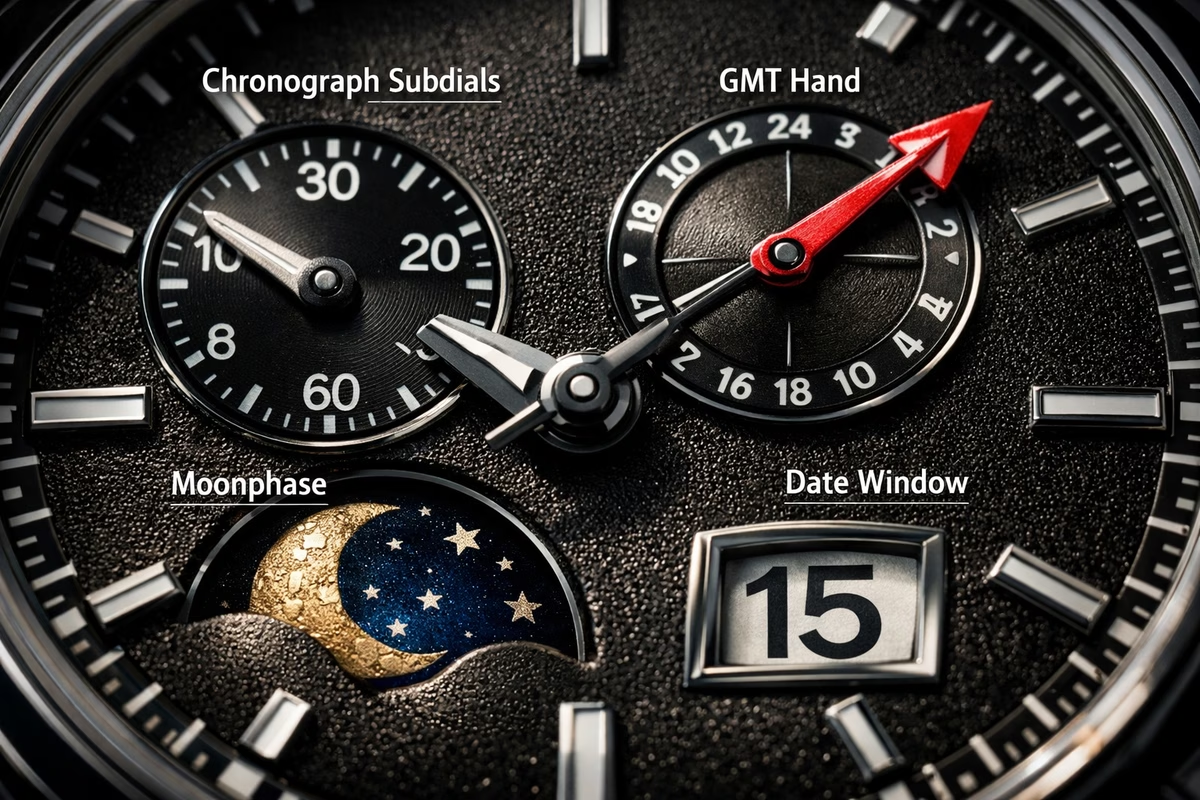
Chronographs bring pushers, sub-dials, and extra thickness, often 12 to 16mm, because the complication takes space. Some add a tachymeter bezel for motorsport flavor.
Sub-styles you’ll see
Racing chronographs lean into tachymeters and bold design; aviation chronographs borrow pilot styling; dress chronographs aim for a cleaner dial and slightly more formal balance.
Classic examples
Entry level: Seiko and Citizen chronograph lines, quartz chronos from major brands. Mid-range: Hamilton Intra‑Matic Chrono, Tissot PRX Chronograph (chunky but loved), Sinn chronographs. Icons: Omega Speedmaster Professional (Moonwatch), Rolex Daytona, Zenith El Primero heritage.
Field Watches
Field watches are simple, durable, and easy to read. They come from military needs, and they still work well because they are honest.
The field watch personality
Field watches are usually smaller and thinner than divers and chronographs, which makes them comfortable and versatile. They’re typically in the 36–41mm range, with clear numerals and sometimes a 12/24-hour scale. Straps skew practical: nylon, leather, simple bracelets. Water resistance is usually “enough for life,” not “a diver,” which is why field watches feel so easy as daily wear.
Classic examples
Entry level: Timex Expedition, Seiko 5, Citizen field lines. Mid-range: Hamilton Khaki Field Mechanical, Sinn 556 (field-adjacent modern classic). Iconic vibe: Rolex Explorer (field-luxury hybrid), many vintage military-inspired models.
GMT / Travel Watches
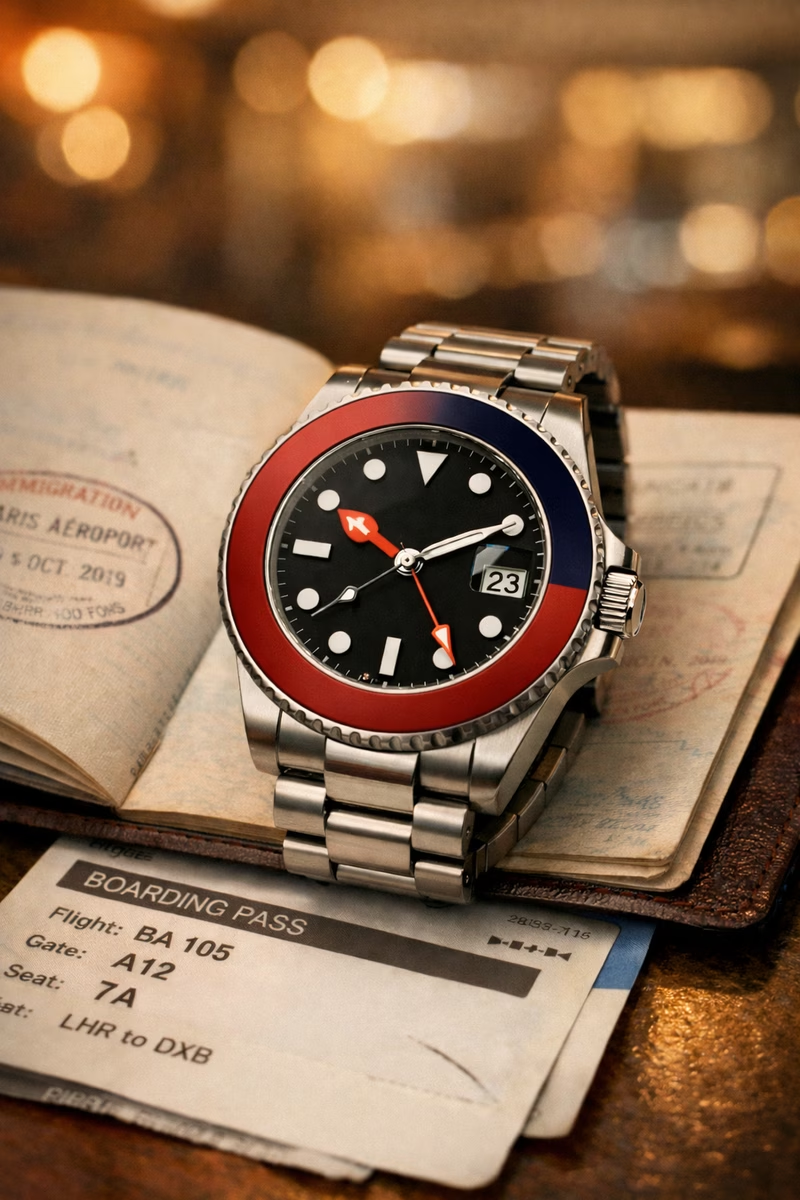
Travel watches exist for one reason. They help when your body is in one time zone and your mind is in another. A GMT watch lets you track home time and local time at once.
What to look for
GMT watches vary wildly, but the usability comes down to how the second time zone is displayed and adjusted. The basics are simple. A GMT hand makes one rotation every 24 hours, and you read it against a 24-hour scale on the bezel or dial. A traveler GMT lets the local hour jump independently. A caller GMT adjusts the GMT hand independently.
Classic examples
Entry level: Seiko and Citizen GMTs, many microbrand GMT options. Mid-range: Longines GMT lines, Christopher Ward GMTs. Icon: Rolex GMT‑Master II (the category-definer), Grand Seiko GMTs.
Racing / Motorsports Watches
Motorsport watches are about measuring speed and celebrating movement. The archetype is the racing chronograph with a tachymeter bezel, but “racing style” can also show up as bold colors, high contrast, and a dial that looks like a dashboard.
The hallmark details
Motorsport watches often signal their heritage with a tachymeter bezel (speed calculations, mostly a fun ritual today), high-contrast dials meant to read quickly, and bold color accents that feel kinetic rather than formal.
Classic examples
If you want the canonical references, look at Tag Heuer Carrera lines (motorsport heritage), the Rolex Daytona (luxury icon), and the huge world of Seiko and microbrand racing chronographs (often the value kings).
Luxury Sports Watches
Luxury sports watches are the modern “one watch” fantasy: tough enough for daily life, refined enough to feel special, and recognizable enough to carry status (if you care about that). The category grew out of the 1970s idea that a steel watch could be luxury if the design and finishing were exceptional.
What defines the category
Luxury sports watches often have integrated bracelets (or at least a strongly unified case/bracelet design), excellent finishing, and a “works anywhere” feel that’s equal parts durability and jewelry-level detail.
Classic examples
Icons include the Audemars Piguet Royal Oak and the Patek Philippe Nautilus. More accessible versions of the idea include the Omega Seamaster Aqua Terra, sport lines from Tudor and Grand Seiko, and many high-finish microbrands.
Skeleton / Open-Heart Watches
Skeleton and open-heart watches are about letting the mechanics become the dial. They’re not the most “legible,” and that’s the point: you’re wearing motion and craft.
How to choose without regret
Skeletons range from tasteful to chaotic. If you want to love it long-term, look for:
Start by checking whether there is a clear focal point, whether the hands and markers are readable, and whether you actually enjoy looking at the movement. Skeletons are watches you live with up close, so any mess on the dial will stand out.
Smart/Hybrid Watches
Smartwatches are wearables first. They still have styles, and choosing well can make them feel less disposable.
A practical way to pick
If you want fitness and notifications, a full smartwatch makes sense. If you want classic looks with gentle tracking, a hybrid is often the sweet spot. If you want something you’ll wear for years, prioritize battery life and comfort over features you won’t use.
How to Choose Your Style
Most people don’t need “a watch collection.” They need a watch that fits their real week.
Start with your primary use case
If you’re mostly formal, start with a dress watch. If your life is casual with active weekends, start with a diver or field watch. If you travel often, start with a GMT. If you love timing functions or motorsport energy, start with a chronograph.
Think in roles (if you want more than one watch)
If you’re building a small set, the cleanest approach is to avoid overlap:
In practice, “one-watch life” is usually a versatile sports watch (dive or field). “two-watch life” is often dress + sports. “three-watch life” adds a beater/travel watch that lets you stop worrying about wear and tear.
The point isn’t to “own categories.” It’s to cover the moments you actually live.
Style-Specific Buying Advice
Instead of a long checklist, here are the few things that prevent the most common “I wish I’d known” problems.
Dress watch must-haves
Prioritize thinness (comfort under a cuff), a calm dial that doesn’t fight formal clothing, and a strap that matches the level of formality you expect.
Dive watch must-haves
Prioritize real water resistance, a crown you trust, a bezel you can grip, a dial you can read quickly, and comfort with thickness.
Pilot watch must-haves
Prioritize high contrast and legibility, a size that fits your wrist (pilot watches can run large), and only the complications you’ll actually use (GMT is often the most practical).
Chronograph must-haves
Prioritize dial legibility (sub-dials you can read, not just admire), comfortable thickness and balance on wrist, and pushers that feel crisp and intentional.
Next Steps
Decide on your primary use case, set a budget you can enjoy, then read the Buying Guide and Watch Movements guide. If you want a quick gut-check, open Learn with Fizz .