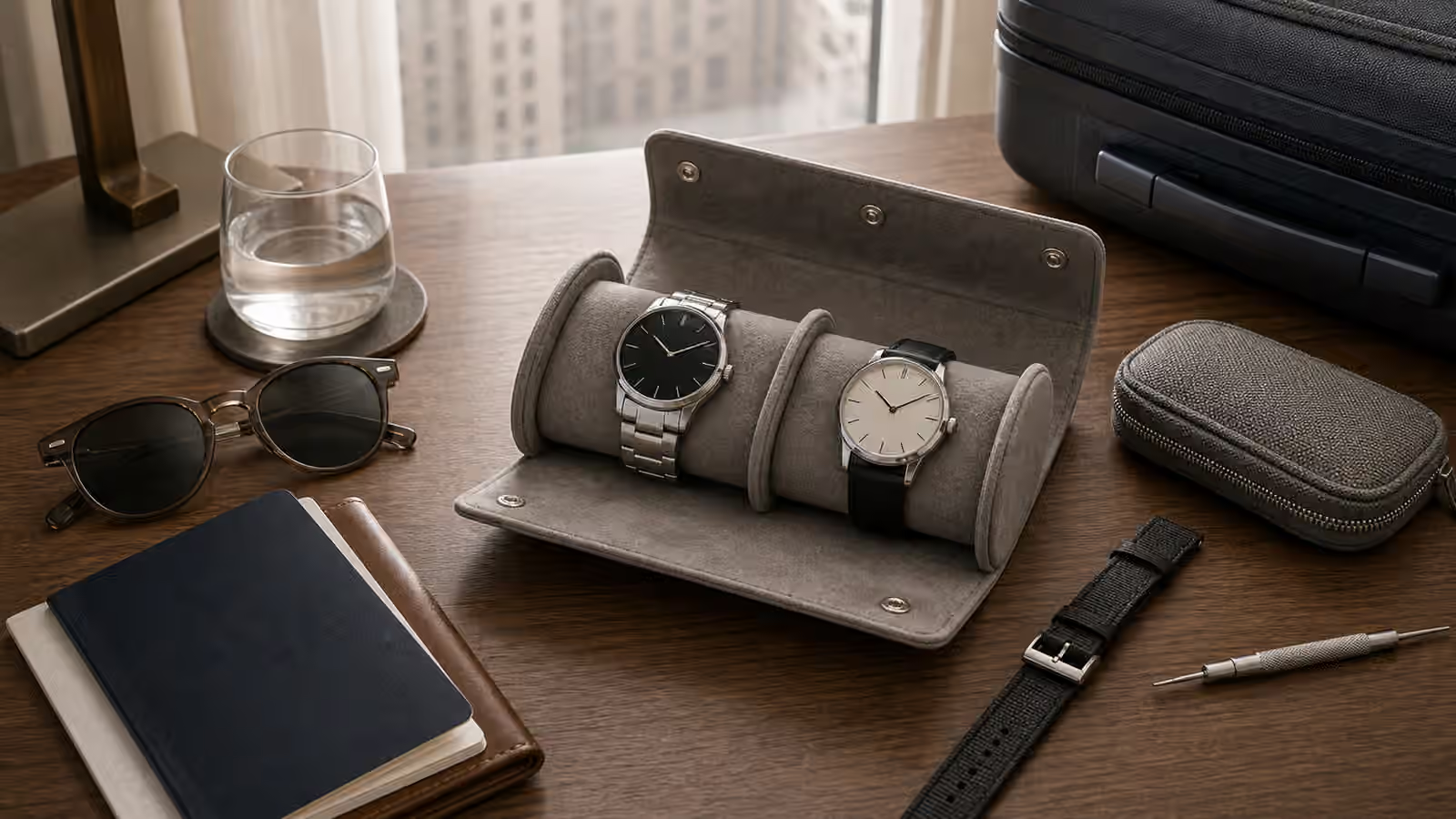
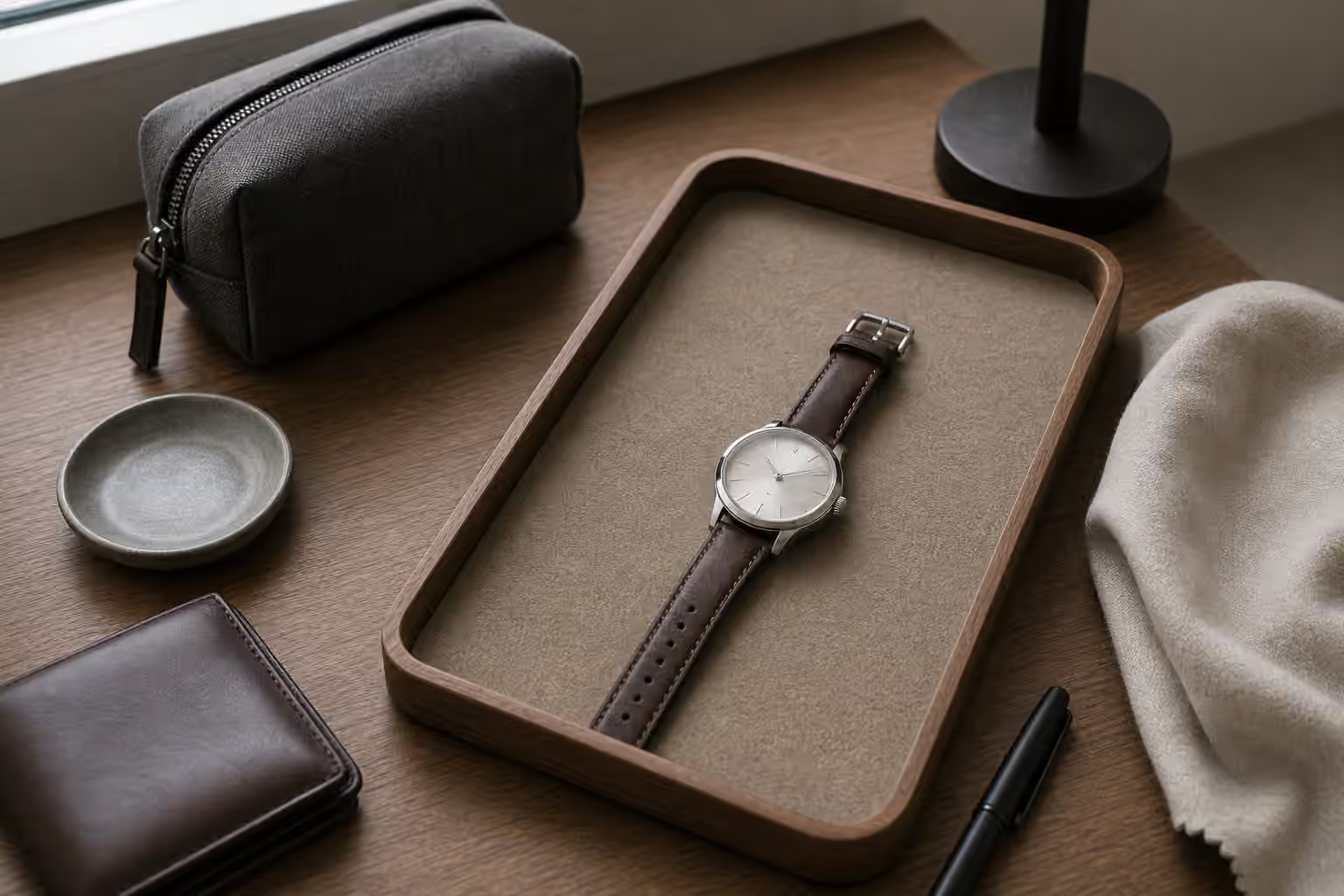
Watch storage sounds like a furniture question until the collection grows past one watch. Then it becomes a daily-use question. Where does the watch go when it leaves the wrist? Does the leather strap dry properly? Does the bracelet rub against another case in the drawer? Is the automatic watch allowed to stop, or does it need to stay running? Is the travel roll protecting the watch, or quietly pressing the crown against a hard edge?
The best storage setup is not the most elaborate one. It is the one that keeps watches separated, dry, easy to choose, and safe from the ordinary hazards that do the most damage over time. A padded tray on a stable shelf can be better than an expensive box placed in a humid bathroom. A simple soft pouch can be better for travel than a handsome roll that lets watches knock into each other. Storage is part of Watch Care Guide , but it deserves its own attention because watches spend far more hours resting than being worn.
Storage is about separation first
Most storage mistakes begin with contact. Steel cases touch steel bracelets. Buckles scrape case flanks. A deployant clasp presses into the back of a neighboring watch. A watch dropped casually into a drawer lands crystal-down on keys, coins, spring bars, or the rough corner of a strap tool. None of this is dramatic in the moment, which is why it keeps happening. The watch was not abused. It was simply left where ordinary objects could act on it.
A useful storage setup gives each watch its own space. The padding does not need to be luxurious, but it should keep the watch from sliding, leaning, or sharing a hard surface with metal parts. A tray works well when the watches live at home and are chosen often. A box adds dust protection and visual calm. A pouch works for a single watch. A roll can work for several watches, but only if each one is held securely and the roll does not compress crowns, pushers, or high crystals when closed.
The watch pillow matters more than it seems. If it is too large, it can over-stretch a bracelet or force a strap into a curve it does not want. If it is too small, the watch can flop around and let the caseback or clasp hit the tray. Adjustable cushions are helpful because bracelets, deployants, and short straps all sit differently. The goal is not display perfection. The goal is a resting shape that does not create strain.
The room matters as much as the box
A watch box cannot make a bad environment good. Humidity, heat, direct sunlight, dust, and magnets all matter. A bathroom cabinet is usually a poor place for watches because warm damp air is routine there. A windowsill can heat straps, fade dials, and age gaskets faster than a shaded shelf. A bedside table beside a strong speaker, magnetic charging stand, or bag clasp may look convenient while creating avoidable risk.
Mechanical watches are especially sensitive to magnetism because a magnetized balance spring can make the watch run fast or erratically. The Watch Accuracy and Regulation guide explains the timekeeping side, but the storage lesson is simple: do not make the resting place the problem. Laptops, tablet covers, speakers, magnetic phone mounts, and some clasps deserve distance. You do not need paranoia. You need a storage spot that is not built around magnets.
Humidity is less visible but just as important. A modern watch with sound seals is not instantly harmed by ordinary indoor air, but long-term dampness is still the enemy of straps, boxes, papers, and eventually metal. If you live somewhere humid, a small desiccant packet in the box can help, provided it is replaced or dried according to its type. The point is not to turn a watch drawer into a laboratory. It is to avoid storing valuable objects in a microclimate that always feels slightly wet.
Let straps recover
The watch head often gets all the attention, but storage can be hardest on straps. Leather needs to dry after a warm day. It should not be sealed into a tight pouch while damp with sweat. A leather strap stored wet can darken, stiffen, smell, and weaken sooner than it should. Rubber and fabric are more tolerant, but they still benefit from being rinsed and dried after saltwater, sand, or heavy sweat.
This is where storage connects directly to Watch Straps and Bracelets . A bracelet can tolerate a tray that would be unkind to leather. A suede strap wants gentler handling than a steel clasp. A rubber dive strap can live through water but may still collect grit around the buckle. If a watch came off the wrist because the day was hot, wet, or dusty, storage begins before the box. Wipe the watch. Let the strap breathe. Then put it away.
Bracelet watches have their own storage habits. Closing the clasp around a pillow can keep the watch tidy, but it should not force the bracelet into an unnatural bend. If the bracelet is very small, a flat tray position may be kinder. If the clasp is bulky, make sure it is not pressing against the caseback in a way that creates marks. Scratches inside a bracelet or on a caseback may not bother you, but they are still evidence of storage doing work it should not do.
Stopping is usually normal
Many automatic watches are perfectly content to stop when they are not worn. That statement surprises new owners because a stopped mechanical watch looks neglected. In reality, a healthy movement is designed to start again when wound and worn. Letting a simple automatic rest is not a failure of care. It is ordinary ownership.
The trade-off is convenience. A time-only watch or simple date watch may take less than a minute to wind and set. A watch with a day, date, moon phase, annual calendar, or perpetual calendar may be more annoying to reset, especially if you rotate often. That annoyance is one reason winders exist. They are not magic preservation devices. They are convenience tools for watches whose settings are inconvenient enough that keeping them running improves ownership.
For a simple three-hand automatic, a winder is usually optional at best. If you enjoy the ritual, set the watch when you wear it. If the watch is vintage, delicate, or overdue for service, constant running may not be a gift. A movement that needs fresh oils does not become healthier because a motor keeps it moving. If the watch stops overnight despite normal wear and a full wind, the question belongs closer to service and power reserve than storage.
What a winder can and cannot do
A watch winder slowly rotates an automatic watch so the rotor can wind the mainspring. A good winder uses controlled motion and rest periods. A poor one treats the watch like an object to spin. The difference matters because an automatic movement is not helped by endless unnecessary motion. It needs enough turns in the correct direction or directions for its winding system, then time to rest.
The right settings depend on the movement. Some automatics wind in both directions. Some wind efficiently in one direction. Each movement also has a rough turns-per-day range that keeps it charged without excessive motion. If you do not know the movement, the safest approach is to research the specific caliber or ask the manufacturer or a competent watchmaker. Guessing wildly defeats the purpose of using a winder thoughtfully.
Even a good winder does not replace maintenance. It does not refresh gaskets, clean old oils, correct magnetism, prevent water damage, or make a neglected watch ready for swimming. It simply keeps an automatic watch running. That can be useful if the watch has a complicated calendar or if the owner strongly values grab-and-go convenience. It is less useful if the watch is easy to set and spends most of its life waiting for a special occasion.
There is also a philosophical point. A winder can make a collection feel alive, but it can also hide the fact that too many watches are not being worn. If the machine is doing more wearing than you are, the problem may be rotation, not storage. Watch Collection Strategy frames the healthier question: does each watch have a real role in your life, or is the box becoming a waiting room?
Quartz and solar watches have different needs
Quartz changes the storage equation because the watch usually keeps running while it rests. A battery-powered quartz watch can sit quietly for years, but a dead battery should not be ignored indefinitely because old cells can leak. If a quartz watch has stopped, especially one you care about, treat the battery as maintenance rather than a future problem. Quartz Watches covers that rhythm in more detail.
Solar and light-powered watches need a different kind of thought. They are wonderfully low-maintenance when they see ordinary light, but a dark drawer can defeat the whole system. A solar watch stored in a closed box for months may enter a low-power state or stop. That does not mean it is fragile. It means the storage choice should match the power source. If a solar watch is part of your rotation, let it spend regular time where daylight can reach it without baking it in harsh direct sun.
Digital watches, radio-controlled watches, and connected time-setting watches add their own small quirks, but the general principle stays the same. Store the watch in a way that supports how it works. Mechanical watches need sensible rest and occasional winding. Battery quartz watches need timely battery attention. Solar watches need light. The box should serve the movement, not force every watch into the same routine.
Travel storage is different from home storage
Home storage protects against slow contact and environment. Travel storage protects against compression, impact, and distraction. A watch that is safe in a drawer may be vulnerable in a suitcase because luggage gets squeezed, dropped, and opened in awkward places. The safest travel habit is to carry fewer watches and give each one a predictable place.
A single-watch pouch is often enough if you wear one watch and bring one spare. A small hard-sided case can protect better inside a bag. A roll is pleasant when it is well designed, but it should keep watches from touching and should not create pressure points. Be cautious with rolls that look elegant when open but close tightly around crowns, crystals, or clasps. The closed shape matters more than the showroom view.
The watch you are not wearing should usually stay in carry-on luggage, not checked luggage. That is less about drama and more about control. You know where it is, you avoid baggage handling, and you can keep it away from liquids or heavy objects. When you arrive, avoid leaving watches loose on hotel furniture where they can be swept into a bag, wrapped in laundry, or forgotten in a drawer. Travel is when simple systems matter most.
Documents, boxes, and the non-watch parts
Storage is not only for watches. Receipts, warranty cards, service records, spare links, extra straps, spring bars, and original boxes all have their own value. The watch does not need to live inside its original packaging, but the paperwork should be findable. Service records help with future maintenance and resale. Spare links matter because bracelets are sized to people, and the next owner may need what you removed. Even if you never sell, organized records make ownership calmer.
Keep small parts labeled enough that you know what belongs to what. A loose bracelet link in a drawer becomes a puzzle later. A spring bar of unknown size is not much better. This does not require elaborate cataloging. It requires avoiding the one mixed tin where every spare part becomes anonymous.
Good storage makes watches easier to wear
The real test of storage is whether it helps watches stay in use. If the box is buried, you will wear what is easiest. If the straps are damp, you will avoid them. If every automatic is stopped and you hate setting dates, you will keep reaching for the same quartz watch. If the travel roll is fussy, you will leave the spare watch loose in a bag. Storage shapes behavior quietly.
A good setup makes the desired behavior easy. The daily watch has a landing place. The less-worn watches are visible enough to invite rotation. The solar watch sees light. The leather strap dries before being closed away. The watch with the complicated calendar gets a winder only if that winder truly makes the watch more wearable. The watches are separated, the room is stable, and the collection feels like something you use rather than something you manage.
This is the modest truth of storage: it should disappear into habit. A watch should come off the wrist, be wiped if needed, rest safely, and be ready when its turn returns. Done well, storage does not make ownership feel precious. It makes ownership feel smoother, which is exactly what a careful collection needs.