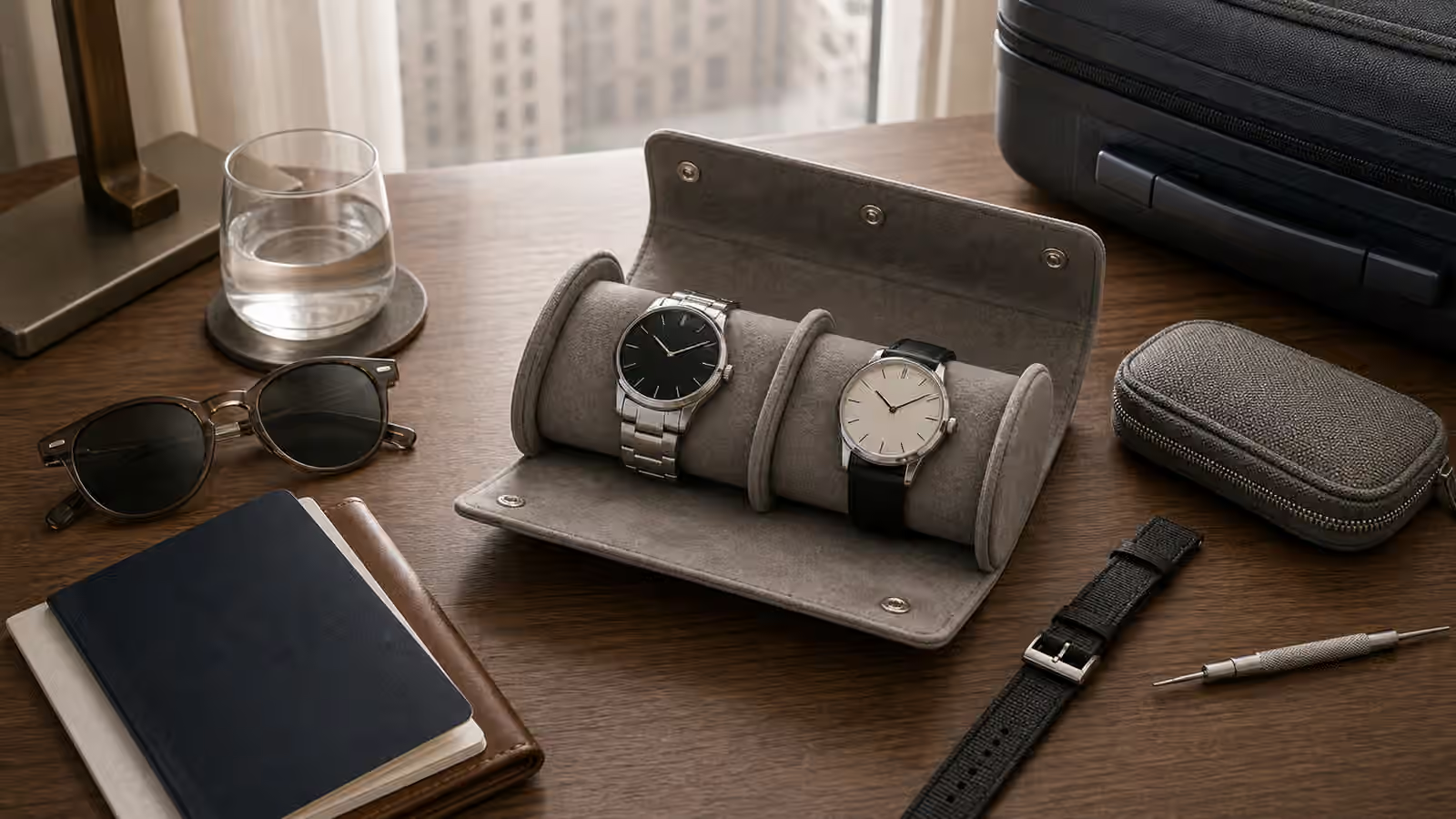
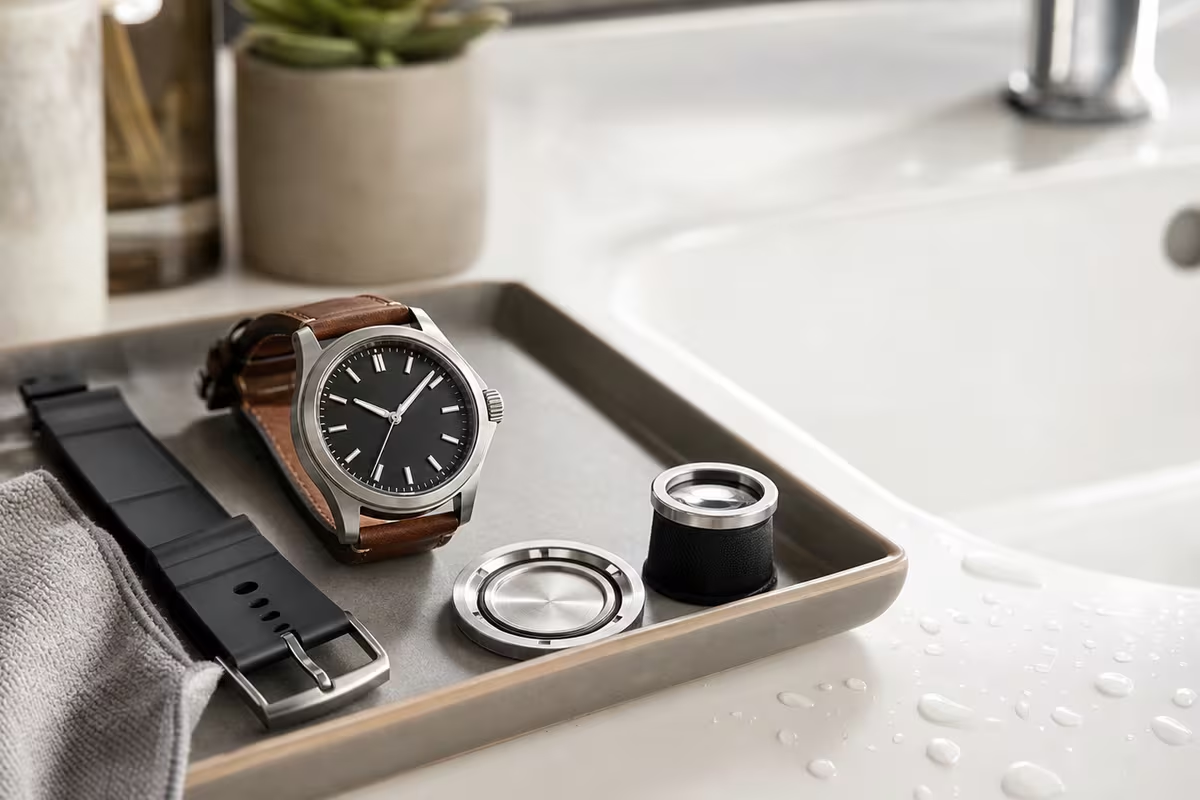
The spring bar is one of the least glamorous parts of a watch and one of the most important. It is a small telescoping metal pin with a spring inside. It sits between the lugs, passes through the end of a strap or bracelet, and holds the watch to your wrist. When everything fits, you barely think about it. When it fails, the whole watch can leave your wrist in a second.
Strap changes make watches feel flexible and personal. A field watch can become softer on leather, more casual on fabric, and more useful in heat on rubber. A dress watch can feel transformed by a thinner strap with a better taper. A diver can move from bracelet to rubber for water and back again for daily wear. Watch Straps and Bracelets covers the comfort and style side of that choice. This guide focuses on the small hardware that makes the choice safe.
A spring bar is a loaded part
The spring bar looks simple because it is simple, but it works under tension. The ends of the bar compress inward, then snap into holes inside the lugs. That snap is the point. The bar needs enough length to seat securely, enough shoulder for the tool to catch when needed, and enough strength for the weight of the watch head. If it is too short, too thin, bent, corroded, or poorly seated, the connection is weaker than it looks.
Lug width is the first number to respect. A 20 millimeter lug width usually needs a 20 millimeter strap and the correct spring bar length for that case. A strap that is forced into a narrow gap can bind the spring bar. A strap that is too narrow can wander between the lugs and put uneven stress on the bar. Some watches use fat bars, curved bars, shoulderless bars, or proprietary bracelet hardware. The owner should not assume that every 20 millimeter bar is equally correct.
This matters most on heavier watches. A large steel dive watch on a bracelet asks more from its attachment points than a slim hand-wound dress watch on leather. The forces of daily wear are not dramatic, but they repeat. A watch that is slightly loose can tug against the spring bars every time the wrist moves. A bracelet that is poorly fitted can transmit knocks through solid end links. The part is small, but the job is serious.
Tools decide whether the job feels calm
A good spring bar tool is not expensive compared with the cost of a scratched case. The forked end compresses bars that have shoulders. A pointed end can help with drilled lugs, where the lug holes pass through to the outside of the case. Tweezers-style tools can be useful for bracelets because they compress both ends at once. The right tool gives control. The wrong tool slips.
The working surface matters as much as the tool. Change straps over a soft mat, folded cloth, or tray. Good light helps more than speed. If the case has polished lugs or if you are new to the job, protective tape around the lugs can prevent the familiar first-strap-change scratch. Tape is not a sign of incompetence. It is cheap insurance against a tool skating across a polished bevel.
Work slowly. The goal is to compress the bar only as much as needed, guide the strap into place, and hear or feel the end seat in the lug hole. Tug gently after installation, close to the lugs, to confirm that both ends are engaged. Do not yank hard enough to create a new problem. You are checking seating, not proving strength.
Drilled lugs change the experience
Drilled lugs make strap changes easier because the spring bar can be pushed from the outside with a pointed tool. Many tool watches used drilled lugs for practical reasons. They let an owner or watchmaker remove a strap without fishing blindly between the strap and case. They also reduce the temptation to lever against a polished inner lug surface.
The visual trade-off is that drilled holes are visible from the side. Some owners love that because it reads as purposeful. Others prefer the cleaner look of closed lugs. The decision belongs to the design language of the watch. A field watch or diver can look right with drilled lugs. A refined dress watch may not.
Closed lugs are not a problem, but they demand patience. The fork must reach the spring bar shoulder from behind the strap or bracelet end. Leather is forgiving because it bends. Rubber can be tight. Solid end-link bracelets can be the hardest because the fit is close and the spring bar may be hidden. If the bracelet resists and the watch is valuable, paying a watchmaker for a quick swap may be cheaper than learning on the most scratch-prone surface you own.
Quick-release straps are convenient, not universal
Quick-release straps put a tiny lever on the underside of the strap, letting the wearer compress the spring bar without a tool. They are excellent for casual strap rotation. They reduce scratches, make travel easier, and encourage owners to match the watch to the day. A leather strap can come off before summer sweat. Rubber can go on before a pool. Fabric can make a watch lighter for travel.
The limitation is fit and strength. The quick-release mechanism needs space in the strap, and the bar is part of the strap system rather than a separate bar chosen for the watch. On many watches that is perfectly fine. On very heavy watches, watches with unusual lug geometry, or watches that need specific fat bars, it is worth being more cautious. Convenience should not outrank secure seating.
Quick-release levers also sit against the wrist side of the strap. On a well-made strap they disappear. On a cheap strap they can irritate skin, catch lint, or feel flimsy. If the lever feels loose before the strap is installed, trust that feeling. The watch head is the expensive part. The strap should earn the right to hold it.
Bracelets make spring bars less visible and more important
Bracelets often hide the spring bars inside end links. A fitted end link can make the watch and bracelet feel like one object, but the neat appearance can disguise a lot of mechanical contact. The end link must fit the case, the bar must seat correctly, and the bracelet must articulate without levering the bar out of position. Aftermarket bracelets can be excellent, but they should be judged by fit, not only by the fact that they attach.
Poor end-link fit can rattle, scratch the underside of lugs, or create pressure on the spring bar. A bracelet that looks close enough in a photo can behave differently on the wrist. This is one reason bracelet changes deserve more caution than strap changes. A leather strap is usually obvious when it does not fit. A bracelet can look nearly right while stressing the hardware.
Watch Clasps and Bracelet Fit handles the comfort side after the bracelet is attached. Spring bars are the connection before comfort begins. If the bracelet does not seat confidently, do not try to solve the problem by wearing it and seeing what happens.
Old bars should not be trusted forever
Spring bars are consumable parts. They can bend, corrode, lose spring tension, wear at the tips, or become contaminated with grit. A bar that came with a cheap strap may not be the bar you want holding a heavy watch. A bar removed from an old watch may look fine until you compress it and feel sluggish movement. Reusing bars is common, but it should be a decision.
Saltwater, sweat, and dirt accelerate the problem. A watch worn in summer, on the beach, or during hard daily use deserves occasional inspection. If a spring bar looks rusty, bent, weak, or rough, replace it. If a strap change sends a spring bar flying across the room and it lands somewhere questionable, replace it. The cost is small, and the consequence of failure is not.
This belongs with Watch Care Guide because care is often about humble parts. Owners notice crystals, dials, bezels, and bracelets. The watchmaker notices gaskets, bars, screws, tubes, and seals. A watch stays wearable because the small parts keep doing their quiet work.
Scratches are usually caused by rushing
Most strap-change scratches happen before the owner understands the geometry. The tool slips because the case is held in the air, the strap is pulled at the wrong angle, or the fork is jammed against the lug instead of the spring bar shoulder. Polished lugs record these moments quickly. Brushed lugs can hide them better, but a deep slip still shows.
Slow work solves much of it. Support the case. Move the strap enough to see the bar. Compress the bar rather than prying the strap. Keep the tool under control after the bar releases, because that is when it wants to jump. If the watch is precious, practice on a less important watch first. A spring bar tool is simple, but the hand skill is still a hand skill.
There is no shame in using a watchmaker. Many shops can change a strap or bracelet quickly, and some will inspect the bars while doing it. For an inherited watch, a rare case, a gold case, or a tightly fitted bracelet, that small service can be the sensible path. The Inherited Watch is a reminder that sentimental watches deserve extra patience because the scratch would not be merely cosmetic.
The strap change should fit the watch’s life
A good strap change makes a watch easier to wear. A poor one makes it less secure. The difference is rarely dramatic at first glance. It lives in the lug width, bar quality, tool control, end-link fit, and final seating check. Once those details are right, strap changes become one of the best parts of ownership. You can adapt the watch without buying another watch.
Treat the spring bar as a real component rather than an accessory afterthought. Use the correct size. Replace tired bars. Work over a soft surface. Confirm the click. Match the strap to the watch’s weight and purpose. When a bracelet or valuable case makes the job tense, let a professional handle it.
The watch on your wrist depends on two tiny pins more than most owners like to admit. Respecting them does not make strap changes less enjoyable. It makes them calmer, cleaner, and safer, which is exactly what a practical watch habit should do.