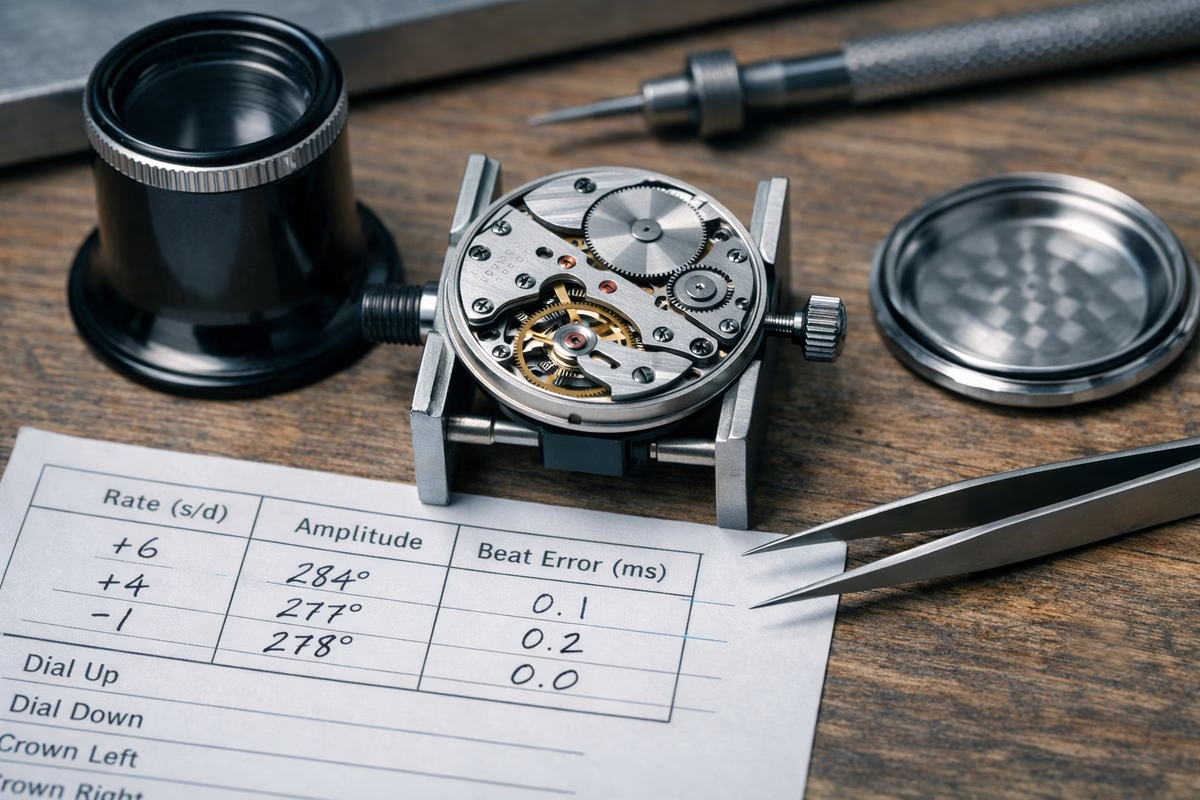
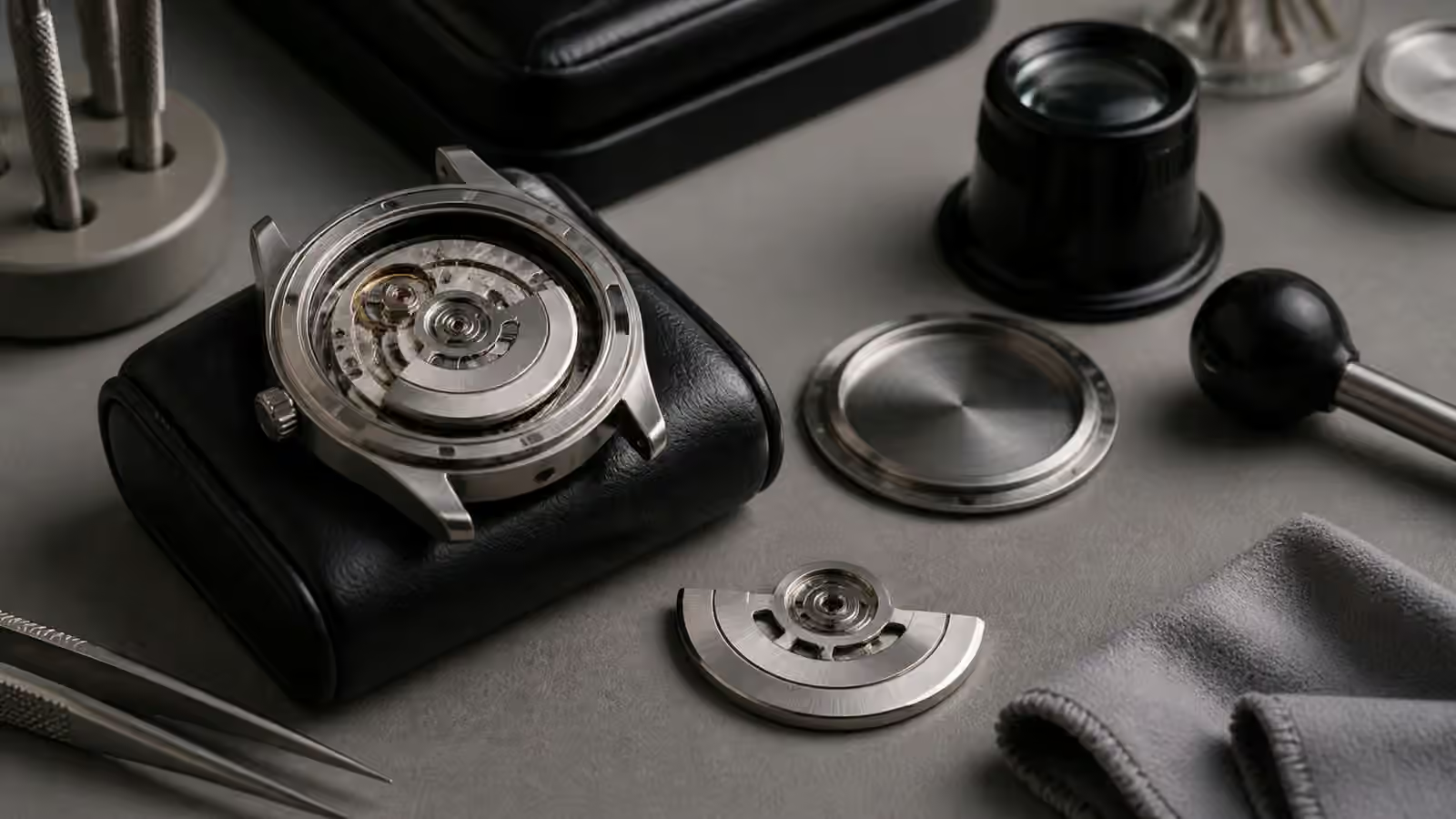
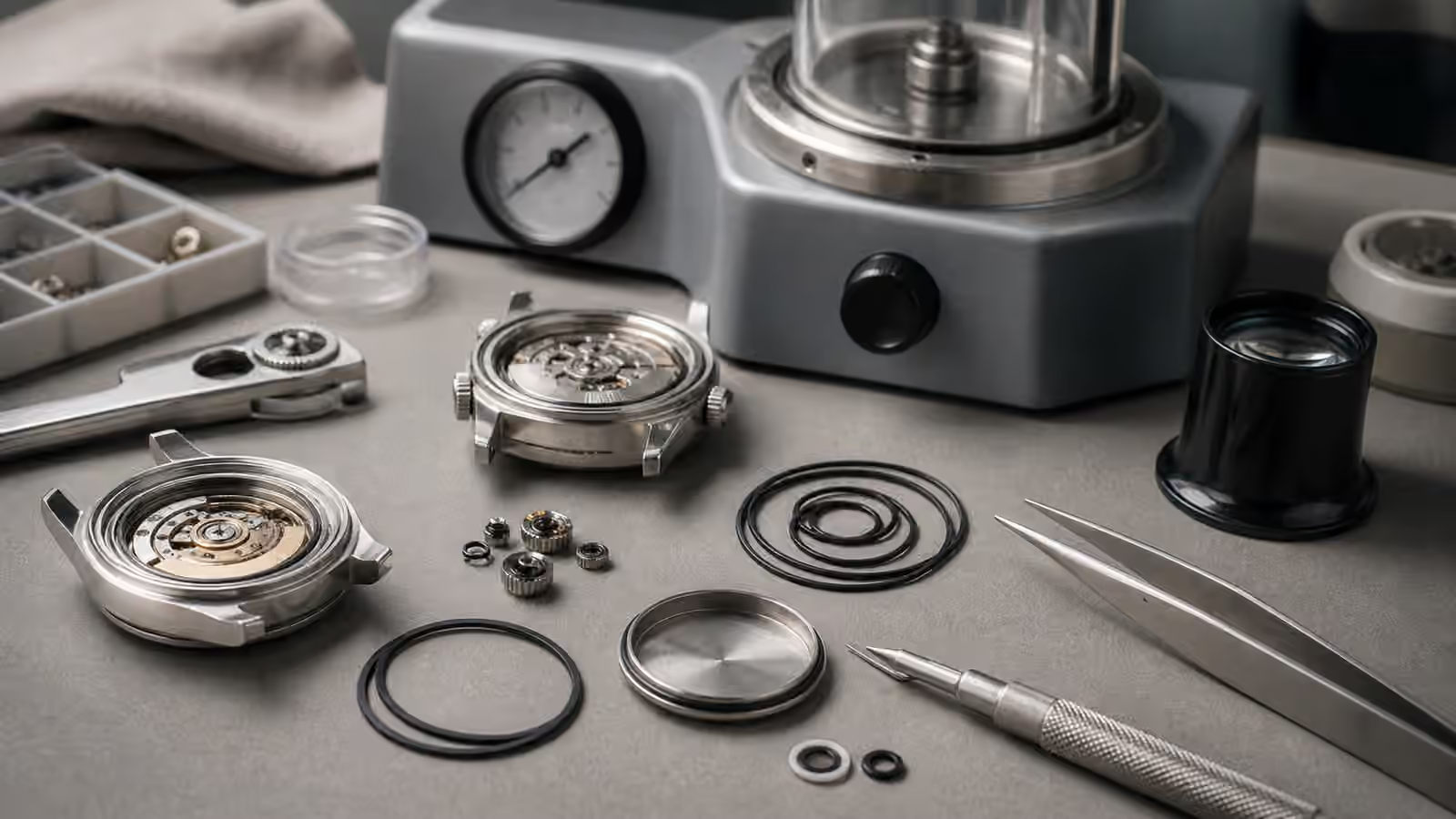
Servicing is the part of watch ownership that receives the least romance until it becomes urgent. A watch runs, sits on the wrist, and becomes part of daily rhythm. Then it starts losing time, the crown feels rough, the automatic rotor becomes noisy, the crystal fogs, the date changes halfway, or a watchmaker says the movement is dry. Suddenly the hidden life of the watch matters more than the dial.
The sensible way to think about service is neither panic nor neglect. A watch is a small machine with lubricants, seals, moving parts, and wear surfaces. It does not need to be opened constantly, and it should not be ignored forever. Service planning is the habit of matching the watch, movement, use pattern, symptoms, and value of the object to the right level of work.
Intervals are guidance, not a kitchen timer
Manufacturers often suggest service intervals, and those suggestions are useful as broad guidance. The mistake is treating them as exact countdowns for every owner. A modern automatic worn daily in a climate-controlled office, a hand-wound dress watch worn twice a month, a vintage chronograph with scarce parts, and a quartz field watch used for travel do not age in the same way.
Lubricants dry or migrate. Gaskets compress and age. Crowns, stems, reverser wheels, rotor bearings, chronograph parts, and calendar works see different kinds of load. A watch that spends years in a drawer may still need attention because oils do not stay young just because the watch was not worn. A watch worn hard around sweat, dust, shock, and water may need checks sooner than one worn gently.
The interval question should become a condition question. Is the watch keeping time within its normal range? Does it wind smoothly? Does the amplitude look healthy if tested? Does the crown engage cleanly? Does the date change reliably? Has water resistance been tested if you rely on it? The calendar matters, but behavior matters too.
Symptoms deserve descriptions, not guesses
When something changes, describe the symptom before diagnosing it. A watch that loses two minutes per day is different from a watch that stops overnight. A crown that feels gritty is different from a crown that will not screw down. A chronograph that resets off zero is different from one whose pusher sticks. A watch that fogs after handwashing is different from a watch with a few scratches on the crystal.
Good descriptions help a watchmaker triage the work. They also protect you from approving the wrong repair. If you say the watch needs regulating when it actually has low amplitude from dried lubrication, you may be asking for a surface adjustment to a deeper problem. If you say the watch needs a new crown when the tube is worn, you may miss the paired part. Let the symptoms lead the conversation.
Watch Accuracy and Regulation is a useful companion because timing behavior can have several causes. Magnetism, low power reserve, positional variation, shock, and service condition can all affect accuracy. Regulation is only one tool.
A full service is different from a quick fix
The phrase service can mean different things in casual conversation. A full mechanical service usually means the movement is disassembled, cleaned, inspected, lubricated, reassembled, regulated, and tested. Case gaskets may be replaced, water resistance may be checked, and worn parts may be renewed. That is very different from a battery change, a pressure test, a regulation, a crystal replacement, or a bracelet adjustment.
When you receive an estimate, look for the scope. Does it name the movement work? Does it include gaskets? Does it include pressure testing? Does it include refinishing, and do you actually want that? Are parts included or separate? Is there a service warranty? Will replaced parts be returned, if that matters to you? Are cosmetic changes optional or bundled?
This matters because over-service and under-service both exist. A watch with a small external issue may not need a full overhaul. A movement with dry oils should not be patched with a quick regulation and sent back as healthy. The right repair is the one that matches the condition and your plan for the watch.
Repair quotes should be read slowly
A repair quote is not only a price. It is a proposed story about what the watch needs. Read it for clarity. A good estimate should make the work understandable enough that you can approve it without guessing. It may not explain every technical detail, but it should not hide behind vague phrasing.
Ask what is necessary for function, what is recommended for reliability, and what is cosmetic. Those three categories often blur. A cracked crystal may be necessary if moisture risk is present. A scratched clasp may be cosmetic. A worn crown tube may be reliability work. Case polishing may make the watch look fresher but reduce sharpness, collector value, or originality.
For watches with collectible value, be especially careful about automatic cosmetic work. Some brand service centers prefer to return watches looking new. Some collectors prefer visible age, original dials, original hands, and unpolished cases. Neither approach is universally right. The point is to decide before the work begins.
Parts availability changes the decision
Parts are the quiet constraint behind many service decisions. A common modern movement may be straightforward to repair because parts are available and many watchmakers understand it. A discontinued in-house movement, vintage chronograph, unusual quartz module, or rare calendar mechanism may require more patience. Sometimes the part is available only through the brand. Sometimes donor movements become the practical source. Sometimes a repair is possible but not economical.
Parts questions should be asked early when the watch is old, uncommon, or expensive. Can the watchmaker source parts? Are generic parts appropriate, or does the watch need factory parts? Will replacing a dial, crown, hands, or bezel affect originality? Is the movement one that independent watchmakers can service, or will future work be tied to the manufacturer?
Watch Movements gives the broad movement families. Service planning adds the ownership layer. A beautiful movement is easier to love when you understand how it will be maintained.
Water resistance is a separate maintenance item
Water resistance should not be assumed just because a watch was serviced. If you intend to wear a watch around water, ask whether gaskets were replaced and whether the watch was pressure tested after reassembly. A timekeeping service without case sealing work may leave the movement healthy but the case vulnerable.
For many owners, pressure testing before swimming season is more practical than waiting for a full service interval. This is especially true for watches that see water regularly. Crowns, tubes, casebacks, crystals, and pushers all create possible entry points. Watch Water Resistance in Everyday Life explains why the printed rating is only part of the story.
Vintage watches deserve even more restraint. A pressure test may show what the watch can handle, but it does not turn an old case into a new one. Sometimes the watchmaker’s advice will be to keep the watch dry. That may sound disappointing, but it is better than learning through condensation.
Quartz service is still service
Quartz watches are often treated as maintenance-free because they are accurate and convenient. They are not immune to age. Batteries can leak if left too long. Solar cells and capacitors can age. Pushers, crowns, gaskets, displays, coils, and stepper motors can fail. A simple battery change may be enough, but the case should still be closed properly, and water resistance should be checked if the watch is used around water.
High-end quartz deserves particular respect. Some quartz movements are finely made, thermocompensated, jeweled, or beautifully finished. They may have service needs that differ from inexpensive disposable modules. The ownership style is convenient, not careless.
Quartz Watch Ownership pairs well with this topic because quartz decisions are often about habits. A watch that is grabbed for travel or rough use still benefits from clean seals, fresh batteries, and a record of work performed.
Communication with the watchmaker is part of the repair
A good service experience depends on communication. Tell the watchmaker how you use the watch, what changed, what matters to you, and what should not be changed without approval. If originality matters, say so. If water resistance matters, say so. If the watch has sentimental value, say so. If you do not want polishing, say that plainly.
Photos before service can help, especially for valuable or sentimental watches. Keep copies of estimates and invoices. Ask for replaced parts if that is appropriate and useful. Store the records with the watch, as described in Watch Box, Papers, and Service Records . Future you, or a future buyer, will appreciate the continuity.
The goal is not to micromanage a professional. It is to make the ownership priorities visible. Watchmakers solve mechanical problems. Owners decide what kind of life the watch should have afterward.
Service is how a watch stays itself
A watch can survive years of neglect, but survival is not the same as care. Servicing protects the movement from wear, keeps seals honest, preserves setting and winding feel, and catches small problems before they become larger ones. It also teaches you what the watch really is: a machine, not only an object of taste.
Approach service with patience. Describe symptoms clearly. Read estimates as scope, not just cost. Separate functional work from cosmetic work. Respect parts availability. Keep records. Do not let a polished case or a low quote distract from the real question, which is whether the work fits the watch and your plans.
The unromantic part of ownership is often what makes long ownership possible. A well-serviced watch does not become less charming because someone cared for it properly. It becomes easier to trust.