A new watch can look perfect until you start reading it closely. The bezel pip may not line up. The seconds hand may miss the markers. The crown may feel rough. The clasp may rattle more than expected. A fleck of dust may sit under the crystal. Some of these details are ordinary tolerance, some are cosmetic annoyances, and some are defects worth addressing quickly.
Quality control inspection is not about becoming impossible to satisfy. Watches are small mechanical objects assembled from many parts, and even excellent watches can show tiny imperfections under harsh light. The point is to notice the right things early, understand what matters for use, and decide calmly whether to keep, return, exchange, or service the watch.
Inspect the watch before you bond with it
The first hour with a new watch is emotionally dangerous. You want it to be right. You have waited, researched, paid, tracked shipping, and imagined the first wrist shot. That excitement can make you excuse things you would have noticed in a listing photo. Before sizing the bracelet, removing protective stickers, or wearing it outside, inspect the watch in steady light.
Start with the whole object. Does the watch match the model ordered? Are the dial color, strap, bracelet, clasp, and accessories correct? Does the case appear undamaged? Is the crystal clean? Are all included links, tools, cards, or straps present if they were part of the sale? Buying Guide covers the broader purchase mindset, and the same calm method applies after delivery.
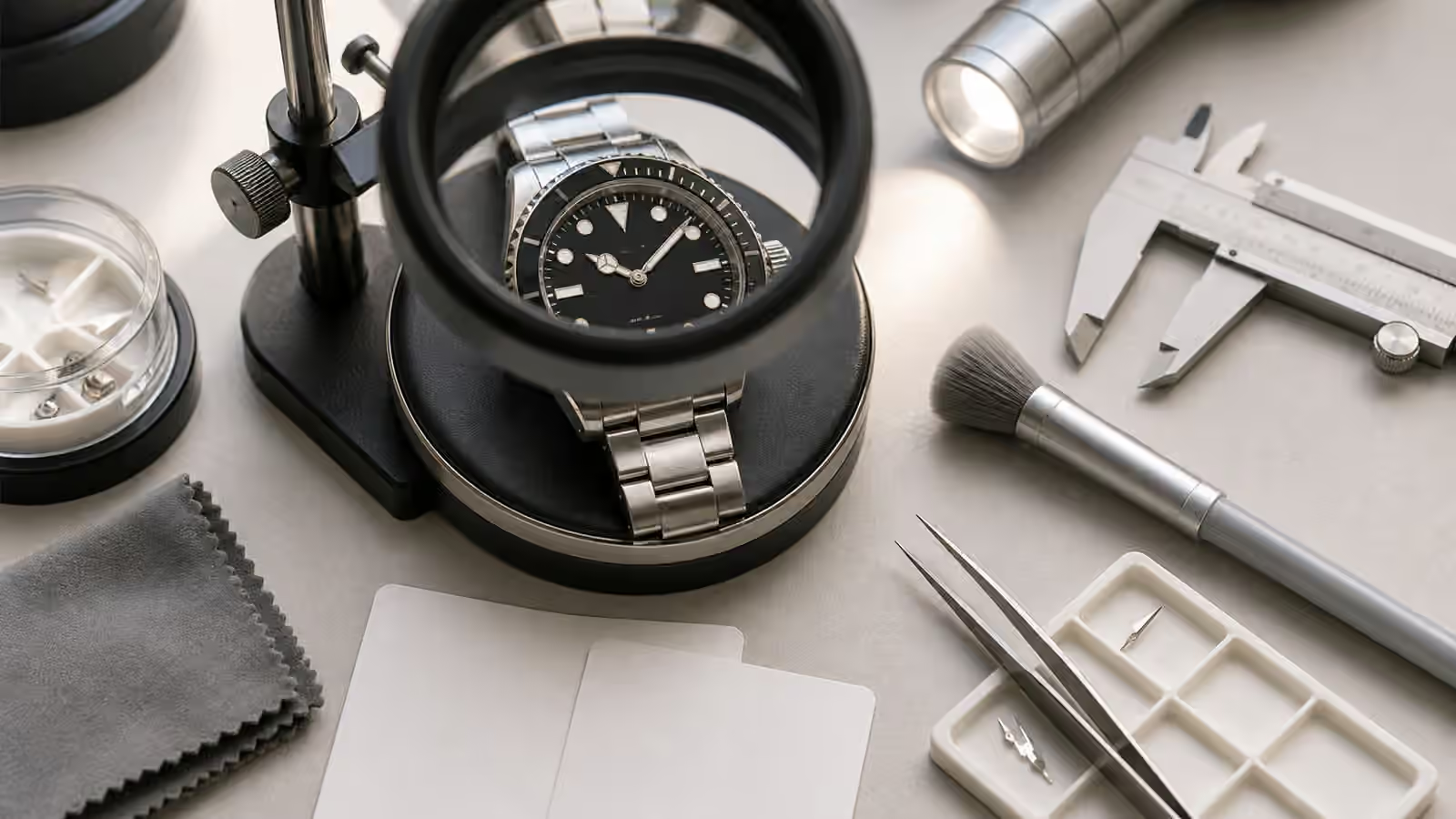
Keep the inspection practical. A phone flashlight can help, but do not search for flaws under conditions that will never occur in normal use and then decide the watch is ruined. Use normal room light first, then closer light for specific questions. The watch has to live on the wrist, not under a microscope.
Dial alignment is about relationships
Dial alignment problems usually appear as relationships that do not agree. The hour markers may not point cleanly toward the center. A chapter ring may sit slightly rotated. A printed minute track may drift. The hands may not stack neatly. A date window may sit off center within its frame. One small detail can be tolerable, but several misalignments can make the watch feel careless.
Watch Dial Legibility, Hands, and Markers helps because alignment affects reading, not only beauty. A watch can be attractive in photos and irritating in use if the minute hand never seems to land where your eye expects. On watches with bold markers, rotating bezels, or railroad tracks, alignment becomes more visible.
View the dial straight on before judging. A domed crystal, raised markers, and viewing angle can create apparent misalignment. Turn the watch in your hand. If the problem disappears from one angle and returns from another, the crystal or perspective may be contributing. If the marker, chapter ring, or date is visibly off from every straight view, the issue is more likely real.
Hand behavior deserves a slow setting test
Hands should move cleanly when the crown is used. The minute hand should not jump unpredictably after the crown is pushed in, although a tiny amount of play can be normal in some movements. The hour hand should align reasonably with the hour marker when the minute hand reaches twelve. On chronographs, reset hands should return cleanly to zero unless the design has an adjustment method and you know how to use it.
This does not mean every quartz seconds hand must hit every marker perfectly from every angle. Dial printing, hand installation, backlash, and viewing position can all affect how the tick appears. Some owners are unbothered. Others cannot stop seeing it. The important part is knowing your tolerance before the return window closes.
Watch Accuracy and Regulation covers timing performance, which is a separate question from hand alignment. A watch can keep excellent time while the seconds hand lands slightly between markers. A mechanical watch can have beautiful hand alignment and poor rate. Inspect both, but do not confuse one for the other.
Bezel action should match the watch’s purpose
Rotating bezels invite inspection because their purpose is tactile and visual. A dive-style bezel should rotate in the intended direction, click securely, and line up closely enough with the dial markers to be useful. A loose, mushy, gritty, or badly misaligned bezel can undermine the feel of the watch even if it never goes near water.
Watch Bezels and Scales explains the different jobs bezels can do. For quality control, focus on whether the bezel feels consistent around the full rotation. Does it bind in one area? Does it backplay enough to bother you? Does the insert sit evenly? Does the pip line up at twelve? Is the edge finished cleanly, or are there sharp spots?
Some bezel variation is normal across price ranges and designs. A rugged tool watch may have a firm bezel that feels different from a refined luxury diver. The question is whether the action suits the watch and whether any defect would affect your confidence using it.
Crown and pusher feel can reveal rough assembly
The crown is one of the most intimate parts of a watch because you feel it directly. It should pull to its positions cleanly, wind without alarming grit, and screw down smoothly if the watch has a screw-down crown. Cross-threading, severe roughness, a crown that will not seat, or a setting position that feels vague should be taken seriously.
Watch Crowns and Pushers pairs well with this inspection. Pushers should actuate with a feel appropriate to the mechanism. Chronograph pushers often have a defined start, stop, and reset feel. Alarm, calendar, or recessed pushers may feel different. The owner does not need to know the entire mechanism, but a part that feels broken should not be dismissed because the dial looks good.
Do not force controls during inspection. If something resists in a way that feels wrong, stop and document it. A watch that arrives with a questionable crown should not be made worse by repeated experiments.
Case, crystal, and bracelet finishing need ordinary light
Case finishing should be judged in normal light before harsh light. Brushing should look consistent. Polished surfaces should not show deep scratches on a new watch. Bevels and transitions should feel intentional. A tiny hairline from handling may be acceptable to one buyer and unacceptable to another, but dents, chips, and tool marks should be documented immediately.
Crystals deserve a layer check. A speck may be on the outside, under the crystal, or on the dial. Clean the exterior gently before assuming a defect is internal. Watch Crystal Materials helps because scratches, chips, and reflections vary by material.
Bracelets should articulate without sharp edges that scrape skin. The clasp should close securely. Screws or pins should look properly seated. End links should fit the case without alarming gaps or rattle beyond the design’s normal character. Watch Clasps and Bracelet Fit and Watch Bracelet End Links and Taper are useful if the problem is more about comfort than defect.
Document before deciding
If you find a concern, take clear photos or short video before wearing the watch heavily. Capture the issue in normal light and in the close angle that shows it. Keep packaging until you decide. Read the seller or maker’s return and warranty terms. This is not legal advice; it is practical housekeeping. A calm record makes the conversation easier.
Some issues deserve immediate contact with the seller: moisture under the crystal, a nonfunctioning movement, a crown that will not engage, a badly misaligned bezel on a watch sold for timing use, missing parts, or damage that was not disclosed. Other issues are preference calls. A seconds hand that misses markers slightly may be acceptable to one owner and unacceptable to another. A tiny dust fleck may disappear from daily awareness or become the only thing you see.
The goal is to decide while you still have options. Waiting until the watch has been sized, worn, scratched, and emotionally absorbed makes every path harder.
Perfection is not the standard; confidence is
Quality control inspection should leave you with confidence, not anxiety. A watch does not need to be flawless under magnification to be worth owning. It does need to feel honestly made, correctly represented, and suitable for the use you bought it for. The more expensive or purpose-built the watch, the less patience most owners will have for careless details.
A small defect is not always a dealbreaker. A hidden defect that affects function may matter more than a visible imperfection that never changes use. A cosmetic mark on a secondhand watch may be acceptable if disclosed. A new watch with multiple alignment problems may not be. Read the watch as a whole object, the same way Watch Authentication and Red Flags advises for secondhand buying.
The best inspection ends quietly. You have checked the dial, hands, bezel, crown, case, crystal, bracelet, and included items. You know what you are accepting. Then the watch can stop being a problem to solve and become what it was meant to be: an object you wear.