Power reserve is one of those watch specifications that sounds simple until it meets real life. A movement may promise forty hours, seventy hours, or several days of running time when fully wound. That number is useful, but it does not tell you whether the watch will be fully wound when you take it off, whether your desk-heavy day gave the rotor enough motion, whether the watch will restart after a weekend, or whether low power is affecting accuracy.
A mechanical watch is alive only because energy is stored in a mainspring and released through the movement. Winding fills that spring. Timekeeping spends it. Automatic winding adds energy through wrist motion. Manual winding adds energy through the crown. Power reserve is the space between those actions and a stopped watch.
Power reserve begins with the mainspring
Inside a mechanical watch, the mainspring is a long coiled strip of metal stored in a barrel. When wound, it wants to unwind. The movement controls that release through the gear train, escapement, and balance. The watch is not using a battery; it is rationing stored spring energy.
The stated power reserve usually describes how long the movement can run from fully wound to stopped under test-like conditions. That does not mean every owner experiences the full number every day. If you put on an automatic watch that is only partly wound, wear it lightly at a desk, and remove it early, it may never reach full reserve. If you hand-wind a manual watch at the same time each morning, it may live a steadier life.
Watch Movements explains the larger movement families. Power reserve is where those families turn into habits. A quartz watch can wait in a drawer for months or years depending on its battery or solar system. A mechanical watch asks for a more regular relationship.
Automatic does not mean always wound
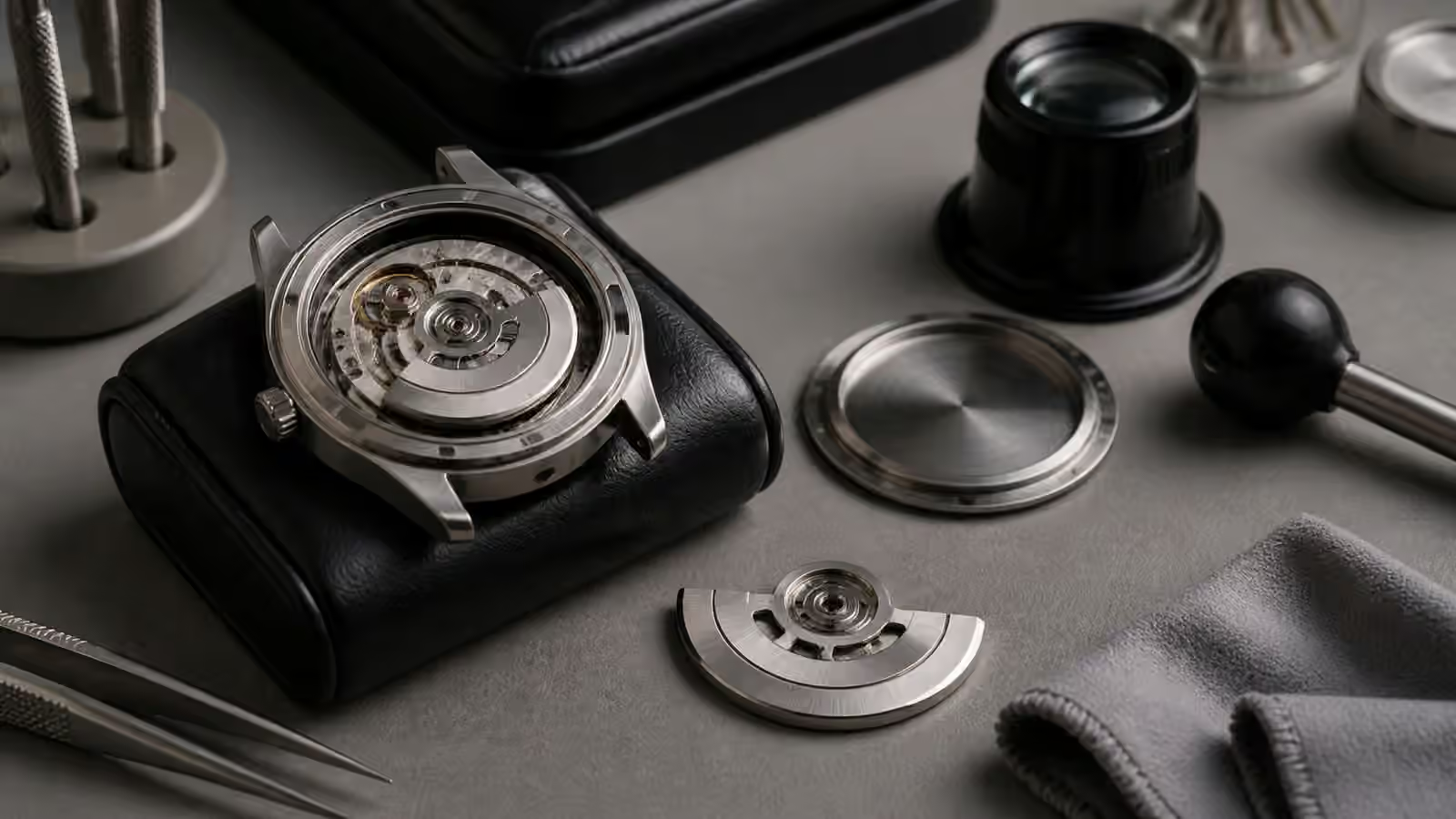
Automatic watches wind themselves through a rotor that moves as the wrist moves. The phrase can create false confidence. Automatic does not mean the watch is magically full. It means normal motion can wind the mainspring over time. If the owner is active, the system works quietly. If the owner types all day, drives carefully, and walks little, the rotor may not receive much useful motion.
Some automatic movements wind efficiently with small motions. Others need more wrist activity. Some rotors wind in both directions; some wind in one direction. Some watches have heavy cases that move less on a snug strap. Some owners wear watches loose, which may create motion but not always efficient winding. The lived result can differ from the spec sheet.
If an automatic watch stops overnight after a full day on the wrist, do not immediately assume disaster. Ask whether it began the day partly wound, whether the day involved enough movement, and whether the power reserve was ever fully tested. A few turns of the crown, followed by normal wear, may solve a habit problem. A watch that still cannot hold power may need inspection.
Manual winding is a ritual and a diagnostic
Hand-wound watches make the power relationship visible. You wind the crown, feel resistance rise, and stop when the movement is fully wound or when the design tells you enough. The ritual can be pleasant because it makes ownership intentional. It also teaches the owner how healthy winding should feel.
Automatic watches often allow manual winding too, though the feel differs by movement. Winding should be calm and controlled. A gritty, suddenly stiff, slipping, or rough crown deserves attention. Watch Crowns and Pushers covers crown handling in more detail, but power reserve gives a reason to listen to the crown. It is the doorway to the mainspring.
Wind off the wrist when practical. Holding the watch in the hand avoids putting sideways pressure on the stem. You do not need theatrical care, only gentleness. Mechanical parts are built for use, not force.
Longer reserve changes the weekend
A longer power reserve can make a watch easier to live with. A watch with roughly two days of reserve may stop if removed Friday evening and picked up Monday morning. A watch with a longer reserve may still be running. That convenience matters if the watch has a date, GMT hand, moonphase, or calendar complication that you would rather not reset often.
Longer reserve is not automatically better in every way. Movement design, accuracy, serviceability, thickness, and winding feel still matter. A shorter-reserve watch that you enjoy wearing daily may be a better companion than a longer-reserve watch that feels thick or dull. The specification should serve the habit, not dominate the purchase.
Think about your rotation. If you wear one watch most days, a modest reserve is usually fine. If you rotate among several mechanical watches, longer reserves reduce resetting. If you wear a mechanical watch only occasionally, convenience may matter less than the pleasure of winding and setting it when you choose.
Low power can change timekeeping
Mechanical watches often behave differently as power drops. The balance may receive less energy, amplitude can fall, and timekeeping may shift. A watch that is accurate when fully wound may lose or gain more near the end of its reserve. The exact behavior depends on the movement, condition, and adjustment.
This is one reason timing a watch casually can mislead. If you measure accuracy after the watch has been sitting nearly depleted, you may judge it unfairly. If you measure only during full wind, you may miss how it behaves during ordinary ownership. Watch Accuracy and Regulation explains why positions, magnetism, service condition, and power state all matter.
For a practical check, wind the watch fully, set it carefully, wear it normally, and observe patterns rather than single moments. Does it stop overnight only after inactive days? Does it lose time mostly when left off the wrist? Does it run well when fully wound but poorly after a day? Those patterns are more useful than frustration.
Watch winders solve fewer problems than people think
Watch winders can keep automatic watches running when they are not worn. They are convenient for some owners, especially with complicated calendars that are annoying to reset. They are not required for most automatic watches. A stopped mechanical watch is not harmed simply because it is resting. Many watches spend time unworn without drama.
A winder can be useful if it matches the movement’s winding requirements and is used sensibly. It can also add unnecessary running time to a watch that would otherwise rest, which may bring service needs sooner over a long period. The choice depends on the watch and the owner. A perpetual calendar has a stronger case for a winder than a simple three-hand watch with a date.
Watch Storage and Winders goes deeper into that decision. For power reserve, the main point is that a winder is a convenience tool, not a moral obligation. The crown and your hands remain perfectly valid ways to wake a watch.
Setting habits reduce annoyance
Power reserve affects how often you have to set the watch. A no-date watch is forgiving because restarting it is simple. A date watch asks you to set the time and date correctly. A GMT may ask for local time, home time, and date awareness. A calendar complication can require more patience.
Watch Winding, Setting, and Date Changes belongs beside this topic because power reserve and setting habits are linked. If a watch stops often, the safe date-setting routine becomes part of ownership. If the watch has a quick-set date danger window, you need to know how to avoid it. If the watch has a screw-down crown, frequent setting means more crown handling.
Small routines help. Put a frequently worn automatic on in the morning after a few crown turns if it has rested. Wind a manual watch at a consistent time. Let a stopped date watch be reset patiently, not while rushing out the door. The watch becomes easier when the routine fits your day.
Match reserve to real ownership
Power reserve should be chosen through honesty about habits. A highly active person wearing one automatic daily may never think about it. A collector rotating six watches may care deeply. A traveler may appreciate a longer reserve because the watch can rest during flights and still run. A person who dislikes setting dates may prefer quartz, solar, or a mechanical watch with a generous reserve.
There is no virtue in choosing the most demanding option if it annoys you. Watch enthusiasm sometimes treats inconvenience as proof of taste. That is not necessary. A mechanical watch can be charming, but the charm should survive ordinary life. If you want grab-and-go simplicity, Quartz Watch Ownership may be the better guide. If you enjoy small rituals, mechanical power reserve becomes part of the appeal.
The best reserve is not the largest number. It is the amount of stored energy that keeps the watch aligned with your rhythm. A watch should not make you feel scolded for living your actual day. It should ask for the kind of attention you are happy to give.