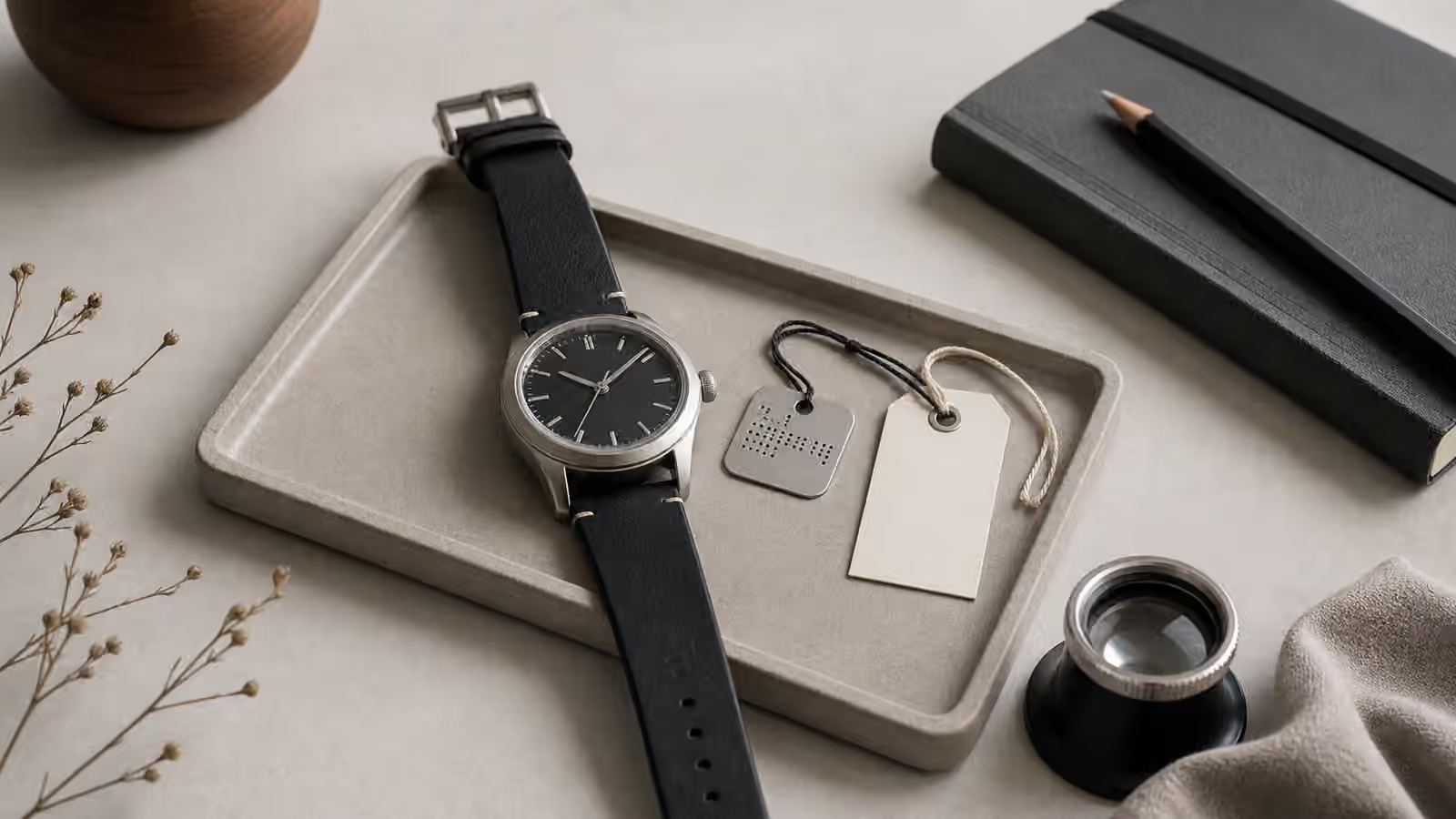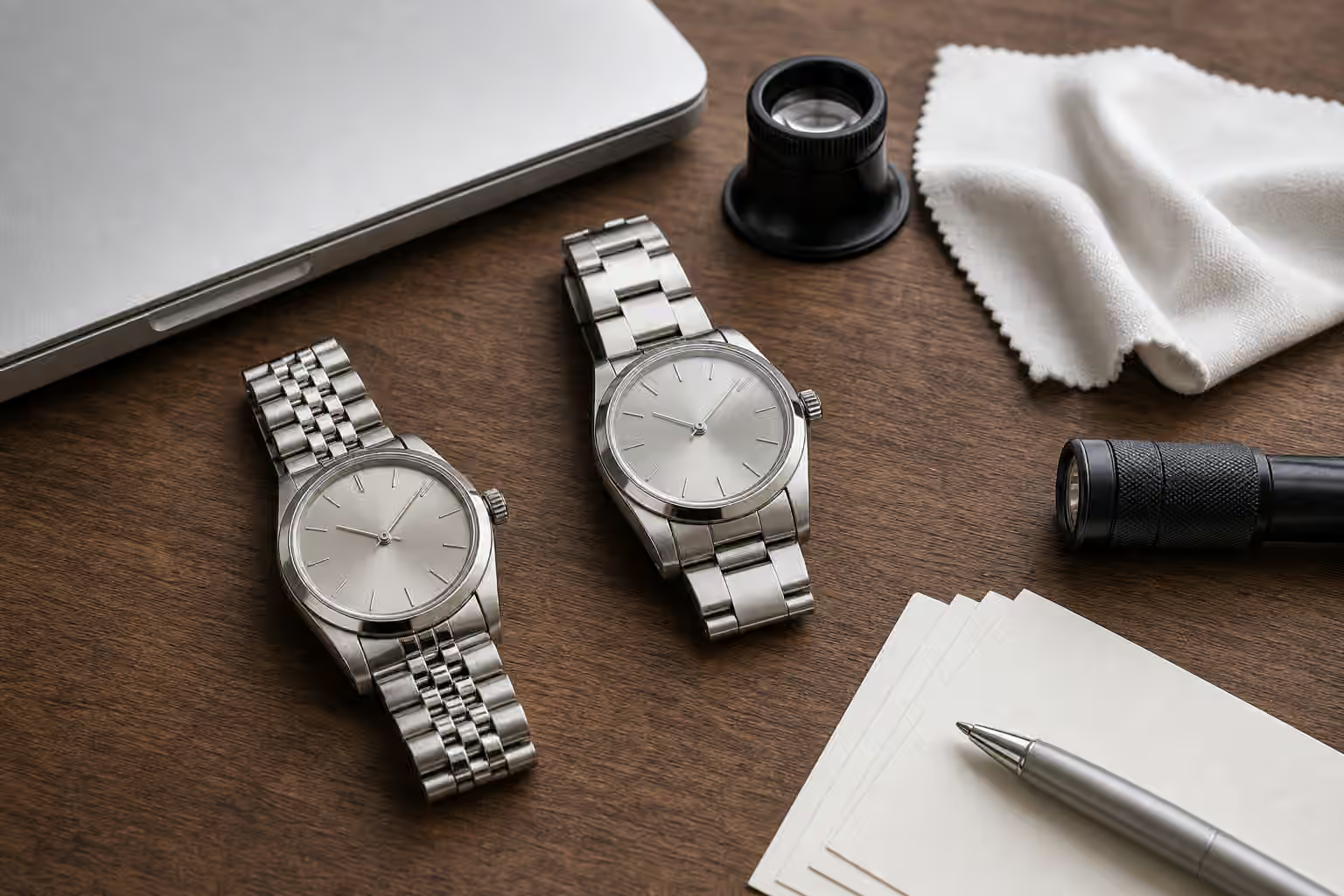
Buying a watch online begins with photographs, but photographs do not simply tell the truth. They frame it. A seller chooses the angles, lighting, distance, focus, and omissions. A good listing can make judgment easier by showing the watch plainly. A weak listing can hide important details without technically lying. Your job is to read both what is present and what is missing.
This does not require paranoia. It requires patience. The goal is not to turn every seller into a suspect. It is to slow the purchase long enough to understand condition, authenticity, service history, included parts, and the limits of the evidence. A watch that survives careful questions is easier to enjoy after it arrives.
Start with the whole watch before zooming in
The first photo usually creates the emotional pull. A clean dial, attractive lighting, and flattering angle can make the watch feel inevitable. Resist the rush. Begin by reading the whole object. Does the case shape match the reference? Do the hands, dial, bezel, crown, bracelet, and clasp belong together? Does the condition look consistent across surfaces, or does one part seem strangely fresh beside worn neighbors?
Watch Authentication and Red Flags gives the broader method: do not authenticate from one detail alone. Online photos should support a consistent story. If the seller describes light wear but the clasp is deeply scratched, ask why. If the dial looks aged but the hands look new, ask whether parts were replaced. If the case looks sharp but the bracelet is heavily stretched, ask for more history.
Condition consistency does not mean every part must age identically. Crowns can be replaced during service. Crystals can be changed. Straps may be newer than the watch. The issue is whether the listing explains those differences clearly or leaves you to invent a comforting story.
Missing angles are information
A strong listing usually shows the dial straight on, both case sides, the caseback, the crown, lugs, crystal, bracelet or strap, clasp, and any accessories. It may also include movement photos when appropriate and safe. When important angles are absent, the absence matters. A seller may simply be careless, but the buyer still lacks evidence.
The lugs deserve particular attention because they reveal wear, polishing, strap-change scratches, and case geometry. Watch Lug Geometry and Case Shape helps you understand why shape matters. Online, ask for clear side and lug photos if the listing only shows the dial. Over-polished lugs can make a watch look soft, and hidden lug damage can affect both value and strap security.
The caseback can reveal tool marks, engraving, reference numbers, gasket access, and signs of rough opening. Watch Casebacks and Display Backs is useful here. A scratched caseback does not automatically ruin a watch, but careless opening marks may tell you something about prior service.
Lighting can flatter scratches and hide edges
Soft light makes watches look beautiful. It also reduces the visibility of scratches, dents, and uneven polishing. Hard light can exaggerate flaws. Neither is neutral. When possible, look for multiple lighting conditions or ask for a short video that tilts the watch slowly. Reflections moving across the case can reveal edges better than a single still image.
Watch Scratches, Polishing, and Refinishing helps separate ordinary wear from altered geometry. Hairline marks on a clasp are normal. Rounded lugs, blurred bevels, shallow engravings, and uneven brushing can matter more. A watch can be shiny because it is clean, or shiny because too much metal has been removed.
Crystal condition also depends on light. Acrylic scratches may be polishable. Sapphire can resist scratches but chip. Mineral crystals sit somewhere else in the trade-off. Watch Crystal Materials gives the background. Online, ask whether marks are on the crystal, dial, or underside, because a reflection can make those layers hard to separate.
Bracelets and clasps need their own inspection
A listing can make the watch head look good while treating the bracelet as an accessory. For daily ownership, the bracelet is not secondary. Stretch, missing links, polished surfaces, mismatched end links, worn screws, loose pins, and clasp fatigue can all affect comfort and cost.
Watch Clasps and Bracelet Fit explains why small hardware matters. Ask for the wrist size the bracelet currently fits, the number of removable links included, and clear photos of the clasp inside and outside. If the bracelet uses screws, ask whether the heads are clean. If it uses pins and collars, ask whether sizing was done carefully. If end links are loose or wrong, the watch may rattle or wear poorly.
For watches on straps, ask whether the original strap is included and whether the current strap is usable. A worn leather strap may be irrelevant if you planned to replace it, but it should not be used to disguise lug damage or spring-bar problems. Watch Spring Bars and Strap Changes gives the safety side of that small connection.
Documentation should support, not hypnotize
Box, papers, warranty cards, receipts, tags, and service records can add confidence. They can also distract from the watch itself. A full set does not erase condition problems. Missing papers do not automatically make a watch bad. The important question is what the documentation proves and whether it belongs to this watch.
Watch Box, Papers, and Service Records is the deeper guide. Online, look for serial or reference consistency where appropriate, but be cautious about asking sellers to expose sensitive numbers publicly. A private, partially obscured confirmation may be more sensible than a public photo of every identifier. Service records should identify the work done, who did it, and when. Vague claims such as “recently serviced” deserve follow-up.
If a seller says the watch was serviced, ask what was included. Regulation alone is not a full service. A battery change is not the same as gasket replacement and pressure testing. Polishing is not maintenance. The phrase matters less than the actual work.
Vintage listings require a slower eye
Vintage watches make online judgment harder because originality, age, restoration, and wear all overlap. A dial can be beautifully aged or damaged. Hands can be period-correct replacements or obvious mismatches. A case can be honest or over-polished. A crown can be original, later, or merely plausible.
Vintage Watch Condition and Patina is essential before buying older watches from photos alone. Avoid letting warm patina language soften every concern. Ask whether the dial has been refinished, whether the lume was replaced, whether the movement was inspected, whether the case was polished, and whether the watch is running within any stated expectations.
The answer may not be perfect. Many vintage watches have lived complicated lives. What you want is clarity. A seller who says “I do not know” is sometimes more trustworthy than one who invents certainty from a blurry photo.
Better questions are specific and calm
Good seller questions are narrow enough to answer. Instead of asking whether the watch is “all good,” ask for the detail you need. Ask for a side photo of the crown guards, a clasp photo, a timegrapher result if the seller already has one, a service receipt, a pressure test result for a watch advertised for swimming, or confirmation that all links are included. Keep the tone practical. Serious sellers are more likely to respond well when the buyer sounds prepared rather than accusatory.
Buying a Watch Secondhand captures the emotional side of this process. You want enough confidence to buy without turning the transaction into a courtroom. Some listings will improve when you ask. Others will reveal that the seller cannot or will not provide the evidence. That is useful too.
Do not let scarcity silence your judgment. If a watch is truly right, it should survive a few careful questions. If it disappears while you were checking, another watch will exist. Regret is heavier than patience.
The best listing makes arrival feel unsurprising
The aim of online inspection is not perfection. It is fewer surprises. A good purchase can still have minor marks, service needs, or quirks, but they should be the kind you understood before paying. The photographs, description, seller answers, and documentation should agree well enough that opening the package feels like confirmation, not discovery.
Use images as evidence, not decoration. Read the whole watch, notice missing views, ask for the angles that matter, and connect every claim to something visible or documented. The more calmly you do that work before buying, the easier it is to enjoy the watch afterward.