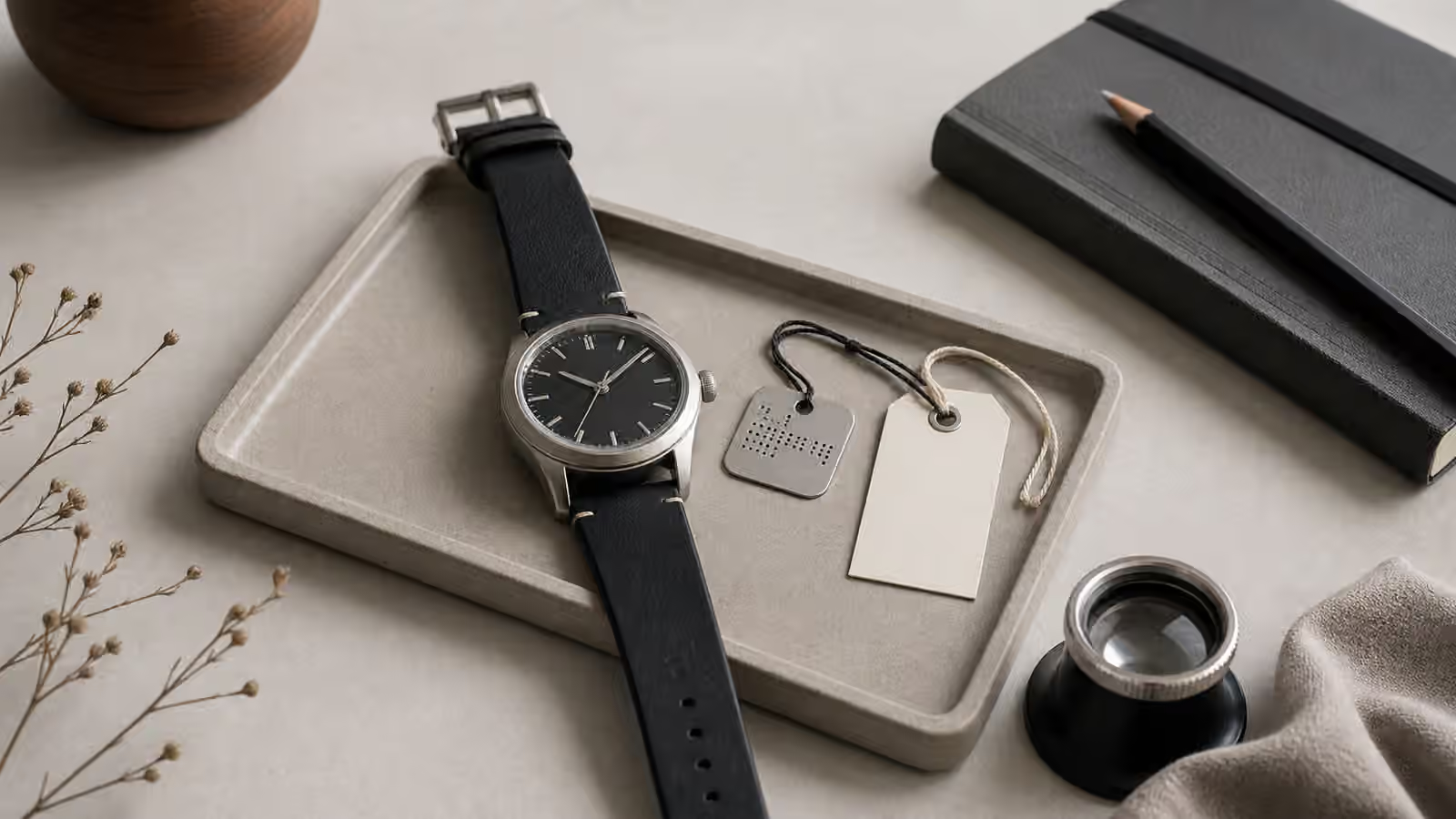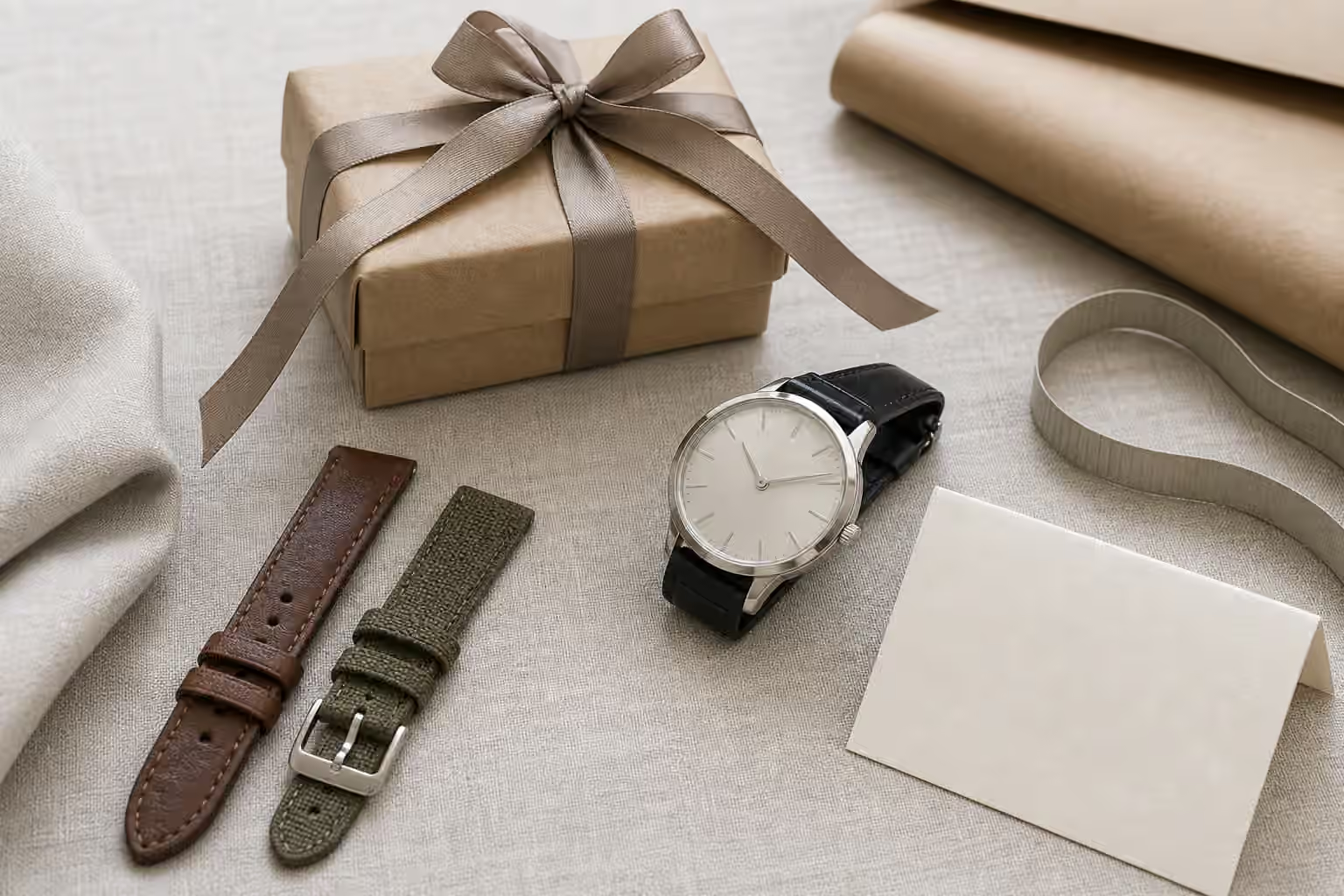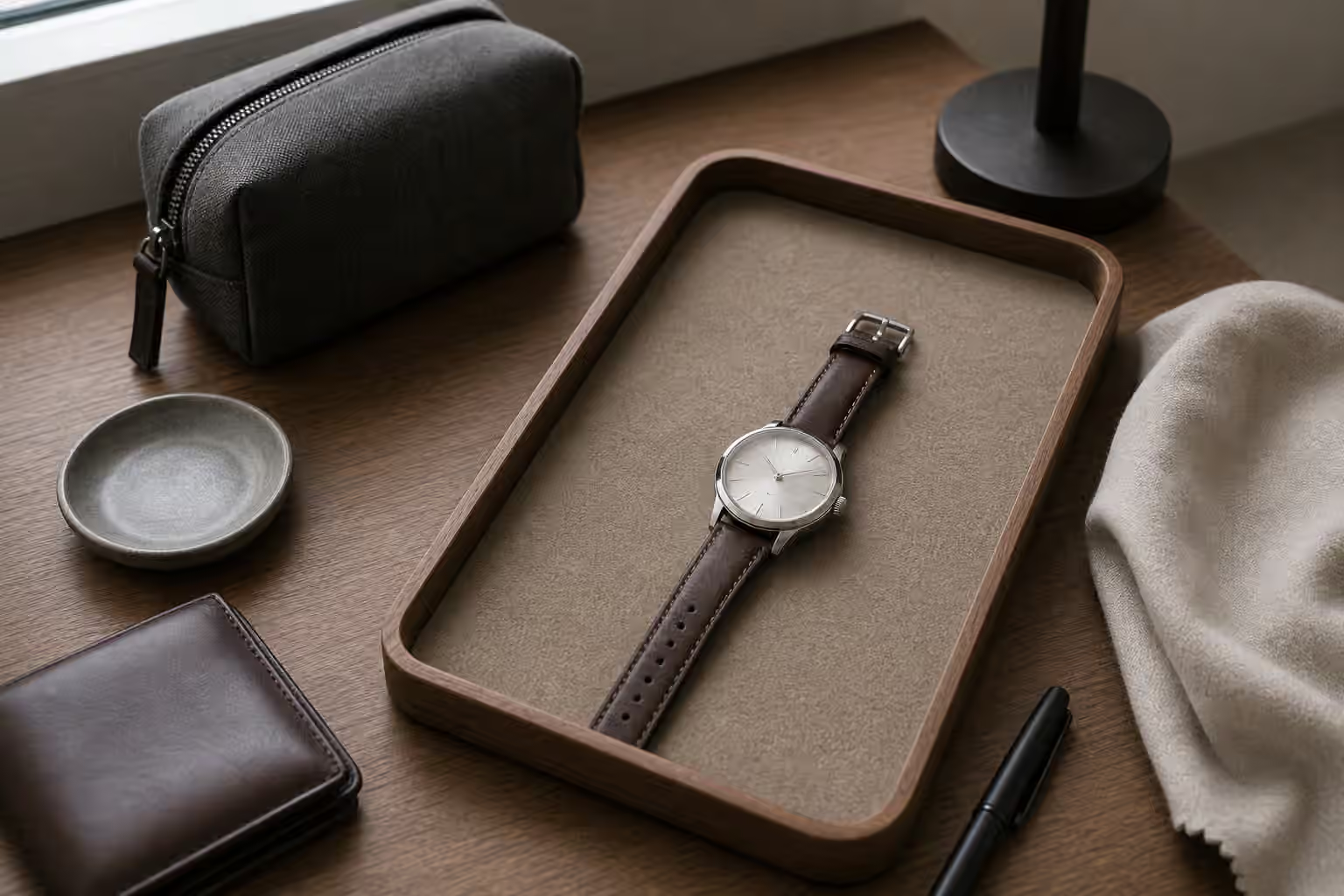
A one-watch collection sounds like a contradiction only if collecting is measured by quantity. In practice, many people want exactly one watch that can absorb most of life: work, weekends, travel, errands, dinner, rain, and quiet days at home. The question is not how to cover every possible category. It is how to choose a watch that remains welcome when it has no backup.
The one-watch idea is demanding because compromise becomes visible. A delicate dress watch may be beautiful but poor around water. A large dive watch may be sturdy but too heavy under a cuff. A manual-wind watch may be charming but inconvenient when mornings are rushed. A quartz watch may be perfect for reliability and still leave someone wanting mechanical ritual.
The first decision is lifestyle, not category
Start with the days the watch must live through. A person who works at a desk, wears shirts with cuffs, travels occasionally, and wants low maintenance is choosing a different object from someone who swims, hikes, works with tools, and wears casual clothes most of the time. The watch should match the recurring pattern, not the most dramatic exception.
Watch Collection Strategy is useful even when the collection contains one watch because it asks what role each watch plays. In a larger collection, roles can be divided. In a one-watch collection, the role must be concentrated. The watch does not need to be perfect at everything. It needs to be acceptable at the few things that actually happen.
This is where honesty matters. If you rarely dress formally, do not choose a fragile dress watch only because it feels elegant in theory. If you never swim with a watch, a high dive rating may be reassuring but not central. If you dislike setting mechanical watches, do not force yourself into a routine you already know will irritate you.
Comfort is the real luxury
A single watch spends more hours on the wrist than a rotating watch. That makes comfort more important than novelty. Diameter, lug-to-lug length, thickness, weight, clasp shape, strap stiffness, and caseback profile all become daily facts. A watch that feels exciting for ten minutes can become tiring after ten hours.
Watch Sizing , Watch Case Thickness and Wrist Comfort , and Watch Lug Geometry and Case Shape give the tools for judging fit. For a one-watch collection, those details are not minor. They decide whether the watch becomes automatic in your life or remains a special object you have to choose deliberately.
Try to imagine the watch during boring moments. Typing. Carrying groceries. Taking off a jacket. Sleeping on a train. Washing hands. Sitting through a long meal. If the crown digs in, the clasp pinches, or the case slides around, the watch will slowly lose the privilege of being the only one.
Versatility is not the same as blandness
People often search for a versatile watch and accidentally choose something without character. A watch can be flexible and still have a point of view. A restrained diver, a compact field watch, a clean everyday automatic, a tough quartz watch, or a simple dress-adjacent watch can all work if the design fits your clothes and habits.
Watch Styles helps name the categories, but the one-watch choice usually lives between them. A diver can be more refined with moderate dimensions and a simple bezel. A field watch can feel polished on leather. A dress watch can become more casual with a slightly stronger case and practical water resistance. The best one-watch candidates often borrow enough from several worlds without pretending to master all of them.
Color matters more than people expect. Black, white, gray, blue, and muted green can be easy to wear, but there is no universal answer. A silver dial may feel bright and formal. A black dial may feel sporty. A blue dial may be versatile in casual settings and less invisible with formal clothes. The right color is the one that works with your actual wardrobe, not an abstract list of safe choices.
Movement choice should match your tolerance for attention
Mechanical watches bring pleasure through motion, winding, service, and the knowledge that small parts are keeping time without a battery. They also ask for attention. They may stop. They may drift. They may need service. They can be affected by magnetism, shock, power reserve, and position.
Watch Power Reserve and Daily Wear explains how mechanical energy meets routine. For one watch, power reserve matters because there is no alternate watch to wear while this one is stopped and waiting. If you wear it every day, a modest reserve may be fine. If you remove it for weekends, a longer reserve may reduce resetting.
Quartz deserves serious consideration. Quartz Watches makes the case clearly: accuracy, convenience, durability, and grab-and-go readiness can be virtues. A one-watch collection is not less thoughtful because the watch has a battery or solar cell. If the watch serves your life better, the movement has done its job.
Water resistance sets the boundaries of care
A single watch will encounter sinks, rain, sweat, travel bathrooms, hot days, and perhaps pools or beaches. Water resistance therefore matters, but it should be understood calmly. The rating on the case is only meaningful when seals are healthy and the crown is secure. A watch with modest resistance can be fine for careful dry use. A watch meant for swimming needs maintenance that supports swimming.
Watch Water Resistance in Everyday Life belongs in the one-watch conversation because a single watch has fewer chances to sit out risky situations. If you want to wear it everywhere, choose a design with enough margin and maintain it accordingly. If the watch is vintage or dressy, accept that it may need to come off more often.
Strap choice affects this boundary too. Leather can make a watch more elegant and comfortable, but water and sweat will age it. A bracelet or rubber strap may be more practical. Some owners solve this with seasonal strap changes, but a one-watch collection should not depend on a complicated accessory system unless you enjoy that ritual.
Service and repair matter more when there is no spare
Every watch has an ownership tail. Batteries need changing. Mechanical movements need service. Crystals scratch or chip. Crowns and gaskets wear. Bracelets stretch or lose screws. A one-watch collection makes repair time more noticeable because sending the watch away leaves the wrist empty.
Watch Service Intervals and Repair Quotes helps set expectations. Choose a watch that can be serviced by someone you can realistically access. A common movement may be easier to maintain than a rare one. A brand with clear parts support can reduce uncertainty. A watch with proprietary components may be fine, but you should know what that means before it becomes a problem.
Documentation also matters. Keep purchase records, warranty information, service receipts, and a few good photos. Watch Collection Inventory and Photography is not only for large collections. A single important watch is easier to insure, sell, service, or identify when its details are recorded.
The one watch should age in a way you can accept
A watch worn daily will change. Polished surfaces will mark. Bracelets will pick up desk scratches. Leather will crease. A bezel may show small knocks. The crystal may eventually need attention. This is not a reason to avoid wearing the watch. It is a reason to choose finishing and materials that match your feelings about wear.
Watch Scratches, Polishing, and Refinishing is a useful guard against panic. If every mark will bother you, choose a watch and finish that hide wear gracefully. If you enjoy visible history, a brushed steel tool watch or a warm leather strap may suit you. Avoid buying a watch whose future condition will make you anxious every day.
A one-watch collection becomes personal because the watch gathers continuity. It appears in photographs, trips, quiet mornings, and ordinary work. That history is part of the reward. The watch should be good enough to deserve it and practical enough to receive it.
Enough is a legitimate collecting strategy
There is no shortage of reasons to buy another watch. Different styles, movements, colors, complications, histories, and occasions all make persuasive arguments. The one-watch collection pushes back gently. It asks whether another object would improve your life or only extend the research.
If one watch keeps time, fits well, handles your routines, and still pleases you when the novelty has faded, it is not a compromise. It is a clear answer. Collecting can mean learning the field, making a thoughtful choice, and then letting the object do its work for years.
The right one-watch collection feels calm. You put it on because it belongs there, not because it won a comparison chart forever. It may be mechanical or quartz, sporty or restrained, new or old. What matters is that it has earned the daily wrist without needing a supporting cast.