Magnetism and shock are easy to ignore because they usually leave no visible mark. A watch can look clean, dry, and carefully worn while the movement inside is suddenly behaving differently. It may gain several minutes a day after spending time beside a magnetic clasp. It may start stopping after a hard knock against a door frame. It may keep time well on the wrist but show a strange pattern overnight. The case still shines, the crystal is still clear, and nothing about the outside announces the problem.
That is what makes these hazards different from scratches or water damage. They live in the gap between how a watch looks and how it runs. A mechanical watch is full of small steel parts, springs, pivots, jewels, wheels, screws, and lubricated contact points. A quartz watch has its own circuit, coil, stepper motor, hands, and battery system. Both can tolerate ordinary life, but neither is separate from physics. The useful owner habit is not fear. It is learning which exposures are ordinary, which ones are worth avoiding, and which symptoms deserve a watchmaker instead of another week of guessing.
Magnetism changes the balance before it changes the mood
Mechanical watches are most famously vulnerable to magnetism because the balance spring is so delicate. The balance spring breathes in and out many times per second, regulating the movement by controlling the oscillation of the balance wheel. If parts of that spring become magnetized, coils can attract each other. The effective length of the spring changes, the rhythm becomes distorted, and the watch often starts running fast. Sometimes it runs a little fast. Sometimes it gains minutes per day and makes the owner think something catastrophic has happened.
The modern home is full of magnets. Phone cases, tablet covers, laptop speakers, magnetic charging stands, bag closures, headphones, refrigerator doors, induction equipment, and small desktop speakers can all create exposures that owners do not think of as watch events. A short brush past a magnet is not always a problem, but resting a watch directly on or beside a strong magnet is asking for trouble. Storage habits matter because the watch may sit there for hours while you sleep.
Many contemporary watches use materials and movement designs that resist magnetism better than older watches did. Silicon balance springs, non-ferrous alloys, soft-iron inner cases, and anti-magnetic movement architecture can add real protection. Still, “anti-magnetic” should be read as a design feature with limits, not as a license to store the watch on a magnetic phone stand every night. The stronger the magnet and the closer the watch, the more conservative your habits should be.
The symptom is often a sudden rate change
Magnetism usually announces itself through timing. A watch that was stable and then starts gaining dramatically is a classic suspect. The word “stable” matters. A mechanical watch can gain or lose a few seconds for ordinary reasons, as explained in Watch Accuracy and Regulation . Position, power reserve, temperature, wear pattern, and service condition all affect the rate. Magnetism becomes more likely when the behavior changes quickly and the change does not match your normal pattern.
A timing app or timing machine can help, but the first useful test is memory. Did the watch spend time near a magnetic clasp, speaker, charging puck, or tablet cover? Did you change where it rests overnight? Did it ride in a bag pocket against headphones or a laptop? A clear before-and-after story does not prove magnetism, but it makes the diagnosis plausible.
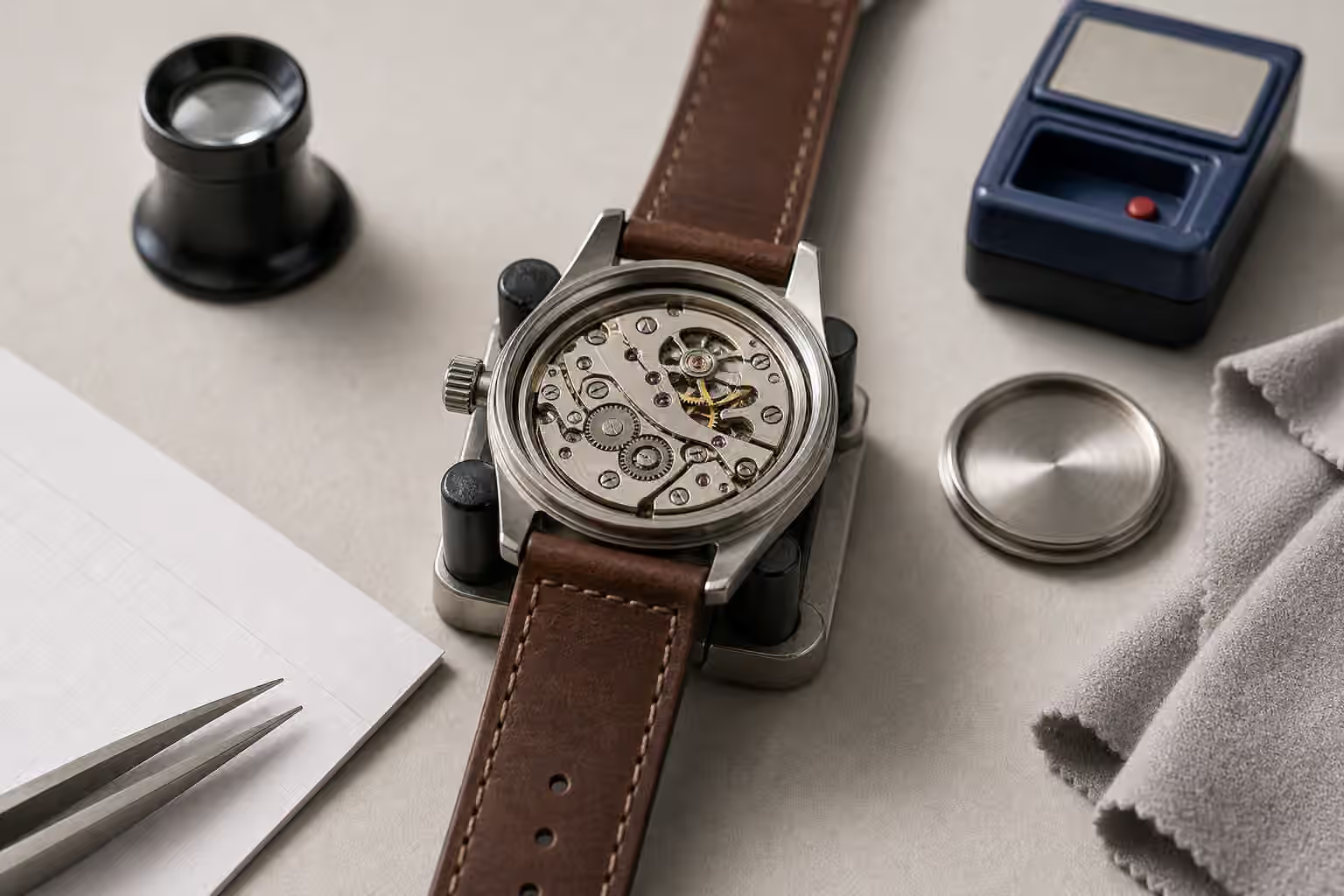
Demagnetizing is often quick for a watchmaker. Many shops can check the watch and run it through a demagnetizer in minutes. Small consumer demagnetizers exist, and some careful owners use them successfully, but they should not become a substitute for diagnosis. If the watch is losing time, stopping, making noise, or behaving irregularly after impact, magnetism may not be the issue. Treat the symptom and story together.
Shock resistance is not invincibility
Shock resistance is another phrase that can sound more absolute than it is. Modern mechanical watches typically use shock protection on the balance staff, often with tiny spring-mounted jewel settings that help absorb impact. This was a major improvement over earlier designs because the balance staff pivots are thin and vulnerable. A watch with shock protection is much better suited to ordinary wrist life than a fragile pocket-watch-era movement would be.
Ordinary wrist life includes desk taps, door frames, small bumps, walking, typing, travel, and the occasional awkward reach into a cabinet. It does not include every sport, tool, or accident. Golf swings, tennis strokes, hard mountain biking, hammering, shooting sports, heavy machinery, and sudden drops onto tile can create forces that are very different from a casual knock. The watch may survive, but survival is not the same as good practice.
Quartz watches often tolerate shock differently because they do not depend on the same balance assembly, but they are not immune to impact. Hands can shift, stems can bend, crystals can chip, batteries can lose contact, and cases can deform. A quartz field watch can be a good choice for rough days, especially when exact mechanical romance is less important than practical resilience. The better question is not which watch is strongest in theory. It is which watch you would be willing to have inspected if the day goes badly.
Hard knocks create mechanical clues
After a meaningful impact, look for behavior rather than drama. Does the watch still wind smoothly? Does the crown feel different? Are the hands aligned and clearing each other? Does the seconds hand move normally? Is there a new rattle? Does the watch stop in certain positions? Is the crystal cracked or chipped? Did moisture enter afterward because a gasket seat or crystal seal was compromised? A watch can take a hit on the outside and suffer a consequence somewhere indirect.
Do not keep winding a watch that suddenly feels gritty, stuck, or wrong at the crown. The crown and stem are the owner interface to the movement, and forcing them can turn one problem into several. Watch Crowns and Pushers explains why small controls deserve respect. If the watch has been knocked hard enough that setting or winding feels changed, stop using it and let a watchmaker inspect it.
The same restraint applies to a watch that stops repeatedly after impact. Shaking it harder is not a repair. Neither is wearing it for another week in hope that it settles. A loose screw, displaced hand, damaged pivot, or movement-holder issue can worsen if the watch keeps running. Mechanical watches are durable when healthy, but they are not self-healing.
Storage habits prevent many invisible problems
The easiest protection is where the watch rests. A dedicated tray, box, or soft roll keeps it away from magnetic phone stands, laptop speakers, desk clutter, and hard surfaces. Watch Storage and Winders covers the broader rotation question, but magnetism adds a simple rule: do not store watches directly beside magnetic objects just because the spot is convenient.
Travel makes this harder. Hotel nightstands, bags, charging kits, headphones, and tablet covers end up in one pile. A soft watch pouch helps, but distance helps more. Keep the watch away from magnetic closures and do not toss it loose into a bag where it can be slammed against metal objects. If the watch is coming off for airport security, the gym, or a hotel shower, give it a predictable place. Many accidents happen during the small moments when a watch is neither on the wrist nor properly stored.
Sports and tools require similar honesty. If you are doing something with repeated impact or vibration, take off the watch or choose one that fits the job. This is not precious behavior. It is the same practical thinking behind choosing rubber near water or a bracelet for a heavy daily watch. The watch should match the day.
When anti-magnetic and shock-resistant specs matter
Specifications can help when they are read as design context. A watch advertised with strong magnetic resistance may suit someone who works around equipment, speakers, laptops, or travel gear. A sport watch with a robust case, secure crown, protected movement, and proven shock design may be better for active wear than a slim dress watch. The context around the specification matters as much as the number.
Vintage watches deserve special caution. Older watches may lack modern shock systems, may have aged lubricants, may use older steels, and may have replacement parts of uncertain quality. A vintage watch can be worn regularly, but it should not be treated as if its original marketing copy still describes present-day toughness. The Inherited Watch shows how much value can live in an older piece. That value is a reason to be gentle, not a reason to test it.
Buying used also requires skepticism around claims. If a seller says the watch is running fast, magnetism may be a simple fix, but it may also be a bargaining phrase hiding service needs. If a watch has impact marks on the case, the movement deserves attention. Complete Watch Buying Guide is useful here because condition is never one detail. Case, movement, seller, service history, and price all speak together.
Build calm habits, not anxiety
A watch should not make daily life feel fragile. Most decent modern watches are built for normal use. They can handle wrists, commutes, desks, cuffs, errands, and travel. The point is to remove avoidable exposures that bring no benefit. Do not rest the watch on magnets. Do not wear a mechanical dress watch for repeated impact work. Do not ignore a sudden timing change. Do not force a crown after a knock. These are small habits, not a lifestyle overhaul.
If the watch suddenly gains a lot of time, think magnetism before panic. If it changes behavior after impact, think inspection before hope. If you cannot explain the change, gather a few days of careful timing notes and then ask a watchmaker. The best outcome is not proving you were right. It is keeping the movement healthy with the least drama.
Magnetism and shock are invisible until they are not. Once you understand their patterns, they become manageable. A watch can be a daily companion and still deserve a little distance from magnets, a little caution around impact, and a quick professional look when its behavior changes. That balance is where care becomes practical.