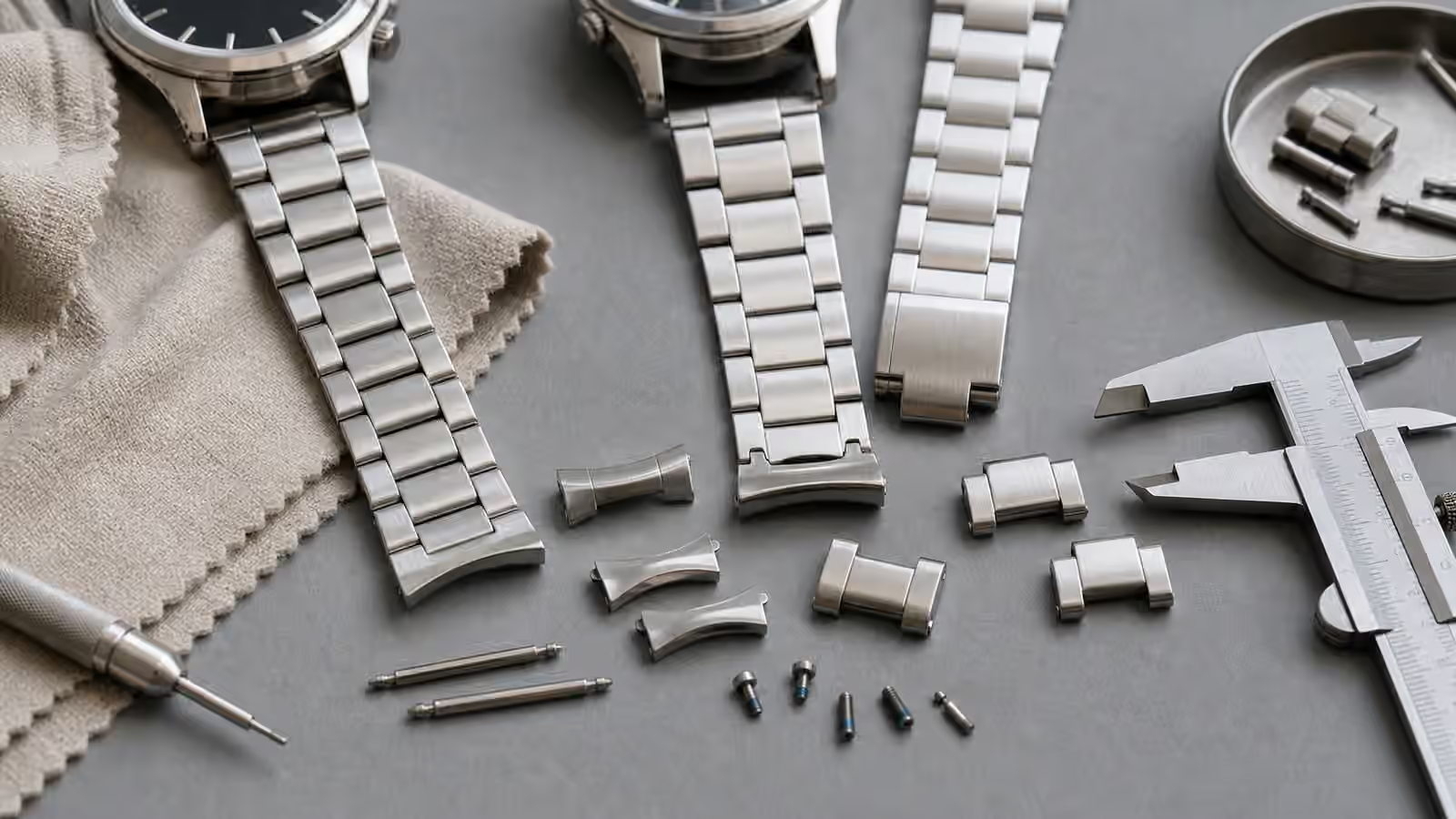
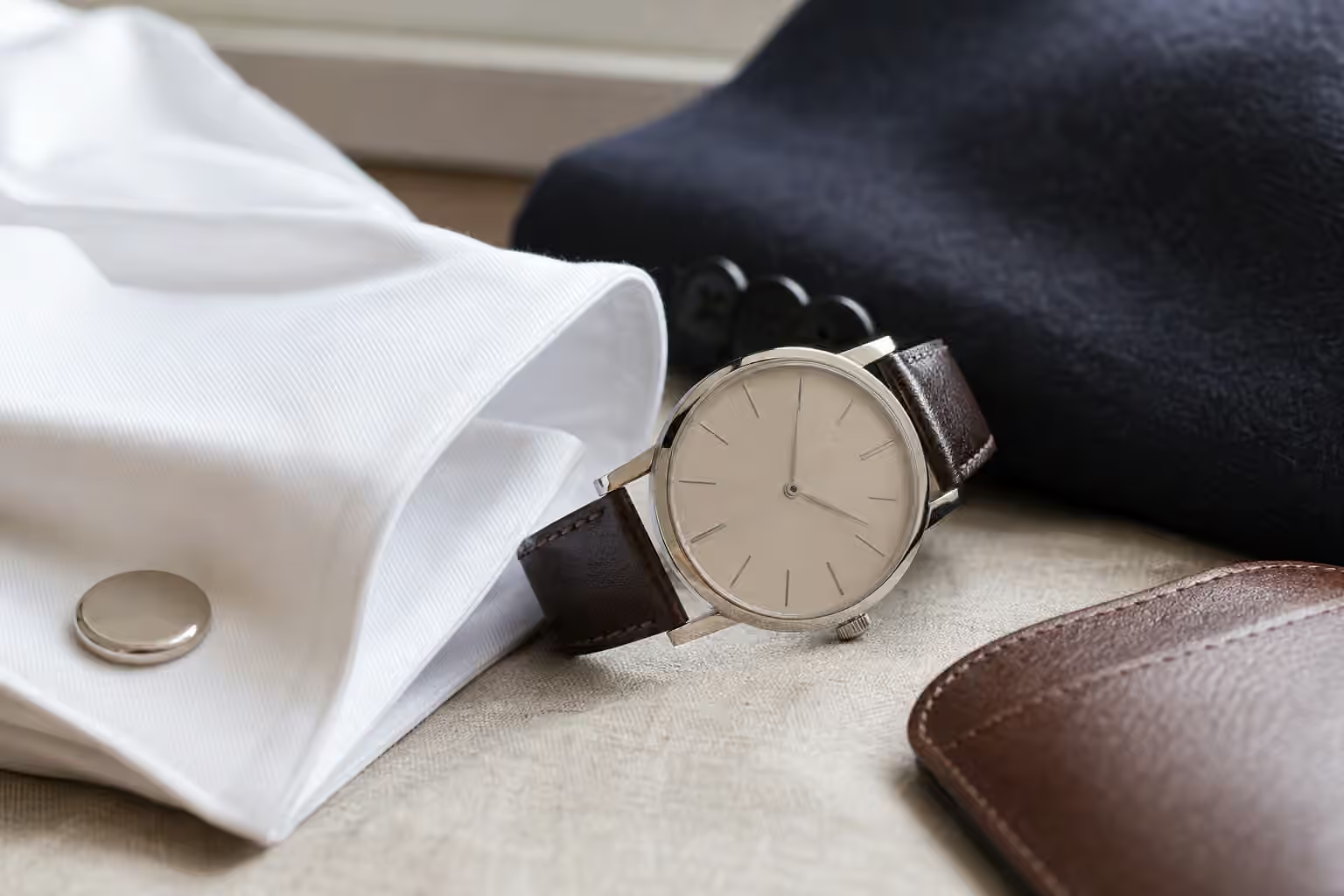
Watch size is often reduced to diameter because diameter is easy to quote. It fits neatly in a listing, sounds objective, and gives buyers a number to compare. The problem is that diameter does not tell you how a watch sits on the wrist. The same 39mm case can wear compact, broad, flat, tall, elegant, or awkward depending on the lugs and case shape around it.
Lugs are the arms that connect the case to the strap or bracelet. They look like a small detail until the watch is on your wrist, where they decide the footprint, strap angle, visual length, and whether the case seems to hug or hover. A watch with short, sharply downturned lugs can wear smaller than its diameter. A watch with long, flat lugs can sprawl past the wrist even when the case sounds modest on paper. This is why lug geometry belongs beside Watch Sizing rather than inside a footnote.
Lug-to-lug is the first reality check
Lug-to-lug length measures the distance from the tip of one lug to the tip of the opposite lug across the case. It is not perfect, but it often predicts wrist comfort better than diameter does. A case can be 38mm across yet 49mm from lug tip to lug tip, which may feel longer than expected. Another case can be 41mm across but only 46mm long, which may sit more easily because the lugs are compact and shaped downward.
The measurement matters because the wrist is not a flat display stand. It has width, curve, bone, soft tissue, and daily movement. When lug tips extend too far, the strap begins beyond the edge of the wrist and drops down abruptly. The watch then looks perched rather than settled. When the lugs land within the natural top surface of the wrist, the strap can leave the case at a gentler angle, and the whole object feels more integrated.
This does not mean every watch has to disappear within the wrist outline. Some tool watches are supposed to have presence. Some vintage-inspired cases look charming with straight lugs and a little air under the strap. The useful question is not whether a number is acceptable in the abstract. It is whether the lugs make the watch feel intentional on your wrist.
Downturned lugs can make a watch kinder
The easiest lug shape to appreciate in person is the downturned lug. From the side, the lug curves toward the wrist instead of continuing flat from the case. That curve helps the strap or bracelet begin its descent sooner, which can make a thick or wide watch feel less blocky. On a smaller wrist, downturned lugs can be the difference between a watch that looks confident and one that looks borrowed.
Downturn also affects the gap under the case. A watch with flat lugs and a tall midcase may leave daylight between the strap and wrist. Some people dislike that because it makes the watch feel unstable. Others barely notice. A watch with more curved lugs can pull the strap closer to the wrist and reduce that floating sensation, though too much curvature can create pressure points if the wrist is flatter than the case assumes.
Case thickness complicates this further. Watch Case Thickness and Wrist Comfort explains why height changes balance. Lug shape decides how that height meets the body. A tall case with excellent lug curvature can feel better than a thinner case with long rigid lugs. This is one reason watches have to be judged from the side as well as from the dial.
Lug style changes the personality
Lugs are not only ergonomic. They are visual architecture. Straight lugs can make a watch look clean, spare, and vintage. Twisted or faceted lugs can add movement to a polished case. Broad squared lugs can make a sports watch look tough and integrated. Thin wire-style lugs can make a dress watch seem delicate, almost like the strap is tied to a pocket watch case.
The lug shape also changes how the dial reads. A round case with long narrow lugs can feel elegant because the lugs extend the watch vertically without making the dial larger. A cushion case with hidden or integrated lugs can feel compact from top to bottom but visually broad from side to side. A tonneau case may ignore the usual round-watch expectation altogether. Case shape and lug shape talk to each other constantly.
This is where Complete Watch Styles Guide helps. A field watch, diver, dress watch, chronograph, and integrated-bracelet sports watch use different case languages. Lugs are part of that language. If a dress watch has heavy squared lugs, it may feel more architectural than formal. If a tool watch has very delicate lugs, it may feel less rugged even if the dial says otherwise.
Strap angle is where the design becomes physical
A watch can look perfect on a tray and still fail once a strap is attached. The strap does not leave every case the same way. Some lugs position the spring bar close to the case, so the strap begins near the case wall. Others set the spring bar farther out, creating a longer rigid span before the strap can bend. Thick straps can exaggerate the effect because they resist bending sharply right after the spring bar.
This matters with leather, rubber, fabric, and bracelets in different ways. A soft leather strap may bend quickly and forgive long lugs. A thick rubber strap can flare outward from the case before turning down, which makes the watch wear larger. A bracelet with solid end links may have a fixed first link that adds effective length beyond the quoted lug-to-lug number. That first link can be comfortable on one wrist and awkward on another.
Watch Straps and Bracelets covers materials and comfort broadly, while Watch Spring Bars and Strap Changes explains the small hardware at the connection point. Lug geometry is the bridge between those topics. It decides whether a strap change transforms the watch or simply moves the same problem to a different material.
Integrated bracelets have their own rules
Integrated-bracelet watches can be difficult to judge from specifications because the case and bracelet are designed as one shape. There may be no traditional lugs at all, or the bracelet may continue from the case in a way that adds visual length. A listed case diameter may hide a much larger wearing footprint because the first bracelet links do not drop straight down.
When these watches fit, they can feel excellent. The bracelet flows from the case, the weight is distributed across the wrist, and the design looks complete rather than assembled. When they do not fit, there may be fewer fixes. You cannot simply put the watch on a softer strap or choose a shorter lug profile. The geometry is built into the object.
Micro-adjustment, half links, and clasp design become especially important here. Watch Clasps and Bracelet Fit is the natural companion because an integrated bracelet can be nearly right and still uncomfortable if the sizing steps are crude. The lugs decide the footprint; the clasp decides whether that footprint can be held in the right place.
Case shape changes the same measurement
Round cases are common, but they are not the only baseline. Cushion cases, tonneau cases, rectangular cases, square cases, and barrel-shaped cases all change the way diameter is perceived. A cushion case may have a wide soft outline and hidden lugs, making it feel broad but not especially long. A rectangular watch may wear elegantly because the short side is narrow, even though the long side sounds large. A square watch can feel bigger than expected because its corners occupy space a round case would not.
The case side matters too. A slab-sided case with straight vertical walls can feel larger than a stepped case that breaks height into layers. Beveled edges can make mass seem lighter. A polished chamfer can visually slim a thick case by catching light at the edge. Watch Case Materials and Finishing goes deeper on those surfaces, but the fit lesson is simple: shape can soften or amplify size.
This is why photos from only one angle are weak evidence. A straight-on dial shot hides lug curve, caseback depth, crystal height, and strap flare. Side shots and wrist shots reveal how the watch occupies space. The goal is not to chase a perfect number. It is to understand what the shape is doing.
How to judge lugs before buying
The best way to judge lug geometry is to try the watch on, but that is not always possible. When buying remotely, look for side views, oblique views, and photos on wrists of known approximate size. Pay attention to whether the strap drops immediately or flares outward. Notice whether the lug tips are inside the wrist edge or hanging over it. Look at the first bracelet link if there is one, because it can add hidden length.
Ask whether the watch will be worn loose or snug. A loose bracelet can let a long watch slide toward the hand, where lugs and crowns become more intrusive. A snug strap may keep the case centered but create pressure if the lugs curve too aggressively. Comfort is a relationship between wrist, case, strap, clasp, and daily motion.
The most useful habit is to stop treating case diameter as a verdict. It is only the opening line. Lug-to-lug, lug curve, spring bar placement, first link behavior, case shape, thickness, and strap material all finish the sentence. Once you learn to read those pieces together, fewer watches surprise you for the wrong reasons.
Good lug geometry does not call attention to itself. It simply lets the watch settle. The case looks proportional, the strap leaves cleanly, the crown stays out of the way, and the watch feels like it belongs where it is. That quiet fit is not an accident. It is design you can feel.