Limited-edition watches create a special kind of pressure. The watch is not only a design you might like. It is a design that may disappear, a number in a run, a color that might not return, a collaboration that sounds culturally specific, or a preorder window that asks for trust before many owners have handled the finished piece. Scarcity can make a watch feel sharper in the imagination than it will ever feel on the wrist.
The solution is not to avoid limited editions. Some are thoughtful, beautiful, and more interesting than the standard catalog piece. The solution is to separate the watch from the pressure around it. A limited watch still has to fit, read well, run reliably, age honestly, and make sense in your collection after the launch noise fades.
Scarcity is a fact, not a verdict
A numbered run tells you something about supply. It does not tell you whether the watch is good. A watch limited to a small number can be beautifully conceived or barely changed from a standard model. A regular production watch can be more wearable, more coherent, and more satisfying than a scarce release. The number on the caseback should begin a question, not end it.
Ask why the watch is limited. Sometimes there is a real reason. A brand may have access to a special dial material, a small batch of movements, a collaboration with a particular artist, or a production method that cannot scale easily. A microbrand may limit a run because small manufacturing is financially realistic only at that size. In those cases, the limit can be part of the object’s story.
Other times, scarcity is mostly a sales rhythm. A familiar case receives a new color, a numbered back, and a short ordering window. That can still be enjoyable if you love the result, but the limited label should not make an ordinary design feel more necessary than it is. Watch Collection Strategy helps here because every purchase should earn a role beyond the thrill of acquisition.
The design has to survive without the story
Launch copy can make details feel meaningful. A dial color may be tied to a landscape, a historical reference, a racing livery, a city, a club, a material experiment, or an anniversary. Story can enrich a watch, but it should not carry the whole design. Cover the text mentally and look at the object. Are the proportions strong? Is the dial legible? Do the hands and markers work? Does the case suit your wrist? Does the color still appeal when removed from the romance of the release?
Watch Dial Colors, Textures, and Finishes is useful because many limited editions are dial-led. A beautiful texture or unusual color can be a real reason to buy. A color that photographs dramatically but fights your wardrobe may become a box resident. Novelty is not the same as depth.
This is especially important with collaborations. A collaboration can bring design discipline, a shared audience, or a detail that would not exist otherwise. It can also add logos, slogans, or references that age faster than the watch. If the collaboration disappeared from the description, would the watch still make sense?
Numbered does not always mean rare in the useful way
Collectors often enjoy numbers. A caseback marked with an edition number feels personal, and the knowledge that only a certain quantity exists can deepen attachment. But rarity has different meanings. A watch can be rare because demand is high and production is genuinely constrained. It can be rare because few people wanted it. It can be rare because the brand is small. It can be rare because the color was experimental.
None of those meanings automatically predicts future value, and this guide should not be read as investment advice. The safer ownership question is simpler: would you still want the watch if resale were ordinary? If the answer is no, the purchase may depend too heavily on other people’s future desire.
Microbrand Watches is relevant because small-maker releases often use limited quantities for practical reasons. That can be healthy when the maker communicates clearly, supports the watch, and delivers the object promised. It becomes risky when the limited language is used to rush buyers past basic questions about movement, warranty, dimensions, service, and production history.
Preorder pressure changes judgment
A limited preorder asks the buyer to imagine the watch before the finished reality is fully public. Renderings, prototypes, early reviews, and founder updates can help, but they do not replace broad owner experience. The buyer may not know how the bracelet articulates, how the dial looks in dull light, how the clasp feels, or whether production finishing matches the prototype.
That uncertainty is not always unacceptable. Many good watches exist because early buyers were willing to wait. The point is to decide consciously how much uncertainty you are carrying. If the watch is inexpensive to you, from a maker you trust, and in a style you know fits, the risk may feel reasonable. If it is a major purchase from a new maker with ambitious promises, scarcity should not silence caution.
Read the terms, communication style, and support plan before reacting to the countdown. A serious maker usually explains timelines, changes, quality control, and warranty responsibilities without treating normal questions as insults. The watch may be limited, but your patience is limited too.
Documentation should support the edition story
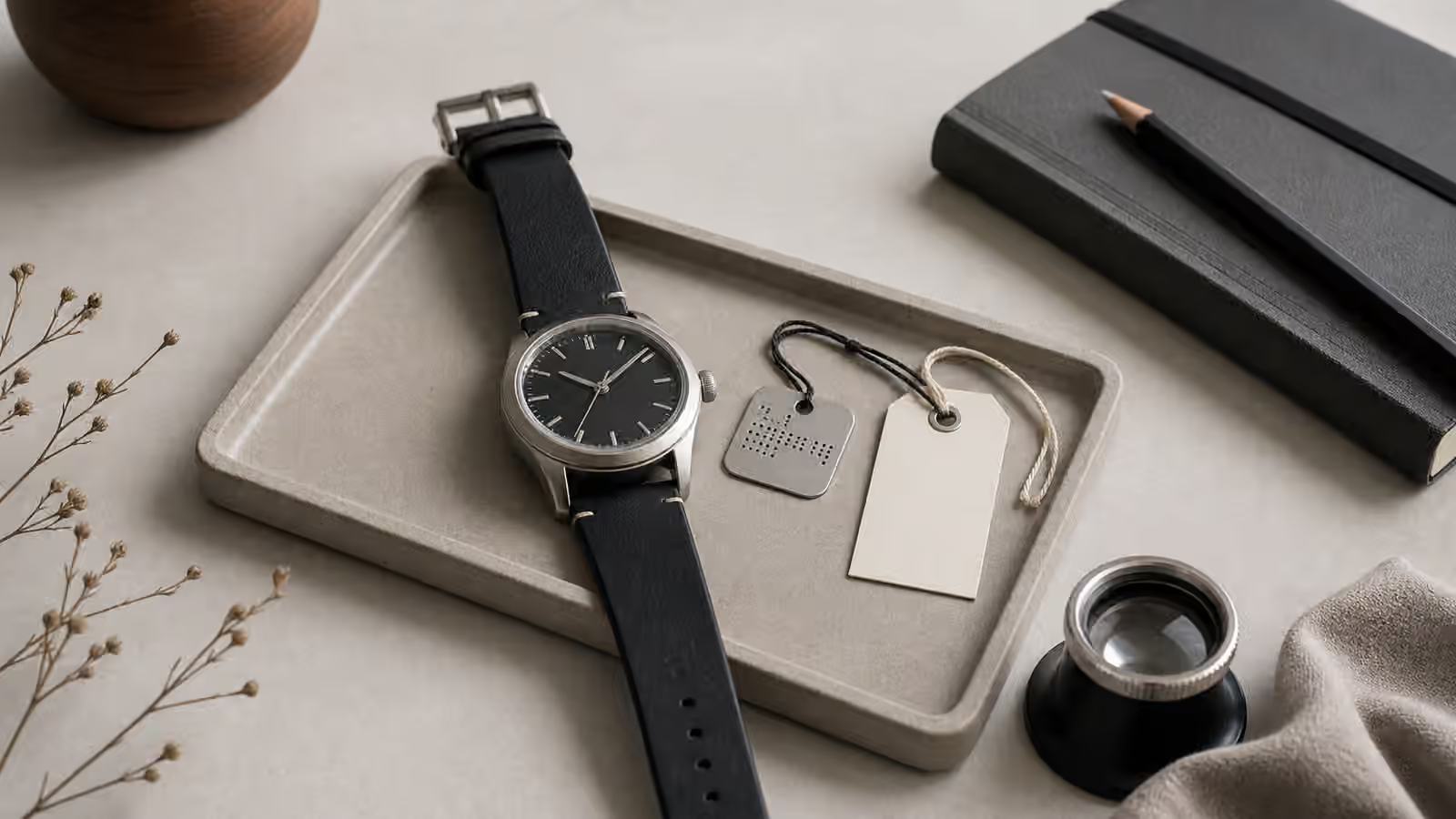
Limited editions often come with numbered cards, certificates, special boxes, straps, tags, or booklets. These can be pleasant, and they can help establish continuity if the watch is sold later. They should not distract from the watch itself. A beautiful box does not fix a poor clasp. A numbered card does not prove the dial is aligned. A certificate does not guarantee that the watch has been cared for.
Watch Box, Papers, and Service Records gives the broader framework. Documentation is most useful when it connects this object to its stated identity. Edition number, purchase record, service history, included accessories, and any replacement parts should agree. On the secondary market, ask whether the edition-specific items are included if they matter to you.
The absence of extras should be priced and considered calmly, not treated as a moral failure. Some owners discard boxes. Some straps wear out. Some paperwork is lost during moves. What matters is whether the listing is honest and whether the watch still fits your purpose.
The collection test is quieter than the launch
Limited releases are often loud at the moment of sale. Photos circulate, forums debate, newsletters repeat the deadline, and early buyers share excitement. That energy can be enjoyable. It can also make the watch feel more essential than it is. The better test happens in a quiet room with the watches you already own.
Imagine where the limited watch would sit in your actual rotation. Does it replace something, complement something, or duplicate a role you already have? Would you wear it on an ordinary Wednesday? Does it fit your straps, clothes, climate, and tolerance for attention? Watch One-Watch Collection is useful even if you own several watches because it forces each candidate to answer a role-based question.
If the only answer is “it is limited,” pause. Scarcity can make a watch interesting, but it should not be the main wearing experience. You do not wear the production number. You wear the case, dial, strap, bracelet, movement, and design.
Secondary-market listings require extra patience
After a limited release sells out, secondary listings can become emotionally charged. Some sellers emphasize scarcity. Some buyers fear missing their only chance. Photos and condition still matter. Seller history still matters. Service, warranty transfer, bracelet links, straps, accessories, and return terms still matter. Online Watch Listing Photos belongs in the conversation because scarcity does not make weak evidence stronger.
Be cautious with phrases that try to turn hesitation into failure. “Rare,” “sold out,” “last chance,” and “investment piece” are not substitutes for condition and fit. A limited watch with poor photos, vague ownership history, and missing accessories may still be worth buying if you understand the trade. It should not be bought because the listing sounds urgent.
The healthiest limited-edition purchase feels calmer after research, not more frantic. The more you know about the watch, the maker, the production story, and your own collection, the less you need the deadline to decide for you.
Buy the watch after the scarcity gets smaller
Scarcity language is powerful because watches are emotional objects. They are small, personal, and easy to imagine as future regrets. A limited edition can make that imagination urgent. The discipline is to shrink the scarcity back to its proper size. It is one factor among design, fit, support, condition, serviceability, and joy.
If the watch is still appealing after you ignore the countdown, after you compare it to your actual wearing life, and after you accept that resale may be ordinary, then the limited nature can become a pleasant detail. It can make the watch feel more personal without controlling the decision.
A limited edition should feel like a watch that happened to be limited, not a limit that happened to be shaped like a watch.