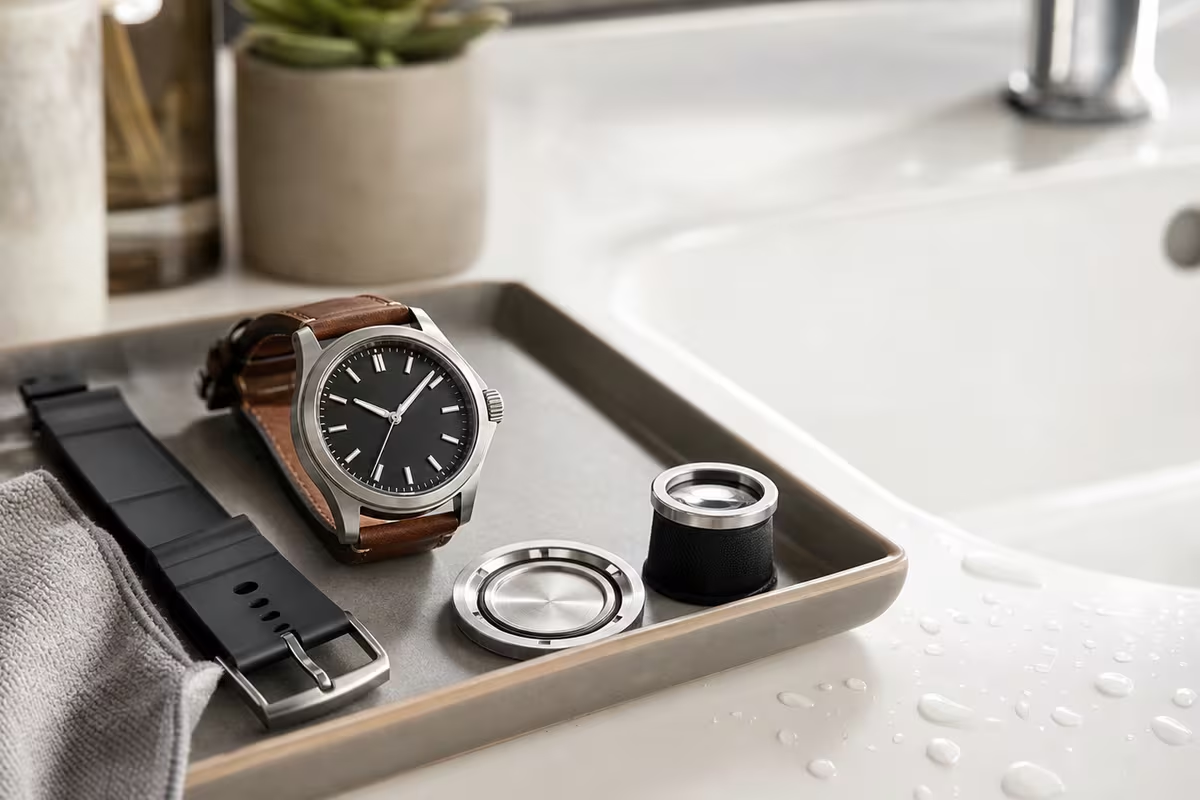
Water resistance is usually printed as a number, but the number is only the visible part of a sealed system. The less visible parts are softer, smaller, and easier to forget: caseback gaskets, crown seals, pusher seals, crystal gaskets, tube seals, and the surfaces those seals press against. A watch can look solid, feel heavy, and carry a confident rating while depending on rubber or synthetic rings that age quietly in the dark.
That is the reason pressure testing matters. It turns a claim into a current condition check. The test does not make the watch stronger, and it does not predict every future accident. It simply helps answer whether the case is behaving as a sealed case at the time of testing. For anyone who wears a watch around sinks, rain, pools, boats, or sweat-soaked summer days, that answer is more useful than trusting a caseback engraving from years ago.
A gasket is a small part with a large job
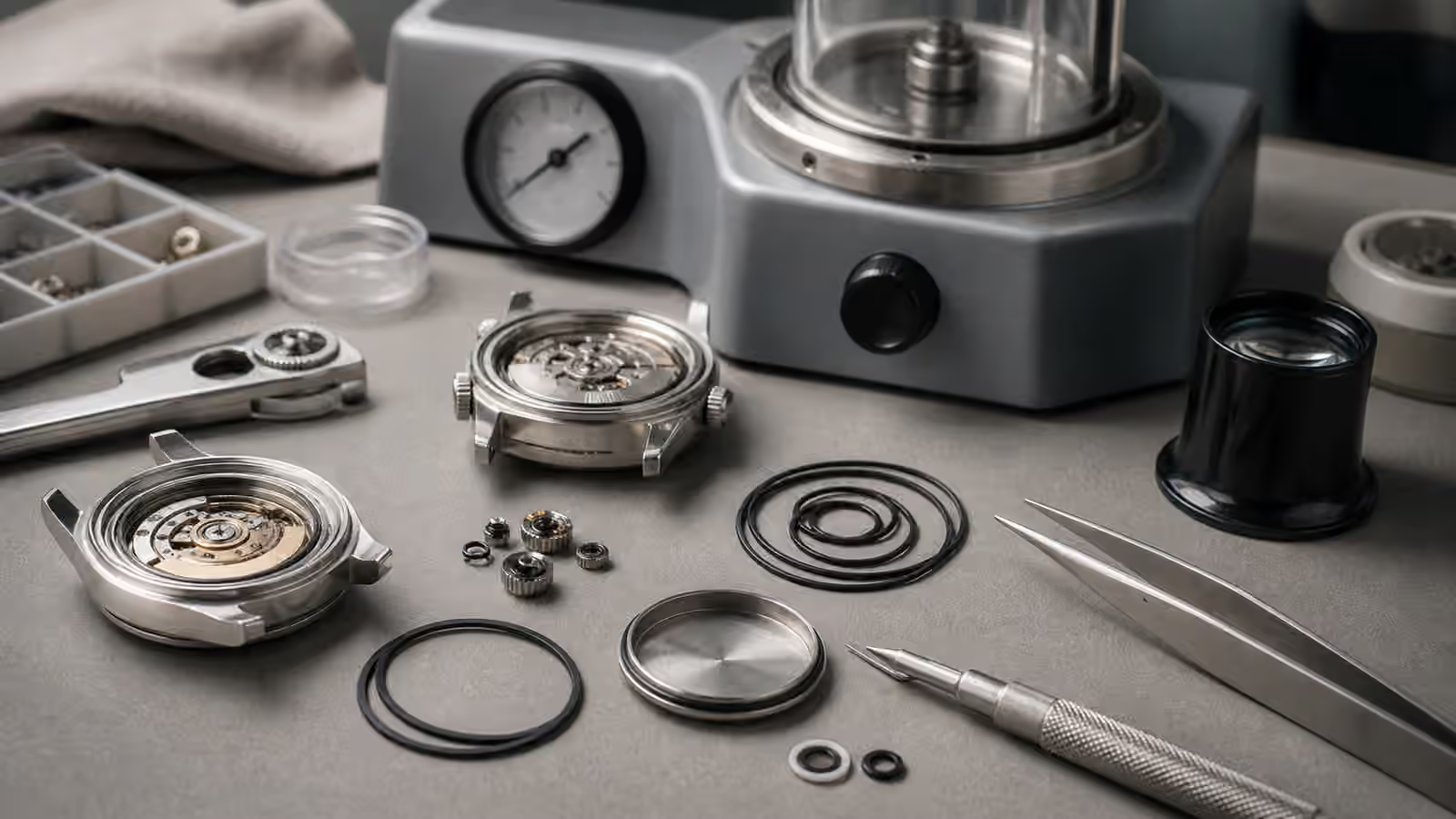
A gasket works by compression. It sits between two surfaces and helps close the route that water, dust, or moisture would like to take. In a watch, those routes exist wherever the case opens or a control passes through it. The caseback must open for service. The crown must move and turn. Pushers must press. The crystal must be held in place. Each opening asks for a sealing answer.
Gaskets are not permanent. They flatten, dry, swell, crack, stretch, harden, or lose the lubrication that helps them seat correctly. Heat, sweat, age, repeated opening, chemicals, salt, and simple time all contribute. A gasket does not need to look dramatic to be tired. Sometimes it simply no longer compresses evenly. Sometimes the surface it seals against has been scratched, dirty, corroded, or closed with the wrong pressure.
Watch Water Resistance in Everyday Life explains the practical side of ratings and habits. Gaskets are the hidden reason that guide takes a cautious tone. A printed rating belongs to a watch in a supported condition, not to every future version of that watch after years of wear and casual battery changes.
The caseback is the obvious door
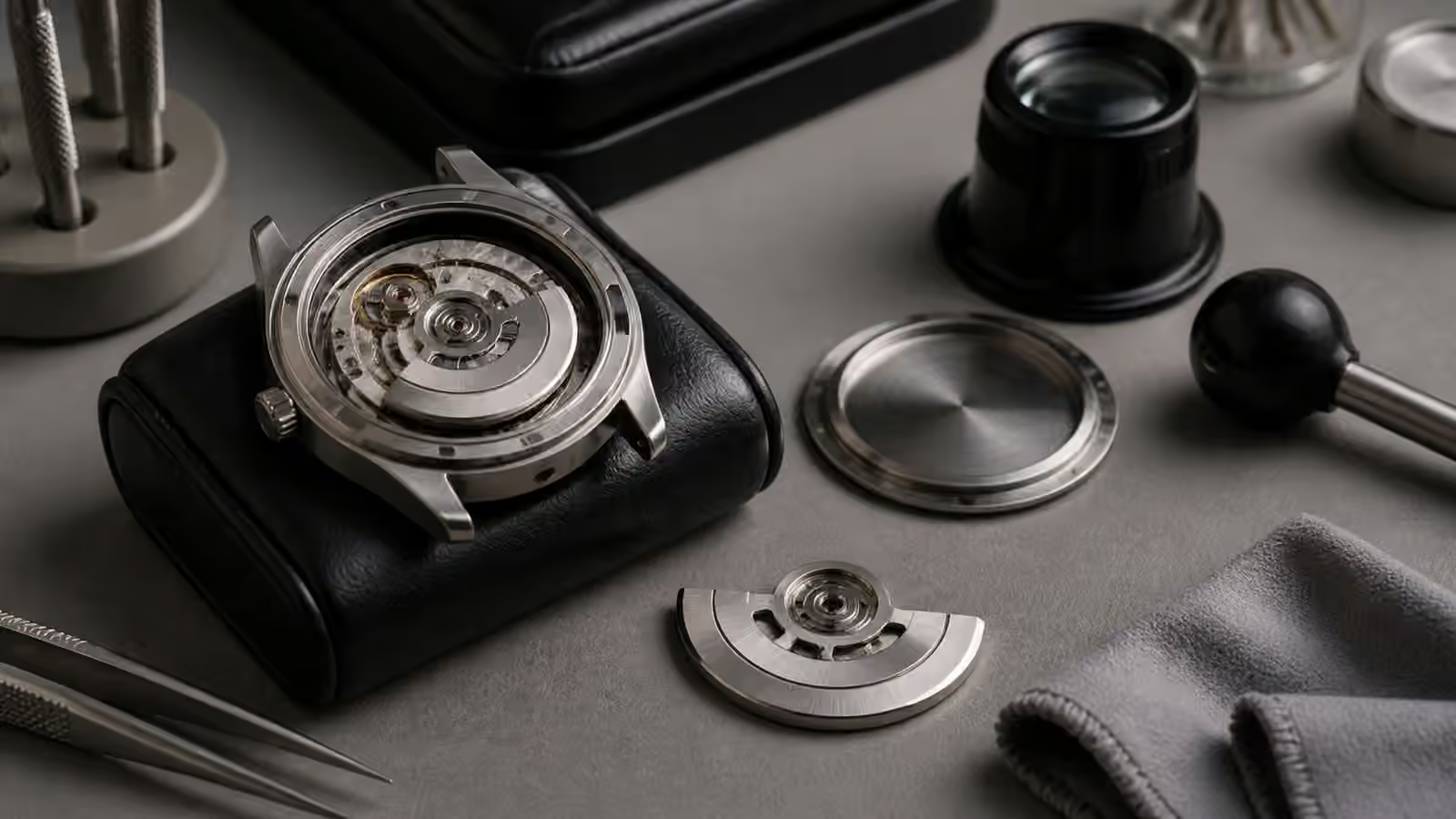
The caseback is the largest service opening, which makes its seal easy to understand. Screw backs, snap backs, and backs held by screws all need the right gasket condition and closure. A screw-down back may feel secure because it tightens firmly, but threads alone do not create the seal. A snap back may look simple, but it still needs a clean lip, an intact gasket, and even pressure when closed.
Every opening is a small reset of trust. If the watch was opened for inspection, regulation, battery replacement, or full service, the gasket should at least be inspected. In many cases it should be replaced. If water resistance matters, the watch should be tested after closure. A watch can leave a bench looking perfect while the sealing system is uncertain.
Watch Casebacks and Display Backs gives the broader view of how backs affect service, thickness, and design. For gaskets, the lesson is plain: the back is not a lid you can treat casually. It is part of the boundary between the movement and the outside world.
Crowns and pushers are moving seals
The crown is more complicated because it is both a control and an opening. It has to let you wind, set, and sometimes screw down the watch, while still keeping moisture away from the movement. The crown tube, stem, and internal seals all matter. A screw-down crown helps hold the crown in place and can support water resistance, but it is not a magic plug. Worn threads, damaged tubes, tired seals, or careless handling can weaken the system.
Pushers add another moving route. Chronograph pushers, alarm pushers, calendar correctors, and other case controls may all rely on small seals. Some specialized watches are designed for certain pusher use around water, but many are not. The safe general habit is to avoid operating pushers when the watch is wet unless the maker’s instructions clearly support it. A sealed button at rest and a moving button under pressure are different situations.
Watch Crowns and Pushers covers the handling side. Gaskets explain why gentle use matters. A stiff crown, gritty screw-down action, or slow pusher return is not only an annoyance. It can be a sign that the parts controlling access to the case deserve attention.
The crystal seal is easy to forget
The crystal looks like a window, so owners often think about scratches before sealing. Yet the crystal also has to sit in the case securely. Acrylic, mineral, and sapphire crystals may use different fitting methods and gasket arrangements. A replacement crystal can improve visibility or remove damage, but it also changes the sealed system. After crystal work, a watch intended for water should be tested again.
Damage around the crystal deserves respect. A chip, crack, lifted edge, or sign of fogging is not only cosmetic. It may create or reveal a route for moisture. Condensation under the crystal should be treated as a warning, not a curiosity. The correct response depends on the watch, but waiting to see whether it clears permanently is rarely the careful path.
Watch Crystal Materials explains how different crystals scratch, chip, and distort. Add the gasket layer and the crystal becomes more than a transparent cover. It is part of the case architecture.
Pressure tests are condition checks, not guarantees
A pressure test evaluates whether the watch resists a test condition. Dry testers look for case deformation or pressure change without submerging the watch. Wet testers use air pressure and water in a controlled way. Watchmakers choose tools and methods according to the watch and the question being asked. The owner does not need to become a testing technician, but it helps to understand what the result means.
A passed test says the watch passed then. It does not promise that the crown will be closed next week, that a pusher will not be pressed underwater, that a gasket will not age, or that a hard knock will not change the case. A failed test does not always mean disaster. It means the watch should not be trusted around water until the leak path is understood and addressed.
This distinction keeps expectations sane. Pressure testing is useful because it reduces guessing. It is not a warranty against every future habit. The best use is regular enough testing for watches that actually see water, especially after service, battery changes, crystal work, or case opening.
Vintage watches need extra restraint
Older watches can be charming and fragile in ways that modern ratings do not capture. Cases may have been polished. Crowns may have been replaced. Tubes may be worn. Crystal seats may be imperfect. Caseback threads may be tired. Even if the watch once had a meaningful rating, decades of use can change the geometry that gaskets depend on.
This does not mean every vintage watch must be locked away from ordinary life. It means the owner should choose habits that match the current object. A watchmaker may advise keeping a vintage watch dry even after service, not because the watch is bad, but because testing or relying on water resistance would stress a case that is better preserved through restraint. That advice can be disappointing, but it is also valuable.
Vintage Watch Condition and Patina is relevant because moisture marks, dial spotting, lume damage, and case corrosion all tell water stories. A watch with beautiful aging may still be a poor swimming companion. Beauty and sealing confidence are different questions.
Records make water decisions easier
Keep pressure-test and gasket service records with the watch. A receipt that says seals were replaced, pressure testing was performed, and the result was acceptable gives future owners or future you a more accurate timeline. It does not keep the seals fresh forever, but it prevents the common fog of memory where “serviced recently” means anything from a battery swap to a full overhaul with testing.
Watch Box, Papers, and Service Records explains why documentation matters beyond resale. For water resistance, records are practical. They help you decide whether to swim, rinse, travel, or schedule a check. They also make conversations with watchmakers clearer because the watch’s sealed history is not being reconstructed from guesses.
The most careful owners are not necessarily the most fearful ones. They are the ones who understand that water resistance is maintained, not inherited permanently. They close crowns, avoid wet pushers, rinse appropriate watches after saltwater, dry straps, test when the watch’s role requires it, and avoid asking old seals to behave like new ones.
The hidden parts decide the visible confidence
A watch can feel trustworthy because of its weight, styling, rating, or reputation. Gaskets ask a more modest question: what is the condition of the actual sealed system today? That question is less romantic, but it is kinder to the watch. It respects the movement, the dial, the case, and the owner who would rather prevent moisture than explain it afterward.
Treat gaskets as consumable parts. Treat pressure tests as useful evidence. Treat ratings as design intent supported by maintenance. A watch does not become less enjoyable because you understand the small rings protecting it. It becomes easier to wear with the right kind of confidence, which is confidence based on condition rather than hope.