Field watches and pilot watches are often discussed as simple watches, but their simplicity is not empty. It comes from a practical idea: time should be readable quickly, under changing light, while the wearer is doing something else. The categories developed from different histories, yet they share a respect for clarity. Big hands, clear markers, matte surfaces, and straightforward cases matter more than decoration.
That makes them attractive for daily wear. A field watch can feel relaxed, modest, and durable. A pilot watch can feel open, instrument-like, and direct. Both can serve people who want a watch that does not require a long explanation. The challenge is choosing one that feels purposeful rather than plain.
Tool-watch simplicity begins with the glance
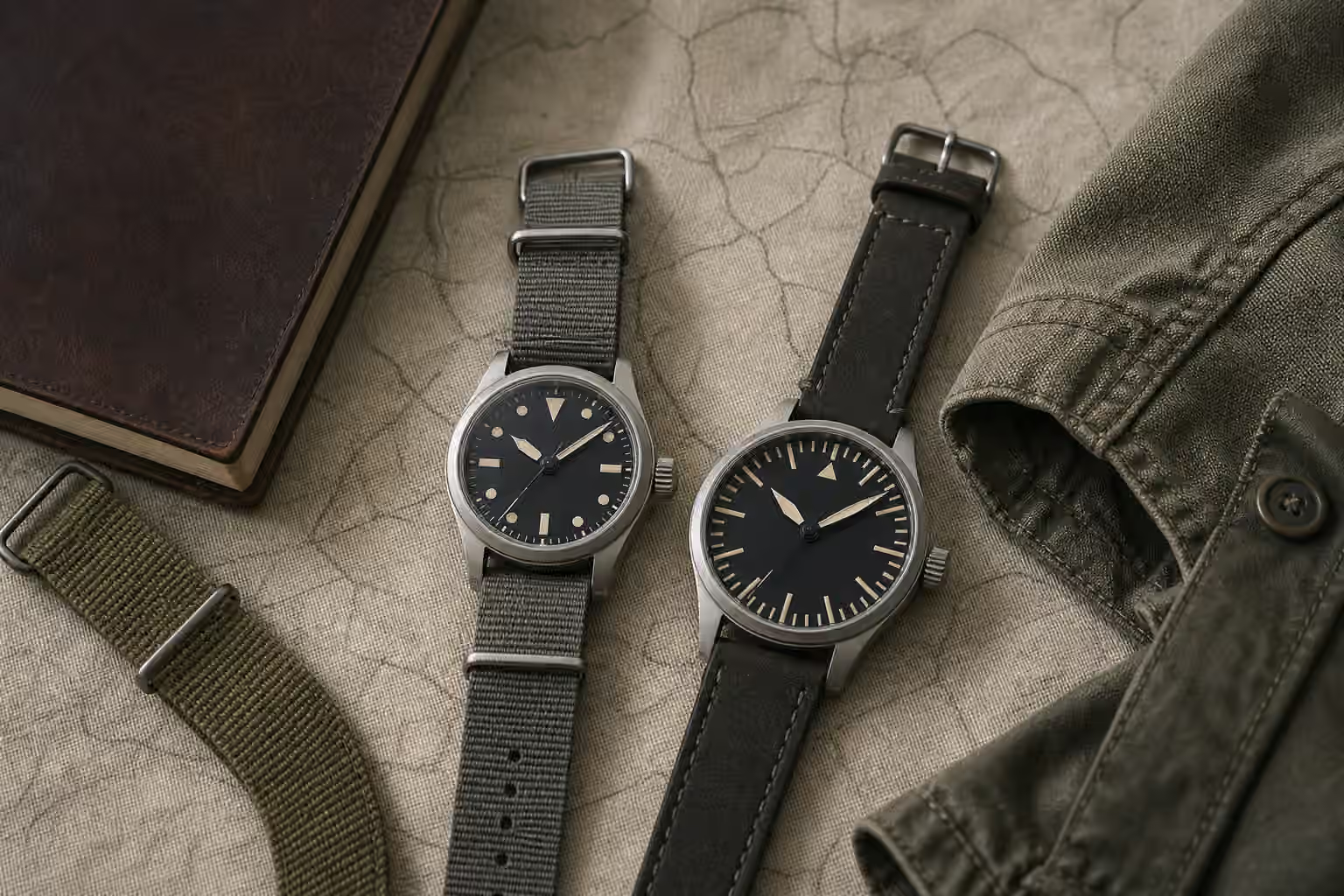
The first question for either style is how quickly the time resolves. A field watch often uses Arabic numerals, a strong minute track, and a case that stays compact enough for active wear. A pilot watch may use larger numerals, a broad dial opening, a triangle marker at twelve, or long high-contrast hands. The exact vocabulary varies, but the purpose remains steady: the dial should orient the eye without fuss.
Watch Dial Legibility gives the underlying method. Contrast matters. Hand length matters. Marker shape matters. Crystal reflections matter. A watch that looks clean in a straight-on photo can become frustrating if the hands vanish at common angles. A dial that seems busy in theory can read well if the hierarchy is strong.
Field and pilot watches also reveal a useful truth about design restraint. Removing decoration is not enough. The remaining elements have to be placed well. If the numerals are cramped, the date window interrupts the minute track, or the hands are too short, the watch may be simple and still not be clear.
Field watches work because they stay modest
The field watch’s appeal often lies in its modesty. It can be worn with canvas, denim, knitwear, work shirts, and casual jackets without making the wrist feel staged. Many field watches are relatively thin, easy to strap, and visually durable. They do not need polished drama to make sense.
This modesty is why proportion matters. A field watch that grows too large can lose the very quality that made it attractive. Long lugs, a tall automatic case, or a dial that stretches too wide can turn a practical watch into a costume version of practicality. Watch Lug Geometry and Case Shape is useful because field watches often depend on short, comfortable cases.
A smaller field watch is not automatically better. It still needs presence on your wrist, enough dial area to read, and a crown that can be used without irritation. The point is not to chase the smallest number. The point is to keep the watch aligned with its job. Field watches usually feel best when they seem ready for ordinary movement rather than display.
Pilot watches need space but not excess
Pilot watches can legitimately wear larger than field watches because their design language often comes from cockpit instruments and fast readability. A broad dial, large hands, and open numerals can be part of the charm. The danger is letting that history excuse a watch that is simply too large or too thick for daily life.
Case size should be read with the habits from Watch Sizing . A 42mm pilot watch with a thin case and downward lugs may wear better than expected. A smaller watch with a long straight case can overhang. A large crown can be attractive and easy to grip, but it can also press into the hand if the case sits low on the wrist.
The dial opening also changes perception. Pilot watches often have thin bezels and expansive dials, so they can look larger than their diameter. That openness is part of the style, but it should not overpower the wrist. The best pilot watch feels like an instrument, not a plate.
Matte surfaces do quiet work
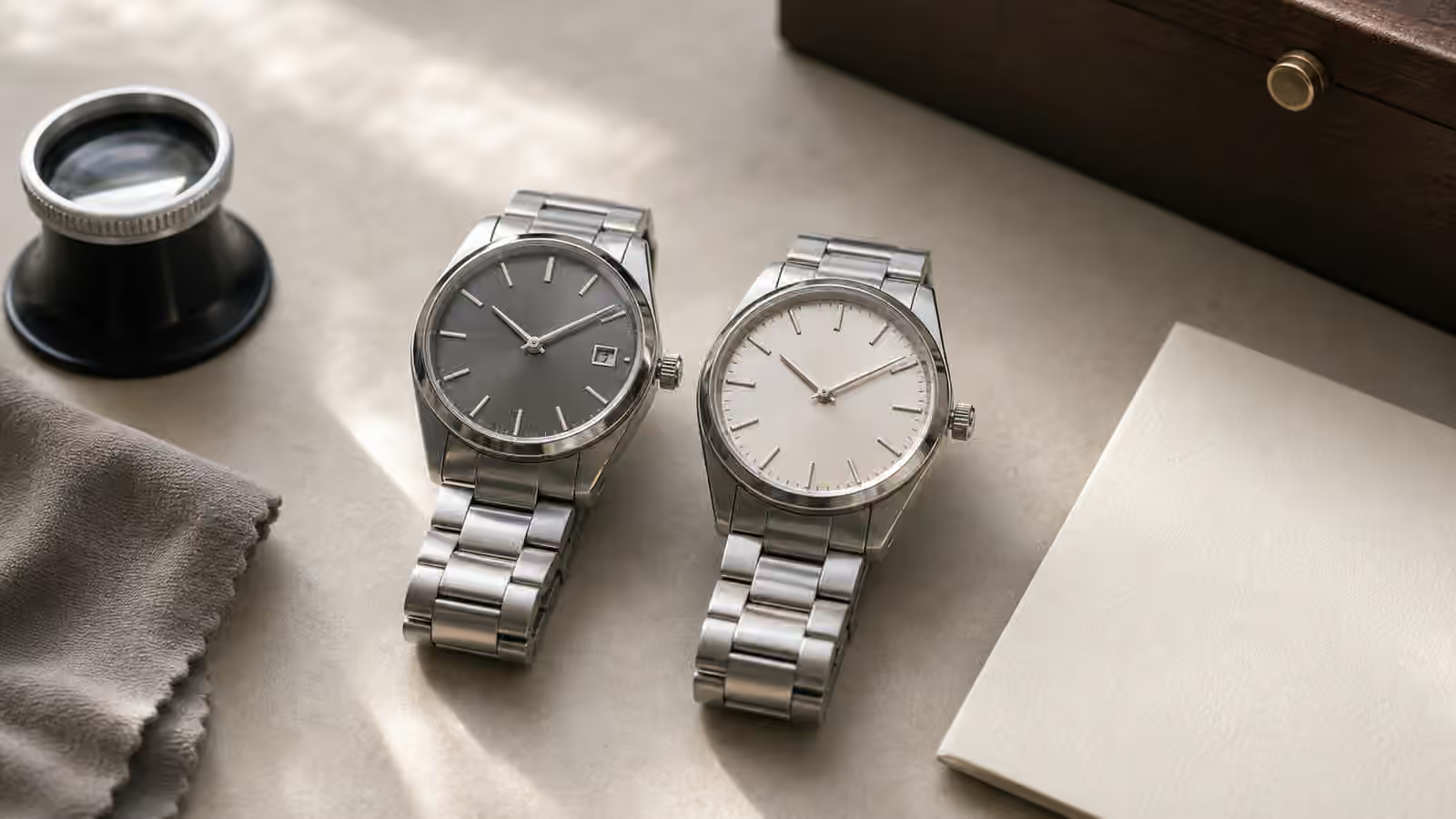
Many field and pilot watches use matte dials, brushed cases, canvas straps, and muted colors because shine can interfere with legibility and mood. A polished dress watch may glow beautifully under soft light. A tool-style watch often benefits from surfaces that stay readable when light is uneven.
Watch Case Materials and Finishing helps explain the difference between brushing that looks intentional and finishing that looks cheap. A field watch does not need elaborate bevels, but the case edges should feel controlled. A pilot watch can have polished accents, but glare should not dominate the dial.
Color should serve the same purpose. Black, white, cream, gray, blue, olive, and tan can all work when contrast is clear. A colored dial that weakens hand visibility may be less useful than a plain one. The watch can have character without sacrificing the quick glance that defines the category.
Straps change the cultural signal
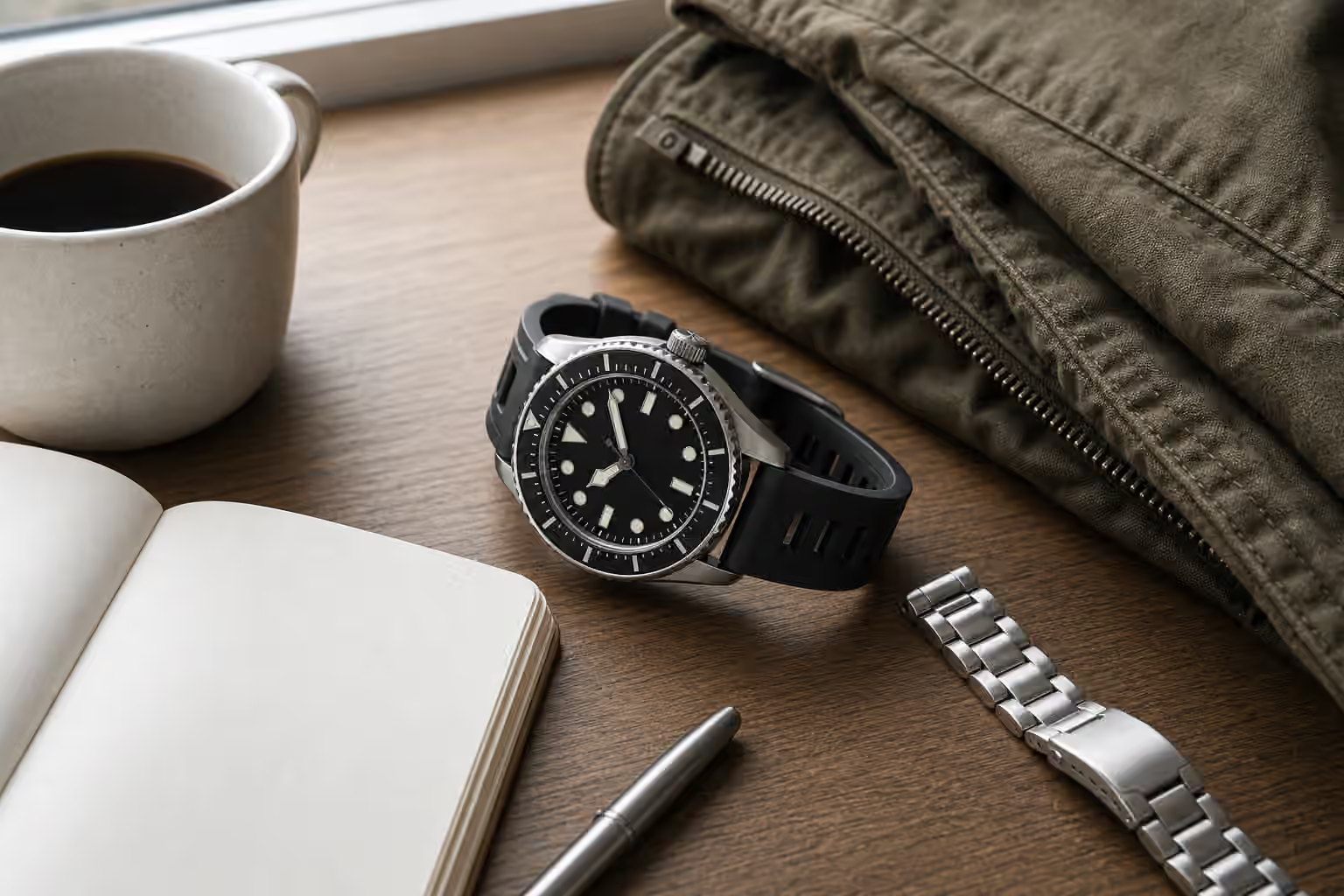
A field watch on canvas or nylon feels casual and ready for weather. On leather, it can become warmer and more refined. On a bracelet, it may become more versatile but less historically direct. A pilot watch on leather can feel classic; on fabric it can feel more relaxed; on a bracelet it may become a broad daily watch rather than a period-inspired instrument.
Watch Straps and Bracelets and Watch Spring Bars and Strap Changes are worth reading before treating strap changes as harmless styling. The strap affects height, lug angle, and comfort. A thick pass-through strap can lift the case and make a watch feel bulkier. Quick-release straps are convenient but still need secure fit. Lug width and taper influence whether the watch looks balanced.
Tool watches invite strap play, but the most successful combinations still respect proportion. A delicate field watch can be overwhelmed by a heavy padded strap. A large pilot watch can look stranded on a narrow taper. The strap should make the watch easier to wear, not merely more interesting in a photograph.
Lume is useful when it supports the dial
Lume belongs naturally to field and pilot watches because both categories are associated with poor light and fast reading. It is satisfying when the hands and markers glow clearly after moving from daylight into a dark room. It is also easy to overvalue. Lume strength matters less if the watch is hard to read during the day.
Watch Lume and Legibility makes the distinction. Lume should reinforce the dial’s structure. If every marker glows but the hands are not distinct, low-light reading still suffers. If the minute hand and hour hand are easy to confuse, brightness alone does not solve the problem. Aging luminous material also changes the equation on vintage pieces, where charm and function may move apart.
For daily wear, test ordinary transitions. Can you read the watch in a hallway, a car, a dim restaurant, or beside the bed? A field or pilot watch does not need to become a flashlight. It should let the eye land quickly when light is imperfect.
History should add texture, not pressure
Both styles carry military and aviation associations. Those histories can be meaningful, but they can also become marketing fog. A modern owner may never fly a plane or cross a field with the watch doing anything mission-critical. That is fine. The design can still be useful because the original constraints created practical habits.
A Short History of Watches can place those influences in context. The important thing is to avoid buying a story while ignoring the object. If the watch is uncomfortable, too reflective, poorly proportioned, or hard to service, the historical language will not make it better on the wrist.
A good field or pilot watch lets the past inform the design without trapping the owner in costume. It can be inspired by old instruments and still be judged as a present-tense object: readable, comfortable, maintainable, and right for your life.
Choose the one that remains useful after the romance fades
The first charm of a field watch or pilot watch may be visual. The dial looks honest. The case looks purposeful. The strap suggests movement. After a few weeks, the lasting value is more practical. The watch is easy to read, easy to wear, easy to pair with clothes, and not precious about ordinary days.
That is why these styles make strong first mechanical watches and strong tenth watches. They do not have to dominate a collection. They can become the watch you reach for when you do not want a decision. If the size is right and the dial is clear, that quiet usefulness can last longer than novelty.
Choose with your eyes, but confirm with your wrist. The right tool-style watch should make time easier to catch, not harder to admire. Its simplicity should feel earned every time you glance down and understand the dial immediately.