A dress watch is supposed to make time feel composed. It is not trying to announce durability from across the room, time a dive, or carry a dial full of instruments. Its strongest quality is often restraint. A good dress watch sits low, reads clearly enough, slips under a cuff, and lets the rest of the outfit keep its shape.
That quietness can make dress watches harder to judge than louder categories. A large sports watch tells you what it is immediately. A dress watch asks you to notice small things: how the lugs curve, how thick the caseback feels, how the strap meets the case, whether the dial has enough contrast, and whether the watch disappears gracefully when your arm moves.
A dress watch earns its place at the cuff
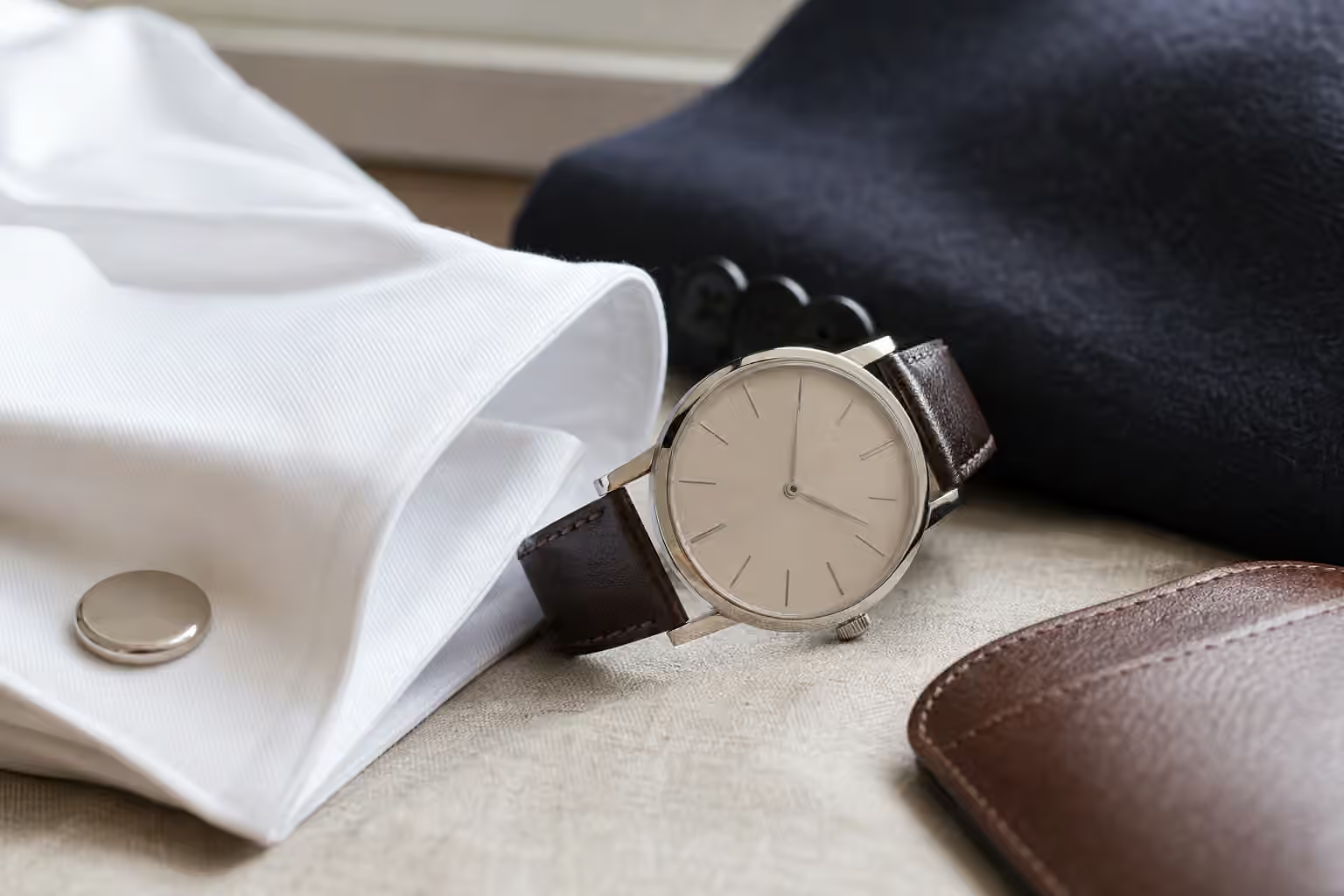
The cuff is the simplest test. A formal watch should not fight the shirt. If the case catches on fabric every time you move your wrist, the watch may be elegant in a product photo and irritating in actual wear. Thinness matters, but the whole shape matters more. A flat caseback, short lugs, a modest crystal profile, and a strap that drops cleanly can make a watch feel slimmer than the number on the spec sheet.
This is why Watch Case Thickness and Wrist Comfort belongs beside any conversation about dress watches. Diameter gets attention because it is easy to quote, but cuff fit is a three-dimensional problem. A 38mm watch that is tall and slab-sided can feel less dressy than a slightly wider watch with a rounded case and low crystal. A watch that sits like a coin on the wrist may pass under a sleeve more easily than one with thick lugs and a raised back.
The sleeve also exposes strap behavior. A stiff strap can hold the case away from the wrist. A thick padded strap can make a slim watch wear taller. A soft leather strap that has broken in can let the case settle. The watch head and the strap have to cooperate, or the cuff will tell you the truth.
Small does not automatically mean refined
Dress watches are often smaller than sports watches, but size alone does not create refinement. Proportion is the better word. A dial can look too wide for its bezel, too empty for its case, or too busy for its purpose. Lugs can be delicate without being weak. A crown can be easy to use without looking oversized. The hands can be thin without becoming invisible.
The general sizing habits from Watch Sizing still apply. Lug-to-lug length decides whether the watch sits inside the wrist. Thickness decides whether it moves under clothing. Dial opening decides how large it looks. A dress watch with a broad pale dial may appear larger than its diameter suggests, while a darker dial with a polished bezel may feel more contained.
The right size also depends on the formality you want. A watch meant for a suit, a dinner, or a quiet office may benefit from understatement. A watch meant for smart casual wear can tolerate a little more wrist presence. The mistake is treating dress watch sizing as a rule handed down by tradition. Tradition gives useful instincts, but your wrist, sleeves, and clothes supply the final evidence.
The dial should be calm, not empty
Restraint is not the same as blankness. A dress watch dial can be spare and still have character. The markers may be applied batons, Roman numerals, small dots, or a printed minute track. The hands may be leaf, dauphine, baton, or syringe-shaped. The surface may be matte, brushed, enamel-like, lacquered, or lightly textured. Each choice changes the mood.
The Dial That Told a Story and Watch Dial Colors, Textures, and Finishes are useful because dress watches live on subtle dial decisions. A tiny date window can feel practical on one watch and disruptive on another. A seconds subdial can add charm or clutter. A sunburst finish can bring life to a simple design, but it may become too reflective in bright rooms.
Legibility still matters. A watch can be formal without making you tilt your wrist like a puzzle. Polished hands on a glossy dial may disappear at certain angles. Low-contrast markers can look refined in still photos and weak in a dim restaurant. Watch Dial Legibility is not only for tool watches. A dress watch earns its elegance more easily when it lets a quick glance remain quick.
Leather is common because it changes the posture
Leather straps suit many dress watches because they reduce visual weight. A bracelet can be beautiful, especially a fine mesh or a refined multi-link design, but leather often lets the case become the center of the watch rather than part of a larger steel object. The strap can also connect the watch to shoes, belts, bags, or jacket texture without trying to match everything exactly.
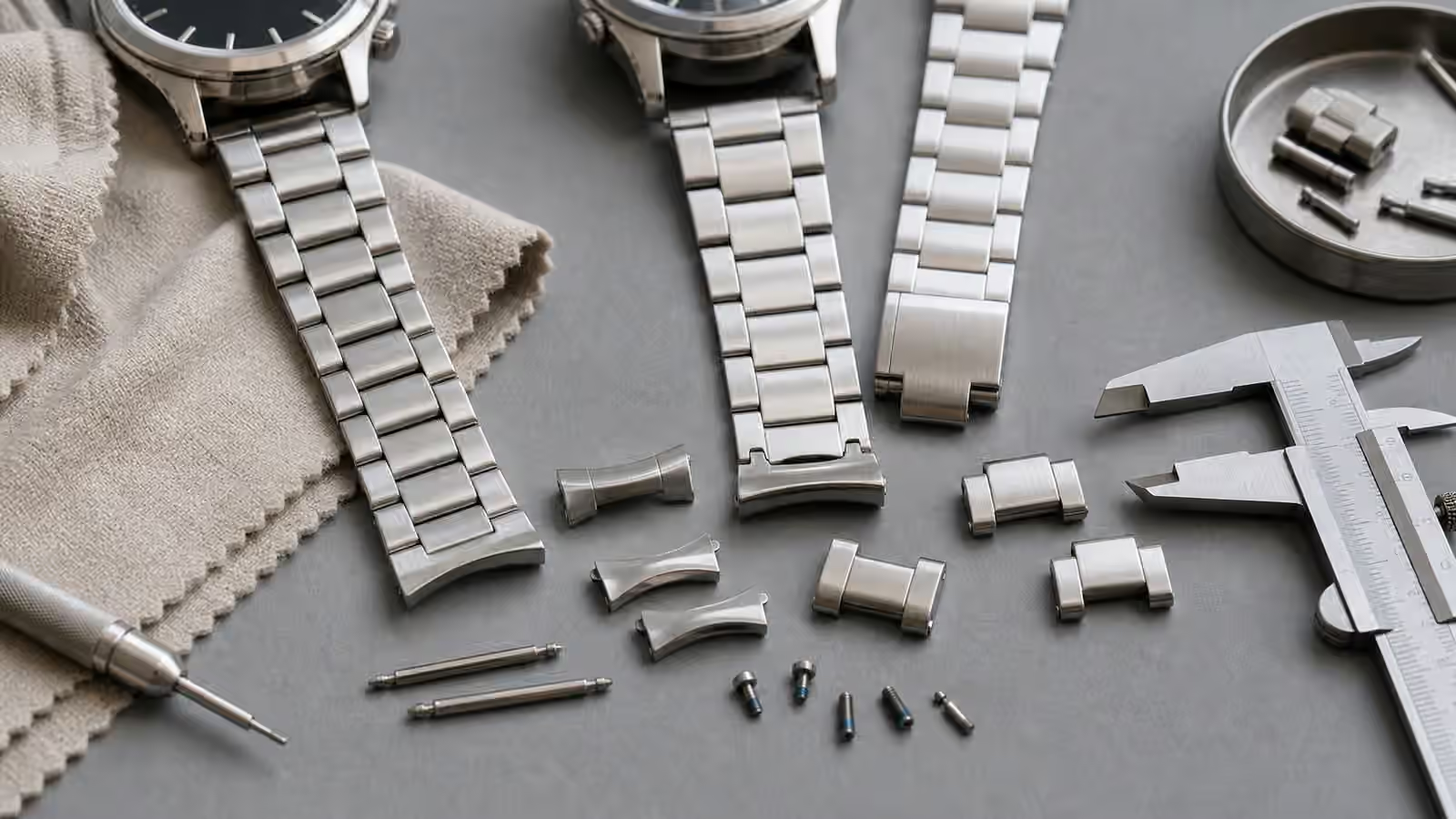
Strap thickness is worth judging carefully. A slim case on a heavily padded strap can feel confused. A very thin strap on a heavier case can feel insecure. Taper matters too. A strap that narrows toward the buckle can make the watch feel more elegant, while a straight wide strap can make the same case look more casual. Watch Straps and Bracelets gives the broader vocabulary, but dress watches make those details more visible.
Leather also asks for honest care. It does not love sweat, rain, or repeated soaking. A dress watch on leather is not the watch to wear when water is likely, even if the case itself has a modest rating. If the watch becomes your daily office companion, rotating straps or letting the strap dry between wears can keep it fresher. The watch may be formal, but the strap still lives against skin.
Water resistance should be read conservatively
Many dress watches are not built around water. They may have modest ratings, push-pull crowns, snap backs, thin cases, and leather straps. None of that is a flaw if the watch is used honestly. It simply means the watch belongs away from showers, pools, and careless sink habits.
Watch Water Resistance in Everyday Life explains why the printed number is not the whole story. Dress watches make that lesson practical. A slim case can be well made and still not be the right choice for swimming. A leather strap can be ruined while the case survives. A vintage dress watch may have little meaningful water resistance left even if it once had some.
This is not fragility for its own sake. It is role clarity. A dress watch can be worn often if you treat it like the object it is. Wipe it after wear, keep it away from moisture, service it when the movement asks, and do not make it prove toughness that the design never promised.
Movement choice changes the daily relationship
A manual-wind dress watch can be especially satisfying because the movement may allow a thinner case and a more intimate routine. Winding the crown before wearing the watch fits the slower mood of the category. Manual-Wind Watches goes deeper into that ritual and the care it requires.
Automatic dress watches are easier for many owners because they wind during wear, but the rotor adds thickness. That trade-off may be invisible on one wrist and decisive on another. Quartz dress watches deserve more respect than they sometimes receive. A slim quartz movement can make a watch thin, accurate, and ready after weeks in a drawer. If the purpose is formal convenience, Quartz Watches may describe the more sensible choice.
The movement should match the reason you want the watch. If you love mechanical ritual, choose it knowingly. If you want a watch that waits calmly until the next wedding, dinner, meeting, or ceremony, quartz may be the quieter luxury.
Formal does not have to mean precious
A dress watch should not feel like a museum piece unless it actually is one. The healthiest version is wearable, legible, comfortable, and honest about its limits. It may show small scratches on polished lugs. The strap may soften. The caseback may gather marks from a desk. Those signs are not failures if the watch is being used as intended.
The mistake is buying only the idea of elegance. A watch can look refined in isolation and still be wrong for your cuffs, posture, climate, and routines. Try to imagine the actual moments: reaching across a dinner table, sliding a jacket on, typing at a desk, packing for travel, or taking the watch off at night. The right dress watch survives those scenes without demanding attention.
Choose the one that keeps its dignity when nothing dramatic is happening. It should not need a famous logo, a complicated dial, or a precious story to make sense. It should sit cleanly, read gently, and let the cuff fall back into place.