A dive watch has a strange second life. It was shaped by underwater timing, high contrast, rotating bezels, sturdy cases, and strong seals, yet many examples spend most of their lives timing laundry, walks, pasta, parking, and meetings. That does not make the design false. It means the original tool language happens to solve ordinary problems well.
The everyday appeal is easy to understand. A good dive watch is readable, casual, water-tolerant when maintained, and visually grounded. It can look right with a T-shirt, a sweater, a rain jacket, or a travel bag. It also brings trade-offs: thickness, weight, bracelet fit, bezel size, and the temptation to treat water resistance as permanent armor.
The bezel changes how the watch behaves
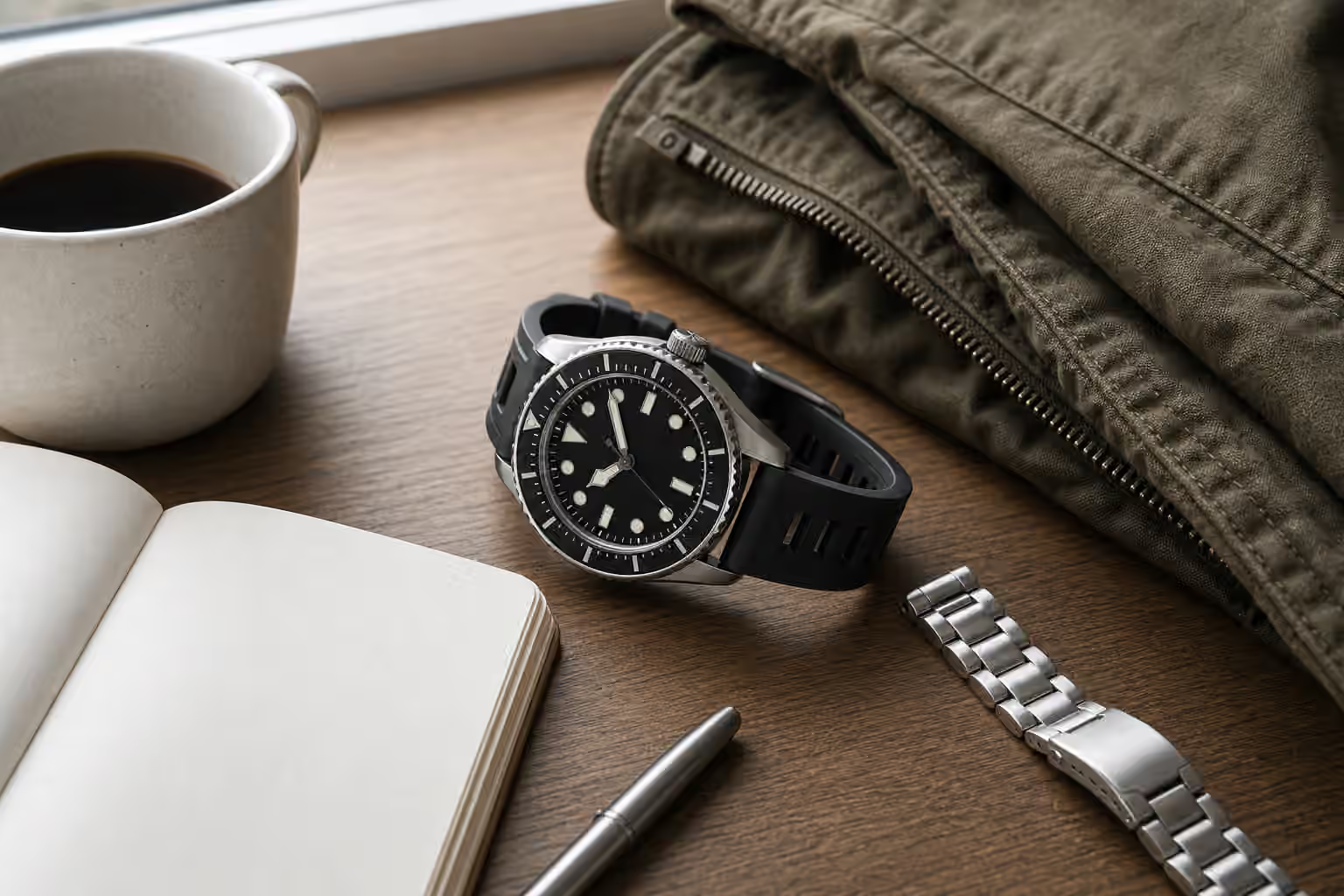
The rotating bezel is the most visible dive-watch feature after the dial. In diving, it is used as a timing reference. In daily life, it becomes a simple external timer. You can mark when coffee started, when a parking meter began, when a meeting should end, or how long a child has been napping. It is not a complication inside the movement, so it adds usefulness without adding movement service complexity.
Watch Bezels and Scales explains the details, but everyday ownership comes down to feel. A bezel should be easy enough to grip and deliberate enough not to move constantly by accident. The clicks should feel secure. The edge should not chew into cuffs or skin. The insert should suit how you use the watch. A glossy ceramic insert may look crisp and resist scratches, while an aluminum insert may age more visibly. Neither is automatically better for ordinary life.
The bezel also affects the apparent size. A wide dark bezel can make the dial look smaller and the watch more compact. A thin bezel and large dial can make the same diameter look broad. When trying on a dive watch, look at the whole face, not only the case measurement.
Water resistance is useful only when preserved
Dive watches invite confidence around water, and that confidence is part of the category’s charm. Rain, handwashing, beach trips, pool days, and humid travel feel less stressful when the watch is designed with water in mind. Still, the caseback rating is not a spell. Gaskets age, crowns wear, crystals can be replaced poorly, and cases can be opened without a fresh pressure test.
Watch Water Resistance in Everyday Life is the guide to keep nearby. A modern dive watch with healthy seals and a secured crown is a different object from an old diver with unknown service history. If you plan to swim with the watch, treat pressure testing as part of ownership. If you bought it secondhand, do not assume the previous owner kept the seals current.
The everyday rule is simple in spirit: use the water resistance you maintain, not the water resistance printed on a watch years ago. Rinse salt and grit from appropriate watches after exposure. Do not use the crown or pushers in water unless the watch is clearly designed for that and you understand the instructions. Keep leather straps away from repeated soaking even if the case can handle it.
Bracelet and rubber change the personality
A dive watch on a steel bracelet can feel like one solid instrument. The weight is distributed across the wrist, the bracelet can handle sweat and water, and the clasp may offer extension or micro-adjustment. The same watch on rubber can feel lighter, more casual, and more comfortable in heat. Fabric can make it feel relaxed and tool-like, though drying time and thickness under the case may vary.
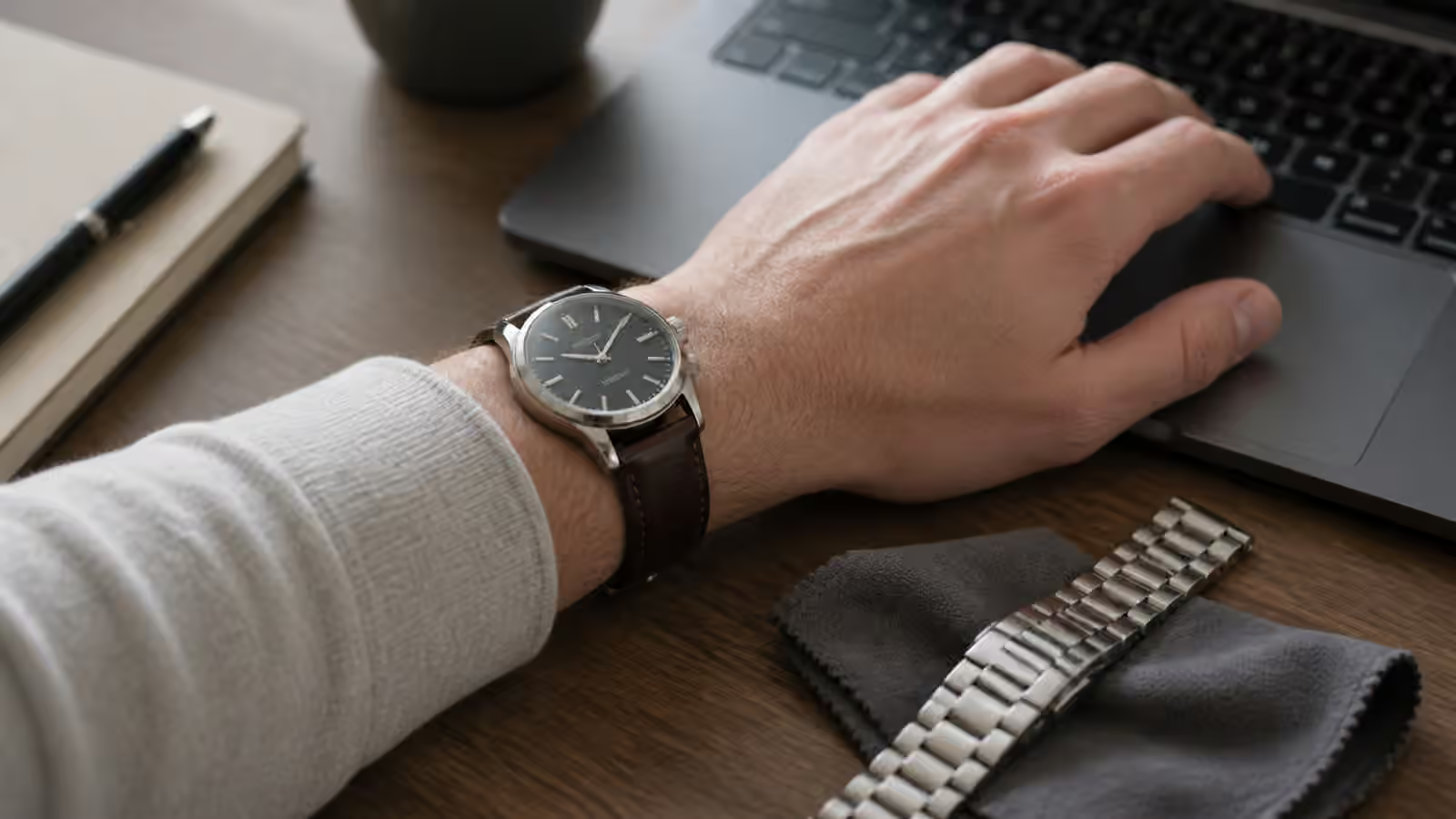
This is where Watch Clasps and Bracelet Fit becomes practical. A heavy dive watch with poor bracelet sizing can slide, rotate, and bang into the wrist bone. A good clasp adjustment can make the watch feel smaller. Half links or fine micro-adjustment can matter more than the bracelet’s visual style.
Rubber deserves the same attention. Some rubber straps are soft and comfortable. Others are stiff, dusty-feeling, or too thick near the lugs. A curved rubber strap can help a heavy watch hug the wrist, but it can also force a shape that does not fit every wrist. Try to judge the watch and strap as a system rather than assuming any dive watch will work on any rubber strap.
Thickness decides whether toughness becomes annoyance
Dive watches often need more case depth than simple dress watches. They may have stronger cases, thicker crystals, rotating bezels, screw-down crowns, and automatic movements. That substance can feel reassuring. It can also make the watch top-heavy under a sleeve or uncomfortable at a desk.
Watch Case Thickness and Wrist Comfort is especially relevant here. A watch can have a moderate diameter and still feel large because the caseback lifts it high. A curved caseback, compact lug-to-lug length, and well-integrated bracelet can make a thick watch wearable. A slabby case with long lugs can feel clumsy even when the spec sheet looks reasonable.
Desk comfort is a real test. If the clasp digs into the underside of the wrist or the crown presses into your hand, the watch may be less useful than it seemed at the counter. A dive watch is allowed to be substantial. It should not make ordinary movement feel like a negotiation.
Legibility is the category’s quiet advantage
The best dive watches are easy to read because they were designed around fast orientation. Large hands, strong markers, clear minute tracks, and lume all serve the same purpose. This is why the style works so well outside the water. You can read the time in a dim hallway, a car, a hotel room, or a rainy street without performing a wrist-angle ritual.
Watch Lume and Legibility and Watch Dial Legibility explain how contrast, hand shape, marker size, and crystal reflection all affect the glance. Dive watches are not automatically legible. A busy dial, polished hands, reflective crystal, or low-contrast color scheme can weaken the advantage. A watch can look like a tool and still read poorly.
Lume should be judged in context. Strong lume is useful if you actually check the watch in darkness. It can also be charming. But daytime legibility matters more for most people. If the hands and markers vanish in normal light, bright lume after a charge will not rescue the watch as an everyday companion.
Vintage divers need a different mindset
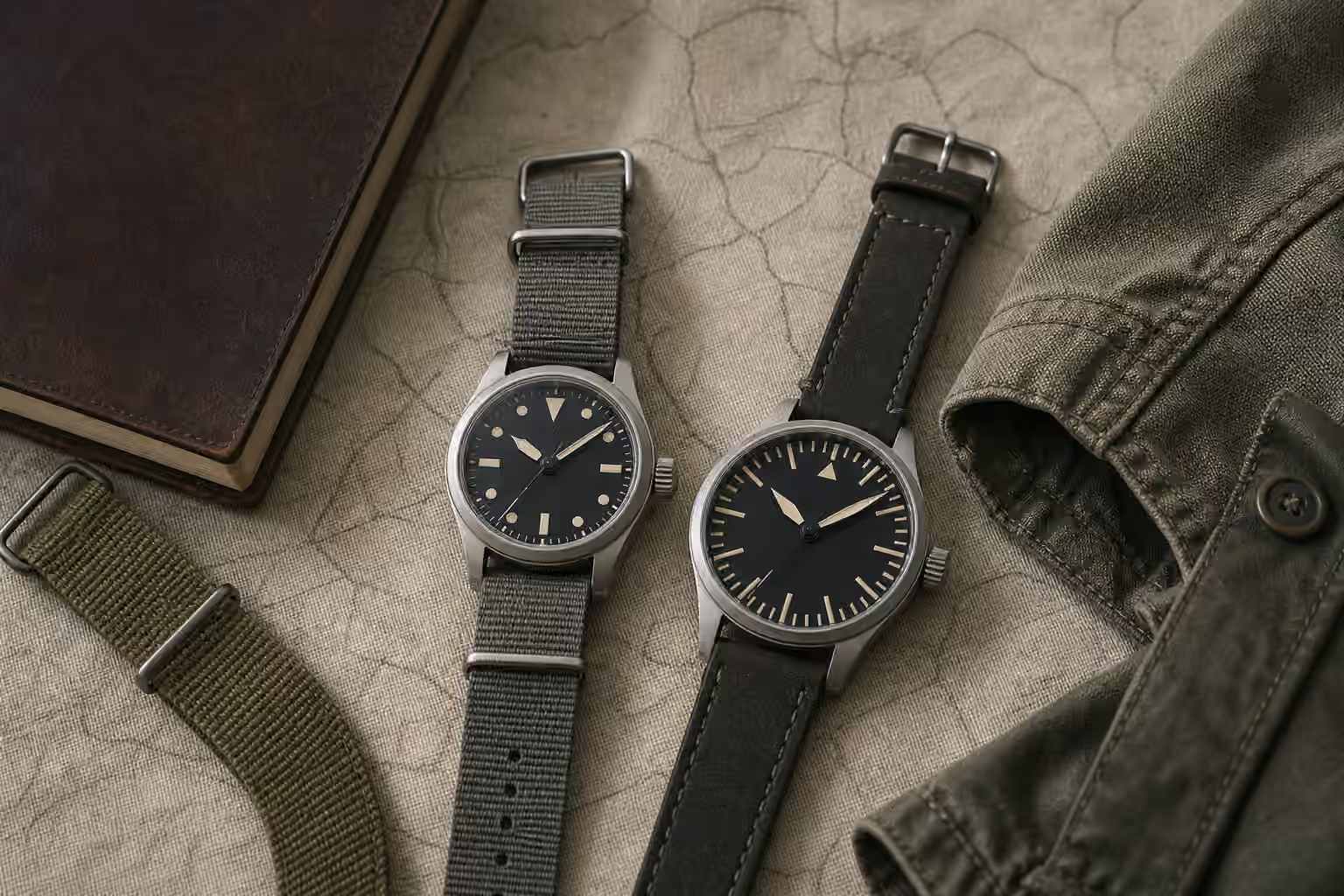
Vintage dive watches can be beautiful because they carry the marks of age. Faded bezels, warm markers, acrylic crystals, softened cases, and old bracelets create a feeling that new watches rarely match. The danger is treating the original purpose as a current guarantee. A vintage diver may be culturally a dive watch and practically a dry-weather watch.
Vintage Watch Condition and Patina helps separate honest age from trouble. A faded bezel can be attractive. A cracked crystal, loose crown, over-polished case, or unknown gasket history can be a warning. If water matters to you, buy and service accordingly. If the watch is mainly about character, accept its limits and let a modern watch handle the pool.
This distinction is not hypocrisy. It is respect. The fact that a watch was built for water decades ago does not mean it should be asked to prove that history now.
The right diver knows its everyday role
The most satisfying dive watch is not always the most extreme. Very high depth ratings, giant cases, helium valves, and aggressive bezels can be fascinating, but they may not improve ordinary ownership. A thinner, simpler, well-sealed diver may be more useful if it fits your wrist, reads quickly, and works with your clothes.
Watch Styles places the dive watch among other categories, but the daily decision is personal. Do you want a watch that can handle rain and weekends without drama? Do you use a timing bezel? Do you prefer rubber, bracelet, or both? Does the watch feel balanced after three hours, not only three minutes?
A dive watch succeeds when its toughness becomes quiet. You should not spend the day thinking about the case rating, the bezel action, or the bracelet weight. You should notice that the watch is there when you need it and out of the way when you do not. That is the real everyday version of a tool watch: not a costume, not a depth claim, but a useful object that fits the day.