The dial is the face of the watch, but it is also one of the least forgiving parts to judge. A scratched case can still feel honest. A tired strap can be replaced. A movement can often be serviced. A dial, especially on a vintage or collectible watch, carries design, originality, age, moisture history, and value signals all at once. Changing it can make a watch cleaner while also making it less itself.
This is why dial condition should be read slowly. Not every spot is charming patina. Not every aged surface is damage that must be erased. Not every refinished dial is a disaster. The owner or buyer needs a calmer vocabulary than “mint” and “ruined.”
The dial tells a different story from the case
Cases live outside. They collect scratches, polishing marks, softened edges, and desk wear. Dials live under crystals and seals, so damage there often means something different. A mark on a lug may be ordinary life. A bloom under the dial printing may suggest moisture, age, chemical change, or prior work. A bright fresh dial inside a worn old case may be perfectly legitimate, but it asks for explanation.
Vintage Watch Condition and Patina is the natural companion to this topic because vintage condition is rarely one-dimensional. A watch can have a beautiful aged dial and a poor case. It can have a strong movement and a refinished dial. It can have original parts that are no longer attractive. The goal is not to worship age. The goal is to understand what kind of age you are seeing.
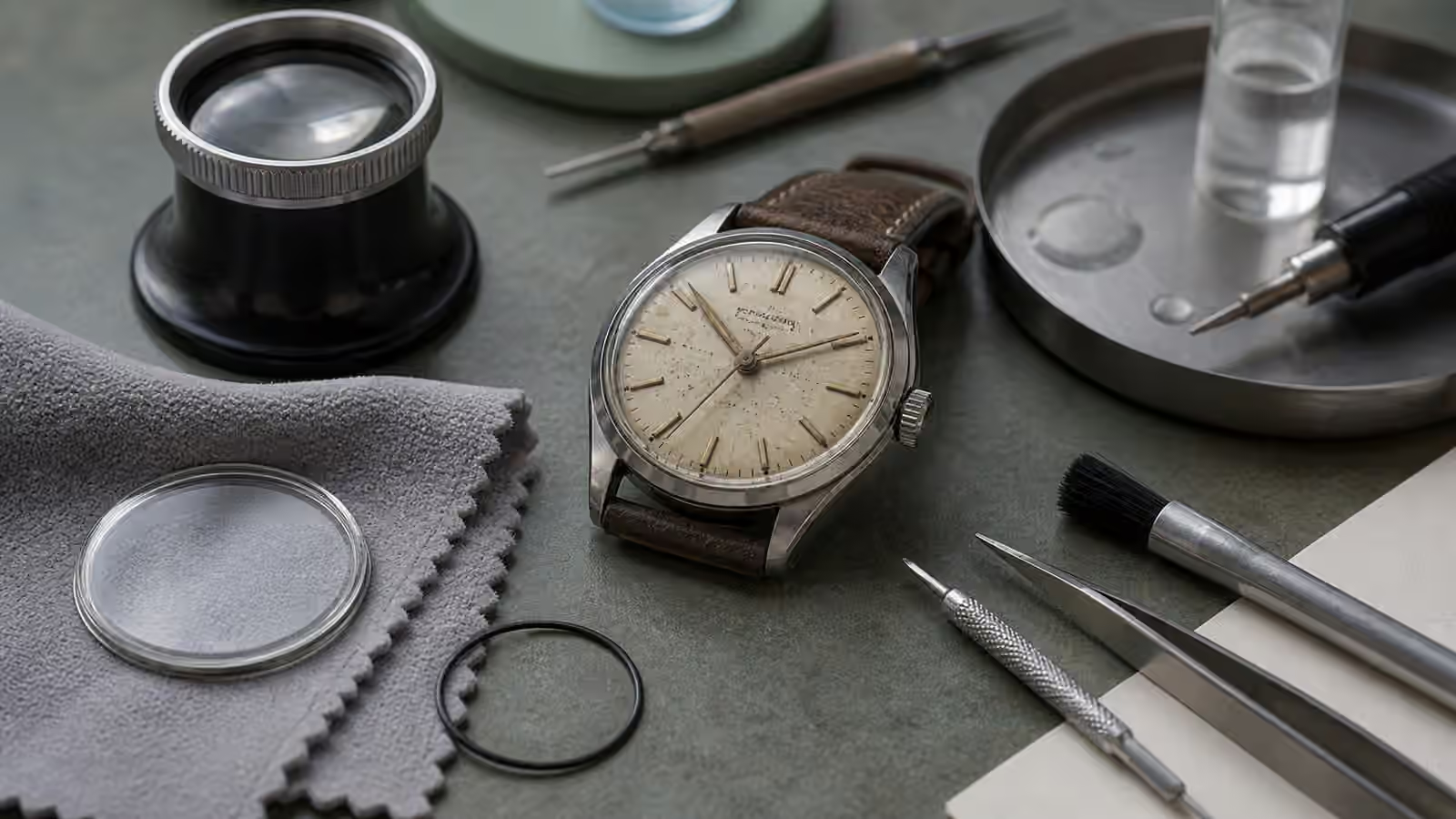
Look for consistency first. Do the hands, markers, lume, dial color, case wear, and service story seem to belong together? A dial with warm aging and hands that look newly luminous may indicate replacement, reluming, or simply different aging behavior. A glossy dial with cloudy patches may suggest moisture or failing lacquer. A matte dial with small specks may be stable age or contamination. The context matters.
Moisture leaves clues before it leaves certainty
Water inside a watch can show itself in several ways. Fog under the crystal is the obvious sign. Rust on hands, dial feet, screws, or movement parts is more serious. Dial spotting, lifted printing, discolored markers, and cloudy lacquer can also point toward moisture, although they are not proof by themselves. A watch may have had moisture long ago and then been dried. It may have had a minor gasket failure. It may have been stored badly.
Watch Water Resistance in Everyday Life explains why seals age and why case ratings cannot be treated as permanent. Dial condition is one of the reasons that water resistance matters even to people who never swim with a watch. A small leak can damage the part you see every time you check the time.
If you suspect moisture, do not keep testing the watch around water to see what happens. A professional inspection is the sensible next step, especially if the watch has value or sentimental importance. Moisture questions are not only cosmetic. Rust and residue can affect the movement, crown, stem, hands, and calendar work. Watch Service Intervals and Repair Quotes is useful because the visible dial may be only the first clue that the watch needs internal attention.
Crystals can protect and distort the evidence
The crystal sits between your eye and the dial, which means it can confuse inspection. A scratch on acrylic may look like a dial mark in a listing photo. A chip in sapphire can cast a shadow. Dust on the underside of a crystal can look like dial spotting. Reflections can make a clean dial seem cloudy. Before judging the dial harshly, separate the layers.
Watch Crystal Materials helps because acrylic, mineral, and sapphire crystals age differently. Acrylic can pick up scratches that are often polishable. Sapphire resists scratches but can chip. A domed crystal can distort edges and markers at angles. Online photos should be read with this in mind, and in person inspection should use steady light and several angles.
When a seller says the dial is clean, ask whether the marks are on the crystal or under it if the photos are unclear. If the watch is already yours, do not open the case simply to satisfy curiosity unless you know what you are doing. Dust, fingerprints, and damaged gaskets can create new problems. Dial inspection often belongs with a watchmaker rather than a kitchen table.
Refinishing is repair and reinterpretation
A refinished dial has been repainted, reprinted, relumed, restored, or otherwise altered from its original surface. Sometimes this rescues a watch that would otherwise be hard to enjoy. Sometimes it erases the qualities that made the watch interesting. The word refinished is not enough; the quality and purpose of the work matter.
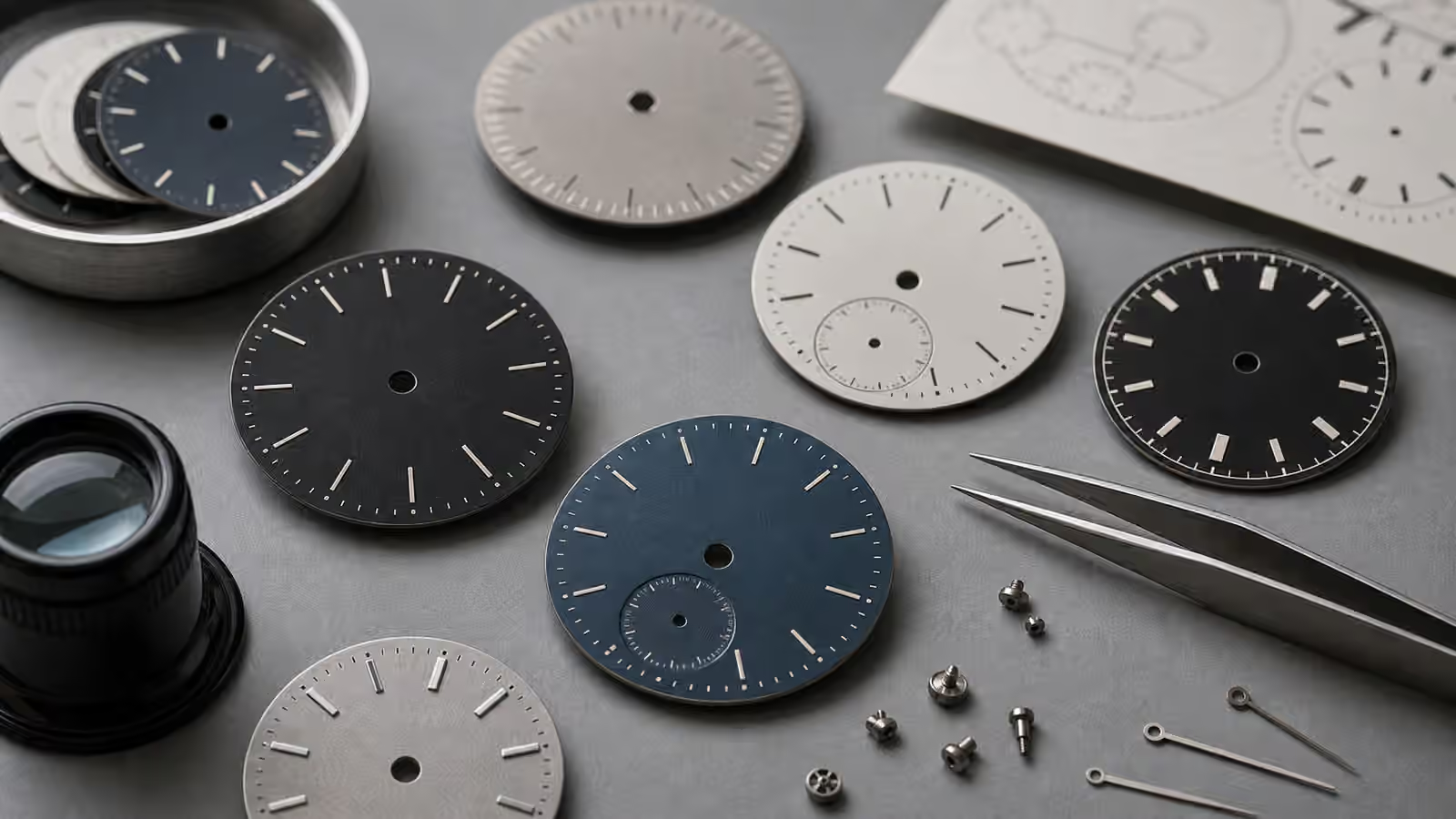
Good dial refinishing requires typography, spacing, color, surface texture, printing thickness, marker alignment, and lume tone to be handled with restraint. Poor refinishing can make a dial look too new, too flat, too glossy, misprinted, or historically wrong. A casual buyer may only see “clean.” A more careful buyer sees that the logo sits wrong, the minute track is uneven, or the font lacks the original character.
Watch Dial Typography and Printing gives the visual tools for reading this. Printing is not decoration pasted onto the dial. It is part of the watch’s identity. When refinishing changes the lettering, it changes the object in a way that a polished case does not fully capture.
Replacement dials can be correct and still matter
A replacement dial is not the same as a refinished dial. It may be a factory service dial, a later correct part, a donor part, or an incorrect substitute. On a practical daily watch, a clean replacement dial may be a reasonable choice. On a collectible vintage watch, it can change the desirability and historical continuity of the piece.
Documentation helps. Watch Box, Papers, and Service Records explains why records should support the story rather than hypnotize the buyer. If a service invoice notes a dial replacement, that is better than discovering the possibility through suspicion. If the seller says the dial is original, the dial should agree with known references, age, hands, case, and movement.
The important question is what you want from the watch. A family watch with a badly damaged dial may become more wearable after professional restoration, even if a collector would prefer originality. A historically interesting watch may be better left aged, stabilized, and documented. Ownership purpose changes the right answer.
Lume aging deserves particular care
Luminous material can age, darken, crack, flake, or be replaced. Older luminous compounds also raise handling considerations that ordinary owners should not treat casually. The practical advice is simple: do not scrape, relume, or open older luminous dials as a hobby experiment. Let qualified professionals handle the work when it is needed.
Visually, lume should be read with the rest of the watch. Hands and markers rarely age in exactly the same way, but a dramatic mismatch asks for explanation. Perfectly bright lume on a very old dial may be a sign of reluming or service replacement. Dark, inactive lume may be original, damaged, or simply old. Watch Lume and Legibility covers the functional side of glow; condition reading adds the question of history.
Reluming can be practical if the watch is meant to be used and the original material is failing. It can also reduce originality. The owner should decide before the work begins, not after. Once a dial has been altered, the previous state cannot be fully recovered.
Originality is not the only virtue
Collectors often talk about originality as if it settles every question. It does not. Original damage can still be unattractive. Original moisture damage can still be a warning. An original dial can be too compromised for the owner’s purpose. At the same time, a clean restored dial can feel emotionally empty if the watch was valued for its age and continuity.
The strongest choices come from honesty. If a dial is original and aged, describe it plainly. If it was refinished, say so. If it was replaced during service, keep the record. If you do not know, avoid inventing certainty. This matters when buying, selling, insuring, servicing, or simply passing a watch to someone else.
Dial condition is intimate because it is what the owner sees most. A watch can tolerate scratches on the back more easily than a dial that bothers you every hour. Read the surface carefully, separate charm from trouble, and decide what kind of life the watch should have. Sometimes preservation is the right answer. Sometimes careful restoration is. The mistake is pretending those choices are the same.