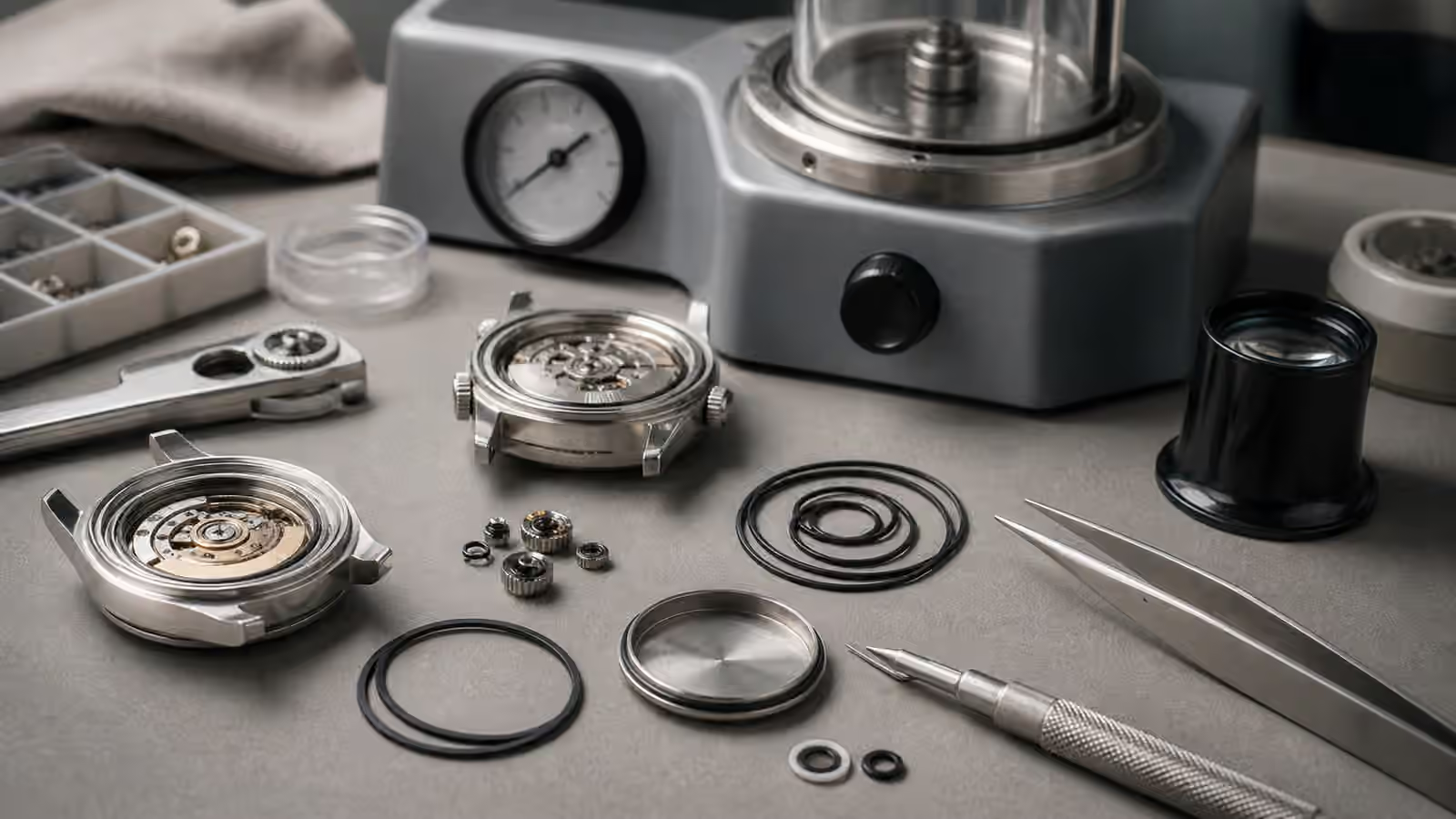
Crowns and pushers are easy to overlook because they are small. The dial gets studied, the case shape gets measured, and the movement receives the romance. Then, every morning, the owner touches the crown. The watch may be wound, hacked, set, pulled into a date position, screwed down, or nudged after a few days off the wrist. On a chronograph, the pushers become the whole personality of the watch. One press starts the timer. Another press stops it. A third returns the hands to zero with a small mechanical snap.
That contact matters. The crown and pushers are the user’s entrance into the watch. They are also openings in the case, which means they sit at the boundary between pleasure and vulnerability. A crown can make a simple watch feel precise, cheap, stubborn, refined, or reassuring. A pusher can make a chronograph feel like an instrument or a toy. The parts are small, but they decide how the watch behaves in the hand.
The crown is a handle, seal, and clue
The crown began as a practical handle for winding and setting, and that is still its most important job. On a hand-wound watch, the crown is part of the daily ritual. On an automatic watch, it may be touched less often, but it still has to wind smoothly, set the time cleanly, and close securely. On a quartz watch, the crown may spend months ignored, then suddenly become important when the date needs correction or the battery has been changed.
A good crown feels appropriate to the watch. A slim dress watch can have a small, discreet crown because it is not meant to be operated with wet hands or gloves. A field watch or diver often benefits from a larger crown with clear knurling because the owner may need more grip. Oversizing the crown can make a watch look awkward, while undersizing it can make the watch frustrating. The right size is not only visual. It is the point where the crown can be used without digging into the wrist or slipping under the fingers.
The crown also tells you something about the case design. A recessed crown may protect against knocks, but it can be harder to grip. Crown guards can give a sports watch a more muscular shape, yet they may make winding less pleasant if they crowd the fingers. A simple onion crown on a pilot-style watch creates a different feeling from the guarded crown on a dive watch. Like the bezel choices in Watch Bezels and Scales , the crown is part of the watch’s functional language.
Screw-down crowns add security, not magic
A screw-down crown is often treated as proof that a watch is ready for water. It is better to see it as one part of a sealing system. When the crown is unscrewed, it can usually be pulled or turned more freely. When it is pushed in and screwed down, threads hold it in place and compress the sealing surfaces. That is useful, especially on watches intended for swimming or diving, but the system still depends on healthy gaskets, undamaged threads, and careful handling.
The most common mistake is rushing the thread. A screw-down crown should catch smoothly. If it feels gritty, tilted, or reluctant, forcing it can damage the tube or crown threads. The better habit is to press gently, turn backward until the threads settle, and then screw forward with light pressure. It should be snug, not crushed. Tightening a crown as if it were a jar lid does not make the watch safer. It can wear the parts that need to remain precise.
This is why crown handling belongs beside Watch Water Resistance in Everyday Life . A printed rating is only useful when the case is closed as intended. A crown left open turns a strong watch into an exposed one. A crown with worn seals may look closed while no longer protecting the movement. The crown is both the control and one of the main doors water would like to use.
Winding feel should be smooth, not heroic
Winding a mechanical watch should feel controlled. Some watches wind with a silky resistance. Some feel slightly grainy because of the movement architecture. Some hand-wound calibers give a clear stop when fully wound, while many automatic watches use a slipping bridle so the mainspring can avoid being over-tightened during normal automatic winding. The exact feel varies, but the owner should not need force.
If a crown suddenly becomes stiff, gritty, or uneven, the answer is not stronger fingers. Dirt, dry lubrication, a damaged stem, cross-threaded crown, worn tube, or movement trouble can all change the feel. A vintage watch may also have a smaller crown than a modern owner expects, which can make normal winding seem awkward. That is not always a defect, but it does ask for gentler handling.
Hand-wound watches reward consistency. Wind them off the wrist, hold the case securely, and turn the crown in a calm rhythm. Winding while the watch is strapped tightly to the wrist can put sideways pressure on the stem. The same idea applies when setting the time. The crown and stem are small parts doing delicate work. They can tolerate normal use, but they do not need to be levered against the case because the owner is in a hurry.
If the watch is gaining or losing time and you find yourself touching the crown constantly, pair this with Watch Accuracy and Regulation . Sometimes the issue is not setting technique at all. It may be magnetism, positional behavior, low power reserve, or a service question. The crown corrects the symptom, but the movement creates the timekeeping pattern.
Crown positions can be delicate
Many watches have several crown positions. The first may wind the watch. The next may set the date. The outer position may stop the seconds hand and set the time. Some watches add a day corrector, a GMT hand, a jumping local hour, or other movement-specific behavior. The positions can feel obvious on a modern watch, but they can feel vague on older or thinner watches.
The date position deserves patience. On many mechanical watches, quick-setting the date during the hours when the movement is already preparing to change the calendar can damage parts. The exact danger window varies by movement, so the conservative habit is simple: if you do not know where the movement is in its cycle, move the hands away from midnight before using the quick-set date. Around six o’clock is a common safe-feeling position because the calendar works are generally not engaged there.
This is one of the reasons a watch with a simple date can require more thought than a no-date watch. A no-date watch can be picked up, wound, set, and worn with little ceremony. A watch with a date asks whether the displayed date is near the changeover and whether the hands are showing morning or evening. More complication can mean more convenience on the wrist and more care while setting. Watch Complications Guide explains the larger family of extra functions, but crown behavior is where those functions become real.
Pushers make complications tactile
Pushers are most familiar on chronographs, though they also appear on calendar watches, repeaters, alarm watches, and specialized designs. A chronograph pusher turns a timing function into a physical event. The start pusher may have a firm click, a soft press, a long travel, or a sharp break. The reset pusher may feel slightly heavier because it is returning hands to zero. These sensations are part of why chronographs are loved even by people who rarely time anything serious.
The feel depends on the movement and case construction. A column wheel chronograph is often praised for refined pusher action, while cam systems can feel more direct or utilitarian, though execution matters more than slogans. Case seals, pusher caps, lubrication, and wear all affect the final sensation. Two watches with the same basic function can feel entirely different under a fingertip.
Pushers also reveal whether the watch is healthy. If a chronograph starts cleanly but resets off zero, the issue may need adjustment. If a pusher sticks, returns slowly, or feels crunchy, it deserves attention. If the owner has to stab at the pusher to make it work, something is wrong with the ergonomics, the condition, or both. A good pusher invites use without drama.
The important habit is to understand what the pusher is designed to do. Many chronograph pushers should not be used underwater. Some watches are built with special systems that permit it, but those are exceptions, not assumptions. A pusher is another hole through the case, and moving a seal while wet is a different situation from leaving a sealed watch alone. When water is involved, restraint is cheaper than repair.
Case shape decides whether controls behave
A crown can be technically excellent and still annoy the owner if the case puts it in the wrong place. A large crown on a thick watch may press into the back of the hand. A small crown tucked between crown guards may look tidy but be miserable to wind. Pushers can sit too high, too low, or too close to the wrist. The ergonomics of controls are one reason two watches with similar specifications can feel unrelated after a week.
Trying a watch on reveals more than a spec sheet. Move the wrist. Bend the hand back. Unscrew the crown if the seller or owner permits it. Start and stop the chronograph if it is appropriate. Notice whether the crown is easy to grip and whether the pusher angle feels natural. These details matter most on watches you plan to use actively. A dress watch worn twice a month can tolerate a crown that would irritate you on a daily watch.
Control placement also interacts with straps and bracelets. A loose watch may slide toward the hand and make the crown feel more intrusive. A watch worn too tight can pin the case in a position where the crown digs in. Watch Straps and Bracelets covers fit and comfort in more detail, but the crown is often where poor fit announces itself.
Service keeps the interface honest
Because crowns and pushers are moving case parts, they age. Gaskets compress. Tubes wear. Threads soften. Springs lose confidence. Dirt collects around pusher shoulders and crown guards. A watch can look clean from above while the control points are quietly overdue for attention.
During service, a watchmaker may inspect the crown, stem, tube, pusher seals, and case gaskets. Sometimes a crown is replaced because the seal is integrated into the part. Sometimes a tube has to be renewed. Sometimes the advice is simply to avoid water because the case is older, polished, or not worth stressing. That may sound disappointing, but it is useful information. It tells you what life the watch can safely have.
Vintage watches need special care here. Original crowns can matter to collectors, but originality and water security do not always point in the same direction. A replaced crown may improve daily usability. An original crown may preserve character. The right choice depends on the watch, its condition, and how you plan to wear it. Your First Watch Service is a good companion if the idea of talking to a watchmaker still feels abstract.
Respect the small parts
Crowns and pushers do not need fear. They need attention. Use them off the wrist when possible. Let screw-down threads catch gently. Do not force a stiff crown. Learn the date-setting behavior of the movement you own. Treat pushers as sealed controls, not waterproof buttons by default. Notice how the watch feels when those parts are healthy, because that memory helps you recognize change later.
A watch is more than a dial and a movement. It is an object you operate. The crown is where power, setting, sealing, and touch meet. The pusher is where a complication becomes a click under the finger. When those small controls are well designed and well maintained, the watch feels more trustworthy. When they are ignored, the most beautiful watch can become annoying, vulnerable, or expensive for reasons that began with a part no larger than a fingertip.