What Is a Complication?
In watchmaking, a complication is any function beyond hours, minutes, and seconds. It adds more parts and more complexity.
Complications range from useful everyday features to high-end showpieces. Knowing the difference helps you decide what matters to you.
Everyday Complications
These are the complications you’ll encounter most often. They add genuine utility to a watch and appear across all price ranges.
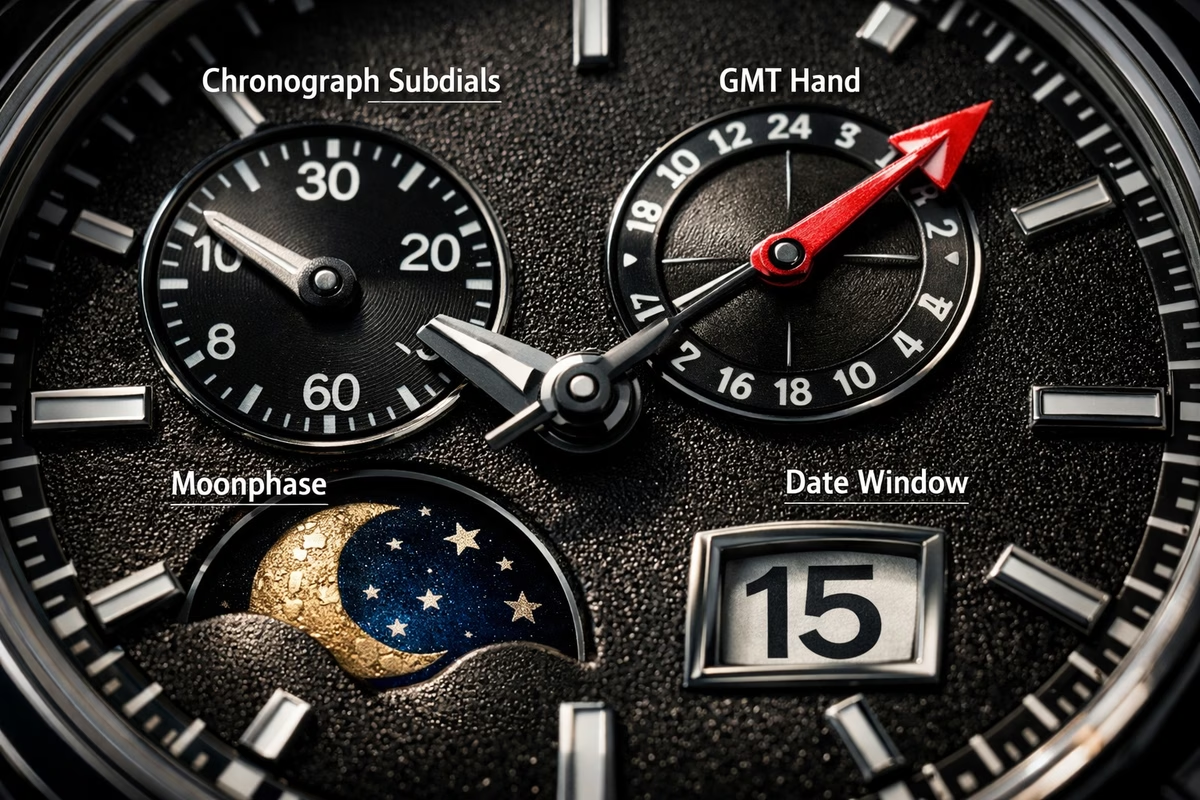
Date Display
The most common complication. A window on the dial shows the date (1-31). Simple date displays need manual correction at the end of short months.
Variants:
- Date window - A small aperture, usually at 3 o’clock
- Big date - Two separate discs creating a larger, more legible display
- Pointer date - A hand that sweeps around the dial’s perimeter pointing to the date
Day-Date
Adds the day of the week to the date display. The Rolex Day-Date made this style famous.
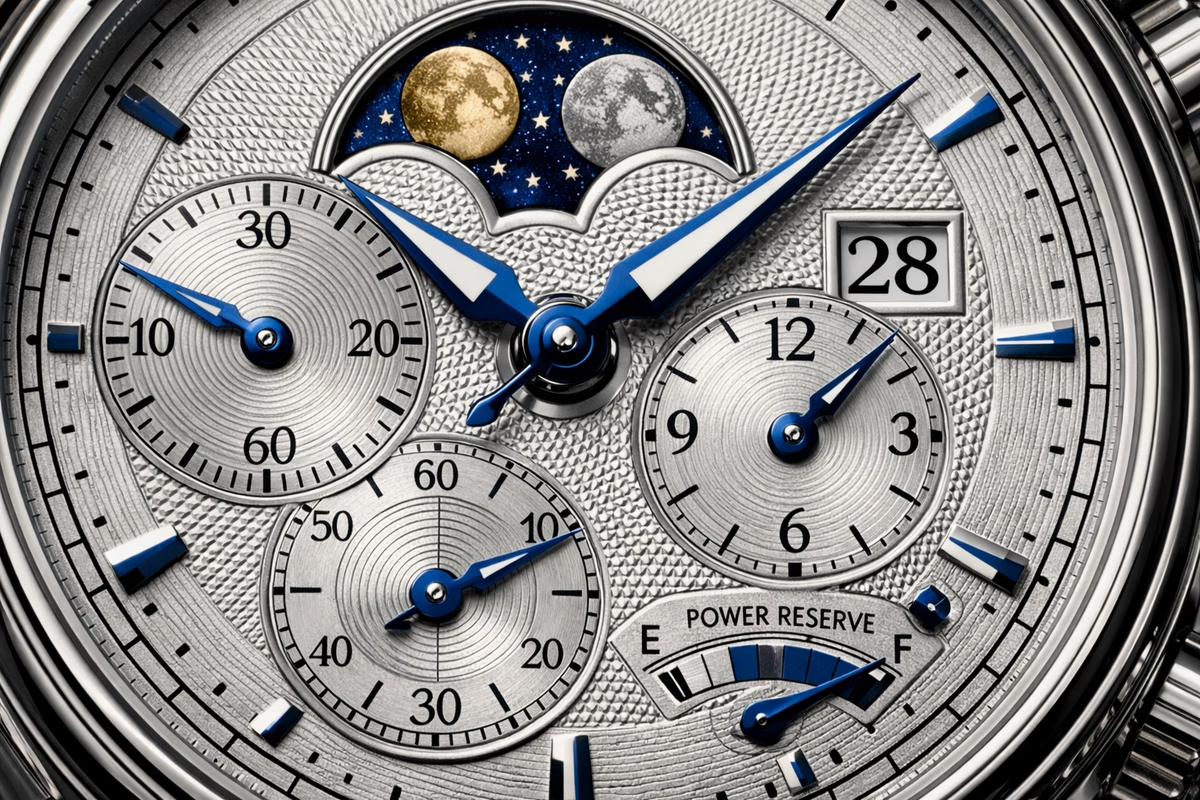
Power Reserve Indicator
Shows how much mainspring energy remains before the watch stops. Useful on manual-wind watches and on automatics that sit unworn.
A typical automatic watch has a power reserve of 38-72 hours. Some modern movements last 5 days or more.
GMT / Dual Time
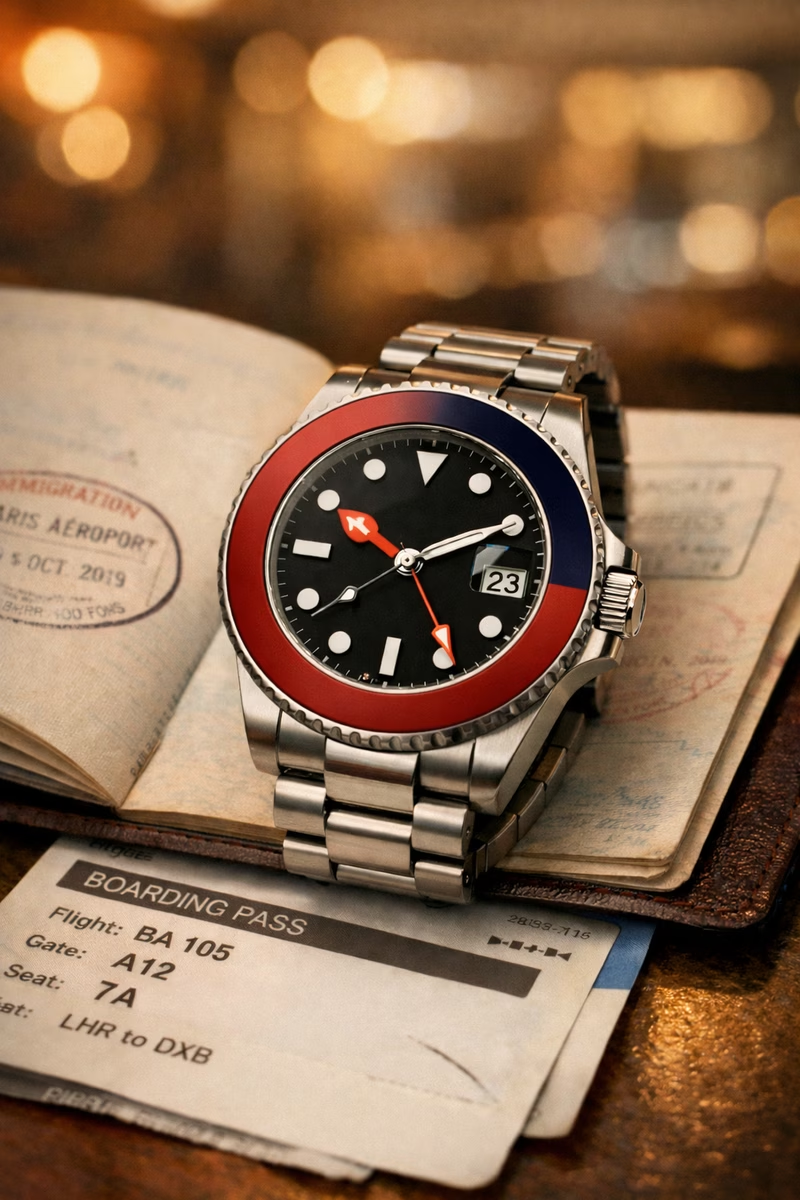
Displays a second time zone using an extra hand or a second sub-dial. It is still one of the most useful complications.
How it works: The main hands show local time. The GMT hand circles the dial once every 24 hours and points to a second time zone.
Chronograph: The Stopwatch
The chronograph is a stopwatch built into the watch.
Anatomy of a Chronograph
- Pushers - Two buttons on the side of the case: one starts and stops the chronograph, the other resets it
- Central seconds hand - The large sweep hand measures elapsed seconds when the chronograph is running
- Sub-dials - Usually two or three smaller dials that record minutes and sometimes hours
Types of Chronograph
Simple chronograph - Start, stop, reset. The most common type.
Flyback chronograph - Pressing the reset button stops, resets, and restarts the chronograph in one action.
Split-seconds (rattrapante) - Two chronograph seconds hands run stacked together. One can stop while the other keeps going.
Tachymeter Scale
Many chronographs feature a tachymeter, a scale that lets you estimate speed over a known distance.
Calendar Complications
Calendar complications go beyond the simple date to track months, leap years, and moon phases.
Annual Calendar
An annual calendar handles months of 30 and 31 days automatically. You only need to correct it once a year, on March 1.
Perpetual Calendar
The most advanced calendar complication. A perpetual calendar knows the length of every month, including February in leap years. Once set, it does not need adjustment until 2100.
Perpetual calendars are complex and expensive to service.
Moon Phase
A moon phase display shows the current phase of the moon through a small opening on the dial. The disc turns about once every 29.5 days.
Better versions stay accurate for a very long time. Basic versions drift more quickly.
Advanced Complications
These complications sit at the top end of watchmaking. They are rare, expensive, and hard to make.
Tourbillon
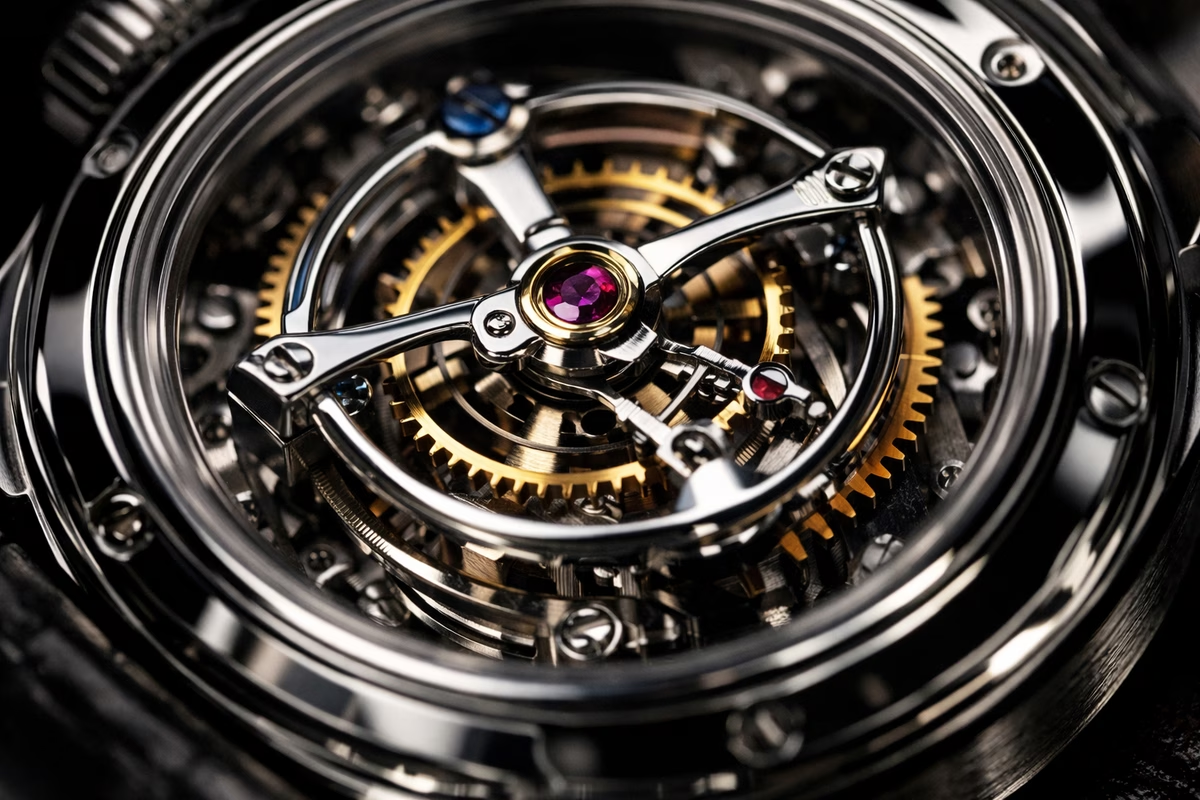
Invented by Abraham-Louis Breguet in 1801, the tourbillon puts the escapement and balance wheel inside a rotating cage. The idea was to reduce gravity’s effect on timekeeping.
Does it improve accuracy? In a pocket watch, yes. In a modern wristwatch, the benefit is less clear. Today it is mostly a display of skill.
Flying tourbillon - A variant where the cage is supported from only one side, creating a dramatic floating visual effect. Mechanically more challenging to build.
Minute Repeater
A minute repeater chimes the time when a slide on the case is activated. It uses tiny hammers striking tuned gongs:
- Low tone = hours
- Double tone (ding-dong) = quarter hours
- High tone = minutes past the quarter
So 3:47 would chime: dong dong dong (three hours), ding-dong ding-dong ding-dong (three quarters = 45 minutes), ding ding (two minutes past the quarter).
The minute repeater is one of the hardest complications to make well. The sound depends on the gongs, the case, and the finishing of the striking system.
Equation of Time
The equation of time shows the difference between watch time and true solar time. It changes through the year because Earth does not orbit the sun in a perfect circle.
It is rare and mostly appears in high-end astronomical watches.
Grand Complications
A grand complication combines several major complications in one watch. It usually includes a perpetual calendar, chronograph, and minute repeater.
Grand complications sit at the top of mechanical watchmaking and can take years to build.
| Complication | Complexity | Practical Use |
|---|---|---|
| Date | Low | High - everyday utility |
| Chronograph | Medium | High - timing events |
| GMT | Medium | High - travel |
| Annual Calendar | Medium-High | High - minimal correction |
| Moon Phase | Medium | Low - aesthetic |
| Perpetual Calendar | High | Medium - never adjust date |
| Tourbillon | Very High | Low - mostly artistry |
| Minute Repeater | Extremely High | Low - audible time in dark |
Choosing Complications That Matter
When shopping for a watch, do not choose based on complication count alone. Ask yourself:
Will I actually use it? A chronograph helps if you time things. A perpetual calendar helps if you hate resetting the date. A tourbillon is mostly for the art.
Can I afford to service it? More complications mean higher service costs.
Does it fit my life? A simple date watch may be better than a complicated watch you avoid wearing.
The best complication is the one you notice for the right reasons.
Next Steps
- Read the Movements Guide to understand what powers these complications
- Explore our Watch Styles Guide to see how complications pair with different watch designs
- Check the Buying Guide for practical advice on choosing your next timepiece