What Is a Complication?
In watchmaking, a “complication” is any function beyond simple hours, minutes, and seconds. The name comes from the French complication—literally, something that makes the mechanism more complex. Each complication requires additional gears, springs, levers, or cams, and the more complications a watch has, the more extraordinary the engineering.
Complications exist on a spectrum from everyday practical (date display) to extreme haute horlogerie (minute repeater, tourbillon, perpetual calendar). Understanding them helps you appreciate what you’re looking at when you examine a fine watch—and helps you choose which complications actually matter for your life.
Everyday Complications
These are the complications you’ll encounter most often. They add genuine utility to a watch and appear across all price ranges.
Date Display
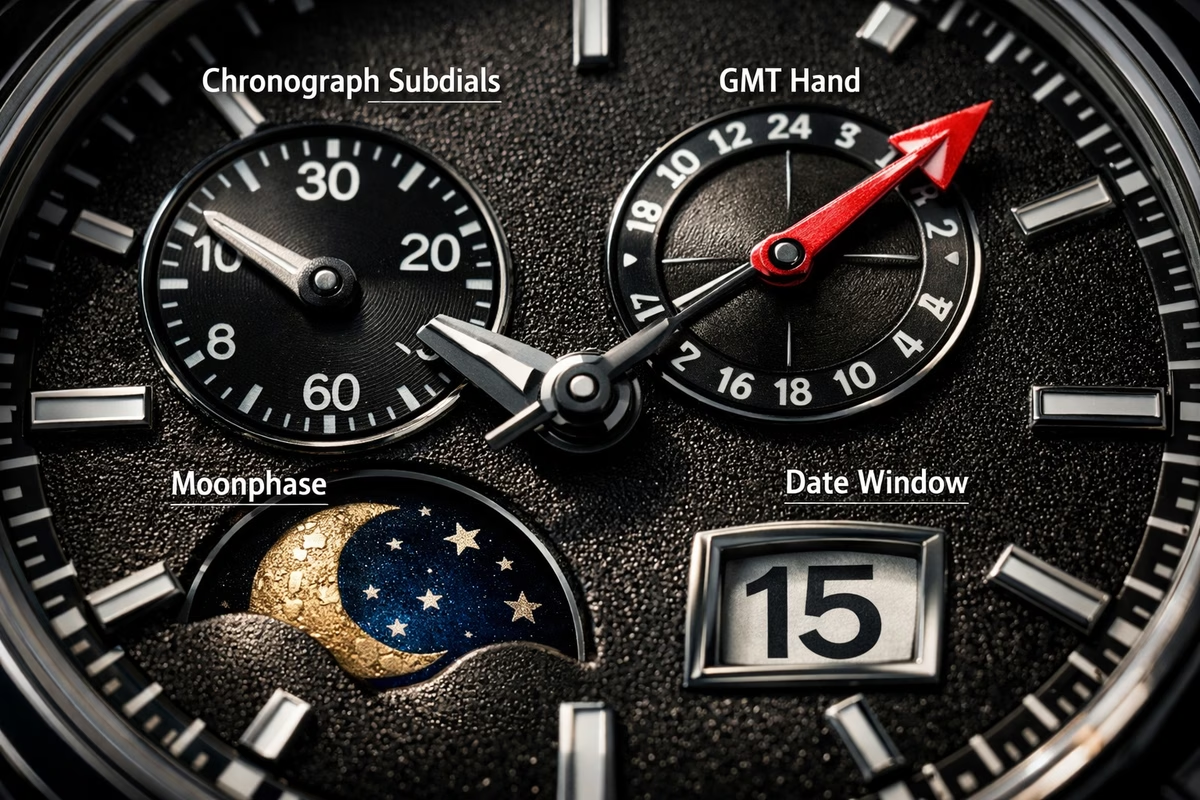
The most common complication. A window on the dial shows the current date (1–31). Simple date displays require manual correction at the end of short months (those with fewer than 31 days).
Variants:
- Date window — A small aperture, usually at 3 o’clock
- Big date — Two separate discs creating a larger, more legible display
- Pointer date — A hand that sweeps around the dial’s perimeter pointing to the date
Day-Date
Adds the day of the week to the date display. Popularized by the Rolex Day-Date (the “President”), this complication shows both “Monday” and “15” (for example) through windows on the dial.
Power Reserve Indicator
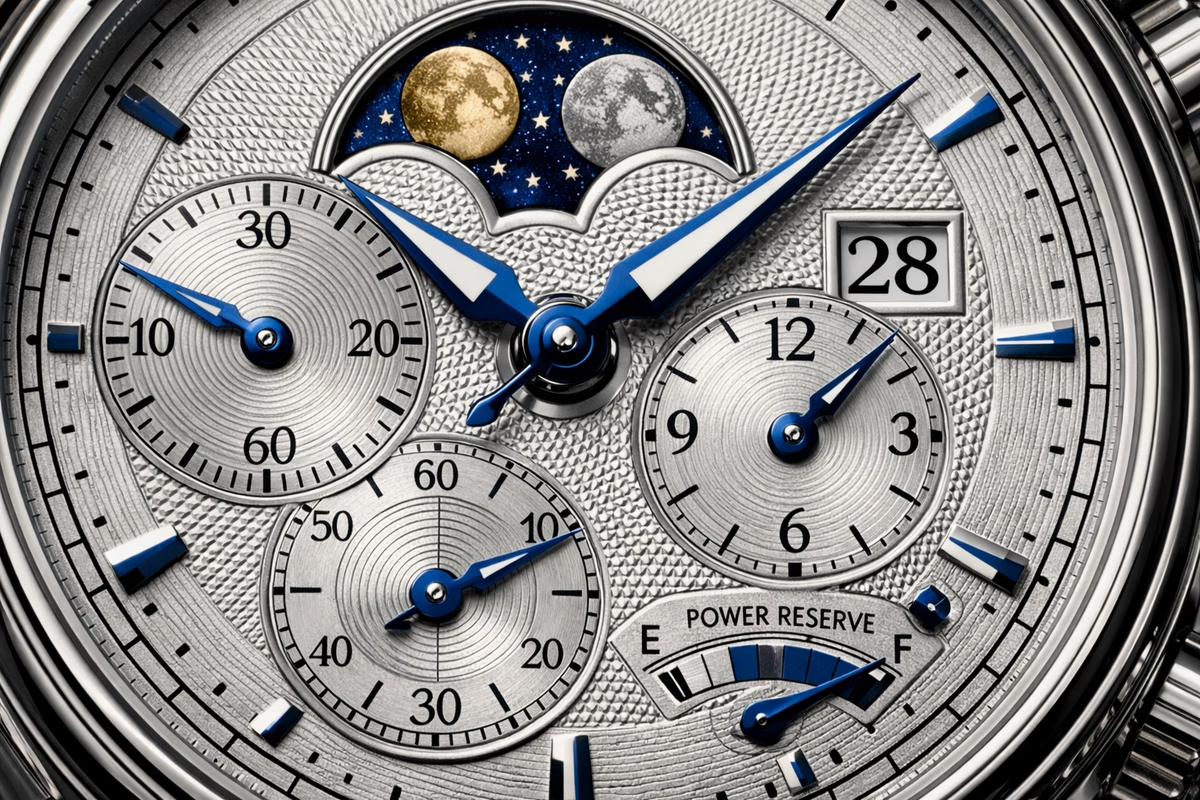
Shows how much mainspring energy remains before the watch stops. Useful for manual-wind watches so you know when to wind, and for automatics so you can see if the watch has been sitting unworn too long.
A typical automatic watch has a power reserve of 38–72 hours. Some modern movements stretch to 5 days or more.
GMT / Dual Time
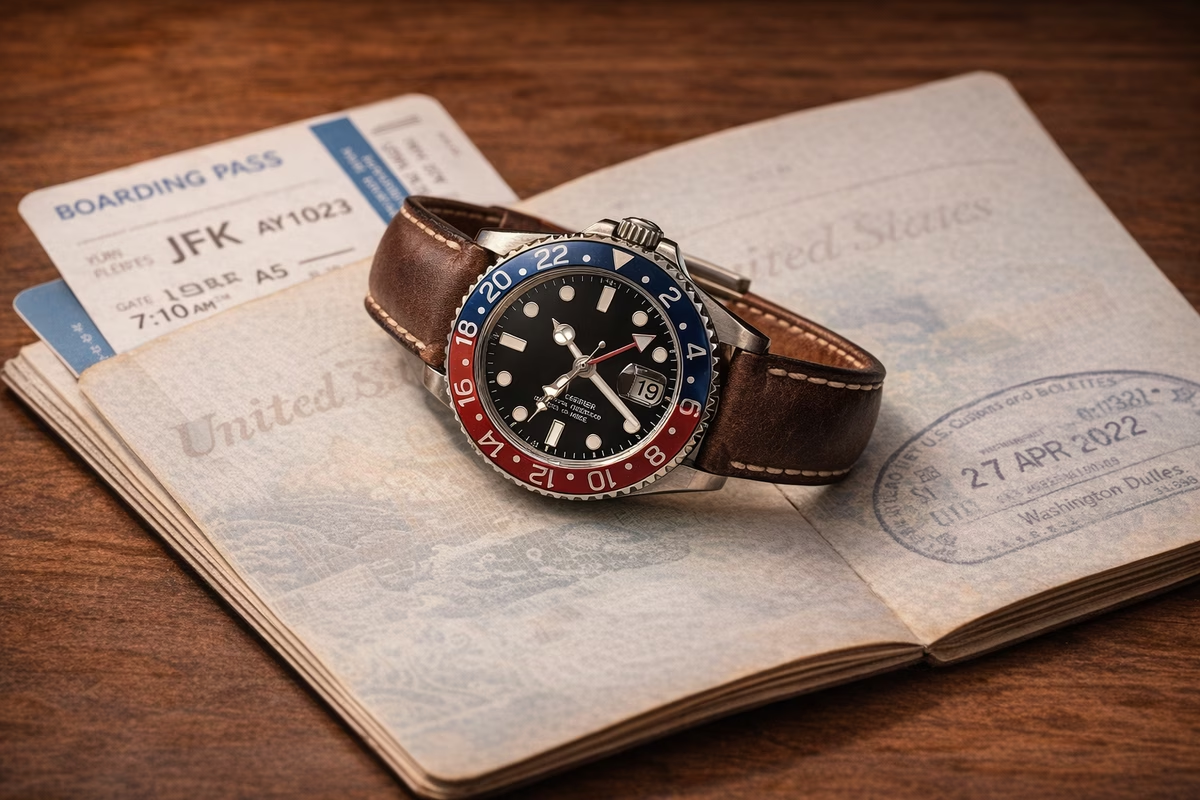
Displays a second time zone using an additional hand (usually on a 24-hour scale) or a second sub-dial. Originally designed for pilots and international travelers, GMT watches remain one of the most practical complications.
How it works: The main hands show local time. The GMT hand circles the dial once every 24 hours, pointing to a numbered bezel or inner ring that represents a second time zone.
Chronograph: The Stopwatch
The chronograph is one of the most popular and recognizable complications. It adds a stopwatch function to the watch, allowing you to measure elapsed time.
Anatomy of a Chronograph
- Pushers — Two buttons on the side of the case: one starts/stops the chronograph; the other resets it
- Central seconds hand — The large sweep hand measures elapsed seconds when the chronograph is running
- Sub-dials — Typically two or three smaller dials recording elapsed minutes (and sometimes hours)
Types of Chronograph
Simple chronograph — Start, stop, reset. The most common type.
Flyback chronograph — Pressing the reset button simultaneously stops, resets, and restarts the chronograph in one action. Designed for pilots who need to time successive events without pausing.
Split-seconds (rattrapante) — Two chronograph seconds hands run stacked together. Pressing an additional button stops one hand while the other continues, allowing you to measure two events that started at the same time but end at different moments. This is one of the most mechanically demanding chronograph complications.
Tachymeter Scale
Many chronographs feature a tachymeter—a scale printed on the bezel or dial edge that lets you calculate speed based on time over a known distance. Time an event over one mile (or kilometer), and the tachymeter reading at the stopped second hand gives you speed in miles (or kilometers) per hour.
Calendar Complications
Calendar complications go beyond the simple date to track months, leap years, and even moon phases.
Annual Calendar
An annual calendar correctly handles months of 30 and 31 days automatically. You only need to manually correct the date once per year—on March 1 (since February is shorter). This is a great compromise between a simple date and a full perpetual calendar.
Perpetual Calendar
The pinnacle of calendar complications. A perpetual calendar knows the length of every month, including February in leap years. Once set correctly, it requires no date adjustment until the year 2100 (when the Gregorian calendar skips a leap year).
Perpetual calendars are mechanically extraordinary—they typically use a complex system of cams and levers that “program” the irregular month lengths into the movement. They’re also among the most expensive complications to service.
Moon Phase
A moon phase display shows the current phase of the moon through a small aperture on the dial. The mechanism uses a disc with two identical moon images that rotates once every 29.5 days (the average lunar cycle).
High-end moon phase complications are accurate to within one day in 122 years. More basic versions drift by about one day every 2.5 years.
Advanced Complications
These complications represent the upper reaches of watchmaking artistry. They’re rare, expensive, and represent thousands of hours of craftsmanship.
Tourbillon
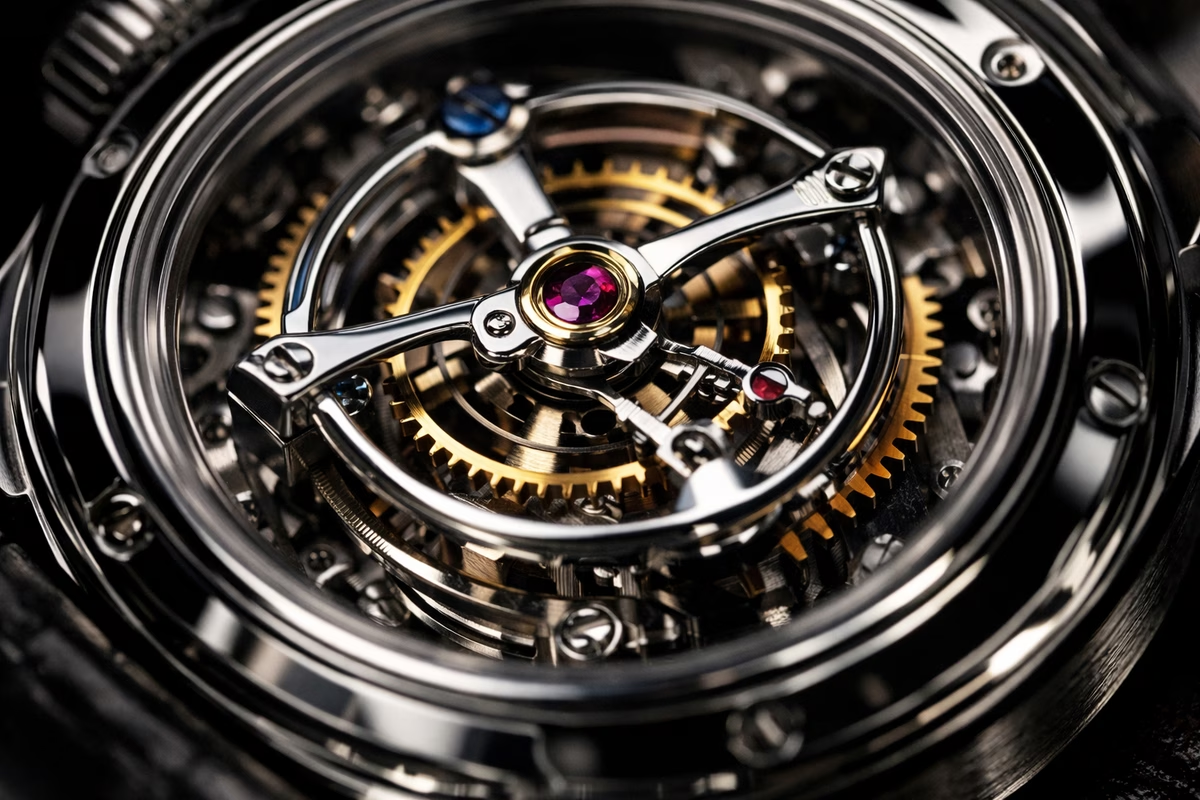
Invented by Abraham-Louis Breguet in 1801, the tourbillon places the escapement and balance wheel inside a rotating cage that completes one revolution per minute. The goal: cancel out the effects of gravity on timekeeping accuracy when the watch is in a vertical position.
Does it improve accuracy? In a pocket watch (which spends most of its time vertical in a pocket), yes. In a modern wristwatch that’s constantly moving, the practical benefit is debatable. Today, the tourbillon is primarily valued as a demonstration of extraordinary mechanical skill.
Flying tourbillon — A variant where the cage is supported from only one side, creating a dramatic floating visual effect. Mechanically more challenging to build.
Minute Repeater
A minute repeater chimes the time audibly when a slide on the case is activated. It uses tiny hammers striking tuned gongs to produce a sequence of tones:
- Low tone = hours
- Double tone (ding-dong) = quarter hours
- High tone = minutes past the quarter
So 3:47 would chime: dong dong dong (three hours), ding-dong ding-dong ding-dong (three quarters = 45 minutes), ding ding (two minutes past the quarter).
The minute repeater is often considered the most difficult complication to execute well. The quality of the chime depends on the gong material, case acoustics, and finishing of the striking mechanism. Top-tier repeaters from brands like Patek Philippe and Audemars Piguet are tuned like musical instruments.
Equation of Time
The equation of time displays the difference between “mean solar time” (what your watch shows) and “true solar time” (the actual position of the sun). This difference varies throughout the year by as much as ±16 minutes due to Earth’s elliptical orbit and axial tilt.
This is a rare complication found almost exclusively in high-end astronomical watches.
Grand Complications
A “grand complication” watch combines multiple major complications in a single timepiece—typically including at least a perpetual calendar, chronograph, and minute repeater. The most famous example is the Patek Philippe Caliber 89, which contains 33 complications.
Grand complications represent the summit of mechanical watchmaking and can take years to assemble by a single master watchmaker.
| Complication | Complexity | Practical Use |
|---|---|---|
| Date | Low | High — everyday utility |
| Chronograph | Medium | High — timing events |
| GMT | Medium | High — travel |
| Annual Calendar | Medium-High | High — minimal correction |
| Moon Phase | Medium | Low — aesthetic |
| Perpetual Calendar | High | Medium — never adjust date |
| Tourbillon | Very High | Low — mostly artistry |
| Minute Repeater | Extremely High | Low — audible time in dark |
Choosing Complications That Matter
When shopping for a watch, resist the urge to choose based on complication count alone. Ask yourself:
Will I actually use it? A chronograph is useful if you time things. A perpetual calendar is useful if you hate adjusting the date. A tourbillon is useful if you love mechanical art.
Can I afford to service it? More complications mean more expensive servicing. A perpetual calendar service can cost thousands of dollars.
Does it fit my lifestyle? A dress watch with a simple date might serve you better daily than a complicated sports watch you’re afraid to wear.
The best complication is the one you appreciate every time you look at your wrist.
Next Steps
- Read the Movements Guide to understand what powers these complications
- Explore our Watch Styles Guide to see how complications pair with different watch designs
- Check the Buying Guide for practical advice on choosing your next timepiece