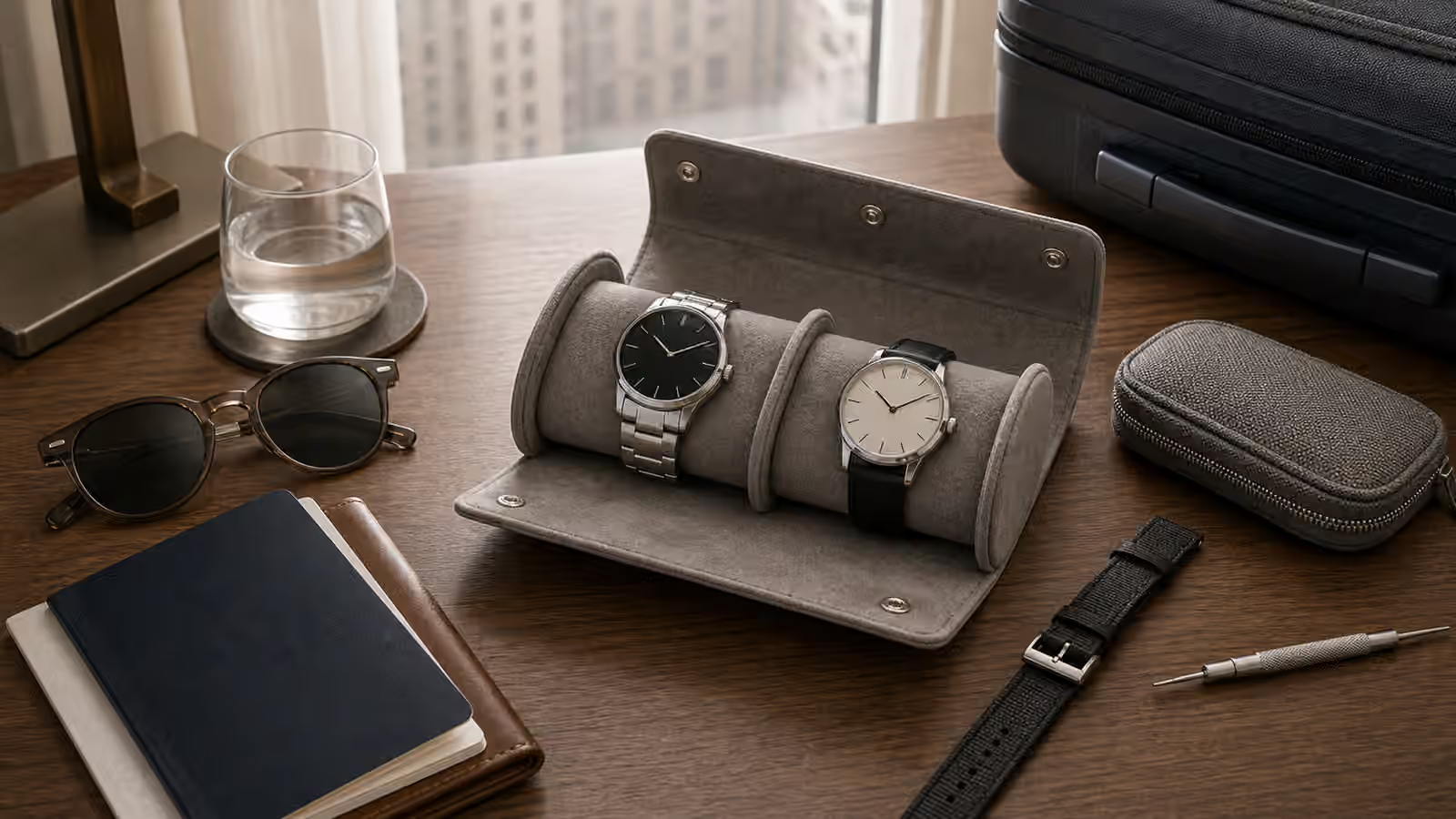
A watch collection becomes easier to own when you can describe it without relying on memory. That sounds dull until the first service appointment, sale listing, move, inherited watch, missing bracelet link, or mysterious scratch. Then a few clear photos and notes become more useful than another evening of forum research.
Inventory is not about turning a hobby into paperwork. It is about giving future you a calm record of what each watch is, where it came from, how it looked when you got it, what was serviced, what accessories belong with it, and what changed over time. The collection can still be emotional. The record simply keeps the emotion from having to do every job.
Start with the watch, not the spreadsheet
The best inventory begins by slowing down with one watch at a time. Put the watch on a clean cloth under good light. Look at the dial, case sides, crown, lugs, caseback, bracelet, clasp, strap, crystal, and any obvious marks. You are not trying to create a museum catalog. You are creating a record that would help you recognize the watch accurately later.
Most collectors already do this mentally. They remember the small ding on the lower lug, the bracelet link that was removed, the service receipt in the box, the strap that came from the seller, and the fact that the watch gains a few seconds on the wrist. The problem is that memory blurs. Records keep small facts from becoming vague stories.
Watch Collection Strategy is about choosing what belongs in the box. Inventory is what keeps the box understandable after the choices are made. A small collection benefits from this as much as a large one because each watch may carry more meaning.
Photograph condition while it is ordinary
Condition photographs are easiest when nothing is wrong. Take them when the watch arrives, after a service, before shipping, after a strap change, or before storing a piece for a long time. These ordinary moments create a useful baseline. If a scratch appears later, you can tell whether it was already present. If a bracelet feels stretched, you can compare it to earlier images. If a seller or buyer asks for details, you are not starting from panic.
Good watch photos do not need studio drama. They need clarity. Soft daylight near a window is often better than a harsh lamp. A neutral cloth prevents reflections and keeps the watch from sliding. A microfiber cloth removes fingerprints before they become distracting. Move slowly enough to get the angles that matter: straight dial view, case sides, lugs, crown, caseback, clasp, bracelet end links, strap underside, crystal edge, and any damage or engraving that affects identification.
Avoid flattering the watch so much that the photos stop being useful. A dramatic shadow can make a watch look beautiful and hide a polished lug. A distant wrist shot can show proportion and hide condition. Beauty photos are fine, but inventory photos have a different job. They should answer questions.
This habit pairs naturally with Watch Authentication and Red Flags . The same angles that help you inspect a seller’s watch help you document your own. Clear photos make ownership more honest.
Keep provenance close to the object
Boxes, papers, receipts, service cards, warranty cards, spare links, hang tags, extra straps, and correspondence can all become separated from the watch. Sometimes that barely matters. Sometimes it changes the confidence a future buyer, watchmaker, or family member has in the piece. The practical answer is not worshipping paper. It is keeping the useful parts organized.
For each watch, record where it came from, when it entered the collection, what accessories came with it, and what work has been done. If there is a service receipt, keep the original safely and make a digital copy. If the watch has spare links, note how many. If the original strap was removed to preserve it, record where it is stored. If a bracelet has a specific end-link fit that matters, photograph it before you forget.
Watch Box, Papers, and Service Records explains how documentation affects buying confidence. Your own inventory is the owner’s version of that lesson. It keeps the history from becoming scattered.
Record service as a story of decisions
Service records should say more than “serviced.” A helpful note explains who worked on the watch, what symptoms led to the service, what parts were replaced, whether the watch was pressure tested, whether polishing was declined or performed, and what the watchmaker advised. That detail matters because service is not one universal action. A complete overhaul, pressure test, battery change, regulation, demagnetization, gasket replacement, and bracelet repair are different events.
The reason to write this down is not resale theater. It is practical care. If the watch starts losing time two years later, you can compare the new symptom to the old one. If you are asked whether the crown was replaced, you can answer without guessing. If you inherit or pass along a watch, the next owner does not have to decode your memory.
Watch Service Intervals and Repair Quotes is useful before and after the appointment. Before service, it helps you ask better questions. After service, it helps you understand what should go into the record.
Let photos protect against polishing regret
Case condition changes slowly, then suddenly. A polished bevel softens. A brushed surface becomes rounded. A bracelet clasp collects hairlines. A ding becomes part of the watch’s life. Some wear is honest and worth leaving alone. Some damage should be repaired. The hard part is deciding with memory alone.
Before any refinishing decision, photograph the case carefully. Capture the lugs, transitions between brushed and polished surfaces, caseback, bezel, crown guards, clasp, and bracelet edges. These images help you see what would be changed. They also give a watchmaker a better starting point if you are discussing whether to polish, refinish, or leave the metal alone.
Watch Scratches, Polishing, and Refinishing covers the judgment side. Inventory photography gives that judgment evidence. It turns “I think it used to be sharper” into something you can actually compare.
Sentimental watches need records too
The watches that most need records are sometimes the ones owners least want to reduce to facts. An inherited watch, a wedding watch, a graduation watch, or the watch worn through a particular season of life can feel too personal for an inventory file. But personal history is exactly what fades when it is not written down.
Record who wore it, when it was received, what stories came with it, and which details are known rather than assumed. If someone remembers where it was bought, write that down. If there is a photograph of the original owner wearing it, keep a copy with the watch record. If the watch has damage from a specific event, preserve the story. Provenance is not only commercial. It can be family memory.
Inherited Watch Story shows why this matters. A future owner may care less about market value than about the small facts that make the object human. Inventory can protect those facts without making the watch less emotional.
Keep private details private
Some watch records include serial numbers, addresses on receipts, seller names, payment details, or family information. Those details can be useful, but they do not belong everywhere. Keep a private complete record for yourself. Use a cleaner version when sharing publicly, selling, or asking for general advice. A photo that helps a watchmaker may reveal more than a photo needed for a forum question.
This is especially true with online listings. Clear photos are important, but control what they reveal. Serial numbers, warranty card numbers, and personal paperwork should be handled thoughtfully. The evergreen habit is simple: document fully for your own records, then share selectively for the purpose at hand.
This is not legal or insurance advice. It is ordinary ownership hygiene. Watches are small, portable, and sometimes valuable. A careful record helps you manage them without scattering sensitive information.
Update the record when the watch changes
An inventory is only useful if it follows the watch’s life. Add a note when you change the strap, size the bracelet, sell spare links, replace a crystal, service the movement, pressure test the case, or notice a new condition issue. The update does not need to be elaborate. A few clear sentences and new photos are enough.
This habit also helps collections stay intentional. If a watch has not been worn in months, the record may remind you why. Maybe it needs service. Maybe the strap is uncomfortable. Maybe it duplicates another watch. Maybe it is sentimental and should stay anyway. The inventory becomes a quiet mirror for the collection’s real use, not a judgment.
When buying, the same discipline works in reverse. Complete Watch Buying Guide helps you evaluate the object before it enters the box. Once it arrives, the inventory turns the purchase into ownership. The watch is no longer a listing. It is part of your care system.
Make the record easy enough to maintain
The best inventory is the one you will actually use. A plain folder of photos and a simple note can be enough. A spreadsheet can work if you like structure. A private document can work if the collection is small. The format matters less than consistency. Each watch should have a place where its images, provenance, service history, accessories, and observations live together.
Do not wait until the collection is perfectly organized. Start with the watch you wear most. Photograph it honestly. Write down what you know. Add the receipt or service note if it exists. Then repeat with the next watch when you have time. A record built slowly is still better than a perfect system never begun.
Watches reward attention, and inventory is one more form of attention. It helps you care for the object, remember the story, speak clearly with watchmakers, sell honestly if the day comes, and pass along something better than a box of guesses. The record does not replace the pleasure of wearing the watch. It protects the pleasure from avoidable confusion.