A watch bracelet can look excellent in photos and still fail on the wrist because the clasp is wrong. The case may be the right size, the dial may be clear, and the movement may suit your life, but the watch will not feel settled if the bracelet cannot land between too tight and too loose. That middle ground is small. A few millimeters decide whether the case stays centered, whether the clasp presses into the underside of the wrist, and whether you keep adjusting the watch all day without noticing why.
Collectors often talk about bracelets as if the links are the whole story. Solid end links, screw links, taper, brushing, and articulation all matter. The clasp matters just as much because it is where the bracelet becomes adjustable hardware instead of jewelry-shaped metal. A thoughtful clasp makes temperature changes, wrist swelling, and small sizing differences easy to live with. A poor clasp turns a promising watch into an object that always asks for compromise.
The clasp is part of the fit, not an afterthought
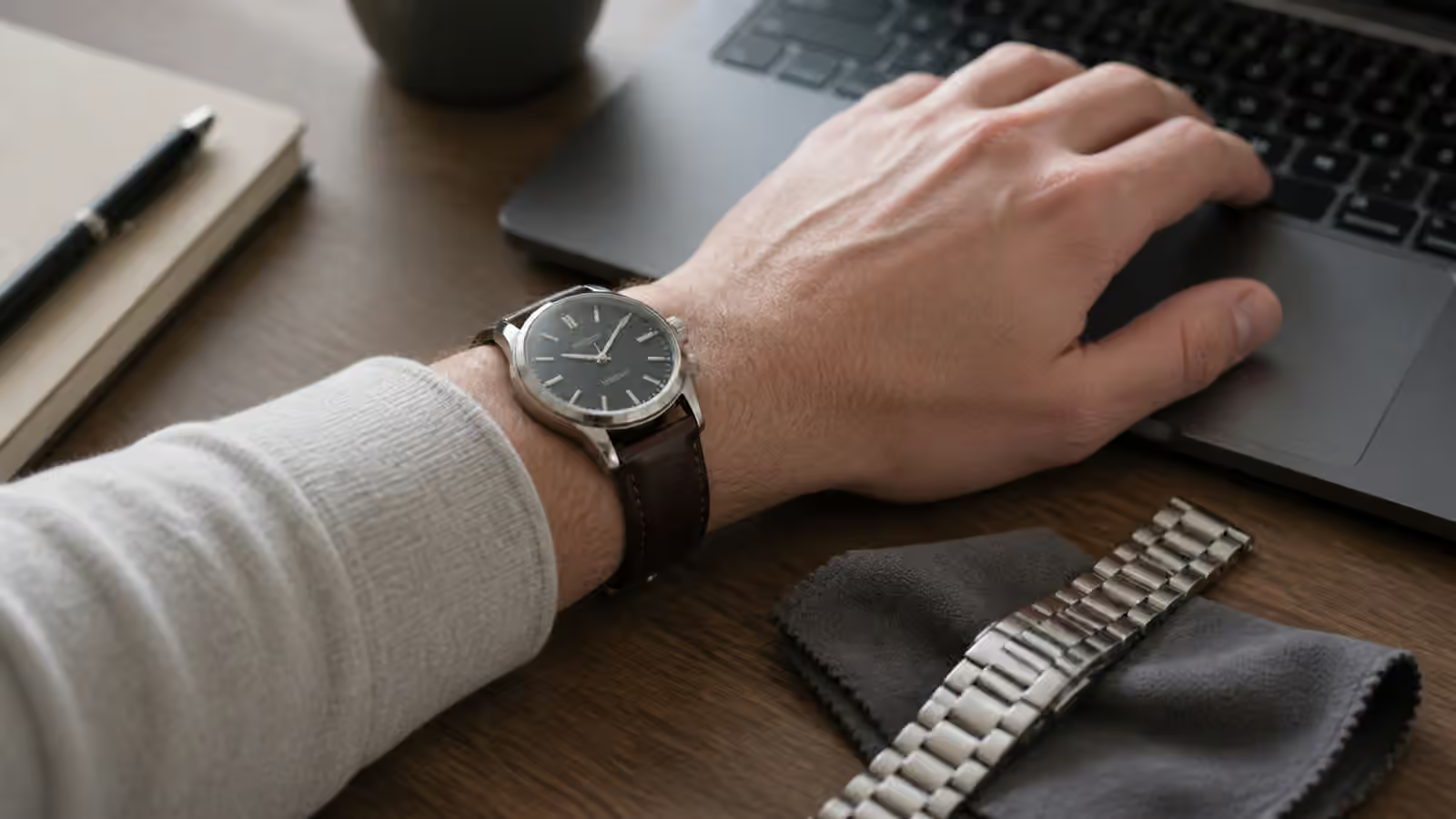
The clasp is easy to ignore when a watch is new because it sits underneath the wrist. The dial gets the first look. The case shape gets the mirror test. The bracelet gets a quick tug. Then the clasp becomes the part you feel most often, especially if you type, drive, lean on a desk, or wear the watch through a warm day.
A good clasp does three jobs at once. It closes securely, gives the bracelet enough adjustment to fit a real wrist, and spreads pressure without becoming a sharp block of metal. Those jobs can pull against each other. A very small clasp can look elegant but offer little adjustment. A large sports clasp can feel reassuring but create a flat steel plate that is wider than the wrist wants. A hidden clasp can preserve visual flow while making fine sizing harder.
This is why clasp choice belongs beside Watch Straps and Bracelets rather than as a minor accessory detail. The strap or bracelet determines how the watch touches the body. The clasp determines how that contact is controlled. If the control is crude, the rest of the bracelet has to work harder.
Fold-over clasps are popular because they are honest
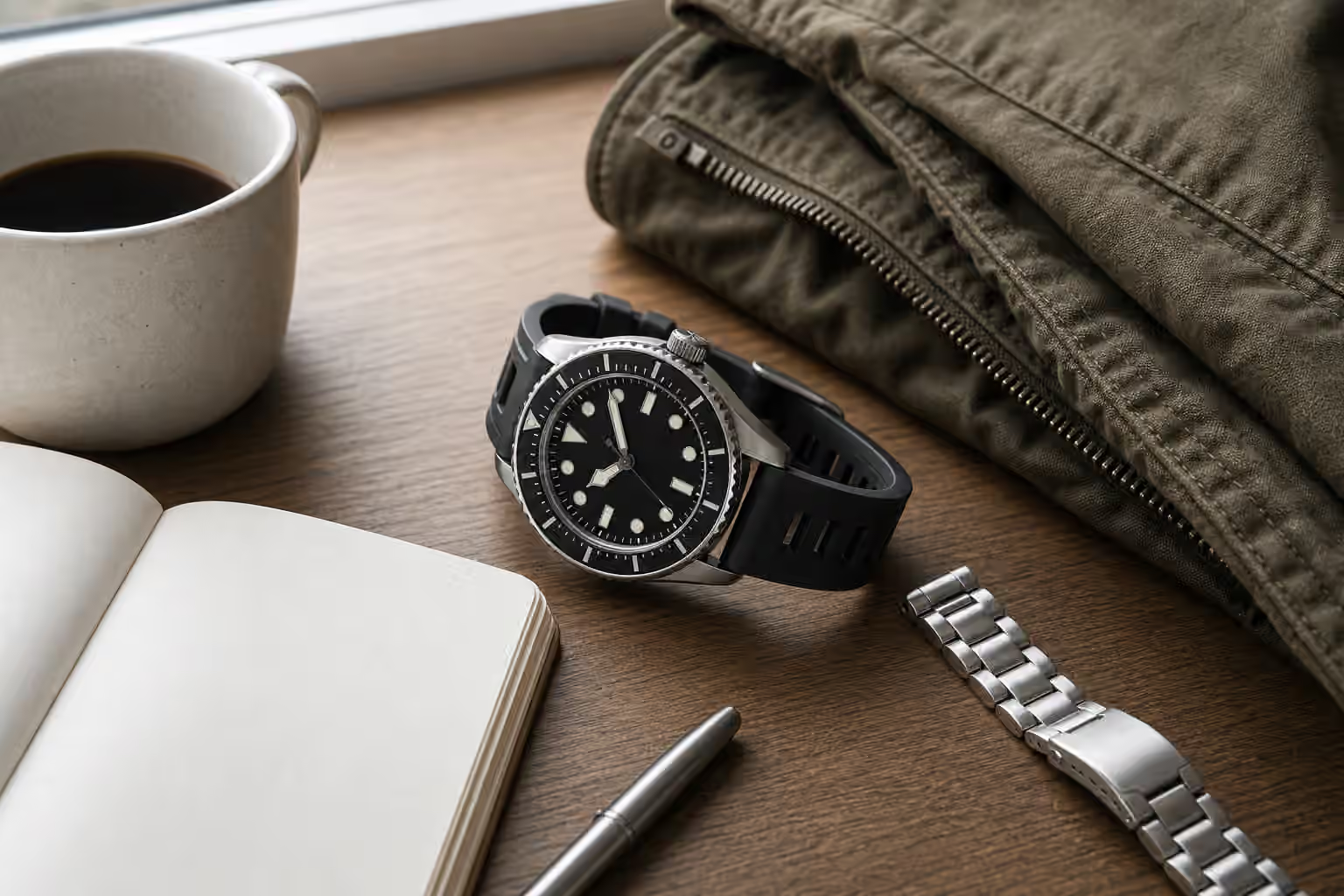
The fold-over clasp is the familiar sports-watch solution. One or more hinged blades fold under a cover, and the cover snaps shut. Many add push buttons, a safety flip-lock, or both. The design can be plain or extremely refined, but the basic appeal is practical: it is easy to understand, easy to inspect, and usually leaves room for micro-adjustment holes or an internal adjustment track.
On a daily watch, that adjustability matters more than decorative cleverness. Wrist size changes during the day. Heat, hydration, exercise, salty food, and even how long your arm has been hanging down can change how a bracelet feels. A clasp with usable adjustment lets the watch move with those changes. Without it, you may be trapped between one link too tight and one link too loose.
Fold-over clasps also make wear visible. Desk work tends to mark the clasp cover before it marks the case. That can bother some owners at first, but it is not necessarily a problem. The clasp is a contact surface. Fine marks on a brushed clasp are part of ordinary use, much like the case wear discussed in Watch Case Materials and Finishing . Deep gouges, bent covers, loose locks, or buttons that return slowly deserve more attention because they may affect function, not just appearance.
Butterfly clasps preserve the bracelet line
A butterfly clasp opens from the center with two folding sides. When closed, it can disappear into the bracelet, which gives a clean look around the wrist. This is why butterfly clasps often appear on dressier bracelets and integrated designs where the uninterrupted bracelet line is part of the watch’s appeal. The visual effect can be excellent. The underside of the wrist looks less like a tool clasp and more like continuous metal.
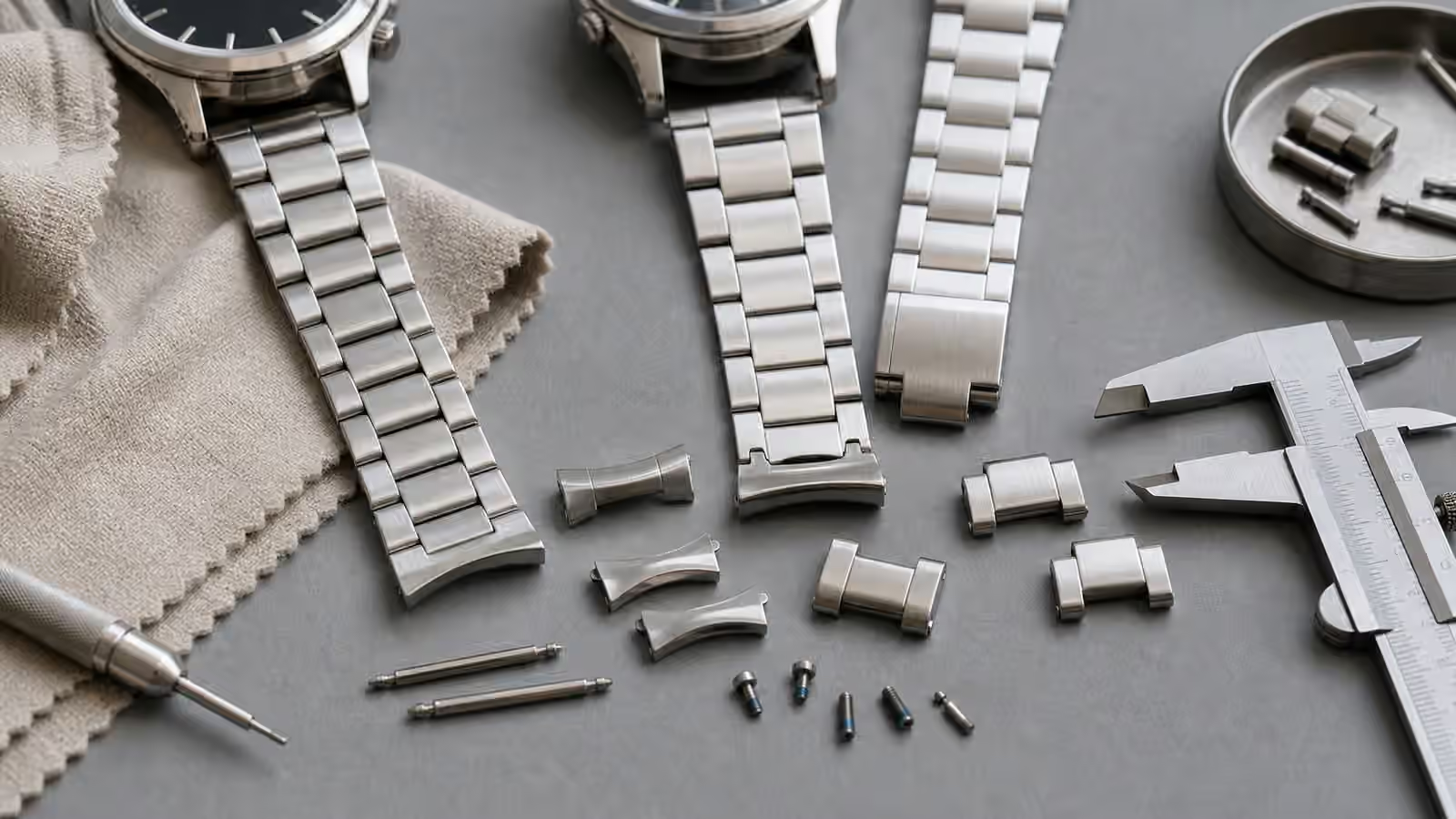
The trade-off is sizing flexibility. Many butterfly clasps provide little or no micro-adjustment. The bracelet has to be sized by removing full links, half links, or both. If the link dimensions happen to match your wrist, the result can feel beautifully balanced. If they do not, the bracelet can become a quiet annoyance. It may be perfect in the morning, tight after lunch, and loose in the evening.
This does not make butterfly clasps bad. It makes them specific. They suit watches where elegance and bracelet continuity matter, and they suit owners whose wrists land well within the available link increments. They are less ideal for someone who needs frequent adjustment or lives in a climate where temperature swings make the wrist change size throughout the day. The clasp is not only a closure style. It is a decision about how much flexibility the watch will have once it is sized.
Micro-adjustment is measured in comfort
Micro-adjustment sounds like a small feature because the movement is small. In practice, it can decide whether a bracelet becomes a favorite. Traditional micro-adjustment often uses small holes in the clasp that let the spring bar sit in different positions. More modern systems may use a sliding internal track, sometimes adjustable without tools. Dive-style extensions add extra length for wearing over a suit, though many owners use the same mechanism simply to loosen a bracelet on a hot day.
The best micro-adjustment disappears until needed. It should move securely, hold its position, and offer increments fine enough to matter. A system that jumps in large steps may not solve the problem it advertises. A system that requires awkward tools may still be useful, but it becomes less helpful during the day. A tool-free quick adjustment can feel luxurious because it respects ordinary physiology. Your wrist is not a fixed measurement.
When evaluating a watch, do not ask only whether it has micro-adjustment. Ask how much, how fine, and how easy. A bracelet with three useful positions may fit better than a bracelet with many positions that are hard to access or placed in the wrong range. This is the same practical mindset used in Watch Sizing . Measurements matter only when they predict what happens on the wrist.
Half links can save a bracelet
Half links are not always exactly half the length of a full link, but they serve the same purpose: they let the bracelet land closer to the wrist’s real size. On many bracelets, the difference between comfort and frustration is not a dramatic redesign. It is one half link and one clasp position.
The placement of removable links matters too. A bracelet should usually keep the clasp centered under the wrist, or at least close enough that pressure feels balanced. If too many links are removed from one side, the clasp may drift off-center and press into bone or tendon. The watch head may also pull toward one side. A bracelet can measure correctly around the wrist while still wearing poorly because the link distribution is wrong.
This is where a patient sizing process helps. Start by getting the length close, then look at where the clasp sits when the watch is worn normally. Move a link from one side to the other if the clasp is clearly displaced. Use a half link if the bracelet has one. Then live with the fit for a full day before declaring it solved. A watch that feels perfect during a five-minute try-on may tell a different story after hours of movement, heat, and desk contact.
Taper changes both comfort and character
Bracelet taper is the change from the width at the lugs to the width at the clasp. A bracelet that starts at 20mm and narrows to 16mm will feel and look different from one that stays nearly the same width all the way around. Taper reduces visual mass, can make the clasp smaller, and often gives a watch a more refined feel. Little or no taper can make a sports watch feel stronger and more tool-like, but it may also make the underside hardware broader.
The right taper depends on the watch. A slim dress watch usually benefits from a bracelet or deployant setup that narrows gracefully. A dive watch can handle more width because the case, bezel, and crown are already sturdy. A large watch with a wide, flat clasp may feel stable but also announce itself every time the wrist meets a table. That may be acceptable on a purpose-built sports watch and irritating on an everyday office watch.
Taper also changes perceived case size. A broad bracelet can make a watch feel more integrated and substantial. A strongly tapered bracelet can make the same case look lighter. This connects to the broader style language in Complete Watch Styles Guide . Bracelet geometry is part of the design, not merely the thing attached to the design.
Deployant buckles change how straps wear
Clasps are not only for metal bracelets. Leather, rubber, and fabric straps may use a pin buckle or a deployant clasp. A pin buckle is simple, thin, and easy to replace. It also bends the strap each time it is opened and closed. Over time, that repeated bend can crease leather around the favorite hole. A deployant clasp folds open and closed more like bracelet hardware, which can reduce stress on the strap and make the watch easier to put on securely.
Deployants have their own fit questions. The curved metal blade must match the wrist well enough to avoid pressure. The clasp may add bulk under the wrist, especially on a thin dress watch. Some deployants require the strap tail to tuck inside, changing how the strap feels compared with a normal buckle. Others leave the tail outside. Neither layout is automatically better. The best one is the one that matches the wrist, strap thickness, and watch style.
Leather makes these choices more obvious because it breaks in. A slightly stiff strap may soften around a pin buckle after a few weeks. A deployant may preserve the strap but remain physically present under the wrist. Rubber behaves differently again, and thick rubber can fight a deployant if the clasp was designed for thinner material. The clasp and strap have to be treated as a pair.
Security should feel calm, not dramatic
A clasp should close with confidence, but confidence is not the same as violence. A snap that requires excessive force can become annoying and may suggest poor tolerances, a stiff new part, or a design that prioritizes the sound of security over daily use. A clasp that opens too easily creates the opposite worry. Push buttons should return cleanly. Safety locks should sit flush. The blades should fold without grinding or twisting.
Age changes clasp behavior. Springs weaken, covers loosen, pins wear, and tiny screws can back out if they were not secured correctly. A bracelet that rattles slightly is not automatically a problem, especially on older designs, but a clasp that can be pulled open unexpectedly needs attention. So does a clasp that no longer holds an adjustment position. These are small parts doing important work over a hard floor.
Water use adds another practical layer. A bracelet can handle water better than leather, but the clasp still collects grit, salt, sunscreen, and skin oils. Rinse and dry a water-suitable watch after swimming, assuming the case itself is appropriate for water and the crown is closed. Watch Water Resistance in Everyday Life covers the case side of that decision. The bracelet side is simpler: clean hardware works better and wears more slowly than gritty hardware.
Try the clasp before judging the watch
The most useful buying habit is to inspect the clasp with the same attention you give the dial. Open it. Close it. Feel the buttons. Check whether the edges are sharp. Look for micro-adjustment. Notice whether the clasp is much wider than the bracelet. If the seller allows it, size the bracelet close enough to test balance rather than letting a loose display fit distort your judgment.
On pre-owned watches, the clasp can tell a story. Heavy desk marks are normal. Deep dents, bent blades, missing screws, stretched links near the clasp, or a cover that no longer snaps cleanly may point to harder use. Replacement clasps can be practical, but they may matter to originality on collectible watches. As with crowns in Watch Crowns and Pushers , small control surfaces can reveal how the watch has been handled.
If you are choosing between two similar watches, the clasp can be the deciding detail. A better movement is attractive, but a bracelet you cannot fit will keep the watch in the box. A famous case shape is appealing, but a sharp clasp will teach you about it all afternoon. The best clasp is not always the most complicated one. It is the one that lets the watch sit where it should, close without fuss, adjust when your wrist changes, and disappear the rest of the time.
Comfort is built from small tolerances
Bracelet comfort is not one feature. It is the sum of link articulation, clasp length, clasp curvature, micro-adjustment, half links, taper, edge finishing, weight, and how the watch head balances on your wrist. The frustrating part is that each detail is small. The useful part is that small details can often be changed. A half link, a different clasp position, a better link distribution, or a strap switch can turn a watch from nearly right into easy to wear.
This is why fit should be treated as an ownership skill. Learn what your wrist does through the day. Notice whether discomfort comes from tightness, sliding, clasp pressure, case weight, or sharp edges. Do not blame the watch head too quickly, and do not assume discomfort is something you must tolerate because the watch is beautiful. A watch is a physical object. It earns wrist time by behaving well there.
When the clasp is right, nothing dramatic happens. The watch stays centered. The bracelet breathes a little without wandering. The underside of the wrist is not constantly aware of a metal plate. You stop negotiating with the fit and start wearing the watch. That quietness is the point. The clasp may be hidden most of the day, but it decides whether the watch feels like a companion or a small engineering argument strapped to your arm.