
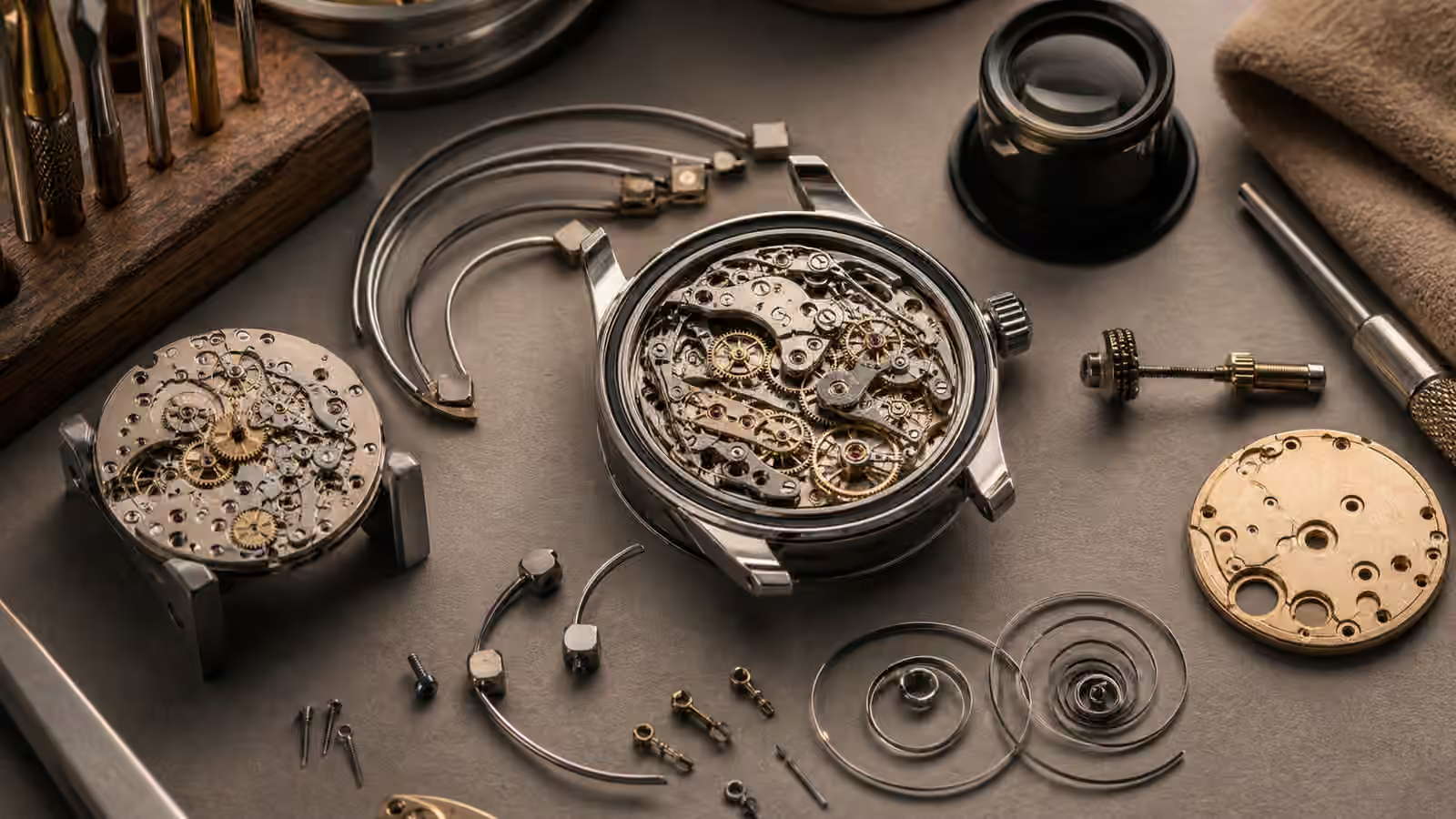
Most watch complications give information to the eye. A chronograph counts elapsed time. A GMT hand shows another zone. A moonphase turns a calendar into a small theater. Chiming and alarm watches are different because they make time audible. They turn a mechanical movement into a source of sound, asking the case, hammers, gongs, and owner to participate in a performance that is brief, physical, and surprisingly intimate.
That sound can be useful, decorative, emotional, or all three. A mechanical alarm can remind the wearer of a meeting, a train, or the end of a rest period. A minute repeater can tell the time in the dark through a sequence of tones. A sonnerie can strike time automatically. These mechanisms range from approachable vintage alarms to highly complex repeating watches, but they share one idea: time does not only have to be seen.
Alarm watches are practical first
The alarm is the most everyday member of the audible family. A mechanical alarm watch stores energy for a separate buzzing or ringing action, often set by an additional crown, inner disc, or hand. When the set time arrives, the alarm mechanism releases and vibrates or strikes against a resonant part of the case. The result is not usually a polished concert note. It is a bright mechanical insistence, sometimes charming, sometimes startling, and often more tactile than musical.
An alarm watch belongs to ordinary life because its purpose is easy to understand. It can mark a departure time without reaching for a phone. It can remind a traveler to return to a gate. It can time a short errand or rest. The sound may not be loud enough for every environment, and it should not be treated as a guaranteed wake-up system for deep sleep, but it gives the wearer a physical reminder that exists outside a screen.
Watch Crowns and Pushers is useful because alarm watches often ask more from their controls. One crown may wind and set the time while another winds or sets the alarm. The owner has to learn which direction does what, when the alarm is armed, and how to avoid forcing a control that is already under tension.
Repeaters tell time by sequence
A repeater is more ceremonial. Instead of sounding at a preset time, it chimes the current time on demand. A minute repeater traditionally sounds hours, quarter hours, and minutes through different tones or sequences. The owner activates a slide or pusher, and the watch translates the position of the hands into sound. This is mechanical logic made audible.
The charm is not only that the watch can tell time in darkness. Modern owners have many easier ways to do that. The charm is that the movement has to read itself, store energy through the slide or pusher, and control a tiny sequence of strikes without losing its place. The complication makes the watch feel less like an instrument panel and more like a small machine with a voice.
Watch Complications Guide introduces repeaters among other advanced mechanisms. The ownership lesson is that audible complications are not simply “more features.” They create a different relationship. You do not glance at a repeater. You listen to it, and listening takes time.
Gongs, hammers, and cases are one system
The sound of a chiming watch comes from more than the movement. Hammers strike gongs, bells, or resonant structures. The case carries and shapes the tone. The size, material, thickness, crystal, water-resistance architecture, and internal volume all matter. A louder watch is not automatically better. A thin clear tone, a warm buzz, a dry rattle, or a long decay can each suit a different design.
This is why case design matters so much. A case built for strong water resistance may not be the most resonant home for a delicate chime. A precious-metal case may shape sound differently from steel or titanium. A display back may change the acoustic chamber. A complicated sealing system may protect the watch but alter its voice. Audible complications make the case part of the movement’s expression.
Watch Case Materials and Finishing gives the broader language of material feel. With chiming watches, material is also heard. The watch does not only touch the wrist and catch light. It uses its body to send sound into the air.
Sonneries are watches with stronger opinions
A sonnerie complication strikes time automatically at intervals, rather than only when the owner asks. Grande and petite sonnerie mechanisms are associated with very complex watchmaking because they have to manage striking sequences, energy use, silence modes, and safety systems. They are fascinating, but they are not casual daily features for most owners. The complication changes the watch’s rhythm and demands more understanding from the person wearing it.
The evergreen lesson is that automatic striking adds responsibility. Sound can be delightful in the right room and intrusive in the wrong one. A watch that announces time mechanically is a different social object from a quiet three-hander. The owner has to know how to silence it, how to wind it, and how to avoid activating functions incorrectly.
This is true at a smaller scale with alarms too. The sound that feels charming at home may be unwelcome in a meeting, theater, or quiet train car. Audible watches bring mechanical romance into shared space. Part of ownership is knowing when not to use the feature.
Handling matters because energy is involved
Chiming and alarm mechanisms often store and release energy in specific ways. A repeater slide may wind a spring that powers the chime sequence. An alarm may have its own mainspring or draw from a shared source. Pushers, crowns, and slides may have rules about when they should be used. Forcing a control can be more serious than making an ordinary setting mistake.
Owners should learn the sequence for the specific watch. Do not assume every alarm sets the same way or every repeater can be interrupted safely. Avoid operating complicated functions while the watch is in a vulnerable setting range unless the maker’s instructions allow it. If the watch is vintage or newly acquired, have a watchmaker explain the controls before experimenting.
Watch Winding and Setting gives the broader habit of respecting mechanism timing. Audible complications make that respect more important. They are not fragile because they are magical. They are delicate because small parts are doing timed work under load.
Buying sound from photos is difficult
The hardest part of evaluating a chiming or alarm watch online is that sound rarely comes through honestly. A phone recording changes volume, tone, and resonance. A seller may record in a quiet room, against a hard surface, or with the microphone very close. The watch may sound louder or thinner in real life. If sound matters to you, hear the watch in person when possible, or treat recordings as clues rather than proof.
Condition matters too. A weak alarm, uneven repeater sequence, buzzing that dies too quickly, sluggish slide, or missing tone can indicate service needs. The watch may still be repairable, but the cost and parts question can be serious. Watch Service Intervals and Repair Quotes belongs here because complicated mechanisms should not be bought as if maintenance were ordinary and cheap by default.
Vintage alarm watches can be especially rewarding because they often carry strong design and useful charm, but they deserve careful inspection. The alarm should set, arm, and sound as intended. Crowns should not feel abused. The case should not show moisture damage. A watch sold as “alarm not tested” may be a small mystery or a large repair. The phrase should slow the purchase.
Sound changes how a watch feels personal
An audible watch has a different intimacy from a visually complicated one. You may hold it near your ear. You may learn its buzz or tone the way you learn the feel of a crown. You may notice how it sounds on a wooden table compared with the wrist. A repeater can make the passage of time feel deliberate because the owner has to ask and listen. An alarm can make time feel practical because the watch answers with a little mechanical insistence.
This is not a better form of watchmaking than silent complications. It is another form. A chronograph invites action through pushers. A GMT invites orientation across places. A chiming or alarm watch invites attention through sound. Watch Movement Finishing teaches the pleasure of looking closer; audible complications teach the pleasure of listening closer.
The right owner is not necessarily the one chasing maximum complexity. It is the one who enjoys the specific exchange. Set the alarm, hear the buzz, smile at the physicality. Activate the repeater, listen to the sequence, and appreciate the machine without demanding that it replace a phone. Respect the controls, service the mechanism, and choose settings where the sound belongs.
Mechanical sound on the wrist is a small luxury even when it is practical. It reminds you that time can be felt, heard, and handled, not only displayed. That is enough reason for these watches to matter.


