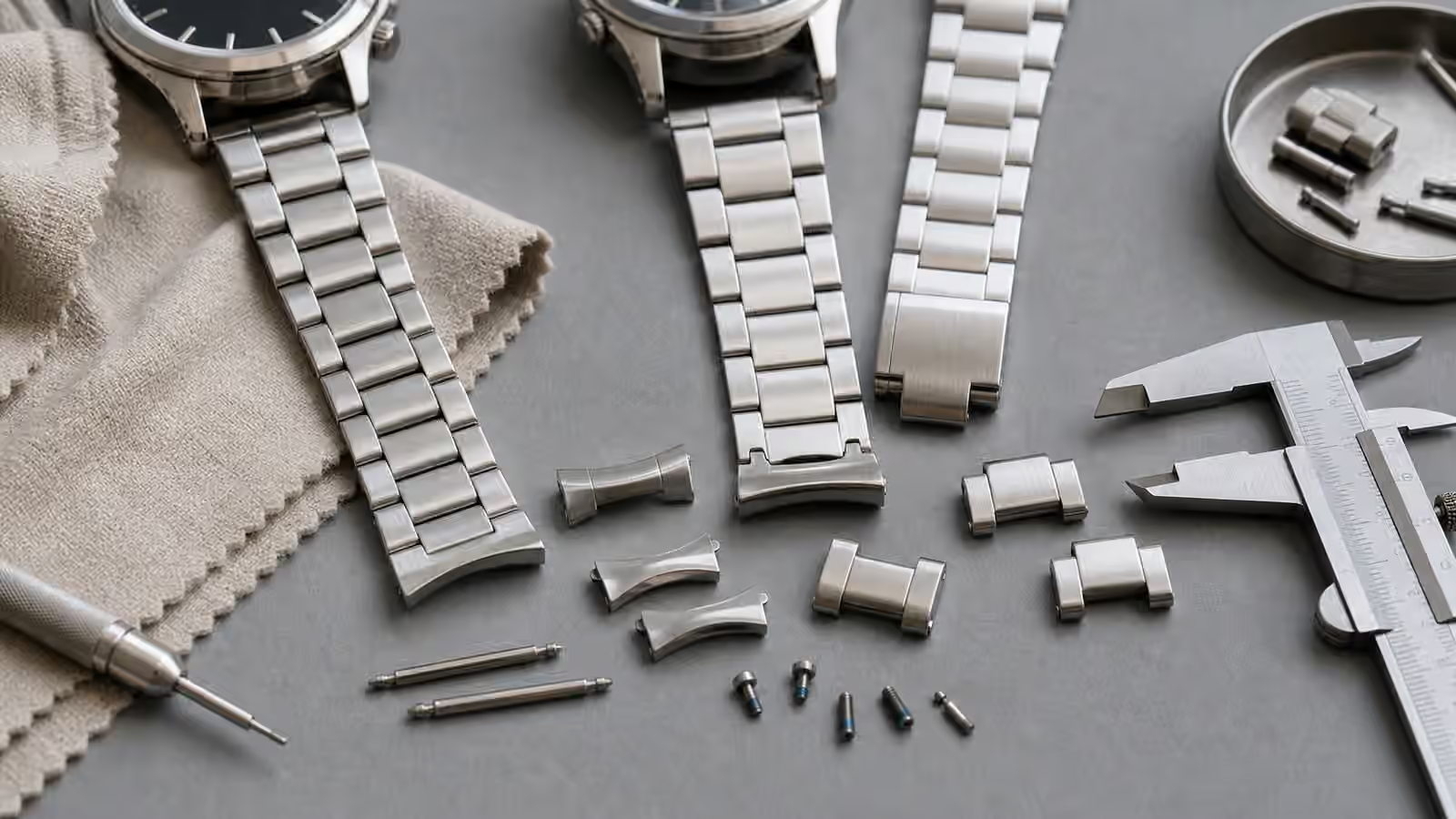
Watch size conversations often begin and end with diameter, but the wrist cares about more than the number across the bezel. A 39 millimeter watch can feel compact or awkward. A 42 millimeter watch can feel balanced or huge. The difference often lives in thickness, lug shape, caseback height, bezel width, strap angle, weight distribution, and the way the case sits on the flat part of the wrist.
This matters because comfort is cumulative. A watch that looks exciting in a photo may become annoying after six hours. A watch that seems too plain in a spec sheet may disappear on the wrist in the best way. Fit is not only visual proportion. It is how the object behaves while you type, drive, cook, walk, reach into a pocket, slide under a cuff, or rest your hand on a desk.
Diameter is only the first clue
Diameter is useful because it gives a rough sense of dial presence. It is also incomplete. Watches with the same diameter can wear differently because one has a broad bezel and small dial while another has a thin bezel and wide dial. The second watch may look larger because more of its face is visible. A cushion case, tonneau case, square case, or integrated bracelet design can also break the simple diameter rule.
Watch Sizing explains the broad sizing conversation, especially wrist measurement and lug-to-lug. Case thickness adds the third dimension. A watch is not a flat circle. It is a small stack of crystal, bezel, case middle, caseback, movement, rotor if automatic, and sometimes extra complication layers. That stack changes both comfort and visual weight.
When comparing watches, imagine the case as a shape in space rather than a number. How much of it is dial? How much is bezel? How tall is the crystal? Does the caseback protrude? Do the lugs turn down? Does the bracelet pull straight out before curving, or does it wrap immediately? The answer may matter more than one millimeter of diameter.
Thickness changes the center of gravity
A thick watch does not automatically wear badly, especially if the case is shaped well and the strap holds it securely. But thickness raises the center of gravity. A tall watch can wobble, slide toward the hand, catch on sleeves, or feel top-heavy on a loose strap. The heavier the case, the more this matters.
Some thickness is structural. Dive watches need case strength, gaskets, bezels, and crystals that can handle water-related demands. Chronographs need more movement height because the timing mechanism adds layers. Automatic watches often need room for a rotor. A display back can add height. A domed crystal may make the watch look vintage and charming while adding to the total profile.
The question is not whether thickness is good or bad. It is whether the thickness fits the watch’s purpose and your wrist. A chunky sports watch on rubber may feel honest and stable. The same height in a dress watch may feel clumsy. A thin watch may slide under a cuff beautifully but feel too delicate for rough travel. Context decides.
Lug shape decides how the case lands
Lugs are the arms that hold the strap or bracelet, and they quietly decide whether a watch hugs or hovers. Downturned lugs can help a watch wrap around the wrist. Long flat lugs can make a watch feel larger because they extend the footprint. Short lugs can rescue a broad case. Hooded or integrated lugs can make the bracelet part of the case shape, which changes how the first link behaves.
The lug-to-lug measurement is often more predictive than diameter because it describes the length across the wrist. If the lugs overhang the flat top of the wrist, the watch may look and feel awkward even if the diameter sounds reasonable. If the lugs curve down and the strap exits neatly, a watch can wear smaller than expected.
End links complicate this further. A bracelet with male end links may extend beyond the case before dropping, effectively lengthening the watch. Female end links allow the bracelet to articulate downward sooner. This can be the difference between a watch that fits and one that perches.
Watch Clasps and Bracelet Fit is a useful companion because the bracelet completes the geometry. A case can be well sized, but a stiff bracelet or awkward clasp can still make the watch feel wrong.
Casebacks can lift the watch above the wrist
A watch may look thin from the side but wear tall because the caseback protrudes. A rounded caseback can sit into the wrist comfortably for some people, while a flat or sharp caseback edge may feel more noticeable. A display back adds visual interest and lets you see the movement, but it can also add height and sometimes a different wrist feel.
The shape of the underside matters most during movement. A watch that seems fine when your wrist is still may shift when your hand bends back. The crown may press into the hand. The caseback may create a pressure point. The lugs may lift because the strap angle fights the wrist shape.
Trying the watch on for a few minutes helps, but longer wear tells more. If you can, notice how the watch behaves while doing ordinary things rather than only admiring it in a mirror. Comfort issues often appear during normal motion, not during the first still glance.
Weight and strap tension work together
Weight can feel luxurious in the hand and tiring on the wrist. A heavy watch needs a secure fit so it does not slide. If it is worn too loose, the case gains momentum and knocks against the wrist. If it is worn too tight, the owner may feel the caseback, crown, and clasp more sharply. The comfortable range becomes narrower as weight increases.
Strap material changes the experience. A soft leather strap can make a modest watch feel elegant and forgiving, but it may not stabilize a heavy case well. Rubber can hold a sports watch firmly and tolerate water. Fabric can reduce weight and add flexibility. A bracelet distributes weight across the wrist, but only if sized and clasped well.
Watch Straps and Bracelets covers the material choices in more detail. For thickness and comfort, the key point is that the strap is not decoration. It is the suspension system. It decides whether the case stays centered, whether the lugs angle down, and whether the watch moves with you or against you.
Cuffs and daily habits are part of fit
A watch that is comfortable on a weekend may frustrate someone who wears fitted shirt cuffs every day. Thickness affects how a watch moves under clothing. A tall crystal, sharp bezel, or proud crown can catch on fabric. A slim watch may pass under a cuff quietly. A sports watch may ask to be worn outside the cuff or with casual clothes.
Desk work matters too. Some people notice clasp bulk more than case thickness because the clasp presses against the desk. Others notice tall watches because they hit door frames, laptop edges, or jacket sleeves. A watch can be technically well sized and still mismatched to the owner’s day.
This is why a one-watch collection often benefits from moderation. A daily watch does not need to be tiny, but it should fit the life it will actually live. If the watch is for occasional use, you can tolerate more drama. If it is for every morning, comfort becomes a specification.
Visual thickness can be softened or exaggerated
Design can hide or amplify height. A stepped case, sloped bezel, curved midcase, domed crystal, or darker case side can make thickness feel intentional. A slab-sided case with vertical walls can look taller even when the measurement is similar. Brushing and polishing patterns also change how light reads the case.
Some watches use a narrow case band and protruding caseback to appear thin from the side. Others embrace a tool-like block of metal. Neither approach is automatically better. The important thing is to compare the side profile, not just the top view. Most sales photos favor the dial. Side views reveal daily comfort.
Watch Case Materials and Finishing helps explain why surface transitions matter. Finishing is not only beauty. It is also how the case communicates shape, weight, and purpose.
The best fit feels boring after a while
The right watch fit often becomes invisible. You notice the dial when you choose to look at it, not because the case keeps reminding you it is there. The watch stays centered without strangling the wrist. The crown does not dig. The lugs do not overhang. The clasp does not create a desk problem. The thickness matches the role.
That kind of fit is easy to undervalue during shopping because discomfort is quiet at first. Online photos reward drama. Spec sheets reward simple comparisons. The wrist rewards balance. When possible, try watches in person, look at side profiles, check lug behavior, and imagine the strap you will actually use.
Diameter starts the conversation, but the wrist finishes it. Thickness, lugs, caseback, weight, strap, bracelet, and daily habits all take part. A watch that understands those details can feel smaller, calmer, and more wearable than its numbers suggest. A watch that ignores them can turn impressive specifications into a small daily irritation.