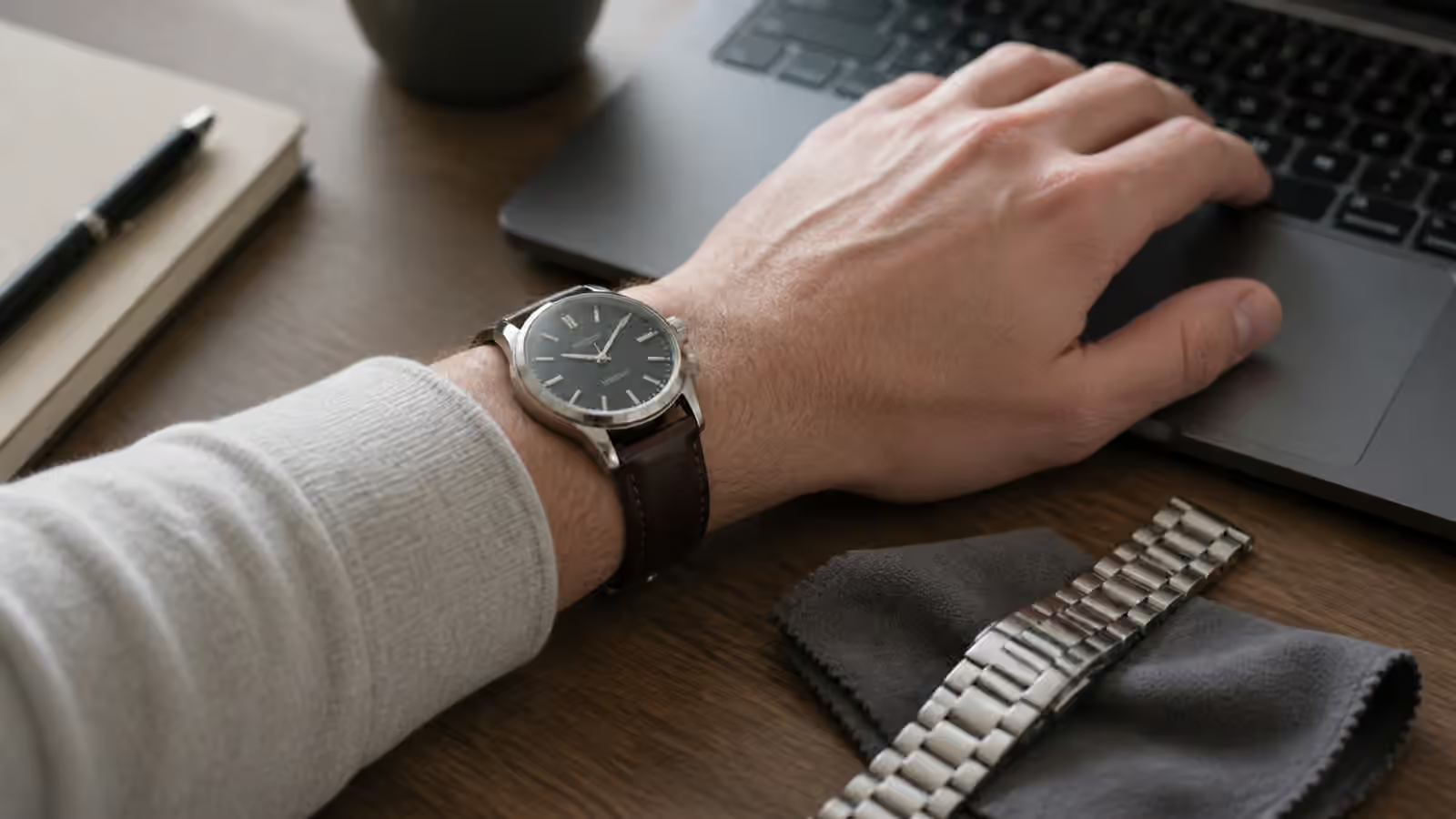
A watch bracelet does not begin at the clasp. It begins where the case stops and the bracelet first learns how to bend. That small connection, the end link, decides whether the bracelet drops quickly around the wrist or extends the watch before it curves. It decides whether the case feels integrated or attached. It can make a watch with reasonable measurements wear larger than expected, or make a heavier watch settle because the first link articulates cleanly.
End links are easy to overlook because they are not glamorous. They do not have the visual drama of a dial, the technical romance of a movement, or the satisfying click of a clasp. Yet they sit at a critical joint. A bracelet has to turn a rigid watch head into something that follows a rounded wrist. If the first link cannot move soon enough, the watch may perch. If the link fit is loose, the bracelet may rattle. If the bracelet tapers poorly, the whole watch can feel blocky even when the case itself is well proportioned.
The end link is part of the case shape
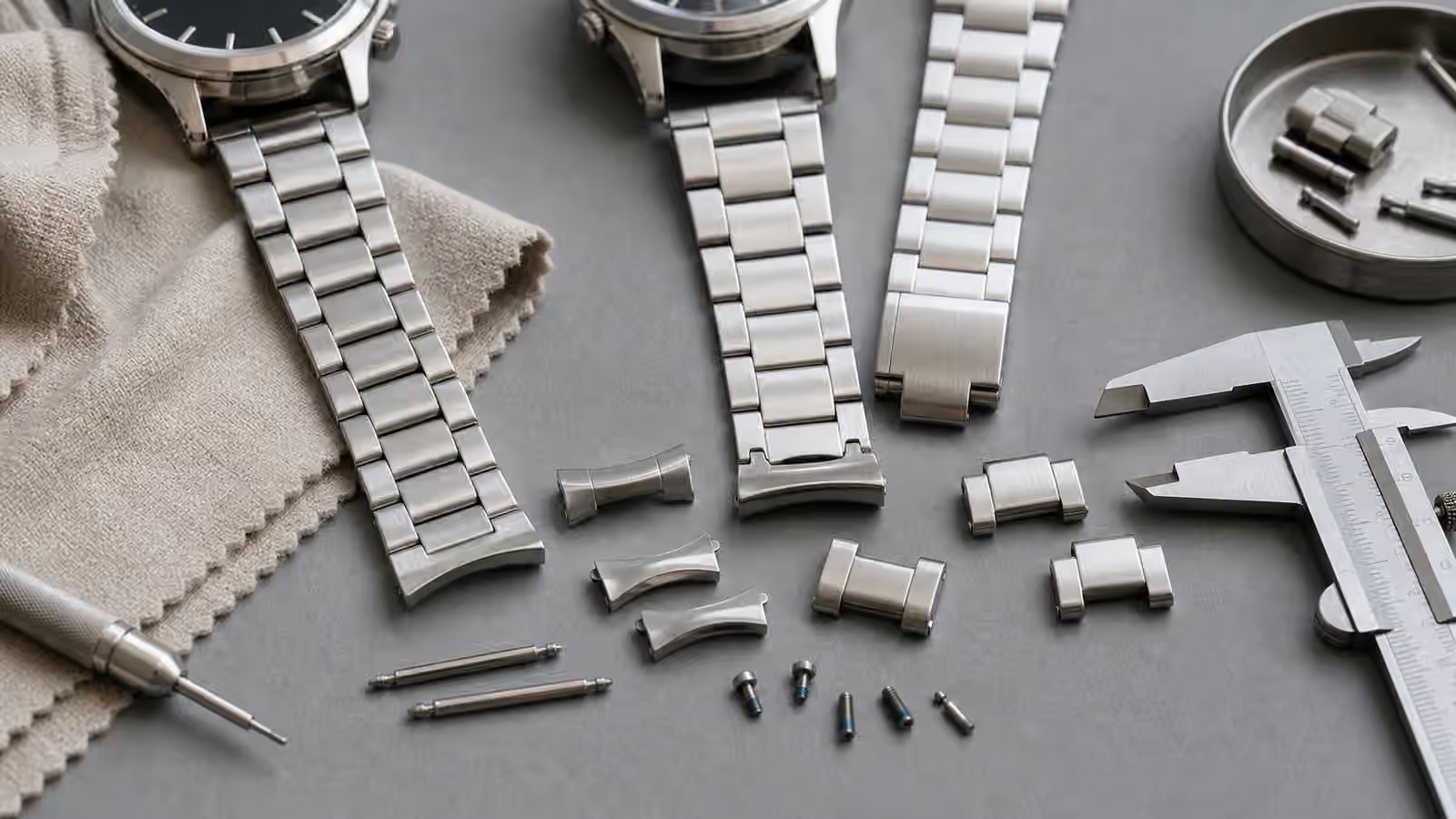
The end link fills the space between the lugs and the bracelet. On some watches it is a simple folded or solid piece that matches the case curve. On others it is part of a more sculptural transition, especially on integrated designs where case and bracelet are meant to read as one continuous form. In both cases, the end link is doing visual and ergonomic work.
A good end link makes the bracelet look like it belongs. The curve follows the case. The brushing or polishing lines make sense. The gap is controlled. The first moving link begins at a point that suits the wrist. When those details are weak, the watch can feel less expensive than its dial or movement suggests. A beautiful case with a poorly matched bracelet has the same problem as a tailored jacket with the wrong sleeves. The main object may be good, but the connection keeps interrupting the impression.
Watch Lug Geometry and Case Shape is a useful companion because lugs and end links cannot be judged separately. Long flat lugs already increase the effective footprint of a watch. Add male end links that project outward before bending, and the watch can wear much longer than the case diameter suggests. Curved lugs with female end links can feel dramatically more compact.
Male and female end links change the first bend
The common shorthand is male versus female end links. A male end link or first center link tends to project beyond the case before the bracelet turns downward. A female end link allows the bracelet to articulate downward closer to the case. The names are not elegant, but the fit difference is real. On a small or flat wrist, the first bend can decide whether the watch hugs or bridges.
This does not mean female end links are always better. A larger wrist may appreciate the way a male end link adds visual flow. A sports watch with a substantial case may look better with a stronger first link because the bracelet carries the mass confidently. An integrated bracelet design may need the end link to continue the case line before it starts to drape. The question is not which type wins in theory. The question is where the bracelet starts bending on your wrist.
Online measurements often miss this. Lug-to-lug tells you the metal case length, but a male end link can extend the practical span. A seller photo taken flat on a table may hide the issue because gravity is not asking the bracelet to wrap a wrist. When possible, look for side photos, wrist photos, or bracelet articulation shots. Online Watch Listing Photos is especially helpful here because missing angles are often where fit surprises live.
Taper changes weight, pressure, and tone
Bracelet taper is the narrowing from the lug width to the clasp width. A bracelet that starts broad and narrows clearly can make a watch feel more refined. It reduces the amount of metal under the wrist, often allows a smaller clasp, and gives the watch a sense of motion away from the case. Little taper can make a watch feel sturdy, modern, or tool-like, but it can also make the bracelet feel like a continuous cuff.
The right taper depends on the watch’s personality and mass. A slim dress watch on a wide, nearly untapered bracelet can feel heavy-handed. A large dive watch on a very narrow taper can feel visually top-heavy, as if the case is floating above a bracelet that cannot carry it. A moderate everyday watch often benefits from enough taper to reduce bulk without making the bracelet look delicate.
Taper also affects clasp comfort. A wider bracelet usually means a wider clasp or at least broader hardware under the wrist. Watch Clasps and Bracelet Fit explains why that underside hardware matters during typing, driving, and desk work. End links may decide how the watch begins around the wrist, but taper and clasp design decide how it finishes underneath.
Articulation is the bracelet’s real flexibility
A bracelet can look flexible while still behaving stiffly. Link shape, pin placement, link thickness, and the finish between links all affect articulation. Some bracelets drape like fabric. Others move in larger segments. A bracelet with broad flat links may look clean but resist smaller wrist curves. A beads-of-rice style bracelet may feel supple because many small links share the movement. An oyster-style bracelet can be excellent when the links are shaped and finished well, but blocky when tolerances are crude.
This matters because weight needs somewhere to go. A heavy watch head on a stiff bracelet can slide, rotate, or create pressure points. A bracelet that articulates well can spread the load more evenly. The owner may describe this as the watch feeling balanced, even if the actual weight is not low. Comfort is often less about absolute grams and more about where those grams land.
Do not judge articulation only by shaking the bracelet in the hand. Put the watch on, let it sit naturally, and notice whether the first links drop, whether the case stays centered, and whether the bracelet creates gaps along the side of the wrist. A small amount of visual gap is normal on many wrists. A bracelet that forms a hard bridge from lug to lug is different. That is not a moral failure in the design, but it may be wrong for the wearer.
Solid, hollow, fitted, and straight end links
Bracelet construction has its own vocabulary. Solid end links are machined pieces that usually feel more substantial and fit the case more precisely. Hollow or folded end links can be lighter, more flexible, and common on older or more affordable watches. Straight end links do not follow the exact case curve and are often used on aftermarket bracelets, especially when the same bracelet must fit many watches. Fitted end links are shaped for a specific case.
Solid is not always better in lived experience. A vintage watch with folded end links may have a charming lightness that suits the case. A rugged modern watch may benefit from solid fitted links that remove rattle and preserve a continuous design. A straight-end bracelet can look honest on a field watch or vintage-style piece, while looking unfinished on a watch that was clearly designed for a curved fitted link. The choice should match the watch.
Fit also affects service and strap changes. End links are held by spring bars, screws, or integrated systems, and careless removal can scratch lugs or bend small parts. Watch Spring Bars and Strap Changes belongs in the same reading path because the bracelet is only secure if the connection is secure. A bracelet that looks excellent but uses tired spring bars is not actually excellent.
Bracelet gaps can be honest or worrying
A small gap between end link and case can be normal, especially on older watches or bracelets designed with looser tolerances. A large uneven gap, sharp rubbing, or a link that moves in a way that seems to chew the lug interior deserves attention. Rattle can be charming on some vintage bracelets and annoying on modern ones. The same physical behavior can read differently depending on the watch’s era and intent.
When buying secondhand, look for consistency. Are the end links correct for the reference? Does the bracelet match the case finish and age? Do the end links sit symmetrically? Are the spring-bar holes damaged? Are there tool marks around the lugs? Watch Authentication and Red Flags gives the broader caution: one odd detail does not prove a problem, but the bracelet should support the watch’s story rather than require excuses.
Bracelet originality can matter to collectors, but comfort matters to owners. A correct original bracelet that fits poorly may be worth preserving while wearing the watch on a strap. A later bracelet that fits beautifully may make the watch usable. The right decision depends on whether you are protecting value, enjoying daily wear, or doing both with clear eyes.
The first link can decide the whole watch
The most useful habit is to treat bracelet architecture as part of sizing. When you try on a watch, do not stop at case diameter. Look at how the end link leaves the case. Notice when the first true bend happens. Feel whether taper reduces underside bulk. Check whether the clasp lands where it should. Let the watch sit for more than a moment, because bracelets often reveal themselves after the wrist moves.
Watch Sizing gives the broad measurement framework, and Watch Straps and Bracelets covers material choices. End links and taper fill the gap between those guides. They explain why a watch that should fit on paper still feels wrong, and why another watch with similar numbers feels natural.
A bracelet is not a chain attached to a watch. It is a shaped structure that has to translate the case into comfort. The end links begin that translation. The taper refines it. The clasp closes it. When all three agree, the watch stops feeling like an object balanced on the wrist and starts feeling like something built around it.