An automatic watch announces itself in small physical ways. The rotor shifts when the wrist moves. The crown may feel different from a hand-wound watch. The case may transmit a faint whir, shuffle, scrape, or wobble. Some watches are nearly silent. Others make the winding system part of the personality. Owners often notice these sounds before they understand them, then wonder whether the watch is healthy or whether something loose is moving inside the case.
The answer depends on the movement, case, rotor bearing, winding architecture, service condition, and the owner’s expectations. An automatic rotor is a moving mass whose job is to wind the mainspring as you wear the watch. It is not supposed to be imaginary. It has weight, inertia, a bearing or pivot system, and gears that translate motion into stored energy. Some sound and sensation can be normal. A sudden change, grinding, scraping, weak power reserve, or visible contact is different.
The rotor turns motion into reserve
The basic idea is simple. A rotor swings with wrist motion. As it turns, the winding system transfers energy to the mainspring. The spring stores that energy, and the movement uses it to run. In daily life, this means an automatic watch can keep itself wound if worn enough. It may still need a manual wind after sitting, and it may not reach full reserve if the owner is sedentary, but the design is built around ordinary motion.
Watch Power Reserve explains the ownership side of stored energy. Rotor behavior is one reason reserve feels different from person to person. Someone who walks all day may keep an automatic watch comfortably charged. Someone who works at a desk and wears the watch loosely may not. A watch with an efficient bidirectional system may respond differently from one that winds mainly in one direction. The movement is not only a specification. It is a partner in a routine.
This is also why automatic watches can feel alive. A manual watch puts the winding ritual in your fingers. An automatic watch hides part of that ritual in your movement. The rotor is the bridge between your day and the mainspring.
Different winding systems have different voices
Not all rotors behave the same way. Some automatic systems wind in both directions. Others wind efficiently in one direction and let the rotor freewheel more easily in the other. Some use ball bearings. Some use jeweled pivots. Some rotors are large and centrally mounted. Some are smaller micro-rotors. Some older designs use bumper systems that do not rotate freely in a full circle but bounce through an arc. Each architecture has a sound and feel.
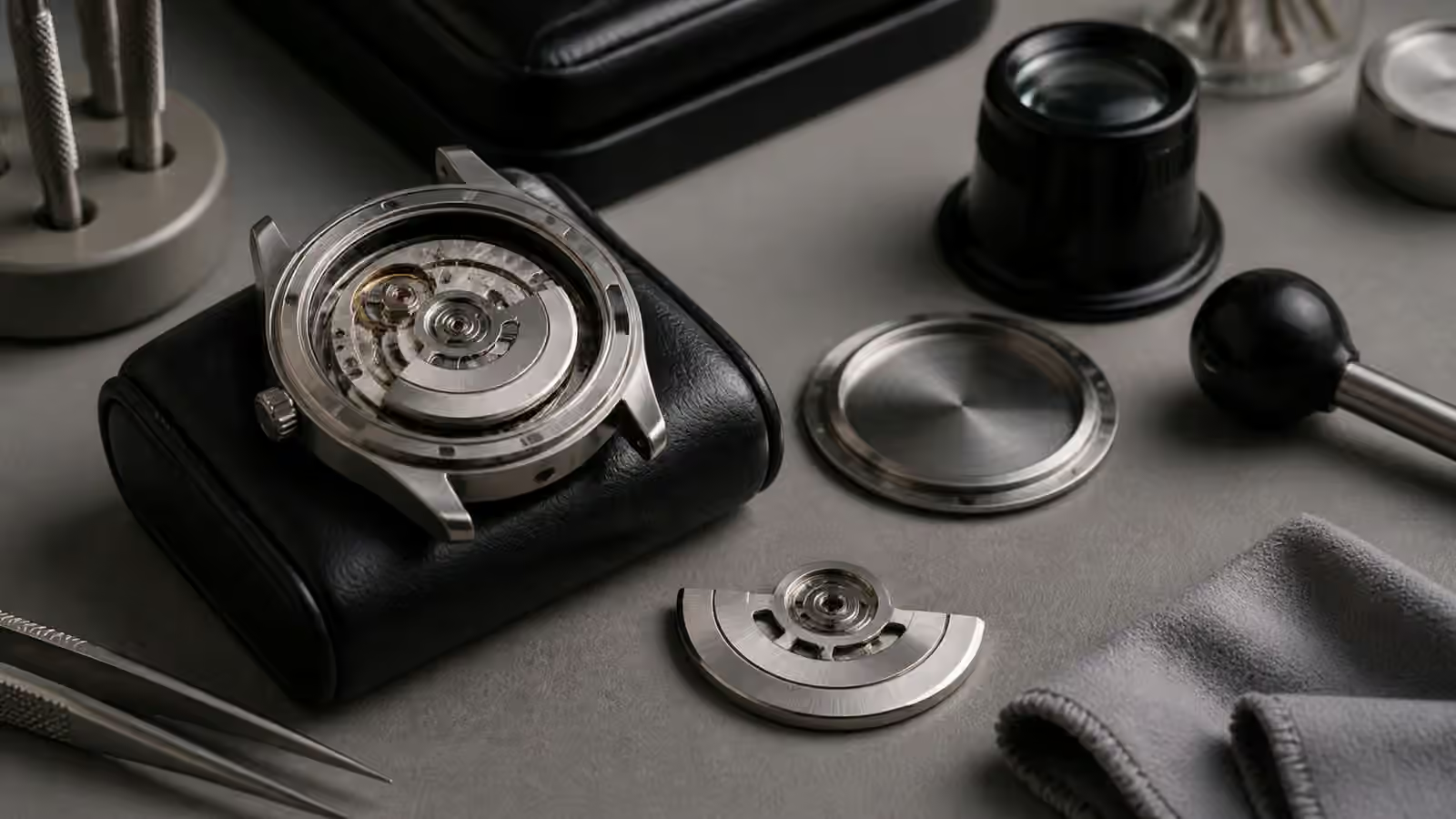
A rotor that spins freely in one direction can create a brief whir that surprises new owners. A heavier rotor may produce a noticeable shift when the wrist moves. A micro-rotor may feel subtler, though the case and movement still matter. A display back can make the motion visible, which sometimes makes the sound feel more understandable. A solid back can hide the motion while leaving the owner to interpret sensation alone.
Watch Movements gives the larger family tree of manual, automatic, quartz, and hybrid systems. Within automatics, the rotor is the part most owners experience physically. Two watches can both be automatic and still feel very different because their winding systems have different priorities.
The case is an acoustic chamber
Rotor noise is not only movement noise. The case amplifies, mutes, or changes it. A thin case with a display back may transmit sound differently from a thick dive case with a solid back. Titanium, steel, gold, and ceramic do not feel or sound identical. The way the movement is secured, the thickness of the caseback, and the amount of empty space inside the case all influence what reaches the wrist and ear.
This is one reason owners disagree about the same movement. In one case, it may seem quiet. In another, the rotor may sound lively. A watch worn tight may transmit vibration differently from one that slides loosely. A bracelet can carry tiny sounds that a leather strap dampens. The owner may hear the watch at a desk, in a quiet room, or while winding down at night, then never notice it outdoors.
Watch Casebacks and Display Backs is relevant because the back changes more than the view. It changes thickness, sealing choices, and sometimes the way mechanical sound reaches the owner. A display back can make the movement feel present, but presence includes the possibility of hearing it.
Normal sound has a pattern
The most reassuring rotor sounds are consistent. A soft swish, brief spin, or faint winding texture that has always been part of the watch is usually less concerning than a new sound that arrived suddenly. A rotor that makes the same gentle noise when the watch is moved may simply be doing its job. A watch that keeps good reserve, winds normally, and shows no signs of scraping has a stronger case for being healthy.
Warning signs are more about change and behavior than about the mere existence of sound. A grinding noise, metallic scraping, rotor wobble visible through a display back, a rotor that seems to hit the caseback, a sudden loss of power reserve, rough manual winding, or debris under the display back deserves professional attention. So does a watch that stops despite normal wear when it previously stayed wound easily.
The owner should avoid diagnosing too confidently from sound alone. A noisy rotor could be normal for a movement. A quiet watch could still need service. The useful habit is to notice patterns. When did the sound start? Does it happen only in one direction? Did the watch take a knock? Has reserve changed? Does manual winding feel different? Those observations help a watchmaker more than a vague statement that the watch “sounds bad.”
Manual winding is part of the automatic experience
Many automatic watches can be hand-wound through the crown, though the feel varies. Some feel smooth and direct. Some feel light because the automatic winding train is separate from the hand-winding path. Some feel slightly gritty when dry or worn. Some older automatics were not designed for routine hand-winding in the same way modern owners expect. The manual wind is a useful control, but it is not always the best way to judge the whole movement.
When starting a stopped automatic, a moderate manual wind is often sensible before wearing it. It gives the movement enough energy to run reliably while the rotor adds charge during the day. Shaking a stopped watch aggressively is a poor substitute for using the crown gently when the movement supports it. The rotor is designed for wrist motion, not for being treated like a starter motor.
Watch Winding and Setting gives the broader routine. Rotor feel adds context. If a watch is hard to start, stops overnight after active wear, or feels rough at the crown, the issue may be power reserve, lubrication, winding efficiency, or service condition rather than a mysterious personality trait.
Winders can hide useful information
A watch winder keeps an automatic moving when it is not on the wrist. That can be convenient for complicated calendars or owners who want a watch ready at all times. It can also hide information about how the watch behaves in real wear. If a watch only stays running because a motor keeps feeding it turns, you may not notice that your ordinary use is not winding it sufficiently.
This does not make winders bad. It makes them tools. Watch Storage and Winders explains the storage side. For rotor behavior, the important point is that winders should match the movement’s winding direction and turn needs. Too little motion leaves the watch low. Excessive unnecessary motion is not a cure for a movement that needs service.
Letting an automatic stop is usually normal for a simple watch. If resetting the time and date is easy, rest can be part of ownership. If the watch has an annoying calendar or is worn unpredictably, a winder may make sense. The decision should come from use, not from the fear that a healthy automatic must never stop.
Service restores the invisible feel
Rotor bearings, reversing wheels, winding gears, lubricants, and pivots all age. A watch that once wound efficiently can become sluggish. A rotor that once felt smooth can become noisy. A movement that still keeps decent time may have reduced amplitude or dry winding parts. Service is not only about the escapement and timekeeping. It is also about the energy path that keeps the watch running.
Watch Service Intervals and Repair Quotes is the right guide when symptoms appear. Describe what changed. Mention rotor noise, reserve behavior, manual winding feel, and any shocks or moisture exposure. If the watch has a display back and you can see unusual rotor movement, say that too. Do not ask only for regulation if the real issue may be winding efficiency.
After service, an automatic may feel slightly different because cleaned, lubricated, and adjusted parts behave differently from worn ones. That difference should be smooth and reassuring, not alarming. A good watchmaker can explain what was found in the winding system and whether parts were replaced.
Listen without becoming suspicious of every sound
An automatic watch is a machine on the wrist. It can be quiet, but it is not obligated to be silent. The rotor is allowed to move. The case is allowed to transmit some life. The owner is allowed to enjoy the sense that motion is becoming reserve. The skill is knowing the difference between character and symptoms.
Establish the watch’s normal pattern. Notice how it sounds in a quiet room, how long it runs after a day of wear, how the crown feels, and whether the rotor sensation changes over time. Then use that memory calmly. A consistent swish is not a crisis. A new scrape is information. A watch that no longer stays wound is information. A rotor that seems loose is information.
The rotor turns daily movement into stored time. When it is healthy, it makes an automatic watch feel connected to the wearer in a way no specification sheet can fully describe. When it changes, it tells you to pay attention. Both truths make automatic ownership richer, as long as you listen with patience rather than panic.