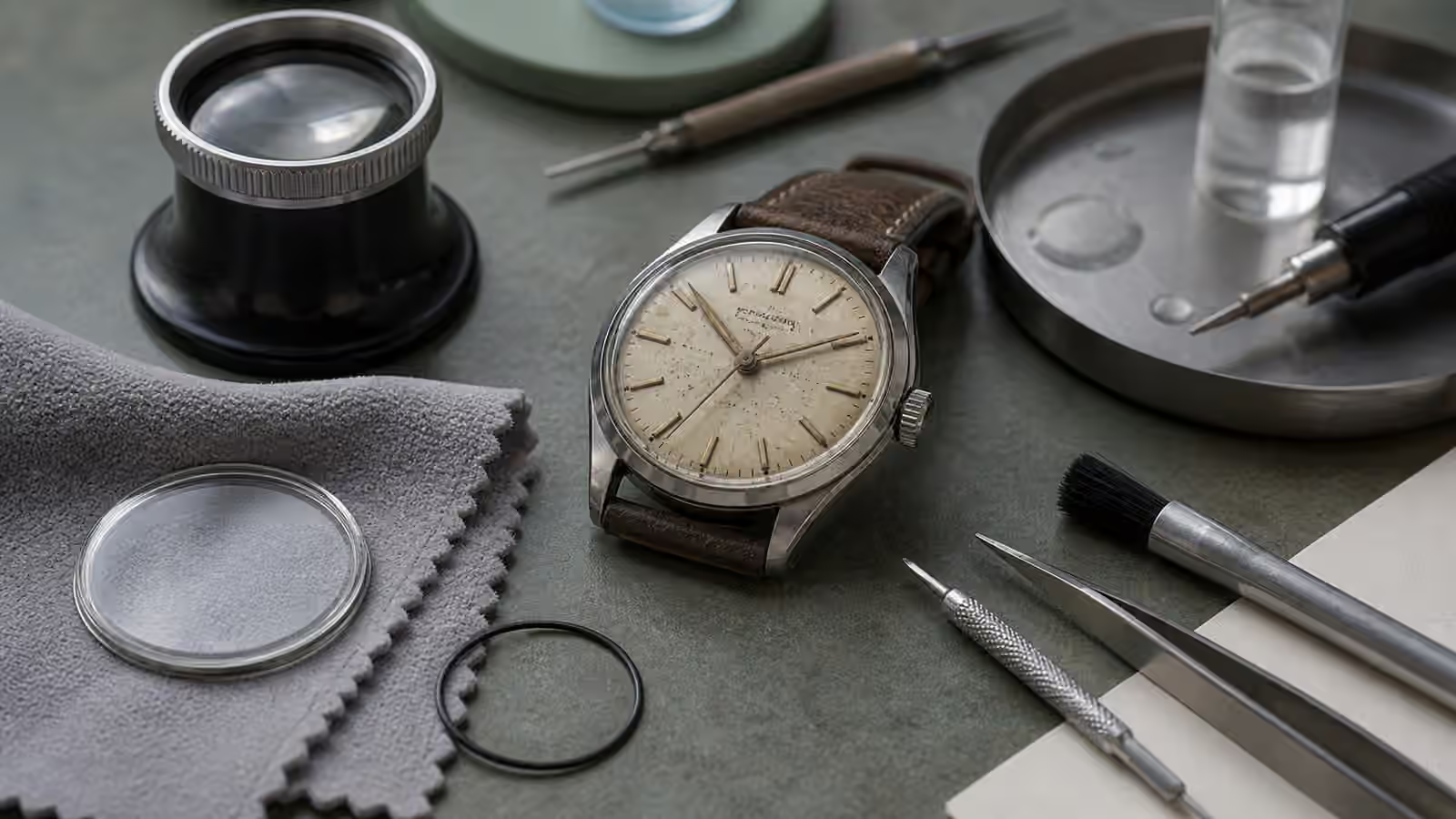
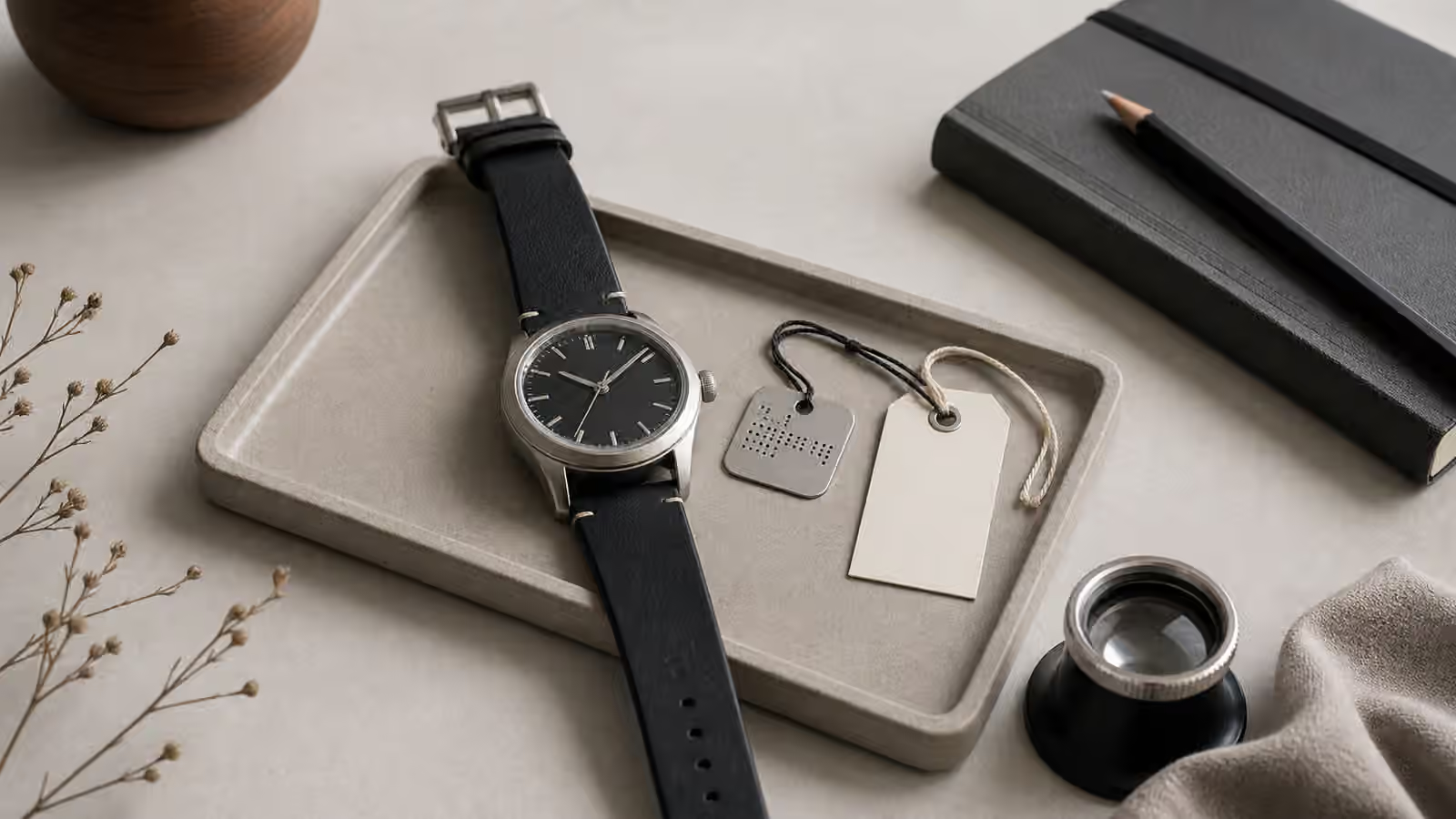
Vintage watches ask for a different kind of attention than modern watches. A new watch can often be judged against a current specification sheet. A vintage watch has lived a life. Its dial may have aged unevenly, the case may have been polished, the crown may have been replaced during service, the bracelet may have stretched, and the movement may have passed through several watchmakers. Those changes are not automatically bad. They are the object.
The challenge is separating attractive age from avoidable damage. Patina can be beautiful because it records time in a way no factory can reproduce. It can also become a polite word for moisture damage, neglect, mismatched parts, or seller optimism. The watch collector’s task is not to worship age. It is to read age clearly.
Patina is a description, not a verdict
Patina simply means the surface has changed with age. On a watch, that can mean cream-colored luminous material, a tropical dial that has shifted from black toward brown, softened print, light spotting, faded bezel color, or a case that has picked up small marks through years of wear. Some patina is prized because it is even, stable, and visually pleasing. Other patina is a warning because it points to moisture, corrosion, or poor storage.
The word becomes dangerous when it replaces judgment. A dial with light, even aging may be charming. A dial with bubbling, flaking lacquer, green corrosion around markers, and stains near the edge may be telling you that moisture entered the case. A faded bezel may be attractive. A cracked insert or missing pip may be a negotiation point. A warm lume tone can look wonderful. Powdery or crumbling lume can become a service problem.
Try to describe what you see before deciding whether you like it. Even color change, edge staining, hand corrosion, dial spotting, crystal crazing, polished lugs, bracelet stretch, and replacement crown are more useful phrases than good patina or bad patina. Specific language protects you from romance.
Originality and condition are not the same thing
A watch can be original and tired. Another watch can have replacement parts and be a better daily wearer. Collectors often talk as if originality is always the highest virtue, but ownership goals matter. A museum-minded collector may prize an untouched dial, correct crown, period bracelet, and unpolished case even if the watch needs careful wearing. A person who wants a vintage daily wearer may prefer a serviced movement, fresh crystal, secure crown, and reliable water-avoidance habits.
Originality means the parts belong to the watch as delivered or to the correct period of its life. Condition means the parts are healthy, attractive, and usable. Those qualities overlap, but they can conflict. A cracked original crystal may preserve charm while reducing daily practicality. A replacement crown may lower collector appeal but improve winding and sealing. A relumed dial may be less original but easier to read.
This is why Watch Collecting is worth reading before a serious vintage purchase. A collection needs a point of view. Without one, every listing can pull you in a different direction. Decide whether you care most about historical correctness, wearability, price, visual warmth, brand significance, or family-like sentiment. The same watch can look different under each lens.
The dial usually carries the biggest value question
On many vintage watches, the dial is the soul of the piece and the most value-sensitive part. Original dials with attractive aging can command strong premiums. Refinished dials may look clean but lose character and collector interest. Service dials can be perfectly legitimate, especially when installed by a brand or watchmaker, but they change the object from what left the factory.
Look carefully at printing, minute tracks, logo shape, marker alignment, and the relationship between dial and hands. A refinished dial may have printing that looks too thick, too thin, uneven, or slightly misplaced. It may use the wrong font or omit small text that should be present. On some watches the differences are subtle enough that you need reference photos from reliable examples.
Hands should make sense with the dial. Matching color is not a perfect test because hands and dial lume age differently, but an extreme mismatch deserves an explanation. Bright green-glowing hands on a dead, dark dial may signal replacement or relume. That may be fine if disclosed and priced honestly. It is less fine when sold as untouched.
Cases tell you how hard the watch has been corrected
Vintage cases deserve slow study. Edges soften with wear, but they also soften under polishing wheels. A lightly worn case can show scratches while keeping its original geometry. A heavily polished case may look shiny in photos while losing bevels, lug thickness, brushing lines, and the shape that made the watch distinctive. The case may still be genuine, but the character has changed.
Pay attention to lugs. Are they even? Are spring bar holes close to the edge because metal has been polished away? Do bevels remain where the model should have them? Does the bracelet sit neatly between the lugs, or are the end links loose and chewing at the case? Does the crown guard profile look like known examples?
Watch Case Materials and Finishing explains surface finishing in a modern context, but the same ideas apply here. Brushed surfaces, polished bevels, and crisp transitions are design information. When they disappear, the watch may become less collectible even if it still wears well.
Movement condition is less visible but more practical
A beautiful vintage watch can still be an expensive ownership problem if the movement is worn, corroded, missing parts, or poorly serviced. Movement photos help, but they are not always enough. A clean-looking movement can have dried lubricants or worn pivots. A dirty movement may still be restorable. The credibility of the watchmaker or seller matters.
Ask about service history in plain terms. When was it last serviced? Who did the work? Was the movement fully disassembled, cleaned, lubricated, regulated, and tested, or was it only checked? Were parts replaced? Are parts still available? Does the watch set, wind, and run consistently? Does the date change properly if it has one?
Your First Watch Service gives a useful feel for what happens at the bench. Vintage adds extra uncertainty because parts may be scarce and previous repairs may be unknown. A watch that needs service soon can still be a good purchase, but the price should leave room for that reality.
Water resistance should be treated as mostly historical
Vintage water resistance is one of the easiest places to make a costly assumption. The caseback may advertise a depth rating, and the model may have been built for water when new. Decades later, the seals, crown, tube, crystal, caseback, and case geometry may no longer support that promise. A vintage diver can look more aquatic than a modern office watch while being the worse choice for a pool.
The conservative habit is to keep vintage watches away from water unless a qualified watchmaker has inspected and pressure-tested the specific watch, and even then to understand that seals age. For many vintage pieces, the better decision is to preserve the watch as a dry-weather object. That is not fear. It is respect for old materials and old tolerances.
Watch Water Resistance in Everyday Life explains why water resistance is a maintained condition. Vintage watches add the complication of age and originality. A new crown and gaskets might improve security but reduce collector correctness. An original crown might preserve charm but make water avoidance non-negotiable.
Bracelet stretch and strap choices change the watch
Vintage bracelets can be wonderful because they complete the period feel of a watch. They can also be loose, stretched, sharp-edged, or too fragile for daily comfort. Stretch does not always mean abuse; decades of wear naturally loosen folded links and pins. Still, a bracelet that feels tired may need repair, replacement, or careful occasional use.
Do not let the bracelet distract from the watch head, and do not let the watch head make you ignore the bracelet. Original bracelets can add value, especially when they are correct and wearable. A damaged bracelet can become an extra project. A later strap may make the watch easier to enjoy, but it may not carry the same collector appeal as the original metal.
This is where Watch Straps and Bracelets becomes practical. Vintage watches often wear best when the strap respects the era, case size, and fragility of the lugs. A heavy modern bracelet on a delicate old case can feel visually and physically wrong. A thin leather strap may let the watch breathe.
Buy the example, not the dream
The most expensive vintage mistakes often begin with a dream version of the watch. The buyer wants the reference, the story, or the dial color so badly that the actual example becomes secondary. That is backwards. In vintage, the example is everything. Two watches with the same reference can differ wildly in originality, condition, service needs, and future satisfaction.
A calm vintage purchase should leave you able to describe the compromises. Maybe the case is polished but the dial is beautiful. Maybe the dial has spotting but the price is fair and the movement is recently serviced. Maybe the watch is not fully original but is honest, attractive, and wearable. The problem is not compromise. The problem is hidden compromise.
Let age be part of the appeal, but do not let it blur the evidence. Patina should invite closer looking, not easier believing. The right vintage watch does not have to be perfect. It has to be understandable.