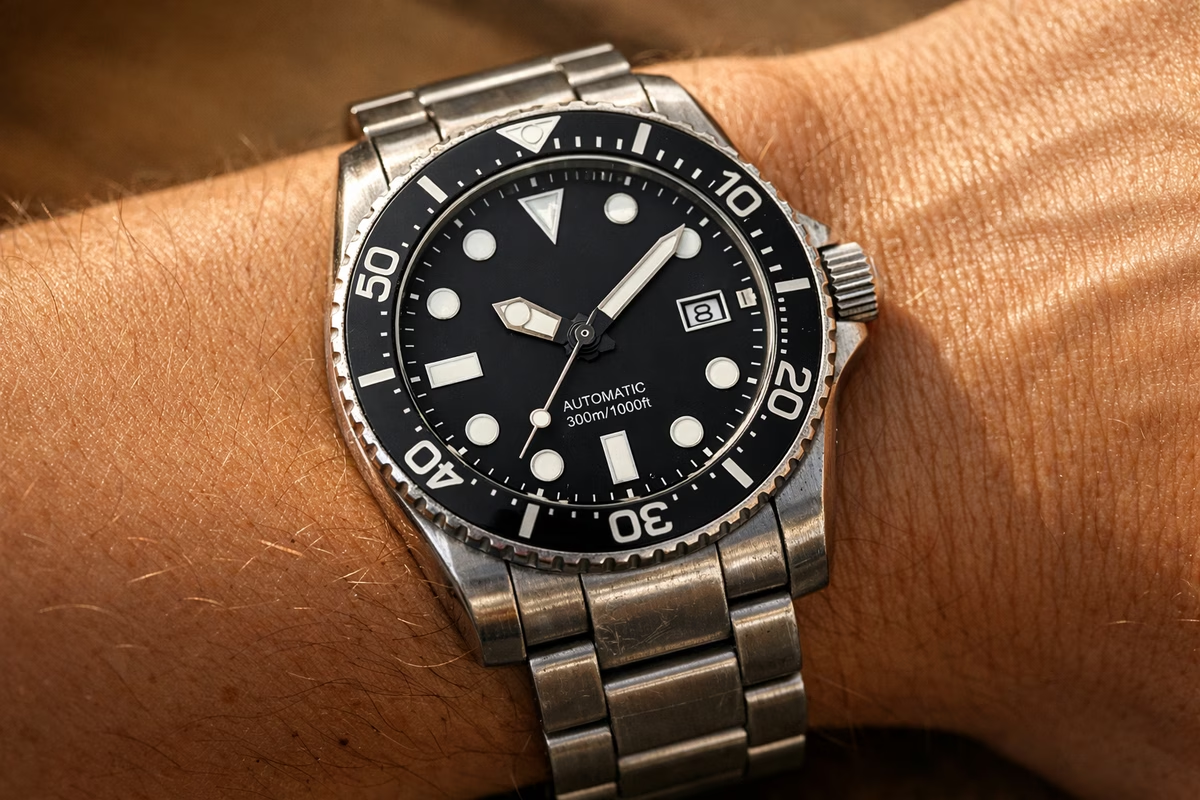
A watch is half object and half interface. The head can be beautifully engineered, but if the strap is wrong, the experience is wrong. The watch slides, pinches, feels top-heavy, or looks oddly proportioned. Many people assume that discomfort is “just how watches are.” Most of the time, it’s simply a strap and fit problem.
This guide treats straps and bracelets like what they are: the part that actually touches your life. You’ll learn how to choose materials based on how you wear the watch, how to size and balance a bracelet, and how to make a watch look deliberate rather than accidental.
The two questions that solve most strap choices
Before you get lost in leather names and buckle finishes, answer two questions.
1) What is the watch’s job?
Is it your daily watch? Your dress watch? A travel watch? A summer/swim watch? A “weekend beater”? The job determines the material more than taste does.
2) What is your comfort boundary?
Some people tolerate a watch moving around. Others hate it. Some prefer a tight fit, others prefer air. Knowing your own comfort preference makes the decision faster and cheaper.
Lug width: the number you must get right
Your watch has a lug width (commonly 18mm, 20mm, 22mm). That’s the strap width where it meets the case.
Buy the correct width. A strap that’s too narrow leaves visible gaps and looks uneasy. A strap that’s too wide will be forced in and can damage the strap or lugs.
If you’re not sure, look up the model specs or measure with a caliper. Once you know the lug width, you’ve unlocked the entire strap ecosystem.
Bracelet vs. strap: the trade that matters
Bracelets
A good bracelet makes a watch feel like a single, integrated object. It distributes weight, stays stable through the day, and often offers the best long-term durability. A well-made clasp and solid end links are not just “nice”—they’re the difference between a watch that feels secure and one that feels like it’s constantly shifting.
The downside is emotional, not functional: bracelets are less expressive than straps. They’re also harder to fit perfectly if the bracelet has limited micro-adjustment.
Straps
Straps are the easiest way to change the personality of a watch. They also solve fit problems because holes offer discrete sizing in a way some bracelets don’t.
The downside is that straps wear out. Leather is a consumable. Rubber degrades. Fabric frays. That’s not failure; it’s the lifecycle.
Materials, explained like you actually wear them
Leather
Leather is the default “nice” option because it reads warm and intentional. But leather is not one material; it’s a spectrum of feel and durability.
A smooth calf strap feels dressy and refined, but it will show wear quickly if you sweat or wear it daily. Suede and nubuck look soft and elegant, but they are poor choices for rain and summer. Shell cordovan can be remarkably durable and develops character, but it’s stiffer and often more expensive.
If you want one piece of advice: don’t buy your first nice leather strap too thick. A thick strap can make a refined watch feel clumsy and can fight the case profile. In many situations, a thinner strap looks more expensive because it respects proportion.
Rubber
Rubber is the comfort king in heat. It’s the strap you wear when you want the watch to disappear. Good rubber is flexible without feeling gummy, and it cleans easily.
Rubber also has the highest “honesty factor”: it doesn’t pretend the watch is dressy. It says, clearly, “this is for wearing.” That can look fantastic even on watches that aren’t dive watches.
Fabric (NATO / single-pass)
Fabric straps are forgiving, adjustable, and comfortable. They can also make a watch sit taller on the wrist because the strap passes under the case. On thicker watches, that added height can feel bulky.
Fabric is a great way to make a watch feel casual and outdoors-ready. It’s also a smart travel strap: it’s light, easy to clean, and if a spring bar fails, many single-pass setups still keep the watch attached.
Canvas and sailcloth
Canvas and sailcloth sit between fabric and rubber in vibe: sportier than leather but more structured than NATO. They work well for everyday watches when you want texture and durability.
Metal bracelets (steel, titanium)
Steel bracelets feel solid and “finished.” Titanium bracelets can be extremely comfortable because they’re light, though they can scratch in a different way than steel.
Bracelet quality is mostly felt in three places: how the links articulate, how sharp the edges are (or aren’t), and whether the clasp gives you meaningful adjustment.
Fit: how a watch should sit on the wrist
A comfortable fit is stable but not tight. The watch should not rotate around your wrist during normal movement, but it should also not leave deep marks or trap sweat.
For bracelets, the ideal is usually “snug enough that the head stays centered.” If your watch head constantly slides toward the underside of your wrist, the bracelet is either too loose or too top-heavy for that case size on your wrist.
For straps, the ideal hole is the one that feels secure without turning your wrist into a pressure test. If you’re between holes, consider a strap with more hole density or a different buckle arrangement rather than just tolerating discomfort.
Micro-adjustment is not a luxury; it’s a comfort feature
Wrist size changes during the day with temperature, hydration, and activity. That’s normal. A bracelet that fits perfectly in the morning can feel tight by afternoon.
If your bracelet has micro-adjustment, use it. If it has a quick-adjust clasp, that feature is not “for divers.” It’s for humans.
If your bracelet has no meaningful adjustment and you can’t get it comfortable, it’s not you. It’s the bracelet design.
Proportion: how to make a strap look like it belongs
Strap choices can change the perceived size of a watch.
A strap with taper (for example, 20mm at the lugs tapering to 16mm at the buckle) tends to look refined. It also reduces visual bulk and can make a watch feel dressier. A strap with little taper reads sportier and can make the watch feel more substantial.
Thickness matters too. A thick strap can make a small watch look tougher, but it can also look mismatched if the case is slim. As a rule: thinner watch, thinner strap.
Color is the quiet power move. Black leather is formal. Brown leather is friendly. A warm tan strap can make a watch feel vintage even if it’s modern. Dark green can be subtle and surprisingly versatile.
If you want one beginner-safe choice: a medium-brown leather strap with a gentle taper works with more watches than you’d expect.
Spring bars, tools, and not scratching your lugs
You don’t need a workshop, but you do need respect for the case.
Use the correct spring bar size and a decent tool. Work over a soft surface. Tape the lugs if you’re nervous. The goal is not speed; it’s control.
If you find yourself forcing a strap in, stop. Misaligned spring bars can slip and gouge the inside of lugs. That’s the most common DIY strap-change regret.
Care: making straps last (and aging them well)
Leather hates salt and moisture. If you sweat heavily, rotate straps. Let leather dry fully between wears. Wipe it down lightly after use. If it gets soaked, dry it slowly at room temperature—never with direct heat.
Rubber and fabric love water, but they do collect skin oils. Wash them occasionally with mild soap and water. Let them dry fully.
Bracelets pick up grime between links. A soft toothbrush and warm soapy water can make an old bracelet feel new, but avoid water if you’re unsure about the watch’s water resistance.
A practical strap strategy (so you don’t buy a drawer)
You don’t need fifteen straps. You need a small set that covers your life.
A strong three-strap setup for many people is:
- One comfortable daily option (rubber or bracelet)
- One “smart casual” option (brown leather)
- One easy travel/weekend option (fabric)
Once you have that, you can explore taste. But you’ll be exploring from a stable foundation—your watch will already wear well.
If you want deeper guidance on choosing a first watch and building a small, wearable collection, start with the buying framework, then return here when you’re ready to make the watch feel truly yours.