My grandfather was not a watch person. He didn’t collect, he didn’t polish, and he didn’t care about movements or complications or the difference between a chronograph and a chronometer. He wore one watch for thirty years, took it off to sleep, and put it back on in the morning. That was his entire watch philosophy.
When he passed, we divided things the way families do: carefully, slowly, with occasional disagreements that felt important at the time and didn’t later. The house was full of meaningful objects—a workbench, a library card collection, a set of tools older than any of us.
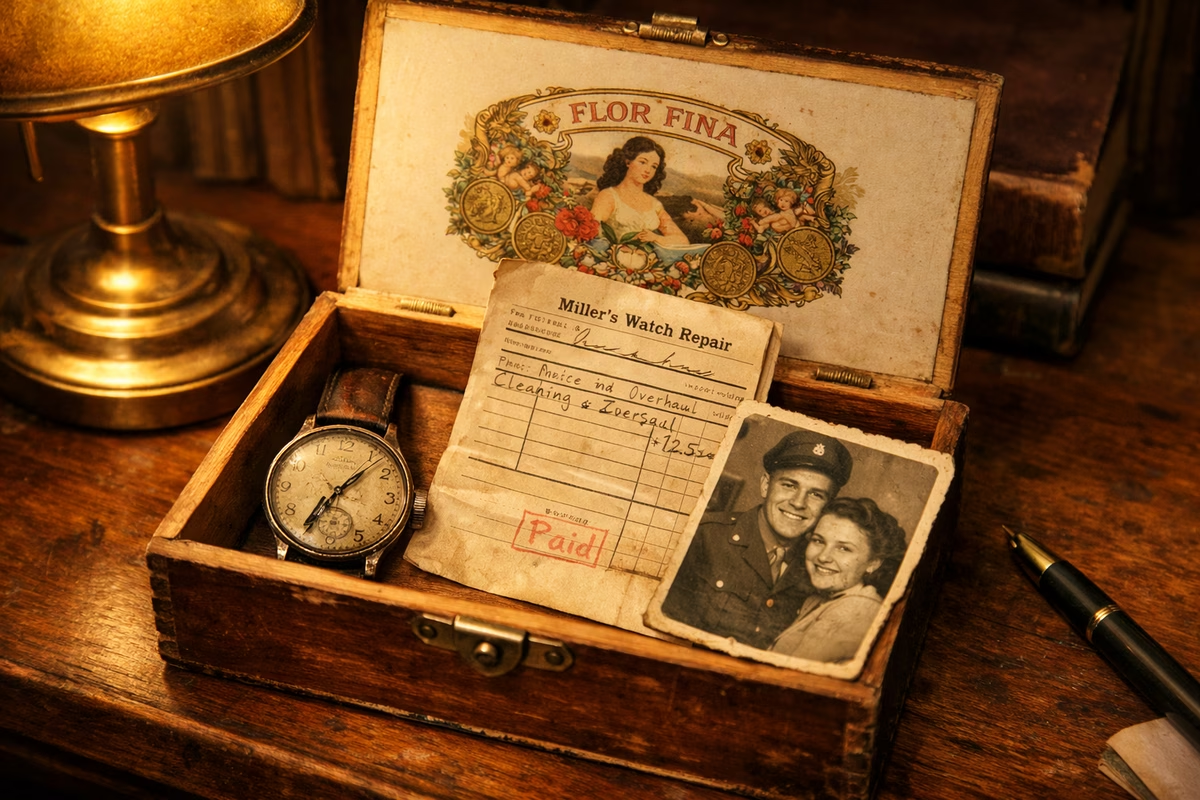
The watch was in a cigar box in his bedside drawer. Underneath it was a single service receipt from 1987 and a note in his handwriting that said, “Runs two minutes fast per week. Good enough.”
I took the cigar box home.
This is the story of what I learned when I decided to wear it—and the guide I wish someone had handed me before I started.
First: don’t rush to fix anything
The watch didn’t work when I got it. The crown turned, but the second hand didn’t move. The crystal had a scratch that caught light in a way I found privately beautiful, and the leather strap had dried to the color of old paper.
My first instinct was to take it to a jeweler and say “fix everything.” A friend who restores watches stopped me.
“Before you change anything,” he said, “decide what you’re trying to preserve.”
That question mattered more than I expected.
The restoration spectrum
Inherited watches exist on a spectrum, and where you land on it is a personal decision:
Full restoration: Replace the crystal, refinish the case, re-lume the dial, install a new crown, service the movement, put it on a new strap. The watch looks and runs like new. But it no longer looks like his watch.
Sympathetic service: Service the movement (clean, oil, regulate), replace the strap, but leave the case, crystal, and dial as they are. The watch runs reliably but keeps its lived-in character.
Museum preservation: Clean it gently, don’t service it, display it in a case. This protects the watch from further wear but means you can’t wear it.
There’s no right answer. But the decision should be conscious, not default.
Understanding what you have
Before taking the watch anywhere, gather what information you can.
The basics to identify
Brand and model. Check the dial for a name. Check the caseback for model or reference numbers (often engraved or stamped). These are the starting points for any research.
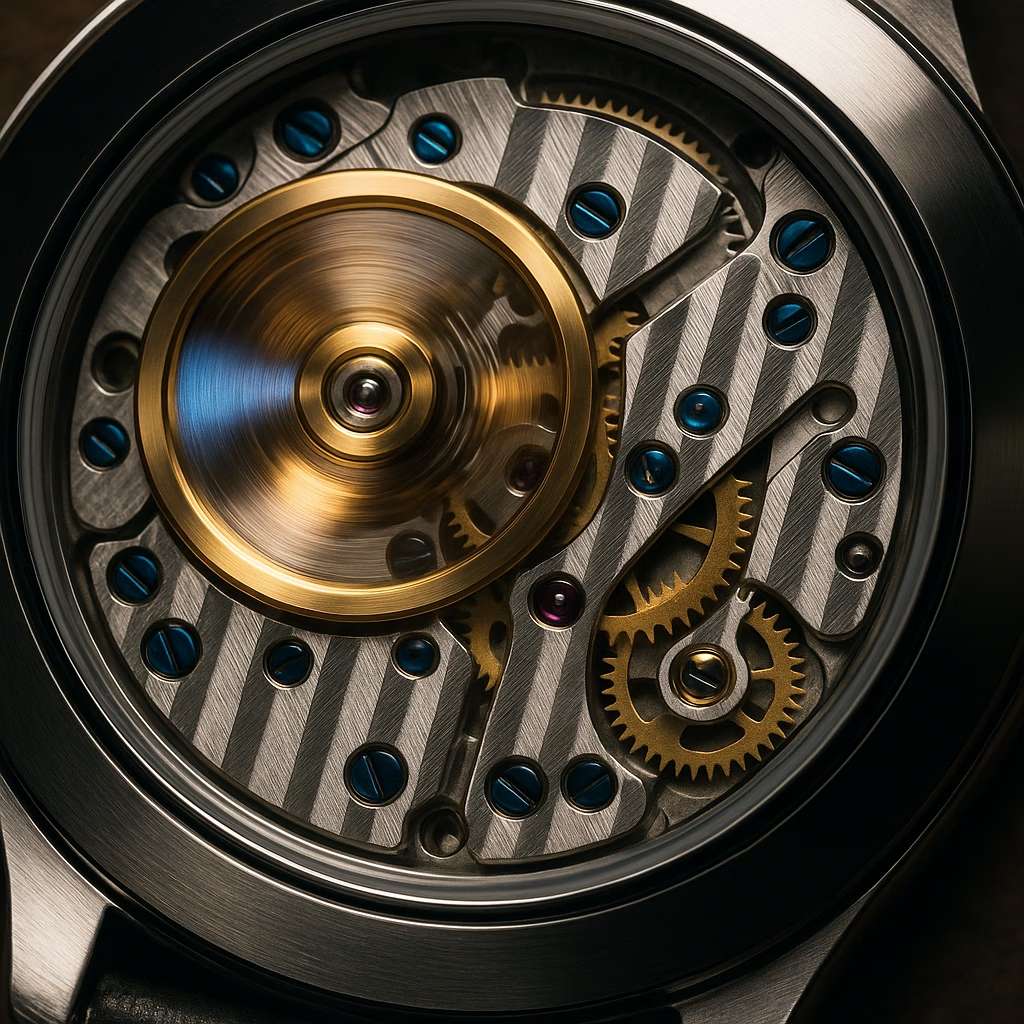
Movement type. If you can see through the caseback (some have transparent backs), note whether it’s automatic (has a rotor) or manual wind. If you can’t see in, don’t force the caseback open—a watchmaker will do this safely.
Case material. Gold, steel, gold-plated, or base metal. A magnet test helps: if a magnet sticks to the case, it’s likely steel or base metal. Gold and gold-plated won’t attract a magnet.
Condition notes. Write down (or photograph) every scratch, dent, patina mark, and wear pattern before you do anything. This is your baseline. You might want to preserve some of these character marks later.
Common inherited watch types
| Era | Common Styles | What to Expect |
|---|---|---|
| 1940s–1950s | Dress watches, military-style field watches | Small cases (32–36mm), manual wind, often gold or gold-plated |
| 1960s–1970s | Chronographs, dive watches, tonneau cases | The golden age of design; many now highly collectible |
| 1980s–1990s | Quartz watches, sporty styles | May need a battery replacement; less romantic but often excellent quality |
| 2000s–present | Modern automatics, homage watches | Likely needs only a basic service |
Finding the right watchmaker
This is the most important decision in the process. A good watchmaker treats inherited watches with the respect they deserve. A bad one can damage what makes the watch special.
What to look for
- Independent watchmaker over a mall kiosk. Certified watchmakers (AWCI in the US, BHI in the UK) with their own workshops are your best bet.
- Experience with your watch’s era. A watchmaker who specializes in modern Rolex servicing may not be the right person for a 1950s Longines.
- Willingness to discuss your goals. A good watchmaker will ask what you want to preserve before proposing any work.
- Transparent pricing. Get a written estimate before authorizing work. A basic service (clean, oil, regulate) for a simple manual-wind watch typically costs $150–$400. Complications cost more.
Red flags
- Suggesting a full dial refinish without asking your preference
- Replacing original parts without showing you the originals
- Inability to explain what they’ll do and why
- No written estimate
The service: what actually happens
A standard watch service involves:
- Disassembly. The watchmaker takes the movement apart completely—every wheel, spring, jewel, and screw.
- Cleaning. All parts go through an ultrasonic cleaning process to remove dried oils and debris.
- Inspection. The watchmaker examines each component for wear, damage, or corrosion. Worn parts are replaced.
- Reassembly and oiling. The movement is rebuilt with fresh lubricants at every friction point. This is the skill that defines a good watchmaker.
- Regulation. The watch is tested in multiple positions and adjusted to keep accurate time. For a vintage watch, ±15 seconds per day is realistic and fine.
- Case and crystal work. If requested: crystal replacement, gasket replacement, case polishing (gentle).
Total time: typically 2–6 weeks, depending on the watchmaker’s backlog and parts availability.
Choosing a strap
The strap is the part of the watch that touches your skin, and it’s the easiest way to make an inherited watch feel like yours.
Strap styles that work with vintage watches
Leather: The classic choice. A new leather strap in a color that complements the dial breathes life into a vintage watch without changing its character. Dark brown, tan, and burgundy are versatile choices.
NATO strap: A single piece of nylon that threads under the watch. Casual, durable, and it protects the caseback from scratches. It adds a modern, relaxed feel to a vintage piece.
Mesh bracelet: A stainless steel mesh band gives a vintage watch a mid-century look. It’s comfortable, adjustable, and works with both dress and field watches.
Original bracelet (if available): If the watch came with its original bracelet, keep it even if you don’t wear it. Original bracelets add significant value and historical completeness.
Wearing it: the emotional part
The first time I put my grandfather’s watch on my wrist, it felt too loose. His wrists were larger than mine. The watch hung at an angle that would have bothered him—he was precise about small things.
I had the strap shortened by one hole. It fit.
And then something unexpected happened: I started noticing time differently. Not checking my phone for the hour—glancing at my wrist the way he used to. The gesture was inherited along with the watch.
Making it part of your life
An inherited watch doesn’t have to be a museum piece. If it’s been properly serviced, wear it. Not every day if you don’t want to—but enough that it stays wound, stays oiled, and stays part of your story instead of sitting in a drawer.
Some practical guidelines:
- Wind it regularly if it’s manual wind. A watch that sits unwound for years will need service sooner.
- Avoid water unless you’ve confirmed the gaskets are fresh and the watch has been pressure-tested.
- Store it properly when not wearing it: in a watch box or soft pouch, away from magnets and extreme temperatures.
- Wear it to things that matter. Weddings. Graduations. Dinners where you’d want him at the table.
The ending: the note inside the box
After the service, after the new strap, after wearing the watch for a month, I went back to the cigar box. I’d taken everything out but hadn’t looked closely at the lining.
Underneath the felt, tucked against the bottom, was a second note. Same handwriting, different ink.
“This watch has been on my wrist for every important day of my life. If you’re reading this, it’s yours now. Take it to someone who knows what they’re doing. Wind it on Sundays. Don’t worry about the scratch.”
I didn’t worry about the scratch.
Some things are more accurate than time.
Next steps
- Read the Care Guide for daily maintenance that keeps an inherited watch running
- Explore Movements to understand what’s ticking inside
- See the Buying Guide if inheritance inspires you to start your own collection
- Try the Secondhand Watch Hunt for finding vintage watches with similar character