The first time someone tells you your watch “needs a service,” it can feel vaguely insulting.
The watch is still ticking. The hands are still moving. It’s still doing the only job you hired it to do.
So why does it need anything?
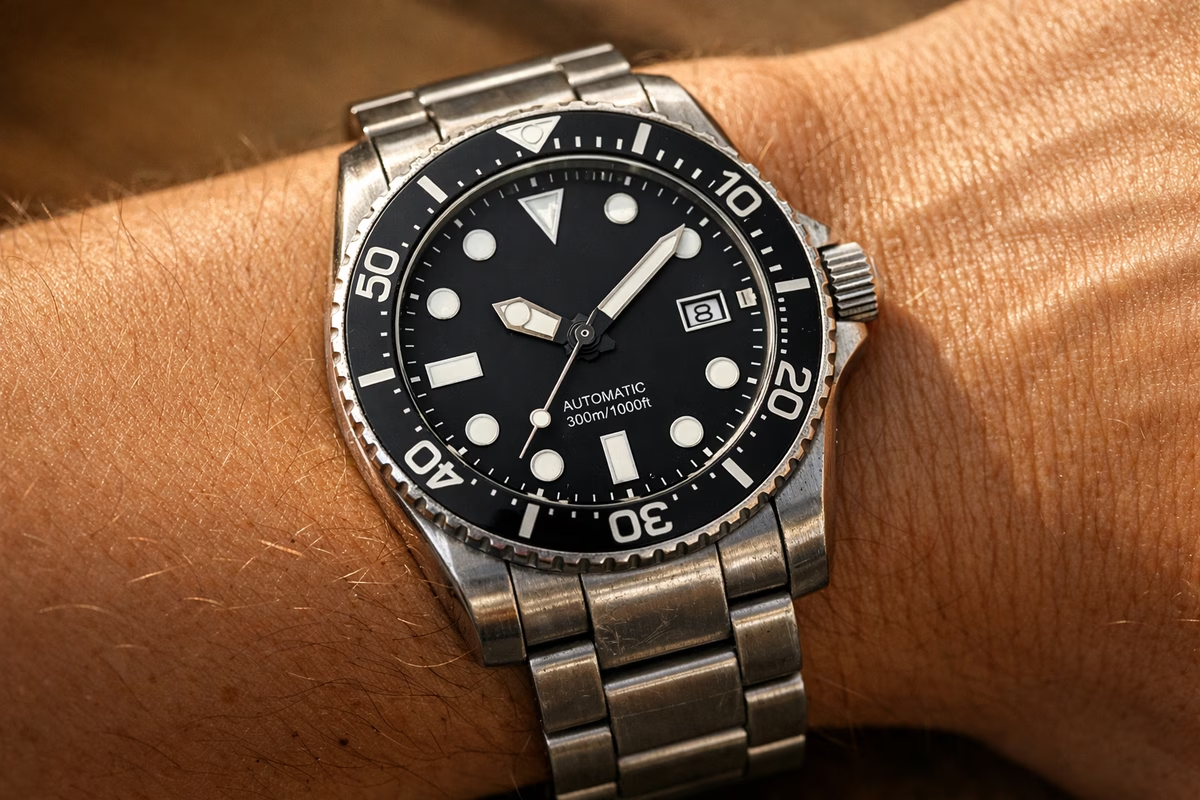
I had that reaction with a daily-worn automatic I loved. It wasn’t rare. It wasn’t a safe queen. It was the watch I grabbed when I wanted to feel put together—steel bracelet, simple dial, the kind of design that quietly survives trends.
One day it started running fast. Then, a week later, it started running slow. Then the power reserve felt shorter, as if the watch was getting tired. I did what people do when they don’t want to face a real solution: I searched for an easy fix.
Maybe it was magnetized. Maybe I bumped it. Maybe the weather.
Eventually I walked into a watchmaker’s shop.
The watchmaker didn’t shame me. They didn’t romanticize it either. They just said something that instantly reframed the problem:
“Watches don’t fail like lightbulbs. They drift. They wear. They get dirty inside.”
That’s what a first service teaches you. Not fear—mechanical reality.
What a service actually is (and why it costs what it costs)
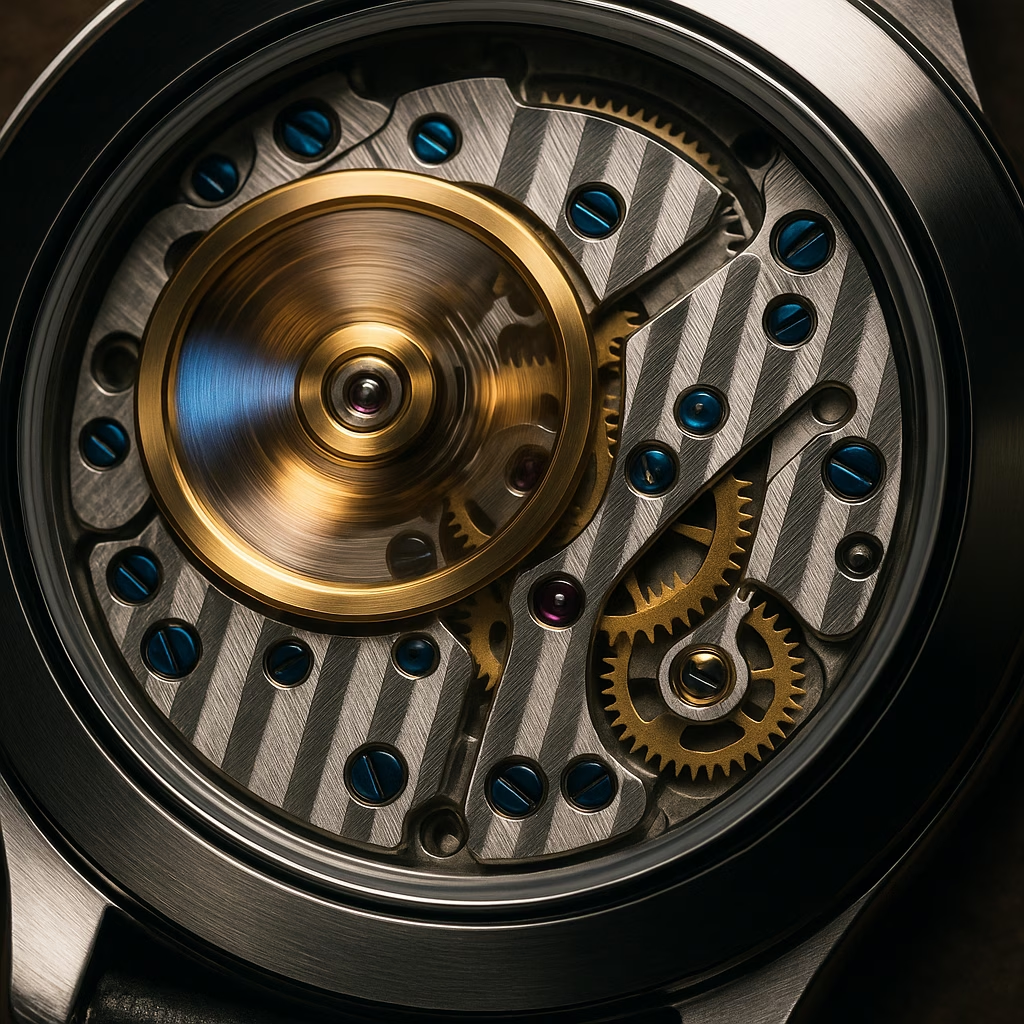
A mechanical watch is a small machine running on friction and tiny amounts of oil.
Over time:
- oils break down or migrate
- dust and wear particles accumulate
- seals age and water resistance becomes uncertain
- impacts and magnetization can shift performance
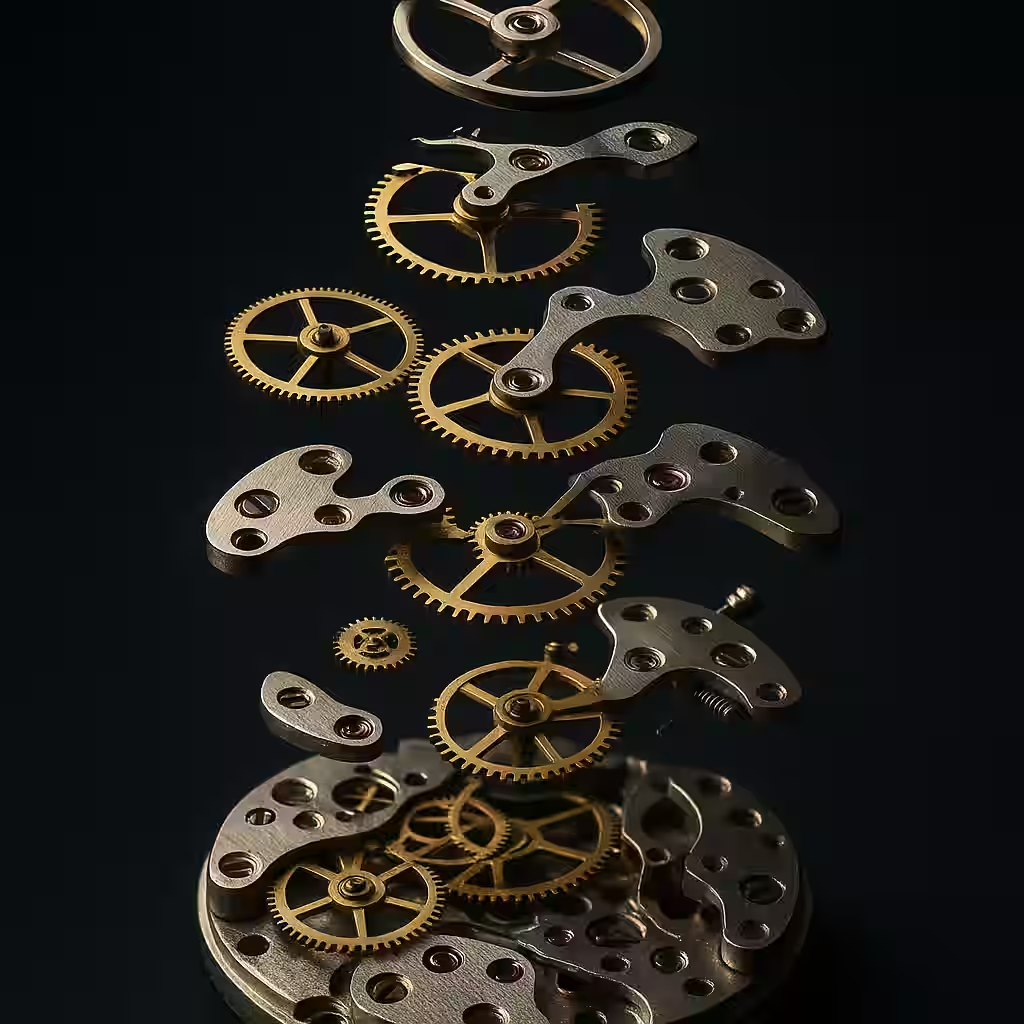
A proper service is not “spraying something inside.” It’s disassembly, cleaning, inspection, lubrication, reassembly, regulation, and often new seals.
You are paying for time, skill, and accountability.
That’s why a good service can feel expensive. It’s not a casual task. It’s a rebuild.
When you actually need a service (without paranoia)
People hear “service every 5 years” and treat it like a law.
A better approach is to watch for symptoms and context.
You likely need attention if:
- the watch suddenly gains/loses minutes per day (magnetization is a common cause)
- power reserve drops noticeably
- the watch becomes inconsistent in different positions
- the crown feels rough or resistant
- moisture appears under the crystal (urgent)
You also need to think about service if:
- you bought the watch used with unknown history
- it’s a water-exposed daily watch and you care about water resistance
For the full framework, Watch Care & Maintenance is the technical companion.
The first-service decision: brand service center vs independent watchmaker
This is where people get stuck.
Brand service centers offer:
- factory parts access
- documented procedures
- official warranty on the service
Independent watchmakers often offer:
- more direct communication
- flexibility (especially for vintage)
- sometimes lower cost
- sometimes more preservation-minded choices
Neither is automatically “better.” The right choice depends on the watch and your goals.
If your watch is modern, common, and you want official paperwork, the brand route can be comforting.
If your watch is older, has sentimental value, or you care about preserving original parts and finish, a good independent watchmaker can be the best ally you’ll ever hire.
The questions that make a service feel calm
A service becomes stressful when the process is vague.
So you want clarity up front.
Ask:
- “Do you do a full disassembly and cleaning?”
- “Will you replace seals and pressure test if appropriate?”
- “Will you call before replacing visible parts like hands, dial, bezel?”
- “What’s the estimate range and what would change it?”
- “What warranty do you provide on your work?”
The best watchmakers answer calmly and specifically.
The hidden mistake: confusing polishing with service
A service is internal. Polishing is external.
Polishing removes metal. It can soften case geometry and permanently change how the watch looks.
Sometimes polishing is fine. Sometimes it’s exactly what you don’t want.
The important move is to be explicit:
If you want the watch to keep its character, say so.
A good shop will respect that.
The ending: the watch that came back feeling like itself
When I picked up my watch after its first real service, it didn’t feel “new.” It felt right.
The crown turned smoothly. The timekeeping stabilized. The watch regained the quiet confidence that made it a daily companion in the first place.
That’s the emotional lesson of servicing: you’re not paying to keep a watch perfect. You’re paying to keep it wearable.
A watch is a machine you carry through your life. Maintenance is part of that relationship.
And once you do it once, it stops being intimidating.
If you want to go deeper on ownership habits after this story, read Care and Movements.