I remember the first time I understood an automatic watch.
I was 26 and standing in my grandfather’s study with the watch he left me. It was a plain steel watch with a cream dial. It had sat in a drawer for months. When I picked it up, the second hand was still.
My father showed me how to bring it back to life. “Put it on,” he said. “Move your wrist.”
I did. An hour later, the second hand was sweeping around the dial. The watch had woken up because I had moved. My motion wound a rotor inside the case, the rotor tensioned the mainspring, and the watch started running.
That was the moment it made sense to me.
I still own quartz watches. They are more accurate and easier to live with. But I keep coming back to the automatic. A watch that runs on motion feels different on the wrist.
How an automatic watch works
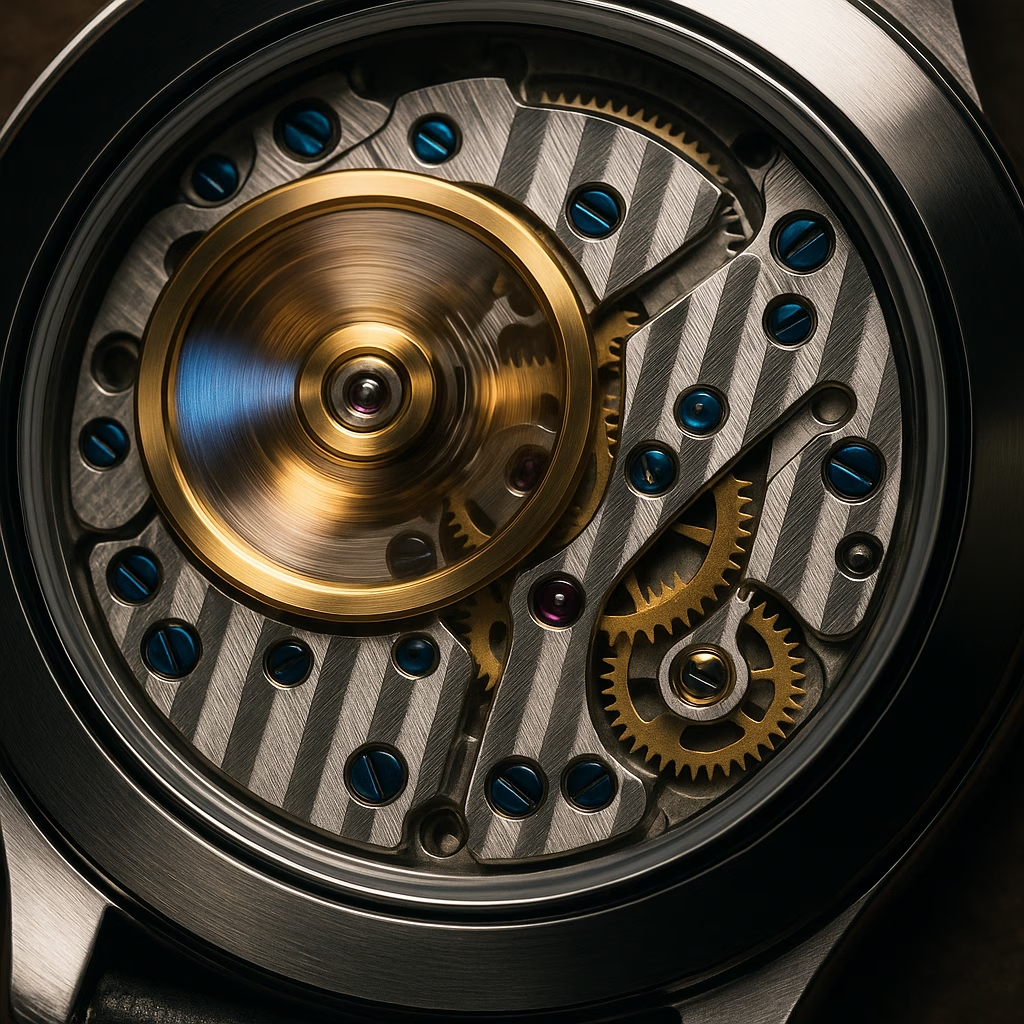
Every automatic watch uses the same basic system.
The mainspring stores energy in a coiled strip of metal.
The gear train moves that energy through the watch.
The escapement releases the energy in small steps.
The balance wheel swings at a steady rate and keeps time.
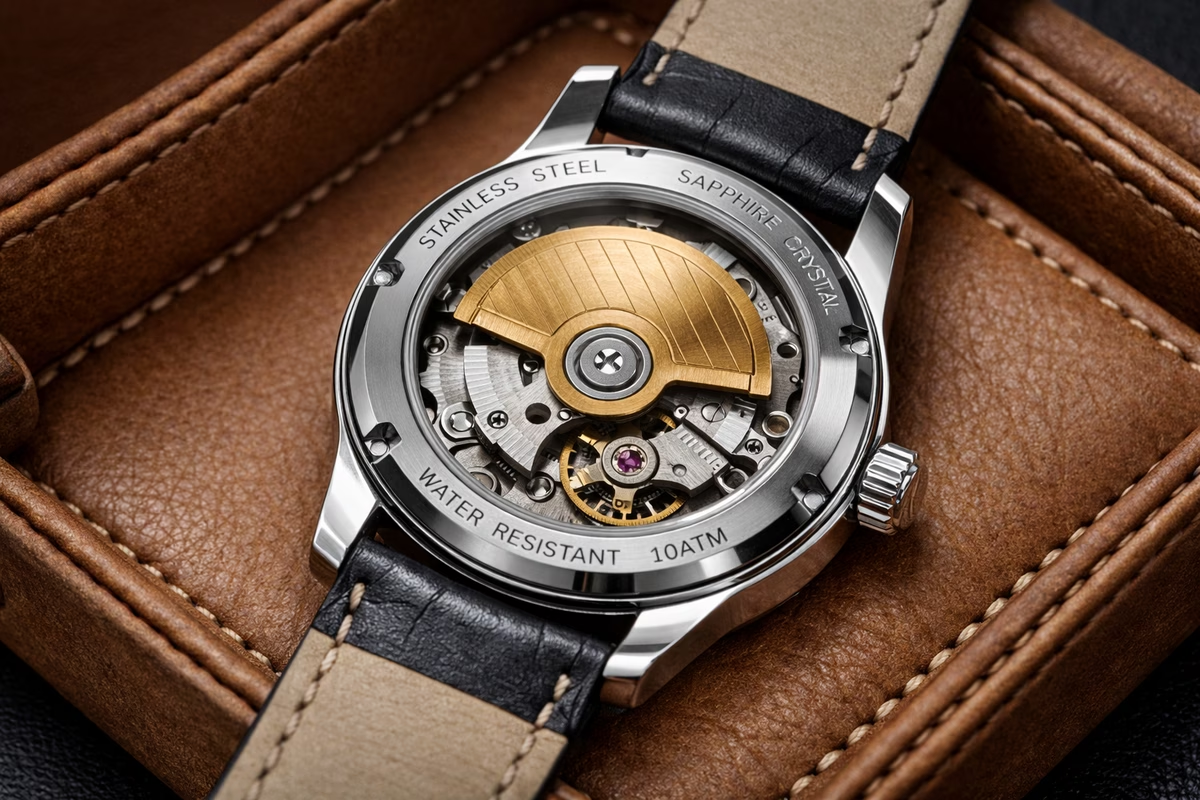
The rotor is the part that makes the watch automatic. It spins when you move your wrist and winds the mainspring.
Automatic (self-winding): Has a rotor. Winds from wrist movement. Can also be wound by hand.
Manual wind (hand-wound): No rotor. You wind it with the crown.
Both are mechanical. Neither uses a battery. The difference is how the mainspring gets wound.
Why mechanical when quartz is better (on paper)
This is the question people ask a lot, and the honest answer is that quartz is better by most measurable standards:
| Quartz | Mechanical | |
|---|---|---|
| Accuracy | ±15 seconds/month | ±5 seconds/day |
| Price for good quality | $50-$500 | $300-$50,000+ |
| Maintenance | Battery every 2-5 years | Service every 5-10 years ($200-$800) |
| Durability | Very resilient | Sensitive to shocks and magnetism |
So why choose mechanical? Because the experience matters.
A mechanical watch is a tiny engine on your wrist. It has springs, gears, jewels, and screws working together to keep time. When you hold it to your ear, you hear the movement ticking away.
The sweep matters too. A mechanical second hand moves in a smooth line instead of one hard tick at a time.
The power reserve question
Every automatic watch has a power reserve, which is how long it runs after being fully wound. Modern automatics usually have 40 to 80 hours. Some last longer.
What this means in practice:
- If you wear your watch daily, the rotor keeps it wound.
- If you take it off for the weekend, a short reserve may run out.
- If you rotate between watches, you may need to reset the time each time.
The practical advice: For your first and only automatic watch, 40+ hours is fine because you’ll wear it daily. If you plan to collect multiple watches, look for 60-80 hour power reserves so weekend breaks don’t kill the movement.
- Wind it by hand when you first wear it. A few turns gets it started.
- Do not worry about overwinding. Modern automatics stop that from happening.
- Set the time with the crown. Push it back in when you are done.
- Small daily drift is normal. If it is far off, it may need regulation.
- Keep it away from magnets. Laptops, speakers, and chargers can cause problems.
The accuracy conversation
If it loses a few seconds a day, that is normal. You do not buy mechanical for accuracy. You buy it for the feel, the craft, and the movement.
If you need exact time, wear quartz. If you want the machine on your wrist, wear mechanical.
What to look for in your first automatic
Budget tier ($150-$500):
- Seiko Presage: The best value in automatic watches. Beautiful dials, reliable 4R/6R movements, excellent finishing for the price.
- Orient Bambino: A dress watch classic. In-house movement, elegant design, remarkable for under $200.
- Tissot PRX Powermatic 80: Modern design, 80-hour power reserve, Swiss movement. A versatile daily wearer.
Mid-range ($500-$2,000):
- Hamilton Khaki Field: A rugged, versatile watch with strong heritage and excellent Swiss movements.
- Longines Conquest: Refined, well-finished, and from one of the oldest Swiss watch companies.
- Mido Baroncelli: Thin, elegant, and equipped with movements that punch above their price.
Entry luxury ($2,000-$5,000):
- Tudor Black Bay: Rolex’s sibling brand. In-house movement, excellent build quality, strong resale.
- Omega Seamaster: Iconic design, METAS-certified movements, robust water resistance.
- Grand Seiko (Spring Drive): Technically a hybrid (uses a mainspring but electronic regulation), offering quartz-level accuracy with mechanical soul.
The universal advice: Try watches on your wrist before buying. A watch that looks perfect online may feel wrong on your arm. Size, weight, thickness, and how the strap sits all matter more than specifications.
The inheritance question
A quartz watch lasts until the electronics fail. A mechanical watch can last much longer if it is serviced.
My grandfather’s watch is a plain Seiko automatic from the 1970s. It was serviced once in the 1990s. When I got it, a watchmaker cleaned and oiled it for $180.
That is the difference. A quartz watch tells you the time. A mechanical watch also carries a story.
Next steps
- Read Quickstart Guide for the foundational watch knowledge
- Explore Movements for the full technical breakdown of watch mechanisms
- See Watch Brands for the landscape of manufacturers
- Read Buying Guide for practical purchasing advice
- Check Care Guide for keeping your automatic running beautifully