
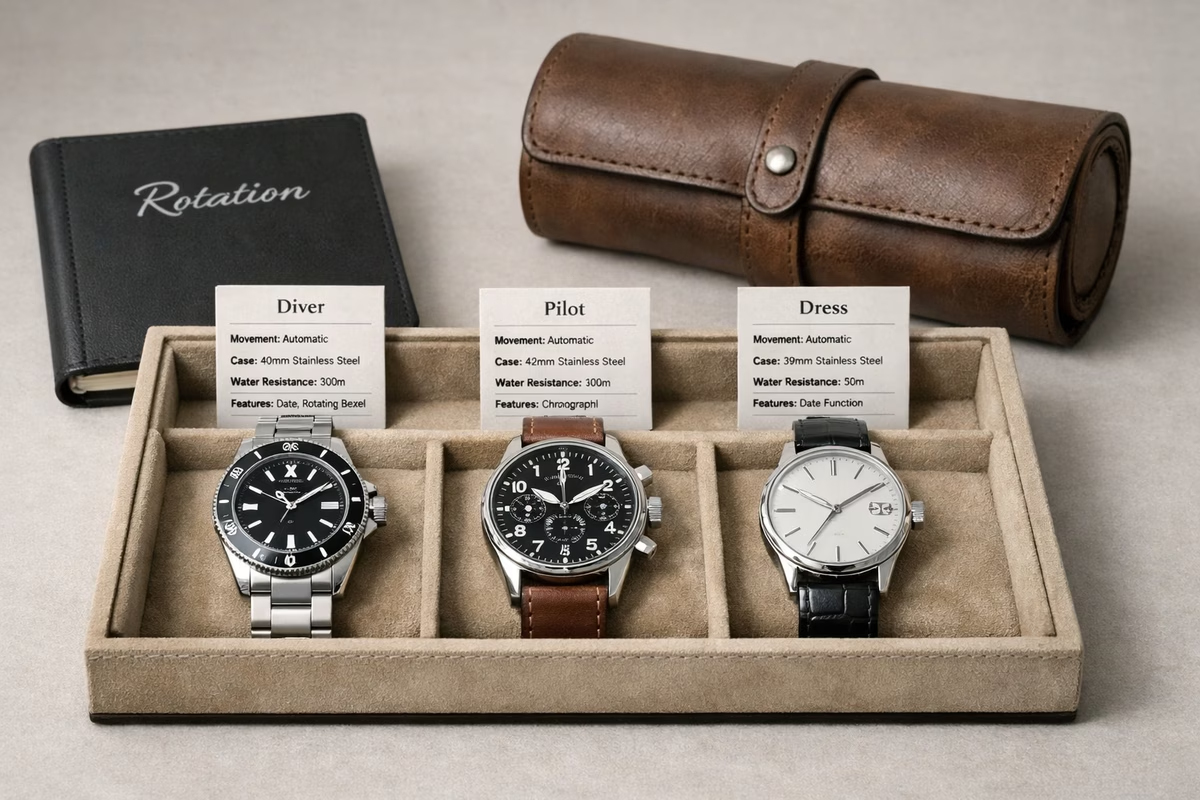
Watch Collection Strategy
Building a watch collection is personal. Strategy just means avoiding obvious mistakes like buying the same watch three times, paying for features you never use, or filling a drawer with watches you feel bad about wearing.
Think of watches like shoes. One pair can be enough. A small set makes more sense if you want one watch for dressier moments, one for daily wear, and one for rough use or travel.
The Fundamental Question
How many watches do you actually need?
The honest answer: One great watch can do almost everything.
The collector’s answer: As many as bring you joy and fit your budget.
The strategic answer: Three watches cover most lives. Five covers most hobbies.
The One-Watch Collection
Philosophy
If you could only own one watch, you want a default watch. It should be easy to wear and not punish you for living a normal life. It does not need to be perfect at everything. It needs to work for your life.
Requirements for a One-Watch Wonder
In practice, a one-watch pick works when it balances three things: versatility, comfort, and a bit of pull. You should like it enough to wear often, and it should be sturdy enough that “often” does not feel risky.
Aim for:
- Comfort you can forget about (size, thickness, weight)
- Practical water resistance (100m+ is a good target)
- A dial you can read quickly
- A look that doesn’t fight your wardrobe
Avoid:
- Pure dress watches (too fragile and too specific)
- Very thick “extreme” divers (hard to wear with sleeves and formalwear)
- Complications you won’t use (they add cost and thickness, not happiness)
The Best One-Watch Candidates
The best one-watch category is the GADA watch, short for go anywhere, do anything. It should be sporty enough for daily wear and plain enough for dinner or a blazer. The exact model matters less than the idea.
Examples that anchor the spectrum (not a checklist you must follow):
- Sporty-elegant icons: Rolex Explorer, Omega Aqua Terra, many Grand Seiko sport models
- “Diver-but-versatile” picks: Tudor Black Bay 58 (if you’re comfortable with a thicker case)
- Value leaders: Hamilton Khaki Field Auto, well-sized Seiko Prospex models, Citizen Eco-Drive sport watches
If you want a simple filter, pick the watch you would pack for a light trip. That is what one watch really means.
The Two-Watch Collection
Philosophy
Two watches is where collecting starts to feel easier. You stop asking one watch to cover everything and give each watch a job. Clear roles help prevent regret purchases.
The Classic Split: Dress + Sport
The simplest (and most successful) two-watch set is:
- One slim, calm watch that looks correct with tailoring
- One durable watch you can wear everywhere else
Examples:
- Dress + field: Orient Bambino + Hamilton Khaki Field
- Dress + diver: Nomos Tangente + Tudor Black Bay 58
- Dress + sporty-elegant: simple dress watch + Omega Aqua Terra / similar
Do not overfocus on the budget labels. The point is the roles, not the price tags.
Alternative Two-Watch Strategies
If dress plus sport does not fit your life, these two-watch setups can work better:
- Mechanical + quartz or solar backup: one watch you love, one you never need to baby
- Vintage + modern: one piece for history and charm, one for reliability and water resistance
- Two moods, same category: two divers, two dress watches, two chronographs, if you really live there
The backup idea is useful. It keeps the hobby pleasant when your mechanical watch is in service and makes travel easier.
The Three-Watch Collection
Philosophy
For most people who enjoy watches, three is the sweet spot. You can cover your week without overlap, and you can wear everything often enough to care about it.
The Classic 3-Watch Formula
The cleanest three-watch set is role-based:
Dress watch: slim, calm, and comfortable under a cuff.
Everyday (GADA) watch: your default—durable, readable, and versatile.
Beater/travel watch: the one you grab when you don’t want to think. Quartz, solar, or tough automatic; the point is “worry-free.”
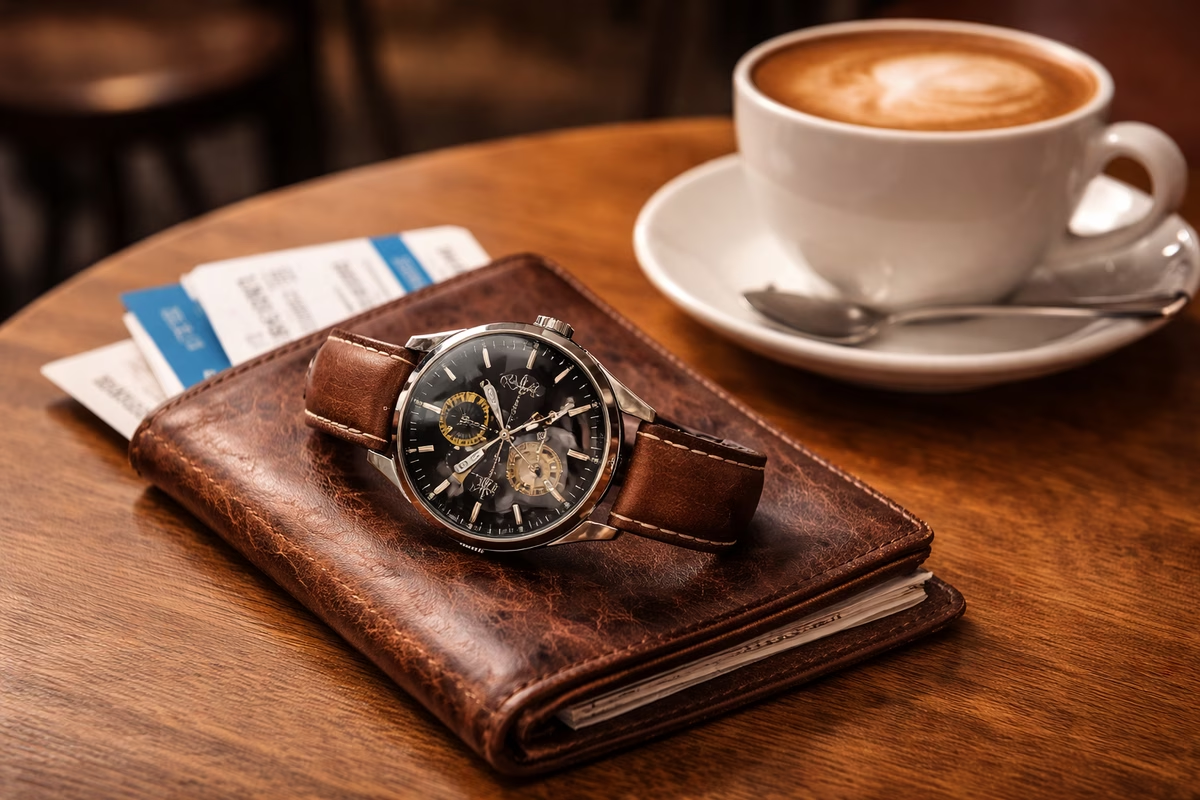
You can make this easier by choosing the everyday watch first. Once you know your default, the other two fill gaps instead of competing for the same wrist time.
Budget-Specific 3-Watch Collections
Budgets change, but the structure holds:
- Allocate the most to the everyday watch (it gets the most wear).
- Keep the beater inexpensive and dependable (it prevents babying your favorites).
- Save a little for straps and eventual service.
If you want concrete examples, pick any combination that matches the roles and fits your taste. The roles do the work; the model names are just vocabulary.
The Five-Watch Collection
The Complete Rotation
Five watches is a full wardrobe. It only makes sense if you like rotating and can maintain them. A sensible five-watch rotation often looks like:
- Dress
- Everyday
- Diver/sport
- “Because I love it” complication (chronograph, GMT, etc.)
- Beater/travel
Collection Building Principles
Rule 1: Buy What You’ll Actually Wear
Before you buy, ask where it fits in your week. If you cannot name the outfits, occasions, or situations, it is probably a fantasy purchase.
The most common excuses are also the most expensive.
- “Special occasions” usually means “never.”
- “Investment” is the wrong main reason to buy almost any watch.
- “Everyone says…” is how you end up buying someone else’s taste.
Rule 2: Avoid Redundancy
Redundancy is how collections turn into drawers. If two watches play the same role, one will slowly stop getting worn. Diversify on purpose. Style, dial color, and strap choice can make watches feel different without needing a dozen of them.
Rule 3: Quality Over Quantity
If you have a fixed budget, fewer watches you love usually beats many you tolerate. It is not about prestige. It is about wrist time. The watches you love get worn. The rest become clutter, and clutter has maintenance costs.
Rule 4: Budget for Service Costs
Service is the hidden cost of collecting. Mechanical watches usually want attention every 5 to 7 years, sometimes longer if worn gently, and costs rise with brand and complexity. Quartz is cheaper to maintain but still needs batteries or solar.
As a rough planning range:
- Entry brands: $150–$300
- Mainstream Swiss: $250–$400
- Luxury Swiss: $500–$1,200+
If you are building a multi-watch rotation, this matters because watches can sit for years and still need service later.
Rule 5: Start Small, Buy Up
The fastest way to buy well is to buy one level below your top budget first, wear it for a season, and pay attention. You will learn things no review can teach you, like whether you hate bracelets in summer, whether a thick case catches on cuffs, whether a date window matters, or whether you actually use a chronograph.
Then you buy up with your own experience instead of forum consensus.
Collection Archetypes
The Purist (All One Brand)
Some collectors love going deep on one brand’s language. It can be satisfying: consistent design, a clear point of view, and a coherent rotation. The risk is that you buy variations of the same idea and miss the joy of contrast.
The Value Hunter (Best Bang-for-Buck)
Value collectors chase “maximum watch for the money.” The upside is variety and less financial pressure. The downside is that resale can be softer, so you’re rewarded most when you buy what you’ll keep and wear.
The Vintage Collector
Vintage collecting is about history you can wear. It’s also where knowledge matters most: condition, originality, service history, and parts availability can change the value and the daily experience dramatically. If you go vintage, assume higher service friction and buy from people you trust.
The Complications Enthusiast
Complication collectors love functions: timing, travel, calendars, astronomical displays. It’s a beautiful rabbit hole—but it’s also where watches get thicker, pricier, and more service-intensive. If you want complications without stress, start with the most practical ones (date, GMT, chronograph) and earn the rest.
When to Sell/Rotate
Selling is part of a healthy collection. If you have not worn a watch in six months, ask why. If it does not fit your life, it is a candidate to move on. If it is sentimental or fills a role nothing else does, keeping it can still make sense.
Rotation becomes easy when your watches have clear jobs. Many people rotate by season, by activity, and by outfit formality.
Red Flags: Signs You’re Collecting Wrong
If collecting makes you anxious, the hobby is driving you instead of the other way around. Common warning signs:
- You own many watches but only wear a couple.
- You are buying to soothe FOMO.
- You are treating watches as investments.
- You are taking on debt or hiding purchases.
Flipping is also expensive. If you buy and sell repeatedly, you often lose 10 to 30 percent per transaction. Sometimes that is worth it, but it is cheaper to slow down and learn what you actually love.
The Ideal Collection Evolution
A healthy watch collection often changes in phases:
Year 1: buy one watch and wear it enough to learn what you like.
Year 2: add contrast.
Year 3: build a small set with clear roles.
After that, refine. Sell what you do not wear. Upgrade what you do. Let the collection get calmer over time.
Final Advice
The best collection is personal, worn, and financially boring. It’s a rotation you use, not a museum you maintain. If you keep the roles clear, avoid redundancy, and buy at the pace you can enjoy, your collection will naturally get better—and simpler—over time.
Next Steps
- Watch Brands Guide - Find the right brands for your budget
- Understanding Movements - Know what you’re buying
- Watch Database - Browse specific models