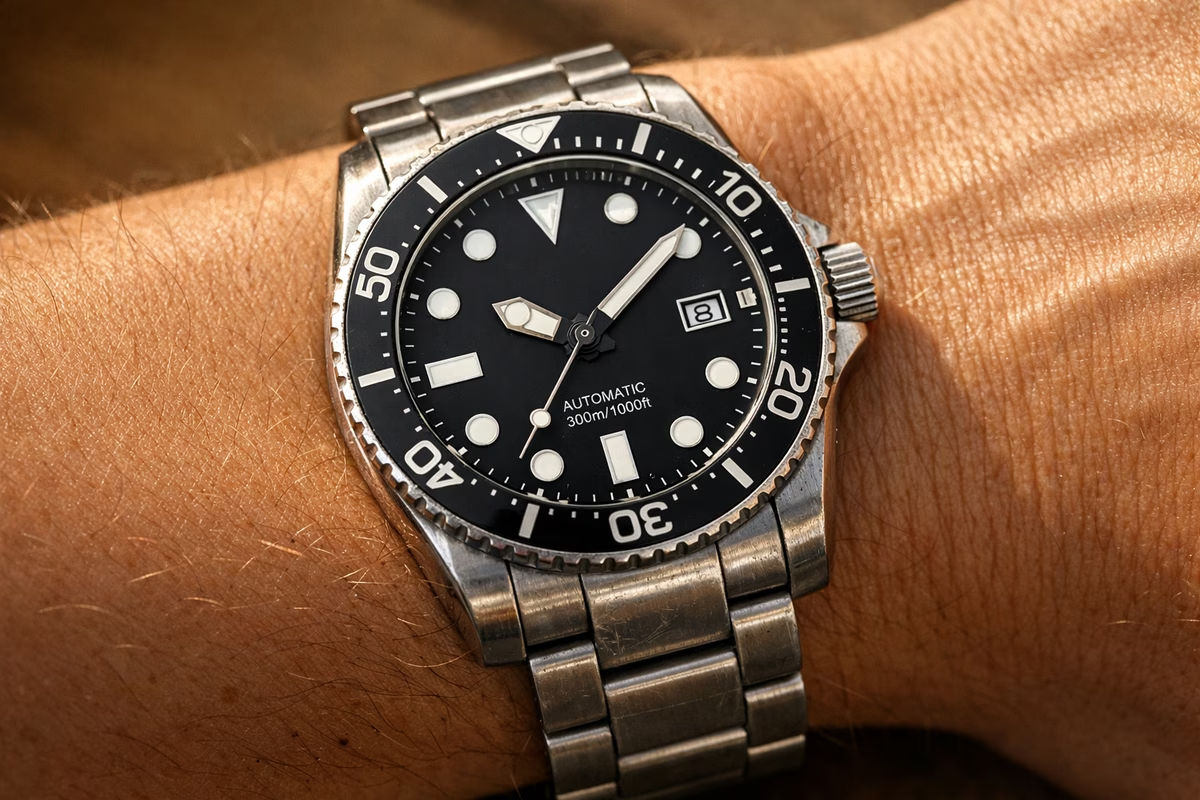
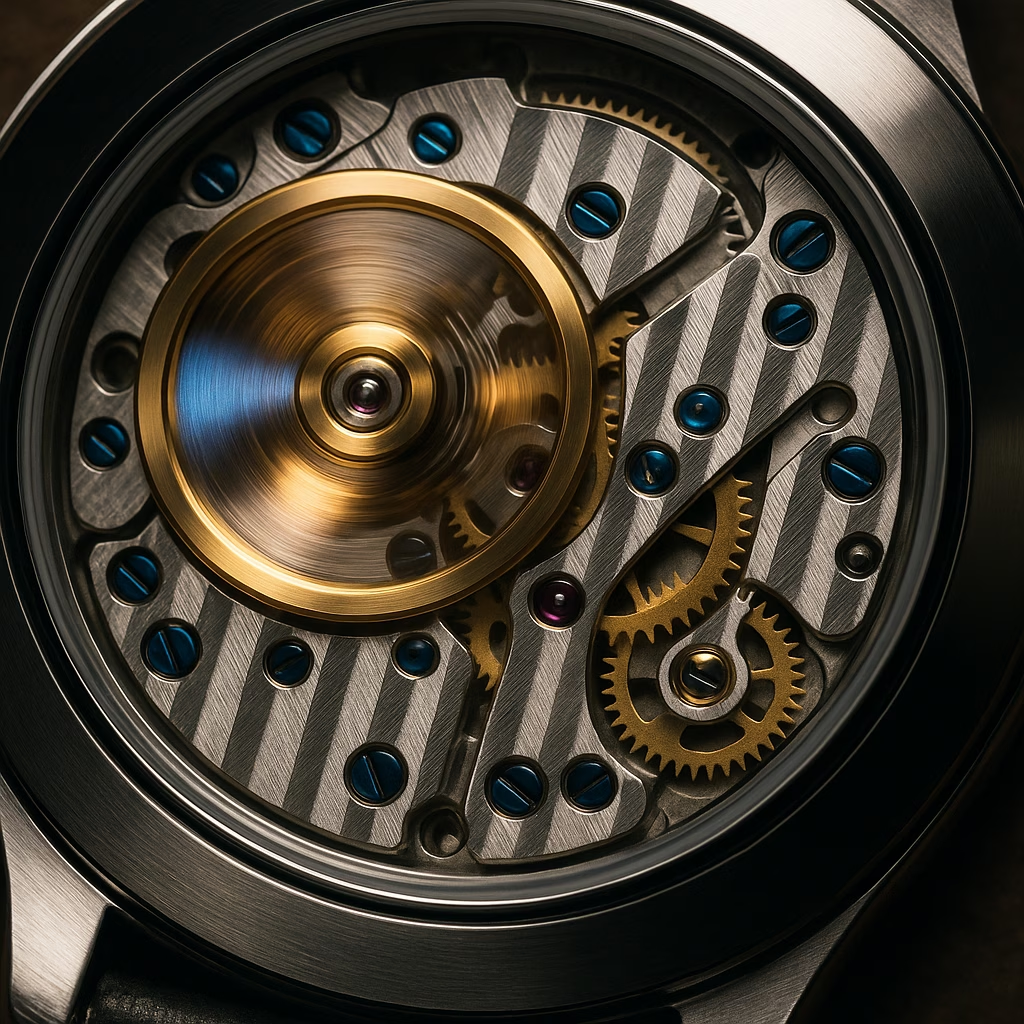
Put your watch knowledge to the test with exercises inspired by The Watch That Survived Everything. From service intervals to water resistance ratings, these games will help you care for your timepiece.
Quiz: Watch Care & Daily Wear
A watch rated to 200 meters water resistance was last pressure-tested 5 years ago. Is it safe for ocean swimming?
What should you always do after swimming with a watch in the ocean?
How often should a mechanical watch typically receive a full service?
What is 'carry-over' in watch timekeeping?
What do 'desk-diving scratches' refer to?
Flashcards: Watch Care Vocabulary
Watch Care & Terminology
Flip each card to learn essential terms for maintaining and understanding your watch.
A crown that threads into the case tube, creating a watertight seal. Must be unscrewed to set the time and screwed back down before water exposure.
The amount of time a fully wound mechanical watch will run before stopping. Typically 38–72 hours for modern movements.
Rubber or synthetic O-rings that seal the case back, crown, and crystal against water and dust. They degrade over time and must be replaced during service.
A quick test ($20–$40) that verifies a watch's water resistance by applying air or water pressure. Should be done every 2–3 years or before significant water exposure.
A rotating bezel on dive watches that turns only counterclockwise. Used to track elapsed dive time—if accidentally bumped, it only shortens the apparent remaining time (a safety feature).
Photoluminescent material (usually Super-LumiNova) applied to hands and hour markers. Charges in light and glows in darkness for legibility.
The process of adjusting a mechanical movement's rate to minimize daily gain or loss. Typically done during service using the balance wheel's regulator.
The gradual change in a watch's appearance through wear—scratches, color shifts, faded lume. Often valued by enthusiasts as evidence of authentic use.
Scratches and wear on the bracelet clasp and case sides from daily contact with desk and table surfaces. Common on daily-wear watches and often seen as a badge of honor.
A watch designed for functional durability: high water resistance, luminous dial, robust case. Examples: Rolex Submariner, Omega Seamaster, Seiko SKX.
Timed Trivia: Watch Knowledge Speed Round
60-Second Watch Challenge
How many watch care and feature questions can you answer in 60 seconds?
What does '200m water resistance' mean?
How often should water resistance gaskets be replaced?
What removes scratches from a watch case?
A watch running +4 seconds per day is considered...
What powers an automatic mechanical watch?
Why should you NOT use ultrasonic cleaners on all watches?
What does 'COSC certified' mean?
Which rotates only counterclockwise on a dive watch?
Matching Pairs: Watch Features and Their Purpose
Match the Watch Feature to Its Function
Find matching pairs—click a feature, then click what it does.
Explore the full story in The Watch That Survived Everything or read the Watch Care Guide for the complete maintenance reference.