Scale is one of the easiest details to miss in an AI image prompt. A bowl may become the size of a bathtub. A notebook may look like a poster. A chair may feel too small for a room because every surrounding object has drifted into a different scale. The image can still be attractive, but it becomes harder to use because the viewer cannot quickly tell what they are looking at.
Props and context clues solve that problem when they are chosen carefully. A cup, pencil, spoon, folded cloth, chair, window, hand-free silhouette, shelf, or plain package can tell the viewer how large something is and how it might be used. The same props can also make an image noisy, misleading, or brand-like if they are added without discipline. This guide extends the basic prompt structure from Prompt Anatomy by treating scale and context as part of the brief, not as decoration added after the model has already guessed the scene.
Scale Needs a Familiar Neighbor
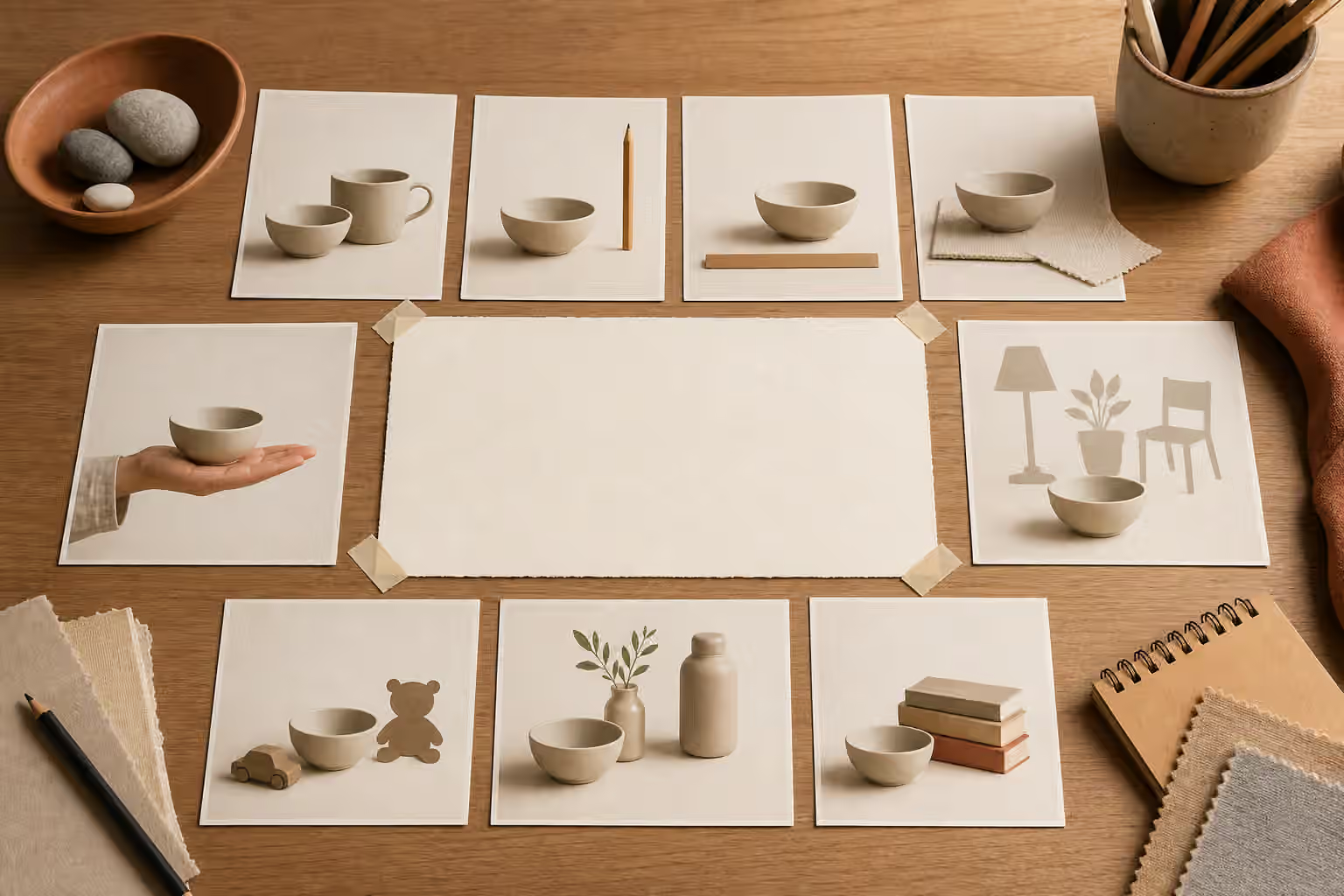
A generated object becomes easier to read when it sits near something familiar. A ceramic cup, pencil, notebook, spoon, folded towel, chair, plant pot, simple tray, or plain card can give the viewer a sense of size without requiring labels. The cue does not need to be the main subject. It only needs to be familiar enough that the viewer can use it as a quiet reference.
The best scale cue depends on the subject. A food image may use a spoon, plate, napkin, or cup. A room image may use a chair, doorway, lamp, or rug. A product-neutral mockup may use a blank box, small bottle, hand-free tray, or folded cloth. A craft image may use a pencil, scissors, thread spool, or cutting mat without markings. The cue should belong naturally in the scene. If it feels imported only to prove scale, the image begins to look staged in the wrong way.
Scale cues are especially useful when the subject is unfamiliar or abstract. A small educational model, a fictional object, a set of blank prompt cards, or a symbolic diagram can drift into any size unless the prompt anchors it. Asking for “a palm-sized ceramic sample on a desk beside a pencil and small cup” gives the model a more stable target than asking for “a small ceramic sample” alone. The word small is relative. The neighboring objects make it visible.
Props Should Explain Use
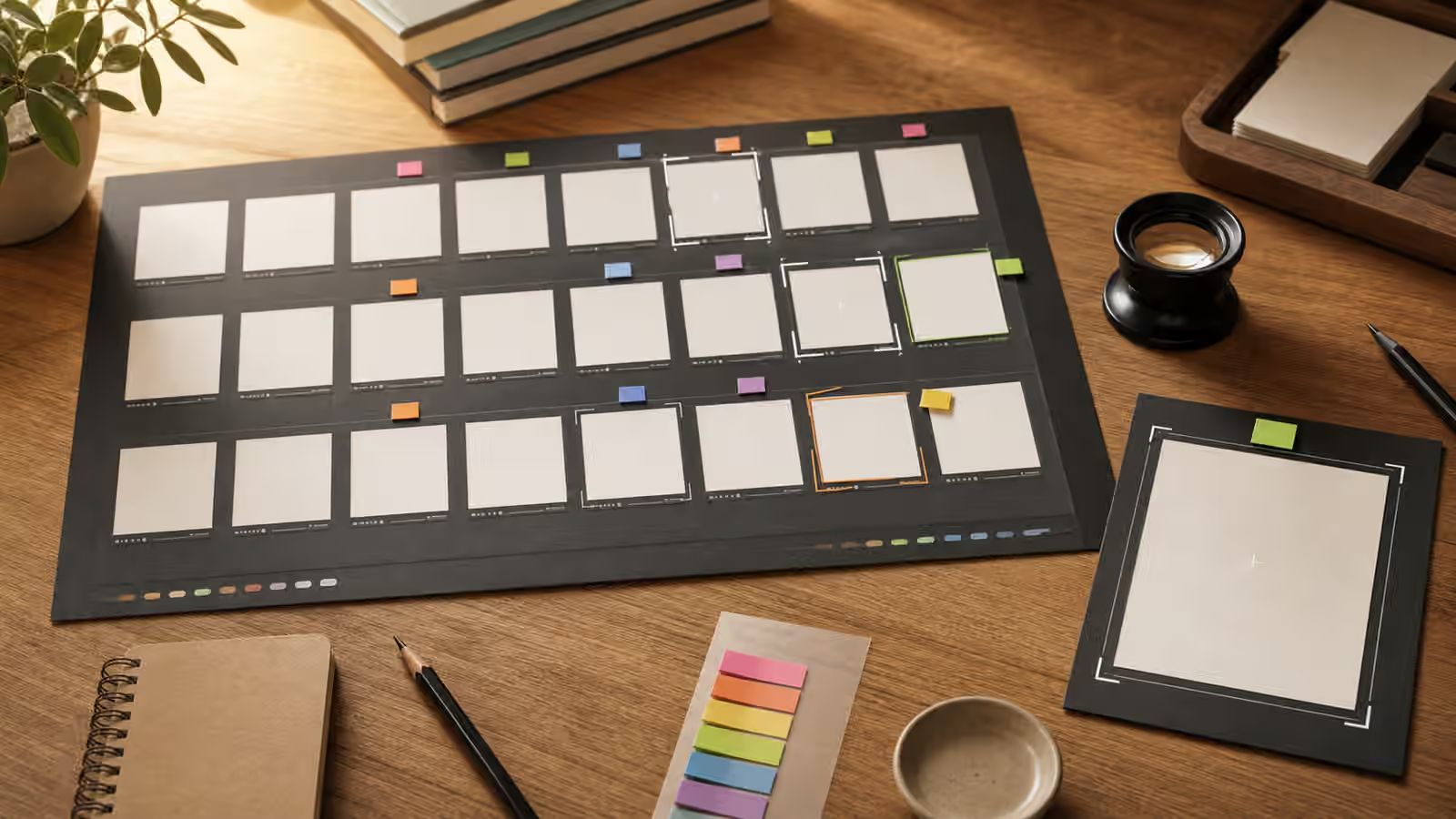
Props become useful when they tell the viewer what the subject does. A kettle near cups suggests brewing. A fabric swatch near a chair suggests material choice. A blank crop frame near an image card suggests review. A soft cloth near a ceramic object suggests care or handling. These clues let the image do quiet explanatory work before the reader reaches the page text.
Weak prompts often ask for “relevant props” and let the model overfill the frame. The result may include a dozen attractive objects that compete with the subject. A better prompt names only the props that explain use. If the image is about product mockups, blank containers and material samples may be enough. If it is about interiors, a window, chair, rug edge, and plant may explain scale better than a crowded room. If it is about food prompting, one utensil and one surface cue may do more than an entire table setting.
This restraint matters because props can create accidental claims. A laboratory prop can make a harmless object look clinically tested. A certificate-like paper can imply approval. A luxury surface can make a fictional product look more expensive or official than it is. The product mockups guide warns against fake labels and brand-like packaging. The same caution applies to surrounding objects. Props should clarify the scene, not borrow authority the image has not earned.
Context Is More Than Location
Context does not simply mean naming a place. A “kitchen,” “studio,” “classroom,” or “office” may be too broad to guide a useful image. Context includes surface, lighting, use, distance, season, storage, adjacent tools, and what has just happened or is about to happen. A bowl on a table is different from a bowl on a child-height meal mat, a restaurant counter, a picnic blanket, or a design board.
For generated images, context should be specific enough to prevent generic decoration but not so specific that it invents a false real place. “A plain home desk near a window” is often safer and more flexible than “inside a famous design studio.” “A generic workshop surface with unbranded tools” is more usable than “a branded repair bench.” “A neutral classroom table with blank cards” is safer than an identifiable school room with posters, names, and documents.
The interior prompt guide handles room-scale context in detail. The same principle works at table scale. Name the surface, the nearby cues, and the reason they belong. A prompt might say that a blank image card sits on a matte paper desk beside a small ceramic cup and pencil to show scale, with soft daylight and no readable notes. That single sentence gives the model subject, scale, context, and safety constraints without stuffing the frame.
Avoid Prop Drift
Prop drift happens when the model adds objects that are plausible in the scene but wrong for the page. A food scene gains branded jars. A design scene gains fake typography. A classroom scene gains worksheets with nonsense writing. A medical-adjacent scene gains pill bottles or clinical devices. A product scene gains logos. These additions can look polished at first glance and fail the image on review.
The prompt can reduce prop drift by naming both what should appear and what should stay absent. For Visual Prompt Lab images, “blank cards,” “unbranded containers,” “plain swatches,” “no readable text,” and “no logos” are not boring constraints. They keep the image from asking the editor to clean up accidental meanings. If the background should stay quiet, say so. If the prop count should stay low, say so. If labels are not needed, prohibit them clearly.
Generated images also drift when every prop has equal visual weight. If the subject is a bowl, the spoon should not become the star. If the subject is a chair, the plant should not dominate the frame. If the subject is a prompt card, the surrounding tools should remain supporting actors. Ask for the main subject to be visually dominant, with props smaller, softer, or grouped around it.
People and Hands Are Powerful Scale Cues
A hand can make scale instantly clear. It can also introduce avoidable problems. Hands are one of the common failure points in generated images, and a realistic hand may imply a real person, a product endorsement, or a documentary moment. If a hand is not necessary, use object-based scale cues first. A cup, pencil, notebook, chair, or tray often gives enough context without adding human anatomy.
When people are needed, keep the purpose narrow. A scene about a chair may need a seated person silhouette to show scale. A scene about a tool may need a partial hand to show grip. A scene about clothing may need a non-identifiable figure to show drape. The people, likeness, and consent guide covers identity boundaries. For scale prompting, the practical rule is simpler: include people only when their presence explains the object better than neutral props would.
If a generated hand appears, review it with the same seriousness as the subject. Count fingers, check anatomy, inspect the contact point, and ask whether the hand changes the image’s meaning. A malformed hand can make a good image feel careless. An unnecessary hand can make a neutral image feel like a staged endorsement. Remove it from the next prompt if it is not earning its place.
Review Props by Asking What They Prove
A good prop proves something small and useful. It proves approximate size, likely use, material, storage, setting, or task stage. A bad prop only proves that the model can make a richer scene. During review, name what each visible prop contributes. If the answer is only atmosphere, consider whether the background or lighting could do that job more quietly.
This review does not require removing all detail. Detail is often what makes an image feel grounded. The question is whether the detail is legible and honest. A fabric swatch beside a chair explains material. A blank notebook beside a prompt board explains planning. A spoon beside a bowl explains scale and use. A fake label, certificate, badge, or interface panel may explain nothing useful and create risk.
Strong scale prompts are modest. They ask for a subject, a few familiar neighbors, a practical surface, and clear absence of misleading details. That modesty makes the image easier to crop, easier to describe in alt text, and easier to trust as an illustration rather than a claim.