People make generated images feel immediate. A person reaching for a tool, sitting in a chair, reading a card, setting a table, or pointing at a diagram can show use faster than an object alone. The same human presence also raises the stakes. A realistic face can resemble someone. A pose can imply endorsement. A scene can look documentary even when it is synthetic. A hand can fail anatomically and pull attention away from the topic.
Responsible people prompting begins before style. It asks what the figure is doing, why a human figure is needed, how identifiable the person should be, and what kind of realism is appropriate for the page. The people, likeness, and consent guide explains the ethical boundary. This guide handles the practical prompt language for role, pose, gesture, and review.
Start With the Role, Not the Identity
Identity language is often unnecessary. A prompt does not need a named person, a celebrity, a real creator, or a private individual to show a person using a tool or sitting in a room. It usually needs a role. A reader, cook, parent, student, designer, gardener, repairer, teacher, shopper, or presenter can be described without borrowing a real face. The role tells the image what the person is doing in the scene.
Role language should stay broad enough to avoid caricature and specific enough to guide the action. “A person reading a blank prompt card at a desk” is safer and clearer than “a famous designer studying a mood board.” “A non-identifiable figure arranging unbranded containers” is enough for a product-neutral mockup. “A faceless illustrated person reaching toward a chair” can show scale without turning the image into a portrait.
This shift also makes revision easier. If the figure’s pose fails, you can adjust the action without preserving a likeness. If the image needs a different crop, you can move the figure without worrying about identity continuity. If you need character consistency for a fictional series, use the methods in Character Consistency for Beginners and keep the character original rather than modeled on a real person.
Pose Is a Shape Before It Is a Story
A readable pose works first as a silhouette. The viewer should understand whether the figure is standing, sitting, reaching, leaning, walking, turning, pointing, holding, or observing before noticing clothing details. If the pose is unclear at thumbnail size, adding style will not fix it. The prompt should name the body position and the relation to the object.
Simple pose language is usually stronger than theatrical language. A person seated at a table, a figure standing beside a shelf, a hand placing a blank card, a presenter gesturing toward an unlabeled board, or a worker kneeling beside a toolbox all give the model a physical arrangement. Words such as dramatic, energetic, powerful, or candid may influence mood, but they do not say where arms and legs go.
Contact points deserve special attention. If a person holds a cup, their hand must meet the cup. If a person sits, the chair and body must align. If a figure points, the direction should make sense. If a person leans on a table, the table should support them. Generated images can break these relationships while still looking polished. A prompt that names the contact point can help, and review must catch what the prompt cannot prevent.
Gesture Carries Meaning
Gesture is the small action that tells the viewer what to notice. A hand hovering over a choice card suggests decision. A person pointing at a blank diagram suggests instruction. A figure carrying a tray suggests use. A person turning away may suggest refusal, transition, or privacy. These meanings can be useful, but they should be chosen deliberately.
For educational and guidebook imagery, neutral gestures often work best. Pointing, arranging, comparing, holding, passing, reading, and observing are clear without being melodramatic. Exaggerated surprise, distress, celebration, or conflict can make a practical page feel like an advertisement or a crisis scene. If the guide is calm and instructional, the body language should match.
Gesture can also reduce the need for readable text. Instead of putting labels on cards, show a figure sorting blank cards into zones. Instead of asking for a screen with legible interface copy, show someone reviewing an abstract image frame with crop guides. Instead of creating a fake certificate or official notice, show a person placing an unbranded item beside a plain checklist-shaped card with no words. The gesture explains the task while avoiding text failures and false authority.
Choose the Right Level of Anonymity
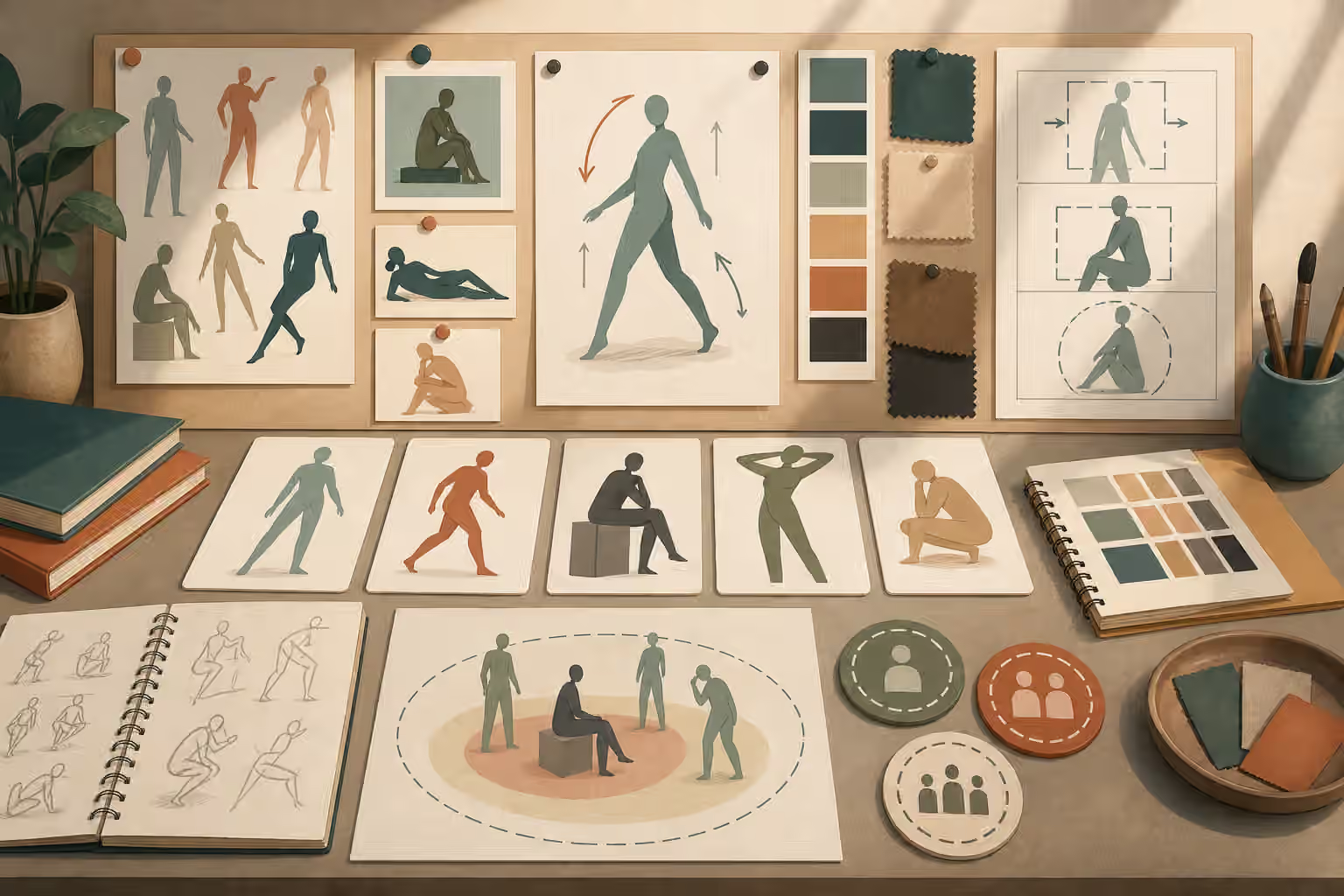
Not every image with a person needs the same treatment. A realistic editorial photo of a person may be appropriate for some projects when consent, release, disclosure, and context are handled outside the prompt. Many AI-assisted guidebook images do not need that level of realism. A faceless figure, silhouette, cropped hands, back view, simple illustrated character, or abstract body card can show the action with less likeness risk.
When identity is irrelevant, say so in the prompt. Ask for non-identifiable figures, no facial detail, no celebrity resemblance, no public figures, and no private-person likeness. If the image should be illustrative, name the medium clearly. A warm editorial illustration of faceless pose cards creates a different expectation than a photorealistic portrait. The less the image depends on an individual face, the easier it is to keep the focus on the page topic.
Clothing can support role without becoming identity. A plain apron, neutral work shirt, simple sweater, studio smock, or generic outdoor jacket can explain context. Branded uniforms, school logos, medical insignia, military-like markings, and official badges can imply affiliation. If affiliation is not the topic, keep clothing unbranded and broad.
Hands Need Their Own Review
Hands are useful because they show scale and action. They are risky because they fail often and attract attention when they do. Extra fingers, fused fingers, strange nails, awkward grips, and impossible wrist angles can make an otherwise useful image feel careless. If hands are not needed, avoid them. If they are needed, keep the action simple and inspect the result closely.
A prompt can ask for hands only partially visible, relaxed, naturally posed, and clearly separated from the object. It can avoid complex finger positions, interlaced hands, multiple hands near each other, and small detailed gestures. A hand placing one blank card is easier than hands tying knots, playing instruments, typing on a detailed keyboard, or holding reflective objects. The AI image quality checks guide is especially useful after generation because hand problems may not be obvious at first glance.
If the hand fails, do not automatically regenerate the whole image with more style. Change the action. Replace a grasp with a nearby object. Use a tool resting on a table. Crop the scene so the hand is unnecessary. Sometimes the most reliable human prompt is one that removes the human from the frame and lets props explain the action.
Avoid Documentary Signals Unless They Are Earned
A realistic person in a realistic setting can look like documentation. This is sensitive when the image could imply a real protest, accident, classroom, clinic, workplace, endorsement, criminal event, or private moment. If the image is synthetic, it should not masquerade as evidence. Even ordinary scenes deserve care when they include people.
For practical guidebook images, use neutral settings, original figures, unbranded props, and honest page context. Do not ask for a public figure doing something they did not do. Do not ask for a private person’s likeness. Do not stage a synthetic image as proof of wrongdoing, safety, success, harm, or official support. If the page needs to discuss such topics, use abstract or clearly illustrative imagery instead.
A strong people prompt can be simple: an original faceless illustrated figure seated at a desk, arranging blank image cards, relaxed posture, natural hand placement, unbranded clothing, no readable text, no logos, no real-person likeness. That prompt does not weaken the image. It clarifies why the person is there and keeps the viewer focused on action rather than identity.